
Your entryway greets you the second you step inside, but let’s be real, it usually turns into a dumping ground for shoes, coats, bags, and mail. When this space gets messy, it can throw off the vibe of your whole home and add a bit of stress you don’t need.
The upside? With a couple of clever storage tweaks and some thoughtful layout choices, you can totally flip this high-traffic spot into something both functional and welcoming.
An organized entryway needs three key elements: designated storage for everyday items, hooks or racks for coats and bags, and a clear system for managing shoes. You don’t need a huge space or a fancy remodel to make it work.
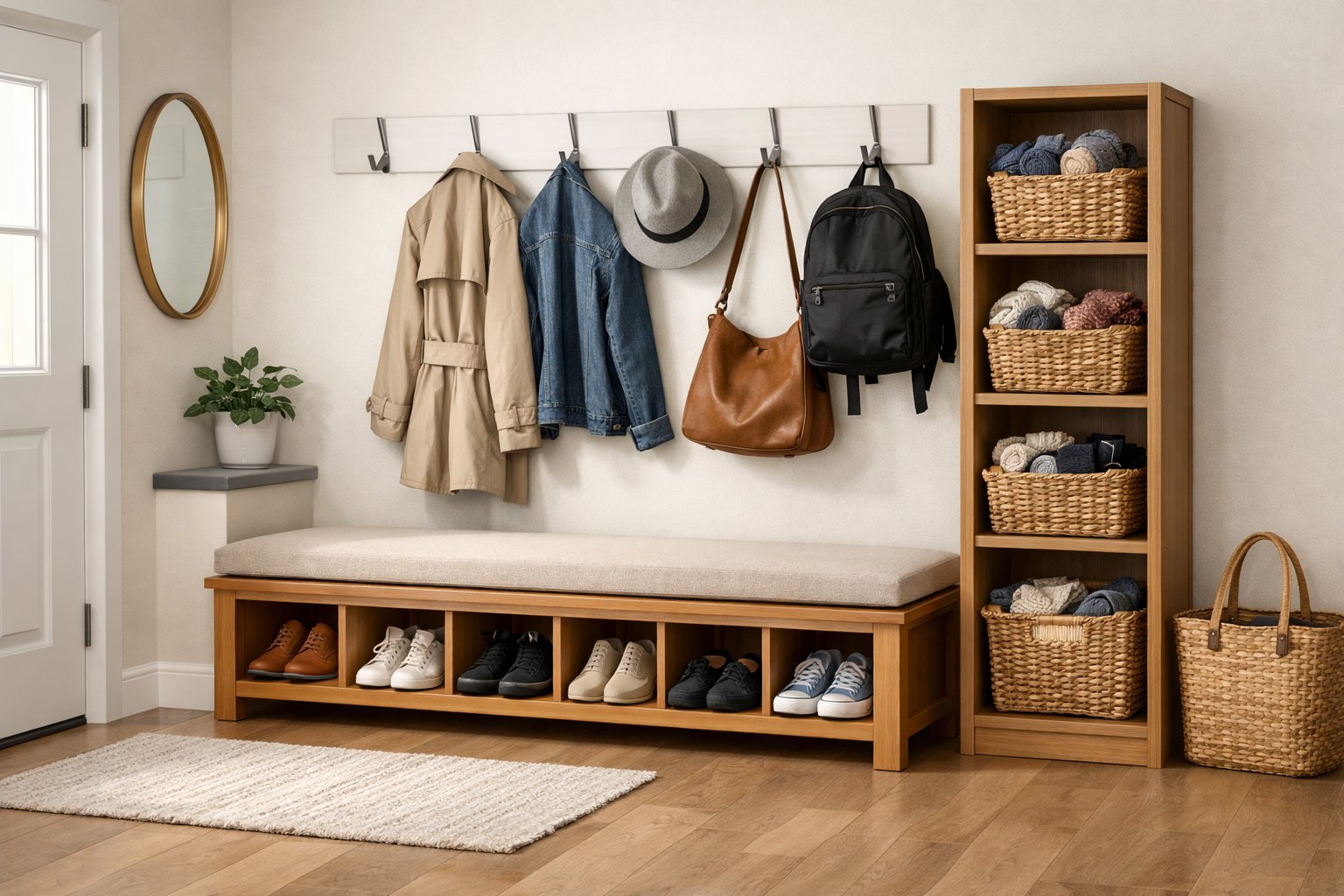
Simple things like a storage bench, wall hooks, and a shoe rack can handle most of the clutter and make it easy to grab what you need when you’re rushing out.
Your setup really depends on your space and how many people are coming and going. Some folks have a narrow hallway, others a big foyer, but either way, you can make it work for your routine.
This guide dives into practical storage ideas, product picks, and layout tips to help you get organized. Maybe you’ll even enjoy coming home a little more.
Key Takeaways
- Use vertical space with wall hooks and racks to store coats, bags, and accessories without taking up floor space
- Choose multi-functional furniture like storage benches that provide seating and hide shoes or seasonal items
- Create designated zones for keys, mail, and shoes so everything has a specific place when you enter or leave
Assessing Your Entryway Needs
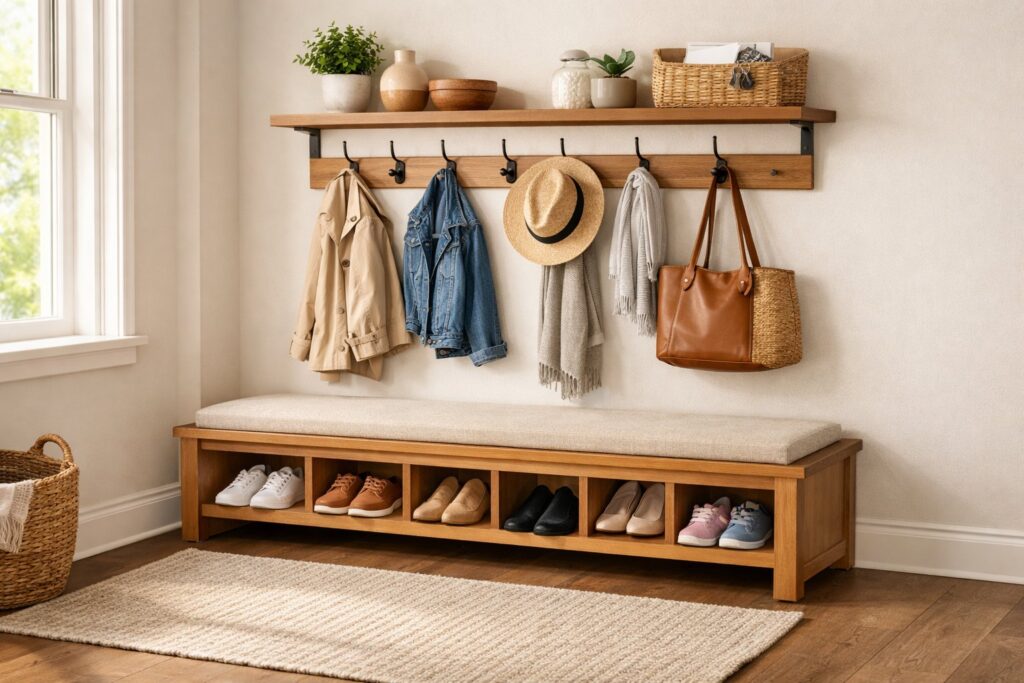
Before you run out and buy bins or start hanging hooks, take a minute to figure out what your space can actually handle. Also, think about what you really need to store.
The right setup depends on your available space, who uses the entry, and what you carry in and out each day. It’s worth a little planning—trust me.
Evaluating Space and Entry Traffic Flow
Start by measuring your entryway’s width, depth, and height. Jot those numbers down, since they’ll decide what furniture and storage will fit.
Walk through your entry like you just got home with groceries, kids, or a backpack. Notice where you instinctively want to drop your stuff. That’s your drop zone, and it’s a smart spot for your main storage.
Count how many people use this entry on a regular basis. A family of five needs way more hooks and shoe storage than a couple, obviously.
Think about whether you come in through the front door or the garage most often, since that can change where things pile up.
Check if doors swing into your entryway. This matters for where you can put furniture. If a door opens inward, you’ll want to keep at least 36 inches clear so no one’s stuck squeezing by.
Look around for empty wall space you could use for hooks, shelves, or maybe a pegboard. Sometimes you have more options than you think.
Determining Storage Priorities
Make a quick list of everything that piles up in your entryway. Usual suspects: coats, shoes, bags, keys, mail, umbrellas, pet leashes, and all those hats and gloves in winter.
Next to each thing, jot down how many your household actually uses every day. Like, maybe you need space for four pairs of shoes, but just one umbrella.
Rank your top three storage headaches. If shoes are always in the way, a shoe rack or boot tray jumps to the top of your list. If coats are the problem, start with hooks or a hall tree.
Think about what you always grab on your way out. Keys, wallets, sunglasses—those need a tray or basket right by the door. These grab-and-go items should be super easy to reach.
Don’t forget about the seasons. You’ll need more coat storage in winter than you will when it’s warm out.
Setting an Organization Goal
Decide what you want your entryway to look like when it’s “done.” Maybe your goal is “clear floors, no visible clutter” or “everyone has a spot for their bag and shoes.”
Be specific about when you want to tackle this. A goal like “install hooks and a shoe rack this weekend” feels doable, while “make the perfect entryway” is just overwhelming.
Pick between open storage (hooks, shelves, baskets you can see) and closed storage (cabinets, drawers that hide everything). Open storage is great if you’re good at putting things back. Closed storage is better if you want everything out of sight.
Set a rough budget. Hooks and baskets might run you $50-100, but a hall tree or console table could be $150-400. It adds up fast, so plan ahead.
Choose one main organizing principle: will you organize by person (everyone gets their own hook and basket) or by category (all shoes together, all bags together)? That one choice shapes your whole setup.
Smart Entryway Storage Solutions
Creating good entryway storage means combining pieces that actually work for your daily stuff. The right mix of surfaces, containers, and zones can turn a cluttered entrance into a space you don’t mind showing off.
Drop Zone Essentials
A drop zone is just a spot to dump your stuff when you walk in. It keeps keys, wallets, and phones from disappearing into the couch cushions or ending up in random places.
You can set up a drop zone with a basic tray or dish on any flat surface. The tray acts like a little boundary that tells everyone where to put the small stuff. Put it right by the entrance so it’s easy to use—no excuses.
Essential drop zone items include:
- A tray for keys and loose change
- A mail organizer to sort bills and letters
- Wall hooks mounted above for bags and coats
- A small bowl for sunglasses
The best drop zones just make sense. You won’t have to nag anyone to use them because it’s obvious where things go.
Console Table and Entryway Console
A console table gives you surface space and hidden storage, all in a slim design that fits tight entryways. Most are about 10-15 inches deep, so you won’t trip over them.
Look for one with drawers if you want to stash clutter like dog leashes, gloves, or spare batteries. The top is perfect for a tray, lamp, or whatever little decor you like.
Some have lower shelves for baskets and extra storage. You can find budget options for $50 or hit up thrift shops for more character. A console table with a couple of drawers is usually enough to keep things separated and easy to find.
Storage Baskets and Woven Baskets
Baskets hide mess while keeping things easy to grab. Slide them under a console table, stash them on shelves, or line them up along the wall for shoes, hats, or pet stuff.
Woven baskets add a cozy vibe and are super practical. Families love them because you can just toss things in—no need to be too tidy. Assign each basket to a category: shoes, scarves, sports gear, whatever you’ve got.
Keep baskets where you can actually reach them. If you’ve got a crowd, label baskets so everyone knows what goes where. If you’re on a budget, you can even DIY some storage baskets out of old boxes and a little creativity.
Maximizing Vertical Space with Hooks and Racks
Wall-mounted hooks and racks turn blank walls into storage you’ll actually use. Standing options are great if you can’t drill holes or want something you can move around.
Wall Hooks and Hook Racks
Wall hooks are the simplest way to use vertical space. Single hooks are fine for bags or the occasional jacket, but a rack gives you more spots to hang things in one go.
Mount hooks at different heights so everyone can reach—lower for kids, higher for adults. Maybe 40-48 inches for little ones, 60-65 for grownups. That way, nobody has to ask for help just to hang up a coat.
Hook rack configurations:
- Linear racks: 3-5 hooks in a row, good for narrow spaces
- Grid patterns: Multiple rows for bigger families
- Decorative options: Vintage or modern styles to fit your vibe
Adhesive hooks work if you rent or just don’t want to mess up the walls. Pick sturdy ones that hold at least 5-10 pounds each. Always test the adhesive somewhere hidden first so you don’t wreck your paint.
Coat Hooks and Coat Rack Choices
Coat hooks have to handle heavier stuff, especially in winter. Go for ones rated for 10-15 pounds per hook so they don’t snap off when loaded down with wet coats.
A mounted coat rack usually combines hooks with a shelf up top for hats or bins. These are about 24-36 inches wide, giving you both hanging and storage space. Mount them 60-66 inches off the floor so adults can use them comfortably.
Double hooks double your hanging space without taking up extra wall. Each peg holds two things, which is a lifesaver for families. Rounded ends help keep delicate fabrics safe.
Recommended products:
- Liberty 4-Hook Wall Rack: Bronze finish, decorative backplate, holds 10 pounds per hook
- AmazonBasics Wall Mounted Coat Rack: Budget pick with shelf and 5 hooks
Standing Coat Rack and Alternatives
A standing coat rack skips the installation and you can move it wherever you want. These fit in corners or next to the door, and you don’t have to commit to anything permanent.
Tree-style racks have branches at different heights and can hold 8-12 coats, depending on how bulky they are. Look for a weighted base so it won’t tip if everyone loads it up at once.
Leaner racks just rest against the wall at an angle and have hooks or pegs along the length. They look modern and stay stable without hardware. Most can handle 30-50 pounds total, which is plenty for most folks.
Freestanding alternatives:
- Hall trees: Combo of hooks, a bench, and shoe storage underneath
- Over-door racks: Hang on any door, no tools needed, hold 5-7 items
- Tension pole racks: Stretch from floor to ceiling with adjustable hooks
Shoe Storage and Organization Strategies
Shoes might be the biggest source of entryway chaos. The right storage keeps them organized, protects your floors, and just makes life a bit easier.
Shoe Storage and Shoe Rack Options
A shoe rack helps keep entryways tidy, and it usually works for most households. Wall-mounted racks free up floor space and can hold several pairs in a compact area.
Vertical racks stack shoes in tiers, while horizontal models stretch along the wall. Open racks let you see all your shoes at a glance, making morning routines a bit easier.
Metal racks with wire shelves let wet shoes dry out, so you don’t end up with that musty smell. If your family is on the larger side, a shoe cubby system comes in handy, giving everyone their own spot and avoiding the classic shoe pile-up.
Wooden cubbies feel cozy and warm, but plastic ones are a breeze to clean. Stackable cube organizers are pretty flexible since you can add or remove cubes as your needs change.
Over-door shoe organizers are a lifesaver in cramped spaces. Hang them on closet doors to use up vertical space you’d probably ignore otherwise.
Boot Tray and Shoe Bench Ideas
A boot tray’s great for trapping water, snow, and mud before it hits your floors. Set one just inside the door for rainy days or snowy boots.
Rubber or plastic trays with raised sides keep messes contained and clean up fast. If you want to make the most of your space, try stacking a shoe rack above your boot tray. That way, you get spots for both everyday shoes and boots without crowding the floor.
A shoe bench is one of those things that feels like a small luxury. You can sit while you take shoes on or off, and the storage underneath keeps pairs off the floor.
Benches with open shelves make it easy to grab what you need, while closed storage hides the clutter. Lift-top benches stash everything inside, but you’ll have to lift the seat each time, so maybe keep less-used shoes there.
Using Storage Benches for Multi-Function
Storage benches are more than just a spot for shoes. They blend seating, storage, and style in one piece, so your entryway doesn’t feel thrown together.
Try a bench with a cushion in your entry. It’s just more comfortable for slipping shoes on or off, and you can stash shoes on one side and things like bags or umbrellas on the other.
Benches with pull-out drawers keep everything tucked away and dust-free. Drawers are easier for daily use than lift-tops, honestly.
You can even assign a drawer to each family member or sort by season. If you add hooks above the bench, you’ve got a whole entryway station for coats, bags, and shoes in one spot.
Optimizing Layout and Traffic Flow
Your entryway should have enough room for people to move around without bumping into stuff or tripping over shoes. A thoughtful layout really cuts down on clutter and makes coming and going way less chaotic.
Furniture Placement Tips
Stick bigger furniture against the walls to keep the center of your entryway open. A storage bench usually fits best on the longest wall, out of the way of the door swing.
Leave at least 36 inches of clear space for the main walkway. That’s enough for two people to pass and plenty of space for hauling in groceries.
Mount coat hooks about 5 feet up for adults, and add a lower row at 3 or 4 feet for kids. Keep hooks 4-6 inches apart so coats don’t pile up and fall off.
Try not to put furniture right in front of the door or along the natural walking path. Watch your family’s habits for a few days to see where storage works best.
Keeping Pathways Clear
Keep things off the floor unless they’re serving a purpose. Shoes belong in a cabinet or rack, not scattered everywhere.
Use vertical storage like wall shelves and hooks for things you need often, like keys or bags, so you’re not tripping over them. Baskets or small containers on shelves give everything a home, making it more likely people will put stuff away instead of dropping it on the floor.
Accommodating Small or Narrow Entryways
Mount slim shoe cabinets, just 6-8 inches deep, to store shoes vertically without blocking your walkway. Some hold up to two dozen pairs in hardly any space.
Swap out bulky furniture for wall-mounted options like floating shelves or a fold-down bench. Fold-down benches are surprisingly handy, offering a seat when you need it and folding away when you don’t.
Use the back of your entry door for storage with an over-the-door organizer for things like scarves or dog leashes. Mirrors on the wall can make a narrow space feel bigger and give you a last look before heading out.
Organizing Entryway Accessories
Small stuff like mail and umbrellas tends to create the most chaos in an entryway. A good system for these bits keeps things functional and less stressful.
Mail Organizer and Sorting Systems
A mail organizer keeps paper from piling up. Wall-mounted versions with several slots let you sort bills, letters, and magazines as soon as you walk in.
You can assign one slot for incoming mail, another for outgoing, and a third for urgent stuff. If you’ve got a small table or console, a desktop mail sorter with 3-5 compartments does the trick, and some even have a drawer for stamps or pens.
Product suggestion: The Umbra Estique Organizer has three slots and a key holder, so you get mail and key storage in one compact piece.
Umbrella Stand and Holder Solutions
An umbrella stand keeps drips off your floors. Ceramic or metal stands with drainage holes are best since water can evaporate or drain into a tray.
Put your stand near the door, but not in the main walkway. Wall-mounted umbrella holders save floor space, especially in tight spots, and hold a couple of umbrellas vertically.
Pick a holder based on your household’s needs. For a family of four, you’ll probably want space for 4-6 umbrellas.
Adding Mirrors and Final Touches
A mirror in the entryway is both practical and makes the space feel bigger and brighter. Hang it at eye level, somewhere between 57 and 65 inches from the floor.
Choose a frame that matches your style. Some mirrors have built-in shelves or hooks, which is a nice bonus. Try to place the mirror where it’ll catch natural or overhead light.
Set a small tray or bowl on a console table for things like sunglasses or receipts. It’s a simple way to keep those little items from vanishing into the abyss of your bag or coat pocket.
Top Product Recommendations
The right products make your entryway work better without crowding it. Shoe racks keep footwear in order, wall hooks offer grab-and-go storage, and a wooden bench adds both seating and a spot to stash stuff.
Recommended Entryway Shoe Rack
Wall-mounted shoe racks give you storage without eating up floor space. Metal or wood models can hold 6-12 pairs, depending on your family size, and multi-tiered racks stack shoes vertically.
Good wall-mounted racks start at around $20. Make sure to mount them to wall studs for stability. Some even have a shelf on top for keys or small items.
If you don’t want to drill into your walls, floor-standing racks work just as well. Go for 2-3 tier models that fit your space. Neutral colors like black, white, or natural wood blend in with most decor.
Best Wall Hooks
Wall hooks are a cheap and easy way to add storage for coats, bags, or leashes. Metal hooks hold more weight than plastic, so they’re better for heavy coats.
For a family, try a peg rail with 4-6 hooks spaced 4-6 inches apart. Mount hooks at different heights so everyone can reach, with adult hooks around 60 inches up and kids’ at about 40 inches.
Look for hooks that handle at least 5-10 pounds each. Decorative finishes like brass or matte black add some style. You’ll need a drill and level for installation, but it’s pretty straightforward.
Versatile Wooden Storage Bench
A wooden storage bench gives you a seat and a spot to stash shoes or gear. Most have a lift-up lid or pull-out drawers, and sizes usually run 36-48 inches wide and 18 inches tall.
Basic benches start at about $35 and have simple compartments inside. You can store shoes, hats, gloves, or pet stuff. A cushioned top makes sitting more comfortable for putting on shoes.
Solid wood benches last longer than particle board. Look for safety hinges so the lid doesn’t slam shut. Some have cubbies or baskets underneath for extra organization.
Frequently Asked Questions
Small spaces really benefit from vertical storage and furniture that pulls double duty. A few layout tweaks and smart products help families stay organized and keep the entryway looking put together.
What are the best storage solutions for a limited-space entryway?
Wall-mounted options are your best bet when floor space is tight. Install floating shelves above hooks for baskets, gloves, or mail. A slim console table, just 10-12 inches deep, gives you a surface without blocking the walkway.
Vertical shoe racks that mount to the wall keep shoes off the floor. Over-the-door organizers add storage without taking up space, and the back of the entry door works for hanging bags or seasonal items.
A slim storage bench with a lift-top seat gives you a place to sit and hides shoes or other stuff inside. Look for benches under 14 inches deep so you don’t crowd your entry.
How can you maintain an organized and functional entryway with kids and pets?
Lower hooks let kids hang their own coats and backpacks. Place these 36-40 inches from the floor so little ones can reach.
Keep a basket by the door for leashes, waste bags, and pet toys. Label bins or baskets for each family member so everyone knows where their stuff belongs.
Use washable bins or wipeable baskets, since kids and pets can be messy. Set a tray or mat by the door for muddy shoes and paws. A weekly cleaning routine helps keep things from spiraling, and have kids empty their baskets every few days to avoid overflow.
What are some creative shoe storage solutions that work for busy households?
Tiered shoe racks let you see everything and fit more pairs in less space. Stack shoes vertically to double your storage, or use built-in cubby systems so each person has their own spot.
Rolling shoe carts are handy if you need to move storage around or clean underneath. Fabric organizers that hang over doors hold lots of shoes and stay out of sight.
Large baskets under a bench are a quick drop zone for shoes. Boot trays with raised edges catch dirt and water, and shoe cabinets with flip-down doors keep shoes hidden but easy to grab. If you’ve got a lot of shoes, go for a rack with multiple levels for up to 20 pairs.
Can you suggest layout tips for maximizing the efficiency of an entryway?
Create a drop zone on one side of the entryway for everything you bring in. Include hooks, a small table or shelf, and a shoe spot. Keep the other side clear for walking.
Put your most-used items at arm level, between 40-60 inches up. Store seasonal stuff higher and less-used things lower. Place a mirror across from or next to your door for last-minute checks.
Use all the wall space, from floor to ceiling. Add shelves above coat hooks for extra storage. Make sure there’s at least 36 inches of clear width for walking through comfortably.
Group items by activity or family member to create zones. School stuff goes together, work bags in another spot. This makes busy mornings less frantic since everyone can find what they need quickly.
What are some practical yet stylish hooks and organizers for entryways?
Metal rail systems with movable hooks let you adjust spacing as your needs change. Wood peg rails add warmth and work with lots of decorating styles.
You can find these in different finishes to match your existing furniture. Modern coat hooks with multiple prongs hold more items per hook.
Decorative wall hooks shaped like animals or geometric forms double as art while storing coats. Flip-down hooks stay flat against the wall when you’re not using them.
Entryway organizers with mail slots, key hooks, and small shelves keep everything in one place. Wall-mounted charging stations with hooks above handle phones and bags together.
Combination pieces with a shelf, hooks, and mirror give you three functions in one. I love finding something that multitasks like that.
Pick hooks made from solid materials like brass, steel, or hardwood since they support heavy winter coats. Try installing hooks 60-65 inches high for adults, and add lower ones for kids if you need to.
Could you recommend a couple of must-have products for keeping an entryway clutter-free?
A storage bench with cubbies underneath works as seating and hides shoes or bags from sight. The Prepac Entryway Cubbie Bench has compartments for organizing and comes in several finishes.
It measures about 48 inches wide, so you get open storage and a cushioned top. I like that it manages to look tidy without much effort.
Wall-mounted mail organizers with key hooks can stop paper piles before they even start. The mDesign Mail Organizer gives you slots for letters, a basket for little things, and hooks for keys.
You can mount it right by the door, which makes it much harder to misplace important items. It’s a small fix, but it helps a lot.
Large woven baskets work well under console tables or benches. They hide clutter and add a bit of texture to your space.
Honestly, these baskets hold everything from pet supplies to sports gear, and they never seem to look messy. They’re one of those simple things that just make life easier.