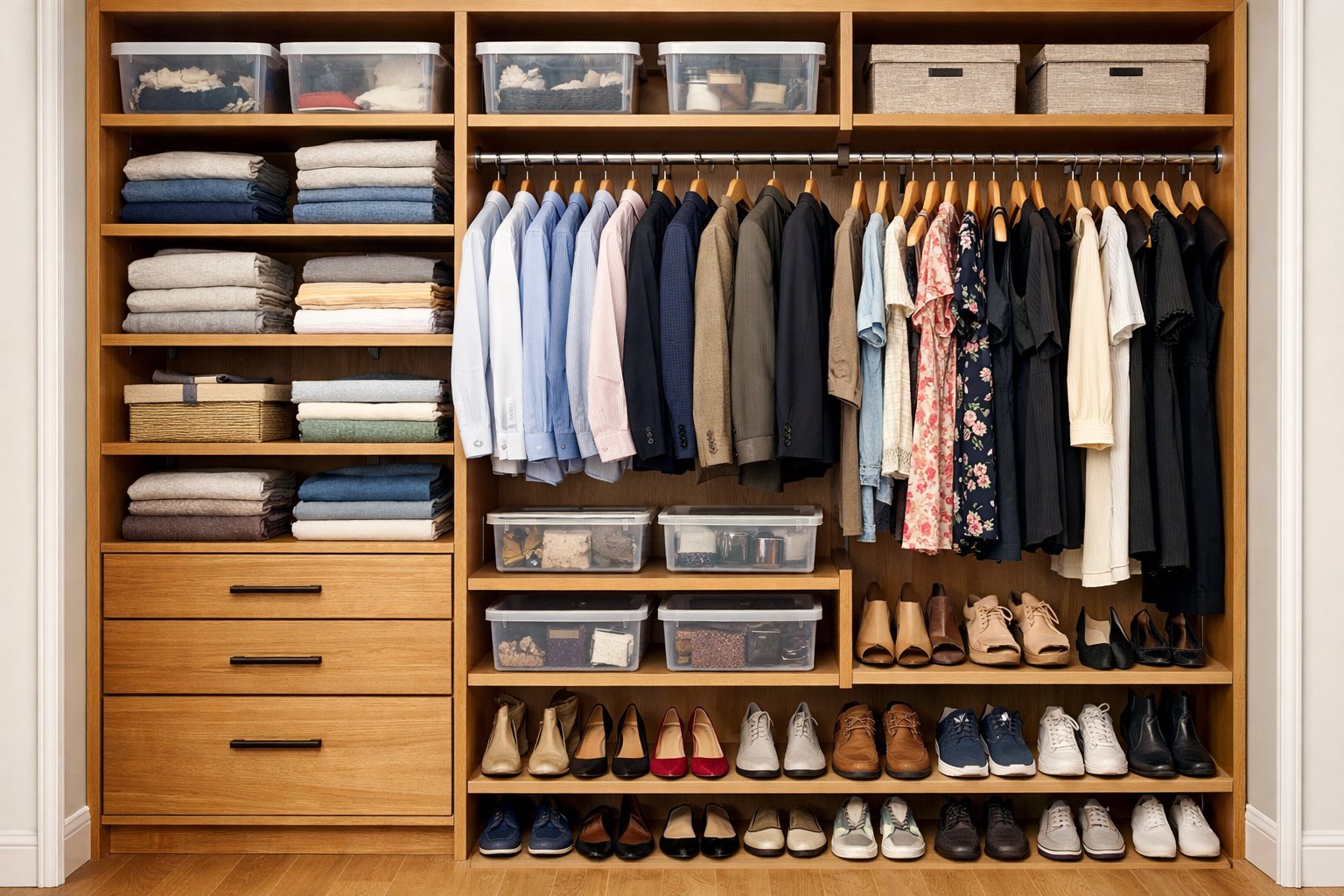

A crowded closet really makes getting ready in the morning feel like a chore. When your clothes are crammed together and you can’t spot what you need, it’s just stressful.
The good news? You can turn any closet into an organized, functional space, even if it’s tiny.
The key to maximizing closet space is mixing smart storage solutions like shelves, containers, and the right hangers with a layout that really fits your life. You don’t need to spend a fortune on a custom system, either.
Just switching to slim hangers, adding a second rod, or tossing some bins in for socks and accessories can seriously boost your storage.
This guide will take you through each step. You’ll figure out how to sort your stuff, plan a layout, and pick products that actually help keep things tidy and easy to grab.
Key Takeaways
- Start by removing items you no longer wear and grouping similar items together to see what storage you actually need
- Use vertical space with additional shelves and double rods while keeping frequently used items at eye level
- Maintain your organized closet by putting items back in their designated spots and reviewing your belongings each season
Clear Out and Assess Your Closet
Before you organize, empty your closet completely. Seriously, take every single thing out.
Put it all on your bed or the floor so you can see what you’re working with. You’ll also want to take some quick measurements while the closet’s empty.
Decluttering for an Organized Closet
Sort your clothes into four piles: keep, donate, sell, and trash. Ask yourself if you wore each piece in the last year.
If you haven’t worn it, it’s probably time to let it go. Be honest about what fits and what you actually reach for.
Clothes that don’t fit your lifestyle or body just eat up space. Hang onto what you love and wear, not the stuff you wish you wore.
Check for damage too. Stains, rips, busted zippers—decide if you’ll actually repair them or if they’re just clutter.
Measuring and Evaluating Your Closet Space
Measure the height, width, and depth of your closet. Write the numbers down somewhere, trust me, you’ll forget.
Check where your closet rod sits and how much space is above and below it. Most reach-in closets are about 24 inches deep, which limits what fits.
Take a look at what features you already have. Count shelves, rods, and drawers.
Spot any wasted vertical space near the ceiling or empty floor space. Are there awkward obstacles like lights, doors, or outlets?
Snap a few photos of your empty closet from different angles. These will help when you’re shopping for organizers later.
Design a Layout to Maximize Space
A good closet layout uses every inch and groups your stuff by type and how often you use it. Even a tiny closet can feel organized with the right design.
Choosing the Optimal Closet Layout
Match your closet layout to what you actually own. Count how many long dresses, shirts, pants, and shoes you have before making changes.
Most people get the most out of their space with a double hang rod setup. Install one rod at about 40 inches for shirts and another at 80 inches for longer stuff.
This basically doubles your hanging space. If you have mostly short items, dedicate more space to double rods.
Got lots of long dresses? You’ll need more single-rod sections. A closet system can help you customize these areas.
Don’t ignore the corners. Corner shelves are perfect for shoes or folded stuff, and you can add a corner rod if there’s enough room.
Using Vertical Space Effectively
Most closets waste the top 12 to 24 inches near the ceiling. Pop a shelf up there for bins with seasonal clothes or things you rarely touch.
Keep a small step stool handy so you can actually reach those high spots.
Install shelves above your hanging rods to use space without sacrificing hanging room. These work well for sweaters, bedding, or storage boxes.
You can DIY with brackets and boards or go for a closet system with built-in shelves.
Stackable bins and drop-front shoe boxes let you build upward instead of outward. Label the bins, or just go for clear ones so you can see what’s inside.
Floor-to-ceiling storage units are great if your closet has high ceilings. Adjustable shelves let you tweak things as your storage needs change.
Creating Dedicated Storage Zones
Divide your closet into zones by category. Everyday clothes go at eye level for easy grabbing. Stash off-season stuff up high or down low.
Create these basic storage areas:
- Hanging zone: Shirts, dresses, pants, and jackets on rods
- Folded zone: Sweaters, jeans, and casual wear on shelves
- Accessories zone: Bags, belts, and scarves on hooks or in bins
- Shoe zone: All footwear in one designated area
Keep similar items together in each zone. All pants in one spot, all shirts in another. This makes getting dressed so much easier.
Use the back of your closet door for lightweight items. Hang an over-the-door organizer with pockets for accessories, or add hooks for bags and hats.
Strategic Shelving for Efficient Storage
Shelves are the backbone of closet storage. They create defined spots for folded clothes, shoes, and accessories.
The right shelf type, smart vertical use, and a few dividers can turn a cramped closet into a surprisingly organized space.
Types of Closet Shelves and Their Placement
Wire shelving is cheap and allows air to circulate, so your closet doesn’t get musty. It’s fine for everyday stuff, but it can leave marks on soft fabrics.
Solid wood or laminate shelves give you a smooth surface and can handle heavier loads. No more weird marks on your sweaters.
Place fixed shelves 12 to 15 inches apart for folded sweaters and tees. Adjustable shelves let you change things up as your needs shift.
Shoes do best on shelves 6 to 8 inches apart. That way, you don’t waste space above them.
Mount your most-used shelves between hip and eye level. It’s just easier to grab things there than bending or stretching all the time.
Lower shelves work for shoes and bins. Save those upper shelves for stuff you barely touch, like out-of-season clothes.
Incorporating High Shelves and Corners
High shelves make use of vertical space that usually gets ignored. Try to get shelves within a foot of your ceiling to squeeze out extra storage.
Store off-season clothes, bedding, or holiday stuff up there. Use lightweight bins with labels facing out, so you don’t have to dig through everything.
Corner shelves fill in those awkward gaps. Triangle or L-shaped units work, or you can try rotating shelves that pull out.
If you use high shelves often, keep a small step stool nearby. It’s safer and way easier than trying to reach or climb.
Utilizing Shelf Dividers
Shelf dividers are surprisingly helpful. They keep stacks from toppling and make your shelves look way neater.
Common divider types:
- Wire dividers that clip onto wood shelves
- Acrylic dividers that slide into place
- Tension-mounted dividers that press between shelves
Stick a divider every 8 to 10 inches to create sections for different clothes. Separate tees from pants, or sort by color if you’re feeling fancy.
They’re great for purses too, which always seem to collapse on themselves. You can even stack sweaters vertically like files, so it’s easier to grab one without wrecking the rest.
Choosing and Arranging Hangers
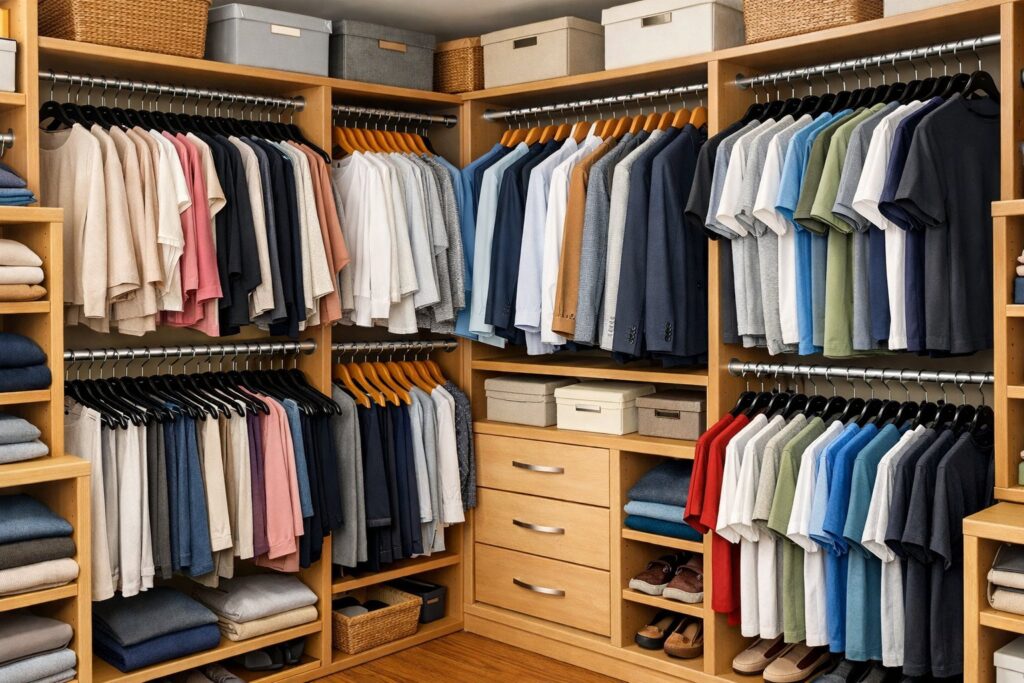
The right hangers can double your closet’s capacity and keep your clothes in good shape. Velvet and other slim hangers save the most space, while specialty hangers keep accessories in check.
Space-Saving Hanger Styles
Velvet hangers are honestly a game changer for saving space. They’re about 0.2 inches thick, compared to plastic ones at 0.5 inches.
You can fit almost twice as many clothes on the same rod. The velvet coating keeps stuff from sliding off, so shirts and dresses stay put without bunching.
You can usually find decent velvet hangers for under a buck each.
Key benefits of velvet hangers:
- Slim profile saves 50% more space than plastic
- Non-slip surface prevents clothes from falling
- No shoulder bumps or creases on garments
- Available with clips or pants bars
Wooden hangers are best for heavy coats and suits. They’re pricier, but they keep the shape of your clothes.
Wire hangers can save space for basics, but they bend easily and can snag your shirts. Not my favorite, honestly.
Organizing Clothes by Type and Length
Group similar items on the same type of hanger. Keep all your button-downs together, dresses in another spot, and so on.
This really helps when you’re in a rush and need to find something fast. Arrange clothes by length too—short stuff like shirts on one side, longer stuff like dresses on the other.
This leaves open space below the short items for shoes or bins. Face all your hangers in the same direction with the hook toward you. It’s a small detail, but it makes things look neater and makes hangers easier to slide.
Organize by category:
- Work clothes
- Casual wear
- Special occasion outfits
- Seasonal items
Try hanging organizers with multiple tiers for things you wear a lot. These let you stash 5 or 6 items in the space of one hanger, which is pretty handy.
Specialty Hangers for Accessories
Multi-tier hangers hold pants, scarves, or ties in vertical rows. A single 5-tier hanger replaces five individual hangers.
You save rod space and keep matching items together. Clip hangers work well for skirts and pants.
Hang pants by the bottom seam to avoid visible crease marks. The clips grip fabric securely, so nothing slips off.
Belt and scarf hangers come with multiple hooks or loops around the frame. One hanger can hold 10 to 15 accessories.
These keep small items visible instead of tangled in drawers. Cascading hooks connect hangers vertically to organize your closet even further.
Attach the hook to your main rod, then hang additional garments below. You can stack four or five items in the same space as one hanger.
Incorporating Bins, Boxes, and Drawer Organizers
Bins, boxes, and drawer organizers can turn a cluttered closet into a functional storage zone. The right containers help you sort items, protect your stuff, and use every inch of space.
Selecting Storage Bins and Boxes
Pick clear plastic bins when you want to see what’s inside without opening each one. These are great for seasonal things like sweaters, swimsuits, or holiday accessories.
Label each bin on the front and top, so you can spot what’s inside from any angle. Storage bins with handles are easier to pull down from high shelves.
Look for stackable bins in a uniform size. This gives your closet a clean look and helps you use vertical space.
Drop-front shoe boxes make footwear easy to grab while keeping pairs dust-free. The front panel opens, so you don’t need to move all the other boxes in your stack.
These boxes work for sneakers, flats, and low-heeled shoes. Fabric bins look better on open shelving if you want a softer vibe.
Pick fabric bins that match your closet’s color scheme. Collapsible ones fold flat when you’re not using them.
Drawer Dividers and File Folding Techniques
A drawer organizer keeps clothing types separate, so things don’t get mixed up. Use drawer dividers to create spots for underwear, socks, or accessories.
Adjustable dividers let you change compartment sizes based on what you need to store. File folding stands items upright in rows instead of piling them flat.
When you file fold shirts, pants, or shorts, you see every piece at once. This way, you don’t have to dig through piles and wrinkle everything at the bottom.
To file fold a shirt, lay it flat and fold the sides toward the center. Fold the bottom up in thirds to make a little rectangle that stands on its own.
Place folded items vertically in your drawer, folded edge up. Drawer dividers help keep file-folded items upright and separated by category or color.
Organizing Small Items and Accessories
Small drawer organizers are perfect for jewelry, belts, scarves, or sunglasses. Velvet-lined compartments stop delicate pieces from scratching.
Use narrow dividers for rings and wider sections for watches or bracelets. Acrylic drawer organizers let you see what’s inside without opening each compartment.
They’re handy for makeup, hair accessories, and even small electronics like earbuds. Stack shallow organizers in deep drawers to use vertical space.
Store accessories in labeled boxes on shelves if your drawer space is tight. Group similar things together: one box for hats, another for gloves, and a third for scarves.
Honeycomb dividers create little cells for socks and underwear. Each item gets its own spot, so things stay organized even after a few wears.
Smart Shoe Storage and Specialty Solutions
Shoes can eat up closet space and create clutter if you don’t store them right. Good storage systems keep your shoes organized, protected, and easy to grab.
Maximizing Shoe Storage Options
Your closet can fit more shoes than you might think with the right methods. Start by sorting shoes by how often you wear them.
Keep your everyday pairs at eye level for quick access. Drop-front shoe boxes stack up and let you see your shoes without unstacking everything.
These clear boxes protect shoes from dust and keep them visible. They work for sneakers, flats, and casual shoes you rotate often.
Wall-mounted shoe shelves use vertical space you might ignore. Install shelves from floor to ceiling in narrow closet sections.
Space them 6 to 8 inches apart for sneakers and flats or 12 to 14 inches for heels and boots. Store seasonal shoes in labeled bins on upper shelves or under your bed.
This frees up closet space for current footwear. Swap bins when the seasons change so your closet setup keeps working for you.
Shoe Racks and Accessible Solutions
A tiered shoe rack fits lots of pairs in a small space. Metal or wood racks with three or four tiers hold 9 to 12 pairs and take up less than two square feet of floor space.
Put these racks on your closet floor or in the entryway for shoes you wear all the time. Slanted shoe shelves keep pairs visible and stop shoes from getting piled up.
These are especially nice for heels and dress shoes you want to keep in good shape. You can find standalone units or add slanted shelves to a bigger closet system.
Boot storage needs a little extra care to keep them looking good. Use boot shapers or clip boots upside down on hangers to avoid creases.
A dedicated boot rack with tall slots keeps them upright and organized. Wire shelving allows air to move around your shoes, which helps prevent odors and moisture.
Adjust shelf heights to fit all the different shoe types in your collection.
Utilizing Garment Racks and Over-the-Door Organizers
A garment rack with a bottom shelf does double duty in walk-in closets. Hang tomorrow’s outfit on top and put matching shoes below.
This setup can help you plan outfits and save time in the morning. Over-the-door organizers add storage without tools or permanent changes.
Fabric or clear plastic pockets hold shoes vertically on any standard door. Each pocket usually fits a pair of flats or sandals.
This solution works great in small closets where floor space is tight. Hanging organizers attach to your closet rod and create pockets for shoes under your hanging clothes.
These fabric organizers often have 10 to 16 pockets and keep lightweight shoes like flip-flops or ballet flats tidy. They’re cheaper than most other options and easy to move around.
Put heavier shoes in the lower pockets to keep the organizer from getting top-heavy. Use upper pockets for accessories like shoe care supplies, gloves, or scarves.
Maintenance and Long-Term Organization Tips
An organized closet doesn’t just stay that way on its own. Quick weekly checks and seasonal reviews help stop clutter from creeping back in.
Maintaining an Organized Closet
Take 10 minutes each week to keep your closet in shape. Put clothes back in their assigned spots after wearing them.
Hang things on the right hangers right away instead of tossing them on a chair. Use the one-in-one-out rule when you buy new clothes.
If you bring home a new shirt, take an old one out. This keeps your closet from getting stuffed.
Weekly tasks:
- Return everything to its proper zone
- Straighten folded stacks on shelves
- Check for clothes that need washing or repairs
- Empty laundry hampers before they overflow
Sort through bins and baskets once a month to clear out things you don’t need. Wipe down shelves and vacuum closet floors every few weeks to keep dust away.
Label storage containers clearly so everyone in the house knows where things go.
Seasonal Closet Reviews and Adjustments
Look over your closet setup at the start of each season. Move heavy winter coats to higher shelves or bins when spring rolls around.
Bring summer dresses to eye level when it gets warm. Store off-season clothes in clear bins with labels.
Pack winter sweaters with cedar blocks to keep moths away. Keep bins on top shelves or under beds so your main closet space stays open for current clothes.
Seasonal checklist:
- Switch out seasonal clothing every three months
- Donate things you didn’t wear all season
- Check for damaged clothes that need to go
- Clean closet storage bins before refilling
- Update your closet layout if your needs changed
Try on clothes from storage before the new season hits. This way, you can spot anything that doesn’t fit or suit your style before you need it.
Recommended Closet Organization Products
The right products can really change a messy closet into a smooth storage system. Look for space-saving hangers, clear bins, dividers for shelves, and dedicated shoe storage to make the most of every inch.
Best Slimline Hangers for Saving Space
Slimline hangers are thinner than regular plastic hangers. They’re usually about a quarter-inch thick, while standard ones are half an inch or more.
You can fit almost twice as many clothes on the same rod. A standard closet rod that holds 40 regular hangers might fit 70 to 80 slimline ones.
Velvet-flocked slimline hangers work for most clothing types. The soft coating keeps clothes from slipping off, which helps with tank tops or silky things.
They also protect delicate items from creasing. Look for hangers that hold at least 10 pounds.
Metal hooks last longer than plastic ones. Some slimline hangers have notches for straps or loops.
Buy matching hangers instead of mixing styles. It looks cleaner and makes sliding clothes easier.
Sets of 50 velvet slimline hangers usually cost $20 to $35.
Top Storage Bins and Boxes
Clear plastic bins let you see what’s inside without opening them. This saves time when you’re searching for something and helps you stay organized long term.
Stackable bins work well for upper shelves where you keep seasonal stuff. Pick bins with lids that lock together so they don’t topple over.
Standard sizes range from 6 to 66 quarts, so you can find what fits. Fabric bins with handles look better on open shelves than plastic ones.
They’re easier to pull down from high spots. Canvas or linen bins in neutral colors blend in with most closet styles.
Label every bin clearly on the front and top. You’ll want to read labels from different angles depending on where bins sit.
Use a label maker or write with a permanent marker on sticky labels. Match bin sizes to your shelves by measuring depth and width before you buy.
Bins should fit snugly without wasting space or hanging over the edge.
Effective Shelf Dividers and Drawer Organizers
Shelf dividers stop stacks of clothes from falling over. Wire or acrylic dividers slide onto shelves and split them into sections.
Adjustable dividers give you the most flexibility. Move them around as your storage needs change.
They work especially well for sweaters, jeans, and bags on closet shelves. Drawer organizers keep small things from getting jumbled together.
Spring-loaded expandable dividers fit drawers of different widths without tools.
Key drawer organizer types:
- Honeycomb designs for underwear and socks
- Shallow trays for jewelry and accessories
- Deep compartments for scarves and belts
- Adjustable strips for custom sections
Bamboo or plastic organizers both do the job. Bamboo looks nicer but costs a bit more. Plastic is lighter and easier to wash.
Shoe Storage Solutions
A shoe rack is the simplest fix for floor storage. Tiered racks hold 9 to 30 pairs, depending on size.
Metal racks with angled shelves are better than flat ones because you can actually see each pair. Over-the-door organizers use space you might ignore.
Clear pocket organizers hold 12 to 24 pairs and keep shoes visible. This works well in small closets where floor space is at a premium.
Stackable shoe boxes protect expensive or seasonal shoes from dust. Drop-front boxes let you grab shoes without unstacking everything else.
They’re pricier than basic boxes but keep shoes in better shape. Under-bed shoe storage stretches your closet capacity.
Rolling bins with clear tops slide under your bed and usually hold 12 pairs. This way, off-season shoes stay accessible but out of your main closet space.
Measure your shoes before buying storage. Men’s size 12 and women’s boots need deeper compartments than average.
Standard shoe storage usually fits up to women’s size 10 and men’s size 11.
Frequently Asked Questions
Small closets need smart tricks like vertical storage and slim hangers. Organizing by category and season keeps things easy to reach.
Budget options like bins and hooks can work just as well as pricier systems when you use them thoughtfully.
What are effective strategies for maximizing storage space in small closets?
Use every inch of vertical space, from the floor up to the ceiling. Install shelves just above the floor instead of tossing things on the ground, which helps keep clutter at bay and makes cleaning a little less annoying.
Add a second closet rod to double your hanging area. Put one rod high up for tops, and another a few feet above the floor for pants and skirts.
Try using the backs of closet doors for storage. Over-the-door organizers or utility tracks hold shoes, accessories, or random small stuff without eating up any closet space inside.
Switch to slimline hangers, which free up several inches of rod space. These thinner hangers take up less room than the chunky plastic or wooden ones, but still keep your clothes in good shape.
How can you categorize clothing effectively in a closet for easy accessibility?
Start by grouping your clothes by type. Keep all shirts together, all pants in one spot, and all dresses in another, so you don’t have to dig through unrelated items.
Within each type, sort by color or season. Arrange things from light to dark, or stash winter clothes separately from summer stuff. Off-season items can live on higher shelves or in bins.
Use shelf dividers to keep stacks of folded clothes from falling over. These little tools make separate spots for things like sweaters, jeans, or gym clothes.
Label bins and pick clear containers so you can see what’s inside without guessing. This way, you find what you need on the first try and it’s easier to put things back where they belong.
What are affordable solutions for closet organization that don’t compromise on efficiency?
Basic storage bins from discount stores do the job just as well as pricey ones. Grab sturdy plastic bins with lids for things you keep on shelves or the floor, and you can usually find them for under $10 each.
Command Strip hooks cost only a few bucks and give you instant hanging space without making holes in the wall. They’re perfect for purses, scarves, belts, or even jewelry, and work especially well if you’re renting.
A basic shoe rack organizes your shoes for less than $20. If you’re short on floor space, under-the-bed shoe boxes are a clever and cheap option.
You can make your own shelf dividers out of cardboard or old bookends. It barely costs anything and keeps folded stacks tidy without needing custom stuff.
Which closet storage bins and containers are best for keeping items neatly sorted?
Clear plastic bins let you see what’s inside without opening each one. Go for stackable ones with lids that actually close, so you can maximize shelf space. They’re handy for accessories, seasonal things, or any small items you want to corral.
Fabric bins with handles work well for shelves you reach for a lot. They’re lighter than plastic, easier to pull down, and you can pick neutral colors to keep things looking calm and tidy.
Divided storage containers keep small things from getting lost in the shuffle. Use them for socks, underwear, belts, or jewelry. Some even let you move the dividers around to fit your stuff better.
For floor storage, heavy-duty bins with lids are your best bet. They keep dust out and keep everything together, instead of letting stuff creep across the floor.
Could you suggest methods to organize a wardrobe when hangers are not an option?
Try file folding, which Marie Kondo made pretty popular. Fold clothes so they stand upright in drawers or bins, letting you see everything at once and actually fit more in.
Shelves with dividers help you create neat stacks of folded clothes, and the dividers stop everything from toppling when you grab something in the middle.
Store folded items in open baskets or fabric bins on shelves. This keeps categories separate and makes it easy to pull out a whole basket when you need it.
Vacuum-sealed storage bags shrink bulky things like sweaters or winter coats. These bags can cut down the volume by up to 75% and protect your clothes from moisture or pests.
What layout techniques can be used to enhance space utilization in compact closet designs?
First, grab a tape measure and check your closet’s dimensions before you buy any organizers. Seriously, it’s the only way to avoid ending up with stuff that just doesn’t fit.
Keep the things you grab all the time right at eye level. Toss the out-of-season or rarely touched stuff up high or way in the back.
Try putting shelves a few inches above the floor instead of piling things directly on it. This simple move gives every item a spot and lets you vacuum underneath without hassle.
Stick some battery-powered LED lights on the shelves. It’s amazing how much easier it is to find things when you can actually see what’s lurking in the corners.
If your closet’s bursting, move a few items out. Maybe set up a garment rack in your bedroom to show off favorite pieces and make some breathing room in the closet.