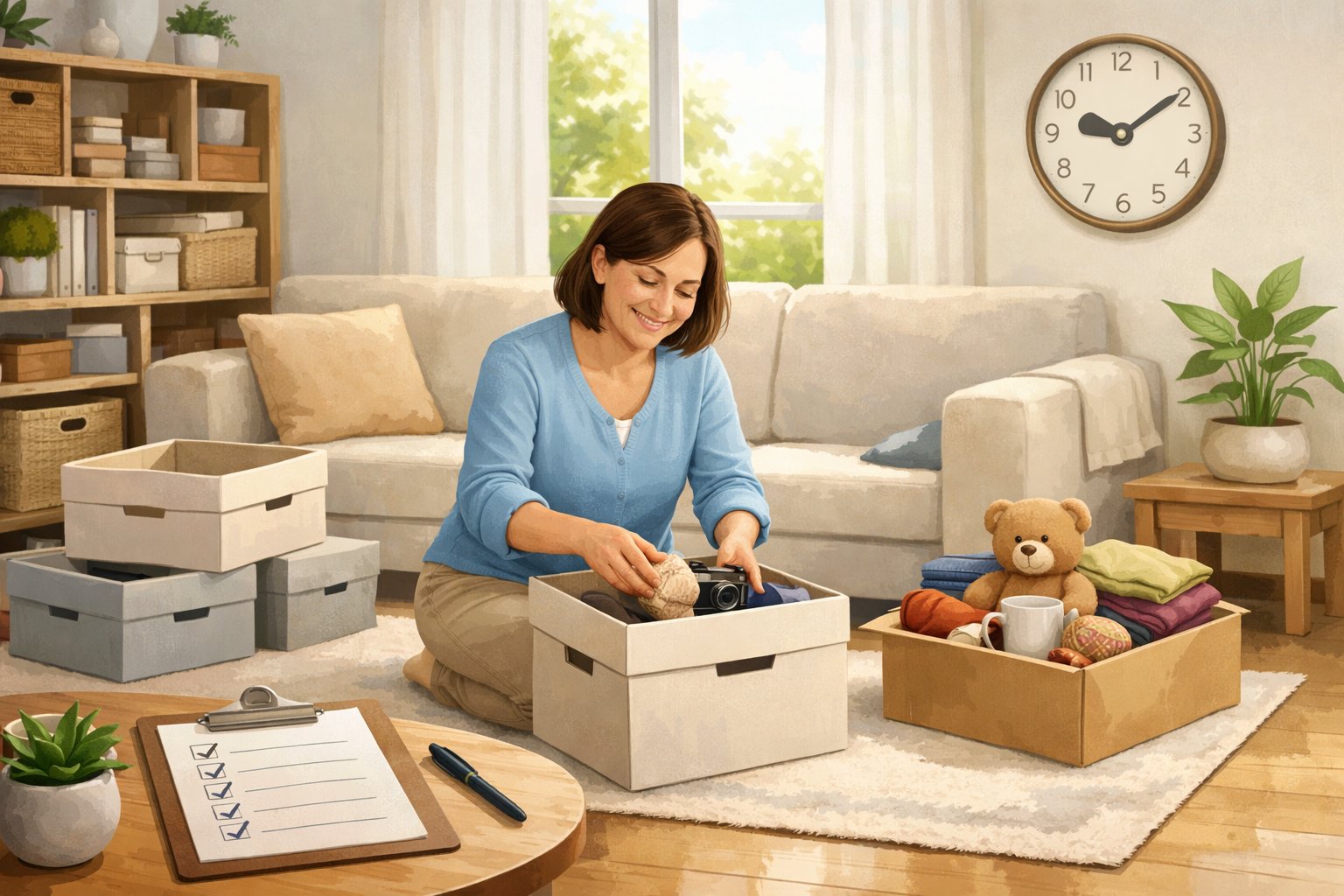

Decluttering your home doesn’t have to feel impossible. Most people look at their cluttered spaces and freeze before they even start.
The thing is, clutter builds up slowly over time, and you can clear it in much the same way.
The key to decluttering without feeling overwhelmed is to start small, work in short sessions, and focus on one area at a time. You don’t have to transform your entire house in a single weekend.
When you break the process into small steps and let yourself go slow, decluttering feels a lot more doable. You’ll pick up simple methods that actually fit your schedule and real life.
This guide offers practical ways to clear your space without all the stress. You’ll get tips for finding the right mindset and room-by-room strategies.
Whether you have 20 minutes or a few hours, you can make real progress toward a calmer home.
Key Takeaways
- Start with small tasks that take 20 minutes or less to build momentum and avoid feeling overwhelmed
- Touch every item in a space and ask yourself if you use it or love it before deciding to keep it
- Create a simple system for organizing what remains and practice regular habits to maintain a clutter-free home
Understanding Decluttering and Its Benefits
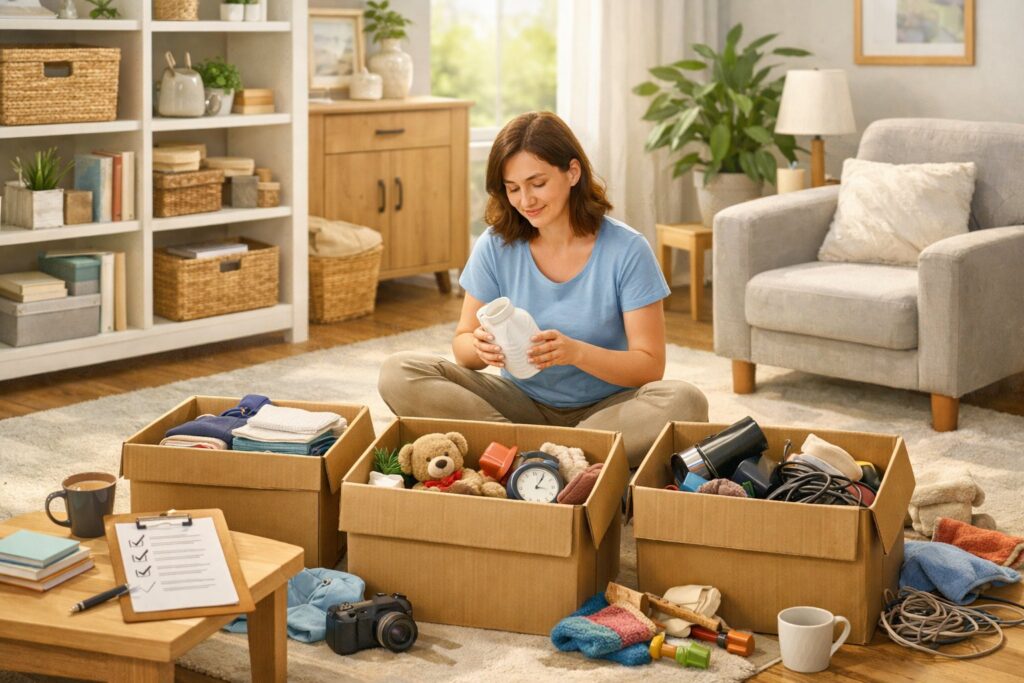
Decluttering means removing things you don’t need so your space actually works for your daily life. This process brings real benefits for your mental health and how well your home functions.
But honestly, a lot of people struggle to figure out where to start, or how to deal with the emotional side of letting go of stuff.
What Is Decluttering?
Decluttering is just sorting through your stuff and getting rid of things that don’t serve a purpose anymore. You go through your spaces and decide what stays, what gets donated or sold, and what needs to go in the trash.
The goal isn’t to get rid of everything. Instead, you want a home where each item has a clear function and its own spot.
That means keeping what you actually use and letting go of things that just fill up space. When you declutter, focus on one area at a time—maybe just a single drawer or the top of your desk.
Breaking the work into small tasks makes everything less overwhelming. You’ll see progress pretty quickly, which helps a lot.
Benefits of a Clutter-Free Home
A clutter-free home can lower your stress and anxiety. When you can find what you need without digging through piles, you feel more in control.
Cleaning gets easier too. Fewer things on surfaces means you can dust and vacuum faster. You spend less time organizing and more time on stuff you actually like.
You save money because you know exactly what you own. People often buy duplicates just because they can’t find something in the mess.
Physical health improves when your space is organized. Less dust and clutter means better air quality, and you reduce tripping hazards.
Your mind feels clearer in a calm space. A lot of people say they’re more focused and productive when their home isn’t full of visual distractions.
Common Causes of Clutter
Emotional attachment makes decluttering tough. You might keep things because they remind you of someone or a certain time, even if you never use them.
“Just in case” thinking leads to holding onto items you might need someday. This fills your home with stuff that rarely gets used.
Lack of storage systems means clutter builds up fast. Without spots for your things, they end up scattered everywhere. You need clear homes for your stuff to keep things in order.
Busy schedules make it hard to stay organized. When you’re rushing around, putting things away feels like extra work, and stuff piles up quickly.
Shopping habits add to the problem. Buying more than you need or grabbing things on impulse just creates more clutter. Sales and deals can be tempting, but where will all that stuff go?
Getting Into the Right Mindset
Your thoughts about clutter really shape how you deal with it. If you shift your mindset, decluttering feels less stressful and a lot more manageable.
The right mental approach helps you set goals that work for you and keeps you motivated along the way.
Overcoming Overwhelm and Perfectionism
You don’t need a perfect home. You just need a home that works for you.
Lots of people put off decluttering because they think they have to finish everything at once. That kind of pressure makes it hard to even start.
Decluttering isn’t a one-time event. It’s something you do over time.
Instead of aiming for perfection, focus on making progress. One drawer is progress. One shelf? That matters too.
Overwhelm usually comes from thinking about the whole picture. Break it down. Pick a small space. Spend 15 minutes there. When the timer goes off, stop.
This way, you avoid burnout and actually build confidence. Remember, clutter took a while to pile up. It’ll take time to clear, and that’s totally fine.
Setting Realistic Decluttering Goals
Clear goals help you move forward. Without them, you’ll just move things around and call it a day.
Start by asking yourself why you want to declutter. Maybe you want a calm bedroom, or space for a home office, or just less stress when you walk in the door.
Write down your reason and keep it somewhere you can see it. Next, set specific goals:
- Time-based: “I’ll declutter for 30 minutes every Saturday morning”
- Space-based: “I’ll clear out my closet by the end of the month”
- Item-based: “I’ll donate 50 items this week”
Pick goals that actually fit your life. If you only have 10 minutes a day, that’s still enough. Small, steady efforts work better than rare, exhausting marathons.
Building Motivation and Accountability
Motivation comes and goes. Habits stick around.
Track your progress in a way you can see. Take before and after photos, or keep a list of areas you’ve finished. Write down how many bags you’ve donated.
Seeing progress reminds you that you’re making changes, even if they feel small. Find support if you can. Ask a friend to help, join an online group, or share your goals with someone who’ll check in.
Accountability makes it harder to give up. Give yourself rewards after you finish a room—maybe a favorite snack or an episode of a show you love.
Set regular check-ins. Every week, spend a few minutes looking at what you did and planning your next small step. These mindset tips help you stay on track when motivation dips.
Step-by-Step Decluttering Methods
Breaking decluttering into clear steps makes the work feel manageable. A structured approach keeps you focused and helps you see real progress.
Start Small: Tackling One Area at a Time
When you start, pick one small area. Maybe a single drawer, a closet shelf, or your nightstand.
Don’t start with a whole room or your entire house. Set a timer for 15 or 30 minutes and work in that one spot until the timer stops.
This time limit keeps you from burning out. Pick areas you use every day first—kitchen counters, bathroom drawers, or your dresser.
When you clear these spaces, you notice the results right away. Finish one small area, then move to the next. Each finished spot builds your confidence.
Establishing a Decluttering Schedule
Create a schedule for when you’ll declutter. Maybe it’s 30 minutes each morning or an hour on Saturday afternoons.
Consistency matters more than the total time. Put your decluttering sessions on your calendar like any other appointment.
Treat this time as important. Plan which areas you’ll tackle each week. For example:
- Week 1: Kitchen drawers and pantry
- Week 2: Bedroom closet and dresser
- Week 3: Bathroom cabinets
- Week 4: Living room shelves and tables
Stick to your schedule, but stay flexible. If you miss a session, just pick up where you left off—no guilt needed.
Using Decluttering Methods and Checklists
Having a method makes decision-making easier. The three-box method is simple: get three boxes labeled “Keep,” “Donate,” and “Trash.”
Place each item in one of these boxes as you go. Another approach is the time-test rule: ask yourself if you’ve used the item in the last three months, or if you’ll use it in the next three months.
If the answer’s no to both, it’s probably time to let it go. A checklist keeps you organized and focused. Make a list of every area in your home that needs attention.
Check off each space as you finish. That visual progress is surprisingly motivating. You can also declutter by category—gather all your books, clothes, or kitchen tools in one place.
This shows you how much you actually have and makes it easier to decide what stays.
Practical Decluttering Techniques
Breaking decluttering into specific methods helps you tackle clutter without getting stuck. These techniques give you systems to sort items, spot what you use, and group similar things together.
The Four-Box or Three-Box System
The box method gives every item a clear category. Grab three or four boxes and label them: Keep, Donate, Trash, and maybe Relocate.
When you pick up an item, put it in one of these boxes right away. This stops you from making messy piles all over the room.
The relocate box is for things that belong in another room. You can put those away later in one trip. Start small, like with a single drawer or shelf.
Pick up each item and ask yourself when you last used it. If it’s been a year, chances are it belongs in the donate or trash box.
At the end of your session, empty all the boxes. Put keep items back in their spots, take donate items to your car, and throw out the trash right away.
This way, you finish the cycle and see visible progress.
Applying the 80/20 Rule
The 80/20 rule basically says you use about 20% of your stuff 80% of the time. Most of us wear the same few outfits, grab the same dishes, and reach for the same tools over and over.
Take a look at your belongings and notice what you actually use every week or month. Those items really deserve their spot in your home.
The rest, the 80% you barely touch, just takes up space. Start by grabbing the things you use all the time and set them aside.
Everything left becomes a candidate for removal. You might find out you own five spatulas but only ever use one.
You don’t need three coffee makers if you only use one. Let go of books you know you’ll never reread or clothes that haven’t left the closet in months.
Group Like Items and Categorize
When you gather similar items in one place, you really see what you own. Pull out all your books, kitchen tools, or craft supplies from every corner and lay them out where you can see everything.
You’ll probably spot duplicates you forgot about. Three tape dispensers? Six half-used notebooks? It’s easy to miss until you put them together.
Decide how many of each thing you actually need. Keep the best ones and let the rest go.
This works especially well in the kitchen, bathroom, or your home office, where duplicates pile up fast. Store what you keep in one spot, like all batteries in one drawer or all cleaning supplies in one cabinet.
It’s so much easier to find things this way, and you won’t end up buying more just because you couldn’t find what you already had.
Real-Life Examples and Room-by-Room Strategies
If you start with high-impact spaces like the kitchen or bedroom, you build momentum. Each room calls for different strategies, depending on what you store there and how you use it day to day.
Decluttering the Kitchen
The kitchen runs best when you can find things quickly. Start with spices and expired food items, since those are easy wins.
Check dates on canned goods, condiments, and spices you haven’t used in ages. Then go for your utensil drawer. Odds are, you have three potato peelers or five wooden spoons and only need one or two.
Keep your most-used tools close to where you use them. Items to declutter:
- Duplicate utensils and gadgets you never use
- Chipped plates, cracked bowls, or random containers
- Cookbooks you’ve never opened (snap photos of favorite recipes first)
- Expired pantry items and old spices
Create zones based on tasks. Store coffee stuff near the coffee maker. Baking items go together in one cabinet. It just makes cooking less of a hassle and shows you what you actually need.
Clearing Out the Bedroom and Closet
Your bedroom should feel calm and restful. Start by moving out anything that doesn’t belong, like paperwork, dishes, or laundry that needs to go elsewhere.
The closet usually needs the most work. Pull out clothes you haven’t worn in a year. If it doesn’t fit or make you feel good, it might be time to let it go.
Create three piles: keep, donate, and trash. If you wouldn’t buy it again at full price today, just donate it. That trick helps you avoid the “maybe someday” trap.
Sort what stays by type and color. Duplicates jump out, and you’ll get dressed faster in the morning. Store out-of-season clothes in bins under the bed or on high shelves.
Simplifying the Living Room and Entryway
The living room ends up as a catch-all for everyone. Hunt for things that wandered in from other rooms: toys, books, mail, or shoes by the door.
The entryway sets the mood for your house. Keep only what you use every day, like keys, one coat per person, and your go-to shoes. Put up hooks or a small table to give these things a home.
Limit decorative stuff to pieces you truly love. Keep books you’ll actually read again. Remotes need one spot, maybe a basket on the coffee table.
Create a “launch pad” in the entryway with spots for bags, shoes, and coats. That way, clutter doesn’t follow you into the rest of the house.
Managing Sentimental and Emotional Items
Sentimental stuff is always the hardest. You don’t have to keep everything to honor your memories. Take photos of bulky items like old jerseys or artwork before letting them go.
Set a memory box with a size limit, maybe one bin per person. When it’s full, you have to remove something before adding more. This keeps only the most meaningful things.
Ask yourself with each sentimental item:
- Does this bring me joy, or just guilt?
- Would I keep this if I moved tomorrow?
- Can I honor this memory in a smaller way?
For kids’ artwork, take photos and make a digital album or photo book. You save the memory without keeping piles of paper forever. Hold onto a few special pieces from each year.
Some things just feel too important to toss. That’s okay. The goal isn’t strict minimalism, it’s about keeping what matters and letting go of what doesn’t serve you anymore.
Organizing What Remains
Once you’ve decluttered, you need to organize what’s left so it’s easy to find and use. Good storage and smart placement create spaces that stay tidy longer.
Optimizing Storage Solutions
Match your storage to what you’re actually keeping. Use vertical space with wall-mounted shelves or tall bookcases to free up the floor. A storage ottoman in the living room works for seating and hiding blankets or magazines.
Under-bed containers help in bedrooms for seasonal clothes or extra linens. Clear bins let you see what’s inside without opening them, which saves time.
Label each container on the top and side, so you can tell what’s in there from any angle. Install hooks on walls or inside closet doors for bags, keys, and things you grab often.
Add a lazy Susan in corner cabinets to reach stuff easily. Use the space behind doors for hanging organizers for shoes, cleaning supplies, or toiletries.
Using Bins, Baskets, and Drawer Organizers
Bins and baskets keep similar things together and stop small stuff from vanishing. Go for open baskets for daily-use items, like fruit or toys. Lidded bins work for seasonal things you don’t need often.
Drawer organizers split up space for utensils, office supplies, or bathroom products. Adjustable dividers in kitchen drawers let you customize compartments for different tools.
Use small containers inside drawers for rubber bands, paper clips, and other tiny odds and ends. Measure shelves and cabinets before buying bins, so they actually fit.
Stackable bins are great in closets and pantries where you need to use vertical space.
Maximizing Space and Creating Functional Areas
Group items by how you use them to create functional areas. Keep cooking utensils near the stove, coffee supplies by the coffee maker, and cleaning products together under the sink or in a closet.
Set up zones for different activities. Maybe a homework station with supplies in one spot, and a reading nook with books in another. Use furniture with built-in storage, like beds with drawers or coffee tables with shelves.
Try to keep counters and surfaces mostly clear. Store appliances you don’t use every day in cabinets. Leave out only what you use a lot. This makes rooms look bigger and cuts down on visual clutter.
Staying Clutter-Free for the Long Term
Keeping your home organized after decluttering takes daily habits, some ground rules for new stuff, family teamwork, and responsible ways to get rid of things you no longer want.
Maintenance Habits and Routines
Daily tidying stops clutter from building up again. Take 10 or 15 minutes each night to put things back where they belong. It’s a small habit that keeps surfaces clear and mess from piling up.
Do a weekly reset in busy areas. Spend about half an hour every Sunday checking entryways, kitchen counters, and living spaces. Return things to their homes and deal with new clutter before it spreads.
Schedule a seasonal review every three months. Go through closets, storage, and drawers to pull out what you haven’t used. This keeps spaces from filling up again.
Label containers and shelves so everyone knows where things go. Clear labels make it easier for everyone to keep up the system.
Build clean-up time into activities, especially with kids. End playtime, crafts, or cooking with a quick reset. It teaches good habits and keeps clutter from taking over.
Handling Incoming Items and One-In, One-Out Rule
The one-in, one-out rule keeps things balanced. When you buy something new, let go of a similar item. Buy a new shirt, donate an old one. This stops clutter from creeping back in.
Be picky about what comes into your space. Before bringing something home, ask yourself: Do I need this? Where will it go? What will I get rid of to make space?
Stop clutter at the door. Sort mail right away, preferably over a recycling bin. Keep a donation box in your closet for things you decide to let go.
Deal with paperwork immediately instead of making piles. Resist free stuff and impulse buys. Just because it’s free doesn’t mean it deserves a spot in your house.
Wait 24 hours before buying non-essentials to avoid bringing in clutter you don’t need.
Involving Family and Using Professional Help
Everyone in the house needs to pitch in to keep things organized. Hold a family meeting, explain your systems, and give everyone age-appropriate tasks.
Use pictures or symbols for labels if your kids can’t read yet. That way, they know where things go without always needing help.
Make tidying a team effort with clear expectations. Kids can handle their own rooms, adults take care of shared spaces. Set a regular clean-up time so it becomes a habit.
If you need extra help, hire a professional organizer. They can visit a couple times a year to refresh your systems and keep you from getting overwhelmed.
Some organizers offer monthly check-ins or virtual sessions. That can help you stay on track and tweak your systems as your needs change.
Selling, Donating, and Disposing Responsibly
Sell valuable stuff on Facebook Marketplace or similar sites. Take clear photos, write honest descriptions, and price things to sell quickly. No point letting them sit around forever.
Donate usable items to local charities, shelters, or thrift stores. Call ahead to check what they take and their drop-off hours. Keep a donation box handy so you can add things as you find them.
Dispose of broken or unusable items the right way. Check your local rules for electronics, batteries, and hazardous stuff. Lots of communities have special collection days for things that can’t go in the regular trash.
Once you decide to let something go, act fast. Put donations in your car and drop them off during your next errand. List things for sale right away instead of storing them “for later.” The faster things leave, the less chance they’ll sneak back into your life.
Frequently Asked Questions
Starting to declutter brings up a lot of questions about methods, timing, and the emotional side of things. Here are some answers to the most common concerns and situations.
What are the initial steps to take when starting to declutter a home for someone feeling overwhelmed?
Pick one small area to start with. Go for a single drawer, a nightstand, or just the top of your desk instead of a whole room. That way, it feels doable and you get a quick win.
Set a timer for 15 to 30 minutes for your first session. When it goes off, you can stop or keep going if you feel like it. Short bursts help you avoid burnout and make it easier to fit decluttering into your day.
Grab three containers before you begin. Label them “keep,” “donate,” and “trash.” Every item you touch goes in one of these right away.
Stay in your chosen space until you finish. Don’t run around the house putting things away in other rooms. Make a “belongs elsewhere” pile and deal with it after you finish your current area.
What is the ‘core four’ method, and how can it be applied to home decluttering?
The core four method sorts every item into four categories: keep, donate, sell, and trash. Some folks simplify it to three by combining donate and sell, but the gist is the same.
Set out four boxes or bags in your workspace. Label each one so you don’t have to overthink where stuff goes.
Pick up each item once and decide right away which box it belongs in. Don’t linger or second-guess too much, just make the call.
If you keep something, it should have a clear home and purpose. If you can’t say where it goes or when you’ll use it, maybe it’s time to let it go.
Be honest with yourself about what you actually use or love. The donate box is for stuff that still works but doesn’t serve you anymore.
The sell pile is for things with real value you can list quickly. Toss broken, expired, or useless things straight into the trash.
Can you provide a comprehensive checklist for clutter-free home organization?
Start at the entryway. Clear out old shoes, expired coupons, and junk mail.
Keep only the essentials like keys, daily bags, and seasonal coats. Hooks and a small basket for incoming mail help a lot.
Head to the kitchen. Toss expired food from the pantry and fridge.
Get rid of duplicate utensils, broken appliances, and mismatched containers. Only keep dishes and cookware you actually use.
In bedrooms, go through clothes and pull out anything that doesn’t fit or hasn’t been worn in a year.
Clear nightstands of old magazines and random receipts. Sort dresser drawers by category, not just stuff everything in.
For bathrooms, throw out expired meds and old cosmetics. Ditch empty bottles and samples you know you’ll never use.
Keep cleaning supplies under the sink in bins so they’re easy to find. It just makes life easier.
In living spaces, sort books, magazines, and entertainment stuff. Remove broken electronics and outdated media.
Organize whatever’s left on shelves or in cabinets. Don’t let it pile up again.
Tackle storage areas last. These spots usually hold things from all over the house.
Sort through seasonal stuff and keep only what you use. If you haven’t opened a box in years, maybe it’s time to say goodbye.
What strategies exist for decluttering a home quickly for individuals who have limited time?
Try the “trash bag tango.” Walk through each room with a trash bag and grab obvious garbage, broken stuff, and anything expired.
This takes about 10 minutes per room and you see results right away. It’s oddly satisfying.
The “one minute rule” can help too. If something takes less than a minute to put away, just do it instead of setting it down.
That way, you stop new clutter from piling up while you work on the old mess.
Clear off surfaces first for quick wins. Empty kitchen counters, tables, and desks. It makes a bigger difference than you’d think.
Set a timer for 15 minutes and declutter in short bursts during your week. Six of those sessions gets you 90 minutes without feeling overwhelmed.
Focus on high-traffic spots where clutter collects fastest. Entryways, kitchen counters, and bathroom sinks are worth your limited time.
How can someone with a hoarding tendency approach decluttering in a manageable way?
Start with expired or broken things you know you should toss. Spoiled food, old medications, and broken electronics are usually easier to let go of.
This helps you practice making decisions without too much emotional weight. It’s a good place to start.
Ask a trusted friend or professional organizer to help out. Having someone by your side keeps you on track and gives you a reality check if you get stuck.
Sometimes they’ll stop you from pulling things back out of the discard pile. It really helps.
Take photos of sentimental stuff before letting it go. A digital album saves the memory without taking up space.
Set limits for the things you tend to collect. Maybe decide you’ll keep 20 mugs or three boxes of craft supplies.
Physical limits force you to pick what matters most. It’s not easy, but it works.
If you find yourself struggling with the emotional side, consider talking to a therapist who understands hoarding.
Professional help can make the process less overwhelming and more sustainable in the long run.
Are there mindset adjustments or practices that can help prevent feeling overwhelmed during the home decluttering process?
Try focusing on the function you want each space to serve, not on perfection. Ask yourself what actually happens in each room, and keep only the stuff that fits those activities.
This approach gives you clearer criteria for what stays and what goes. It also takes the pressure off making everything look like a magazine cover.
Decluttering isn’t an all-or-nothing thing. If you make your home even 20% better, that’s still progress.
Give yourself permission to keep items you honestly love or use. Nobody expects you to live with nothing, and honestly, that’s not the point anyway.
The real goal is to get rid of things that don’t add value to your life. Let yourself keep what matters, and let go of the rest.
You’ll probably feel tired after making a lot of decisions. Decision fatigue sneaks up fast and makes it hard to think straight.
If you notice yourself getting stuck on every single item, that’s a good sign to take a break. No need to power through when your brain’s fried.
Try scheduling regular maintenance sessions so clutter doesn’t pile up again. A quick 10-minute pickup each day, plus a monthly decluttering session, can make things way more manageable.
These little habits help you avoid another overwhelming cleanout later. Honestly, it’s so much less stressful in the long run.