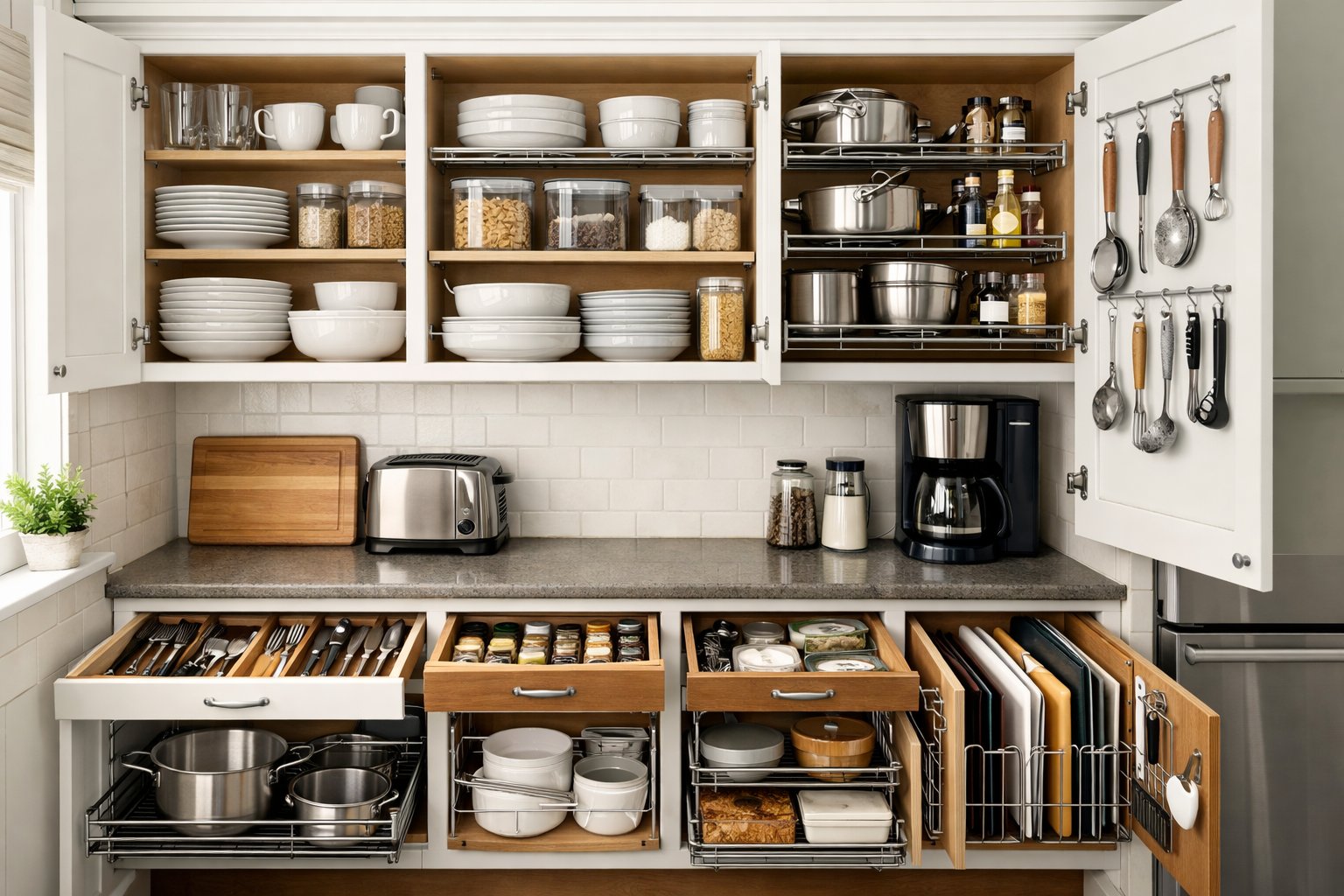

A small kitchen doesn’t have to feel cramped or chaotic. With the right systems and tools, you can make it work as well as one twice its size.
The key is figuring out how to use every inch wisely, from cabinets and drawers to walls and corners.
Lots of folks struggle to organize a small kitchen because they try to cram too much in. You end up with overstuffed drawers, cluttered counters, and missing items when you need them.
But if you use vertical storage, drawer dividers, and a bit of ruthless decluttering, you can turn that cramped kitchen into a functional, enjoyable space.
Key Takeaways
- Remove unused items and organize remaining kitchen essentials into zones based on how you use them
- Use vertical space with wall racks, hanging systems, and stacking bins to store more without taking up counter room
- Install drawer dividers, pull-out racks, and lazy susans to make every cabinet and drawer work harder
Assess and Declutter Your Kitchen
Start by pulling out items you don’t use and sorting what stays. This gives you a realistic sense of your space and helps you decide what truly belongs in your kitchen.
Remove Unused Items Efficiently
Take everything out of your cabinets and drawers. Group items into keep, donate, and toss piles.
Check expiration dates on food and spices. Toss anything expired, no second guessing.
Look at duplicate items. You really don’t need three can openers or five spatulas in a small kitchen.
Keep just one of each tool unless you honestly use more. For dishes and food containers, only hang on to what you can wash daily.
Throw out containers with missing lids or cracks. Test all your storage containers and make sure the lids actually fit before putting them back.
Set aside a donation box for good-condition items you haven’t touched in a year. That includes extra gadgets, serving platters, or duplicate cookware.
Sort and Categorize Kitchenware
Group similar items together so you can see what you have. Put all baking supplies together, cooking utensils in another spot, dishes separate from glasses.
Try using these categories:
- Daily essentials: Coffee mugs, everyday plates, frequently used pots
- Cooking tools: Spatulas, wooden spoons, measuring cups
- Baking supplies: Mixing bowls, measuring spoons, baking sheets
- Food storage: Containers with matching lids
- Small appliances: Toaster, blender, coffee maker
Label each group with tape or sticky notes while you’re sorting. It helps you figure out how much space each category needs later.
Streamline Small Appliances and Utensils
Pick one or two appliances to keep on your counter. Store everything else in a lower cabinet or pantry.
Maybe the coffee maker or toaster gets a spot out, but the stand mixer or food processor can go in storage. Wrap appliance cords with cable ties or velcro straps so they don’t tangle.
Store attachments and accessories in labeled bins with their appliances. Think about which tools actually multitask.
A rimmed sheet pan can bake cookies, roast veggies, and catch drips. A rimless cookie sheet, well, just bakes cookies. Keep the tools that do more than one job.
Count your utensils. Two or three spatulas are plenty, not a whole drawer full. Keep your favorites and donate the rest.
Master Cabinet Organization for Space Maximization
Cabinet organization can turn wasted space into storage you actually use. The right tools and layout make it easier to access everything.
Optimize Cabinet Layout and Grouping
Group items by where you use them most. Keep coffee mugs and filters near the coffee maker, pots and pans close to the stove.
Cutting boards and knives should go near your prep area. This setup saves time and keeps your counters clearer.
Try grouping like this:
- Store baking supplies (flour, sugar, measuring cups) together in one cabinet
- Keep cooking oils, spices, and seasonings near the stove
- Put dishes and bowls in the cabinet closest to your dishwasher
- Dedicate a cabinet to food storage containers and lids
A lazy susan works great in corner cabinets. Place one there for oils, vinegars, or canned goods. Just spin it to grab what you need without moving everything else.
Utilize Shelf Risers and Pull-Out Racks
Shelf risers let you double up in a single cabinet. Stack plates below, bowls above, and you can see everything without lifting heavy stacks.
Pull-out racks make deep cabinets way more useful. Try a pull-out spice rack in the narrow space between your fridge and counter.
Install pull-out shelves in base cabinets so you can reach items in the back. Add drawer dividers to deep drawers and store dishes vertically instead of stacking them flat.
Clear stacking bins work under the sink for cleaning supplies. Stack two bins to use the full cabinet height and keep things visible.
Store Infrequently Used Items Up High
Add ceiling-height cabinets if you can. Use the top shelves for stuff you hardly ever need, like the turkey roaster or holiday platters.
Keep a small step stool handy for safe access. The extra height gives you storage without eating up floor space.
Put everyday essentials at eye level. Middle shelves are for weekly-use items, and keep the things you use most between waist and shoulder height for comfort.
Label containers on high shelves so you know what’s inside from below. Clear bins help you see contents without climbing up.
Smart Strategies for Drawer Organization
Drawers work best when you create clear zones with dividers. The right setup keeps stuff from sliding around and gives everything a home.
Implement Drawer Dividers
Drawer dividers can turn chaos into order. Measure your drawers before buying organizers.
Expandable dividers are useful since they fit different widths and you can change them later. Place dividers to make compartments by item size, with wider sections for big utensils and narrow slots for gadgets.
Bamboo dividers look nice and last, while plastic ones cost less and are easy to clean. The SpaceAid Bamboo Drawer Dividers come with inserts and labels, adjust from 12 to 20 inches, and snap into place without tools.
Troubleshoot the Junk Drawer
Every kitchen has a junk drawer. Start by emptying it completely and sorting the contents.
Only keep essentials like batteries, twist ties, and takeout menus. Store them in small containers or a multi-compartment tray.
Assign each section a job, like “writing tools” or “kitchen tools.” Add a shallow tray organizer with a few compartments to keep things in place.
Check this drawer every month and clear out what doesn’t belong. Set a limit for each item type so it doesn’t overflow again.
Create Zones for Utensils and Tools
Sort utensils by how often you use them and what they’re for. The drawer closest to your prep area should hold everyday tools like spatulas, wooden spoons, and whisks.
Put cooking utensils near the stove and baking tools near your mixing area. Use a multi-section tray with several compartments.
Keep your most-used tools in the front for easy grabbing. Store similar items together, like all measuring spoons in one spot.
Deep drawers are great for larger tools. Stand up rolling pins, meat mallets, and pastry brushes in tall containers so you see everything at once.
Make the Most of Vertical Storage
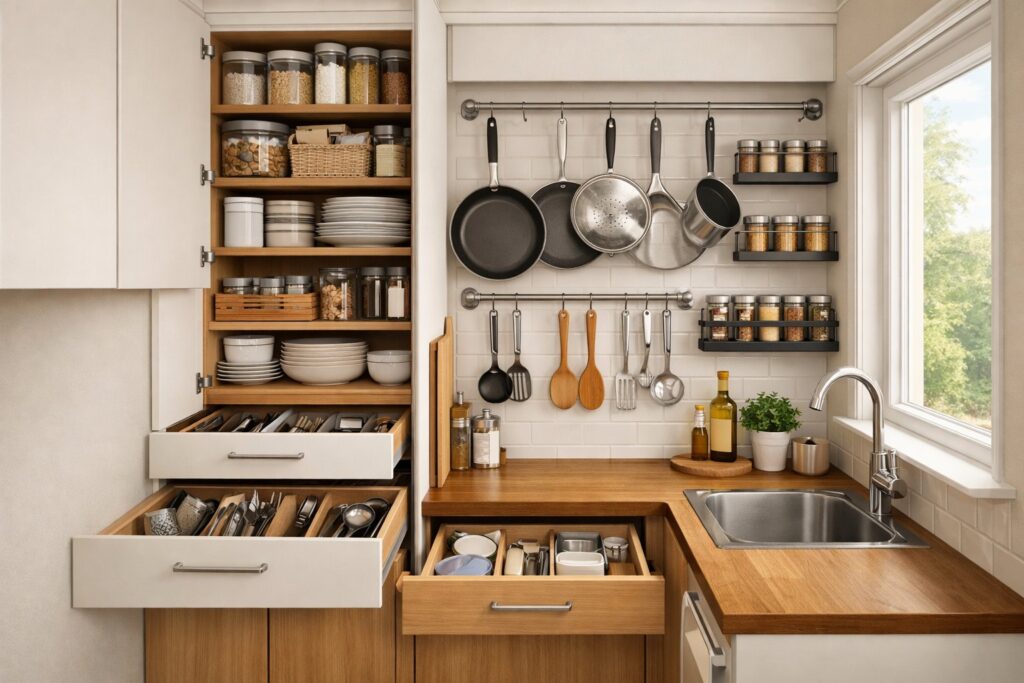
Your walls are full of untapped storage potential. Add shelves, hooks, or magnetic strips to empty wall space to keep everyday items handy and your counters clear.
Install Open or Floating Shelving
Open shelving can turn blank walls into useful storage. Install floating shelves above your counters for dishes, glasses, or go-to ingredients.
These shelves fit nicely between your counter and upper cabinets. Pick shelves that match your kitchen’s style and can handle the weight you plan to put on them.
Metal brackets give strong support for heavy things like dinnerware or appliances. Wood or metal floating shelves look sleek for lighter items.
Mount shelves at heights that work for you. Everyday items go at eye level, less-used stuff higher up.
Try narrow shelves in tight spaces, like above the sink or next to the fridge. The Container Store Elfa Classic Shelving offers adjustable options and can support up to 100 pounds per shelf.
Incorporate Hanging Pot Racks and Hooks
Wall-mounted pot racks free up cabinet space by moving bulky cookware onto the wall or ceiling. Use S-hooks to hang pans, lids, and utensils at different heights.
Install hooks under cabinets or on bare walls for mugs, measuring cups, and kitchen tools. You can also put hooks inside cabinet doors for pot holders or dish towels.
This keeps things within reach without filling up drawers or shelves. A pegboard system gives you flexible storage you can rearrange as your needs change.
Add Magnetic Racks and Strips
Magnetic strips make it easy to store things on your walls without drilling a bunch of holes. Stick a magnetic knife strip on the wall to keep your knives organized and out of the drawer. That frees up space and looks kind of cool, honestly.
Try using magnetic strips for metal utensils, scissors, or even small metal spice containers. The fridge side works as another spot for magnetic storage, too. Just slap on a few magnetic shelves or containers for oils, spices, or whatever tools you reach for most.
Modern Innovations Stainless Steel Magnetic Knife Bar holds around 12 knives and you can mount it on almost any wall. Magnetic storage is really best for daily-use stuff since everything’s right there, easy to grab.
Product Suggestions for Small Kitchen Organization
The right gear can turn a tiny kitchen into a surprisingly efficient spot. Rotating platforms help you use awkward corners, spring-loaded dividers keep drawers from getting chaotic, magnetic strips clear off your counters, and wheeled storage brings flexibility where permanent stuff just won’t work.
Best Lazy Susans for Cabinets
A lazy susan makes those deep, annoying corner cabinets way more useful. You can actually reach everything instead of losing jars in the back forever.
Pick a size between 10 and 16 inches across, depending on your cabinet. Two-tier versions double the storage and stop little jars from vanishing underneath bigger stuff.
Go for ones with raised edges so nothing slides off when you spin it. Plastic lazy susans are lighter and easy to clean, but wood looks nicer if you’re using them on open shelves.
The turntable should spin smoothly, no wobbles. Use them for spices, cans, oils, vinegars, or baking supplies.
Some even have dividers to sort your stuff. Keep your most-used items on the outer edge so you don’t have to reach in every time.
Top Drawer Dividers and Organizers
Drawer dividers stop your utensils from turning into a jumbled mess. Spring-loaded dividers adjust easily and fit drawers from 12 to 18 inches long.
Types of drawer organizers:
- Spring-loaded dividers for custom setups
- Fixed trays for standard silverware
- Shallow bins for tiny things like measuring spoons
- Bamboo organizers if you want a natural vibe
Pick dividers at least 3 inches tall for deep drawers. They should fit snug so they don’t slide around when you open the drawer. Grippy feet on the bottom help with that, too.
Mix and match organizer types in one drawer. Use small bins for random bits like bottle stoppers and bag clips. Larger sections are good for spatulas and serving spoons. Keep your go-to tools in the top drawer by your prep area.
Most Practical Magnetic Knife Strips
Magnetic knife strips go on your wall or even inside a cabinet door, so you don’t need a clunky knife block. An 18-inch strip usually fits four to six knives, depending on their size.
Wood strips with strong magnets protect your knife blades better than metal ones. The magnets should be strong enough to hold your heaviest chef’s knife, no problem. Mount the strip at chest height near your cutting board for easy access.
You can use magnetic strips for metal utensils too, like measuring spoons or scissors. That clears up more drawer space. If you’re mounting inside a cabinet door, use short screws so they don’t poke out the other side.
Metal strips cost less but might scratch knife edges over time. Always check the weight capacity before buying to make sure your knives won’t fall off.
Space-Saving Bar Carts and Rolling Islands
A bar cart or rolling island can give you extra prep space and storage without needing to install anything permanent. Look for carts 24 to 30 inches wide so they fit between your counter and table.
What to look for:
- Locking wheels so it doesn’t roll away
- Two or three shelves for storage
- Butcher block or stainless steel top
- Towel bar or hooks on the side
Use the top for meal prep or as a coffee station. Store pots, pans, or appliances on the lower shelves. Some carts even have wine racks or stemware holders built in.
Roll the cart into a corner or closet when you need the floor space back. Metal carts hold more weight, but wood looks warmer. A rim around the top shelf keeps stuff from sliding off when you move it.
Innovative Solutions and Space Enhancers
Smart storage tools can help you claim back those awkward or wasted spots in your kitchen. Pull-out systems, fold-down surfaces, and stackable bins all work together to make the most of every inch.
Utilize Pull-Down and Pull-Out Shelves
Pull-down shelves bring high-up cabinet stuff down where you can reach it. These spring-loaded systems let you store holiday dishes or appliances you only use sometimes, without needing a step stool.
Pull-out shelves shine in base cabinets and under the sink. They slide forward so you can see everything, even what’s in the back. Try a pull-out spice rack in that skinny gap between your fridge and the wall to use dead space.
Rev-A-Shelf Two-Tier Pull-Out Organizer fits most base cabinets and holds heavy things like pots and appliances. The gliding system makes it easy to reach deep cabinet items without kneeling or stretching.
Explore Multifunctional and Fold-Down Tables
A fold-down table on your wall gives you extra counter space when you need it and disappears when you don’t. Handy for meal prep, a laptop, or even a quick breakfast spot. You can put one near the stove for extra prep or by a window for a cozy nook.
Look for tables with built-in shelves or hooks underneath. Some even have a chalkboard surface or magnetic strip for hanging utensils. Measure your wall and check how much room you’ll need when the table is open.
If you plan to use it for heavy tasks, check the weight limit. Most fold-down tables hold 30 to 50 pounds.
Incorporate Stacking Bins and Under-Cabinet Options
Stacking bins help you use vertical space inside cabinets. Clear acrylic bins are nice since you can see what’s inside without moving everything around. Use them under the sink for cleaning supplies or in pantry cabinets to group similar items.
Under-cabinet organizers attach to the bottoms of wall cabinets. Hooks can hold mugs or wine glasses. Small drawers under cabinets hide away spices, tea bags, or little tools.
SimpleHouseware Stackable Can Rack Organizer stores canned goods in a compact way. The stepped design lets you see every label. Spectrum Ashley Under Cabinet Paper Towel Holder keeps paper towels off the counter but right where you need them.
Frequently Asked Questions
Small kitchens come with their own set of questions about storage, space-saving tricks, and which products actually help you make the most of every square foot.
What are some effective cabinet organization tips for a small kitchen?
Install pull-out racks between cabinets to use dead space that usually gets ignored. These narrow organizers are great for spices, oils, and other slim stuff that disappears in regular cabinets.
Go for ceiling-height cabinets to use vertical space. Keep rarely used items up top and everyday stuff at eye level.
Stack bins under your sink to make the most of vertical space. Clear bins let you see what’s inside without digging or labeling.
Put lazy susans in corner cabinets so things are easy to reach. These spinning platforms keep bottles and cans organized and close by.
Can you provide strategies for drawer organization that maximize space utilization?
Customizable drawer dividers give every item a home. Bamboo dividers are sturdy and you can adjust them to fit your drawer perfectly.
Store everyday dishes in deep drawers instead of cabinets. It’s easier to grab plates and cups this way.
Fill the whole drawer width with organizers to avoid wasted space. Keep things separate but not crammed so you can see and grab what you need.
Group similar items together based on how you use them. Store utensils near your prep area and cooking tools by the stove.
How can vertical storage solutions be implemented in a compact kitchen environment?
Hang pots and pans from a rack above the stove or on a wall. This frees up cabinet space and keeps cookware handy while you’re cooking.
Install open shelves on empty wall space between counters and upper cabinets. Use them for stuff you grab daily, like mugs or cooking oils.
Mount a rod with S-hooks on an unused wall section. Hang utensils, measuring cups, or little baskets filled with kitchen tools.
Add a macrame basket under upper cabinets for onions, garlic, or other produce. It keeps the counters clear and uses space that would otherwise go to waste.
Wall-mounted dish racks hold plates, cutting boards, or drying dishes. Black metal racks look especially good in modern or farmhouse-style kitchens.
What decluttering strategies are recommended for maintaining a tidy and spacious small kitchen?
Only keep essentials on your counters. Limit what you display to cutting boards, a knife block, or appliances you actually use every day.
Organize your junk drawer with dividers or small containers. Recycle boxes and jars to separate rubber bands, twist ties, pens, and other random stuff.
Put less-used kitchen gear in hard-to-reach cabinets near the ceiling. Save the best storage spots for tools and dishes you use all the time.
Let dishes and glassware double as decor by displaying them on open shelves. This way, you don’t need extra decorative items and your essentials stay visible.
Keep a small rolling bar cart just outside the kitchen for entertaining supplies. Glasses and bottles stay close but don’t take up precious kitchen space.
Could you suggest budget-friendly ideas for organizing a small kitchen efficiently?
Install simple shelves cut to fit weird angles or odd walls. Paint or stain the wood to match your cabinets for a custom look without spending much.
Use in-sink dish racks instead of countertop ones. These keep dishes out of sight while drying and help keep counters clear.
Repurpose bookends to organize cookbooks on your counter or shelves. It’s cheap and keeps recipes right where you want them.
Add corner shelves in the gaps between upper cabinets and windows. Rounded edges make them look smooth and help you use every bit of space.
Store things where you actually use them. Keep your chopping board above the knife drawer and mugs on a shelf above the coffee maker so you don’t need to buy extra organizers.
What are three essential products that can help keep a small kitchen well-organized?
A pull-out spice rack fits snugly between cabinets, turning that awkward gap into useful storage. It keeps spices organized and easy to spot, so you won’t waste time digging through crowded shelves.
Customizable bamboo drawer dividers let you set up any drawer just how you want it. They’re tough, eco-friendly, and you can adjust them whenever your collection of utensils changes.
Clear stacking bins help you use every inch of vertical space under the sink or in your pantry. Since they’re transparent, you can see what’s inside right away, making it way easier to grab what you need.