
Stainless steel appliances really make a kitchen look modern, but wow, fingerprints and water spots show up fast. Lots of folks end up using the wrong cleaners or tools, and that can scratch or mess up the finish for good.
Learning a few simple tricks will help your appliances stay shiny and last longer. You don’t need fancy products, either.
The key to keeping stainless steel appliances looking new is using gentle cleaning methods, wiping in the direction of the grain, and drying the surface completely to prevent water spots and streaks. Simple things like microfiber cloths, dish soap, and white vinegar do the job for most cleaning.
Here’s a step-by-step guide to cleaning stainless steel appliances. You’ll see which products work best, what to skip, and how to tackle tough stains.
Whether you’re just dealing with smudges or something more stubborn, these methods will help your appliances look their best.
Key Takeaways
- Use soft microfiber cloths and always wipe in the direction of the grain to prevent scratches and streaks
- Water, mild dish soap, and white vinegar are effective cleaners that won’t damage stainless steel surfaces
- Regular cleaning and immediate attention to spills prevents buildup and extends the life of your appliances
Understanding Stainless Steel Appliances
Stainless steel appliances come in different finishes, and each finish affects how you need to clean them. Some finishes are more prone to showing fingerprints and smudges than others.
Types of Stainless Steel Finishes
Your appliances probably have one of three main finishes. The brushed finish shows visible lines or grain running in one direction, and it’s the most common style on fridges, dishwashers, and ovens.
The mirror finish is super shiny, almost like a mirror, and doesn’t have a visible grain. This one really shows fingerprints and smudges fast.
Some appliances come with a fingerprint-resistant coating from the factory. That coating helps repel oils from your hands, but you need to use gentle cleaners or you might break down the protective layer.
Always clean with the grain if you can see it. Going against the grain just makes scratches and streaks more obvious.
Unique Cleaning Challenges
Stainless steel seems to attract fingerprints, water spots, and smudges like a magnet. Every time you touch it, oils from your skin transfer onto the surface.
Hard water can leave behind mineral deposits that look like cloudy spots if you don’t wipe them away quickly. Food splatters and grease build up around handles and controls, especially where you grab the appliance the most.
Heat from cooking sometimes bakes these residues onto the surface, making them even tougher to remove later. Regular cleaners or anything abrasive can leave permanent scratches.
The grain pattern on brushed stainless steel will show every streak if you wipe the wrong way. It’s worth taking a second to figure out which direction the grain runs before you start cleaning.
Importance of Proper Care
If you use the wrong products, you can damage the protective chromium oxide layer on your stainless steel appliances. That layer keeps rust and corrosion away.
Harsh chemicals like bleach or chlorine will break down this coating and leave permanent discoloration. Abrasive scrubbers and steel wool leave scratches that trap dirt and make future cleaning a pain.
Once scratched, the surface loses its smooth look and picks up even more fingerprints and grime. Regular maintenance stops that buildup and helps your appliances stay looking new for years.
Essential Tools and Recommended Products
The right tools make a huge difference in how your stainless steel appliances look. Good products protect the finish and actually get rid of fingerprints and smudges.
Choosing the Right Microfiber Cloths
Microfiber cloths work best because they trap dirt without scratching the surface. Look for ones with at least 200 GSM (grams per square meter) for better absorption.
Have at least two cloths ready for each cleaning session. Use one for applying cleaner and the other for drying and buffing, which helps prevent streaks.
Avoid cotton towels or paper towels since they can leave lint and might scratch the finish over time. Wash microfiber cloths separately in warm water and skip the fabric softener, which messes with their effectiveness.
Replace your cloths every few months, or sooner if they start feeling rough or lose their softness.
Best Stainless Steel Cleaners
Commercial stainless steel cleaners are made to remove fingerprints and bring back that shine. Weiman Stainless Steel Cleaner and Bar Keeper’s Friend are two popular options that create a protective coating against future smudges.
Always check the label to make sure the cleaner is safe for appliances. Some have harsh chemicals that can ruin modern finishes. You only need a small amount, so don’t go overboard.
Spray-on cleaners work well for big surfaces like fridge doors, and wipes are handy for quick touch-ups. Always test a new cleaner on a hidden spot first, just in case. Stick with the grain when applying to avoid streaks or marks.
Natural Cleaning Alternatives
White vinegar mixed with equal parts distilled water makes a great natural cleaner. This combo cuts through grease and removes water spots without harsh chemicals.
Pour it into a spray bottle for easy use. Dish soap and warm water also work well for daily cleaning—just a few drops in a bowl of water is enough.
If you have stubborn stains, make a paste with baking soda and water. Gently apply it, let it sit a few minutes, then wipe clean. A little olive oil or mineral oil after cleaning can boost shine, but don’t use too much or you’ll end up with a greasy surface.
Supplies to Avoid
Never use steel wool, abrasive scouring pads, or scrub brushes on stainless steel. Those will leave scratches you can’t fix.
Even “non-scratch” pads are sometimes too rough. Bleach and ammonia-based cleaners will discolor the finish and break down that protective layer.
Tap water can leave spots, so try to use distilled or filtered water if possible. Glass cleaners usually leave streaks on stainless steel, and rough sponges or magic erasers can scratch too.
Step-By-Step Cleaning Instructions
Cleaning stainless steel appliances takes the right technique and products. You’ll want to check the finish, set up a daily habit, handle tough stains when needed, and finish with a polish.
Preparation and Surface Assessment
Before cleaning, figure out which way the grain runs. The grain is the little lines you see on the surface.
Spray a bit of water on two spots next to each other. Wipe one spot horizontally and the other vertically with a microfiber cloth. The direction that looks cleaner and smoother is your grain direction.
Wipe away any loose crumbs or food bits with a dry cloth. Check for scratches or dents that might need special care.
Gather your supplies:
- Microfiber cloths (at least 3)
- Dish soap or white vinegar
- Warm water
- Olive oil or baby oil
- Spray bottle
Don’t use steel wool, abrasive scrubbers, or bleach-based cleaners. Those will scratch and damage the finish.
Daily Cleaning Routine
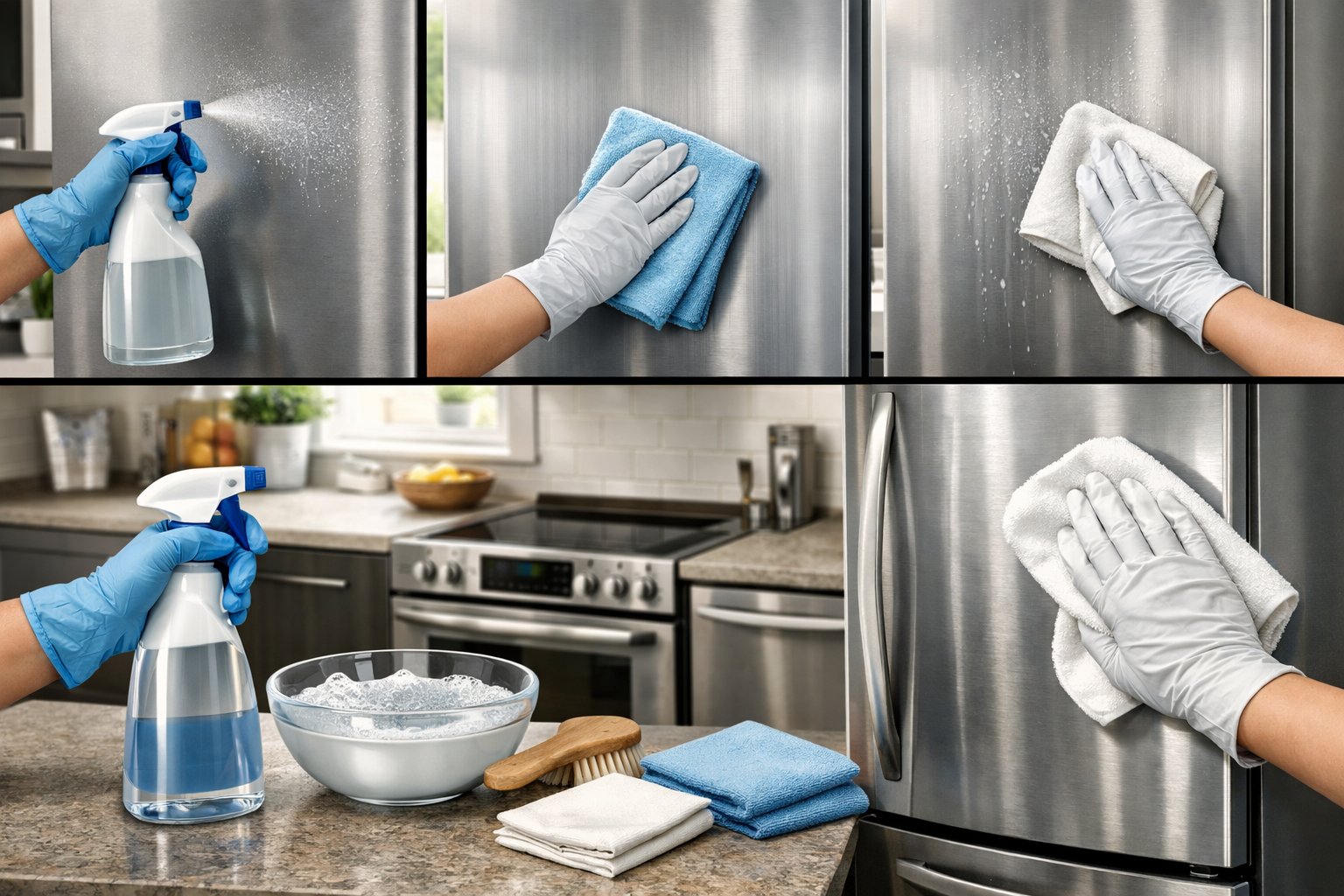
Mix a few drops of dish soap with warm water in your spray bottle. Spray the solution onto a microfiber cloth, not directly on the appliance, so you don’t get drips or water spots.
Wipe along the grain using gentle, even strokes. Go from top to bottom or side to side, depending on your grain pattern.
Rinse your cloth with clean water and wring it out well. Go over the surface again to pick up any soap left behind. Soap residue dries into streaks and attracts more dirt.
Dry the appliance right away with a fresh microfiber cloth. Stainless steel gets water spots super quickly, so don’t skip this step.
For fingerprints between deep cleans, you can use a glass cleaner sprayed onto a cloth and wipe in circles. Just don’t overdo it.
Deep Cleaning for Tough Stains
White vinegar is great for water spots and mineral deposits. Fill a spray bottle with straight white vinegar and spray it on your cloth. Wipe the stain with the grain and let it sit 30 seconds before wiping again.
For grease and stuck food, use dish soap on a damp cloth. Scrub gently along the grain until the mess comes off. Sometimes you need to repeat this for heavy buildup.
Baking soda paste works for stubborn stains that vinegar can’t handle. Mix three parts baking soda with one part water to make a thick paste. Apply it with a soft cloth, rub gently with the grain, then rinse it off well.
Stain Type Guide:
| Stain | Solution | Method |
|---|---|---|
| Water spots | White vinegar | Spray and wipe |
| Grease | Dish soap | Direct application |
| Burnt food | Baking soda paste | Gentle scrubbing |
| Rust marks | Commercial cleaner | Follow product directions |
Don’t let any cleaning solution sit on the surface for more than a few minutes. Always rinse and dry after treating stains.
Polishing for a Streak-Free Shine
Put a few drops of olive oil, mineral oil, or baby oil on a clean microfiber cloth. That’s all you need for an appliance door.
Rub the oil on with the grain, using light, even strokes. The oil helps fill tiny scratches and adds a bit of a barrier against fingerprints.
Buff with a dry part of your cloth to soak up any extra oil. Too much oil just looks greasy and collects dust. The finish should look even and have a nice, soft shine.
Commercial polishes like Weiman Stainless Steel Wipes or Therapy Stainless Steel Cleaner + Polish combine cleaning and polishing in one step. These are handy for weekly touch-ups when you want a little extra shine.
Club soda works as a quick polish between oil treatments. Spray it on a cloth and wipe with the grain for a fast shine boost. The carbonation seems to help lift light residue and leaves a streak-free finish.
Polish your appliances once a week if you can. If you have kids who leave fingerprints everywhere, you might want to do it twice a week.
Special Cleaning Techniques for Different Stains
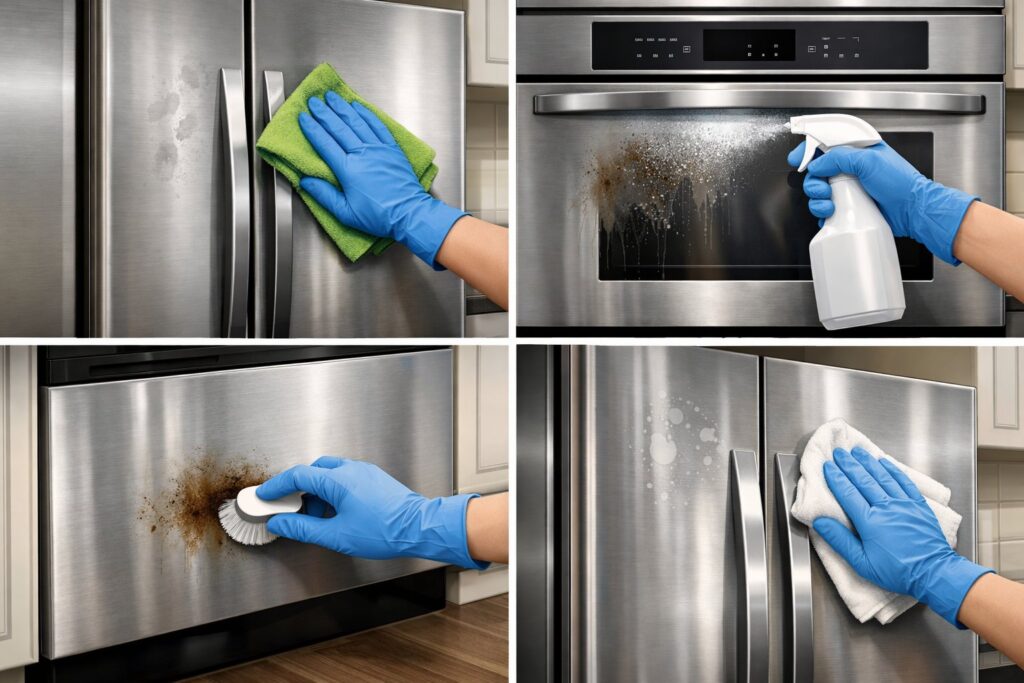
Different stains on stainless steel need their own cleaning tricks. The best technique depends on what caused the stain and how long it’s been there.
Removing Fingerprints and Smudges
Fingerprints are probably the most common marks you’ll spot on stainless steel appliances. The oils from your skin make them show up right away.
Start by dampening a microfiber cloth with warm water. Wipe the surface in the direction of the grain, which are those tiny lines you can see on the stainless steel.
If fingerprints won’t budge, add a drop of mild dish soap to your damp cloth. Wipe gently, then rinse with a clean, damp cloth to get rid of any soap left behind.
Dry the area immediately with a soft towel so you don’t get water spots. You can also use isopropyl alcohol for a quick clean.
Just apply a small amount to a microfiber cloth and wipe the fingerprints away. This method works great for daily touch-ups and doesn’t leave streaks.
Tackling Hard Water Spots
Hard water leaves white or cloudy spots on stainless steel, especially near sinks and faucets. It’s the minerals in the water that cause these marks.
White vinegar is your best friend for hard water spots. Mix equal parts white vinegar and water in a spray bottle.
Spray the solution right onto the spots. Let it sit for about 5 to 10 minutes so the vinegar can break down the mineral buildup.
Wipe with a soft cloth, moving with the grain. If the spots are stubborn, just repeat the process.
Rinse with clean water once the spots are gone. Always dry the area with a clean towel, since water left behind can make new spots.
Rust and Discoloration Removal
Rust spots usually show up when other metal objects sit on your stainless steel. Discoloration can happen from heat or even chemical spills.
For light rust, mix three parts baking soda with one part water to make a thick paste. Spread it right on the rust spot.
Let it sit for 15 to 20 minutes. Use a soft cloth to rub gently in the direction of the grain.
The baking soda’s mild abrasiveness lifts the rust without scratching the steel. If you’ve got heat stains, grab some white vinegar.
Apply vinegar to the discolored area and let it sit for 10 minutes. Wipe clean and dry well.
For really stubborn discoloration, you may need a professional stainless steel cleaner.
Using Baking Soda Paste for Stubborn Stains
Baking soda paste isn’t just for rust, it’s great for burnt-on food, grease, and those weird spots that resist regular cleaning. Mix baking soda with just enough water to form a spreadable paste.
Make sure the paste is thick enough to stick to vertical surfaces. Apply it to the stain and let it sit for at least 10 minutes, or up to 30 minutes for tough messes.
The baking soda will gently break down the stain. Wipe away the paste with a damp microfiber cloth or soft sponge.
Rub in circles at first, then finish by wiping with the grain. Rinse with clean water and dry right away.
Never use steel wool or harsh scrubbers with your baking soda paste, those will scratch the surface.
Proper Maintenance and Care Tips
Regular maintenance keeps your stainless steel appliances looking good and helps prevent long-term damage. A few specific care habits really go a long way.
Maintaining Shine and Protective Layers
Water is your first line of defense for daily cleaning. Wipe down surfaces with a damp microfiber cloth after each use to stop buildup before it starts.
If you want extra shine, put a bit of mineral oil or olive oil on a clean cloth. Buff the surface gently in the direction of the grain, and you’ll create a protective layer that repels fingerprints and water spots.
Key shine maintenance steps:
- Use distilled water instead of tap water to avoid mineral spots
- Buff dry right after cleaning to keep water spots away
- Apply oil-based polish about once a month for extra protection
- Always work with the grain, not against it
Regular oiling makes cleaning easier next time. You might notice fingerprints and smudges wipe away more quickly when you keep up this barrier.
Preventing Scratches and Buildup
Always use cutting boards or trivets under hot pots and pans. Dragging metal cookware across stainless steel can leave marks that are almost impossible to remove.
Avoid abrasive tools altogether. Steel wool, scouring pads, and rough sponges will scratch and dull the finish.
Stick to soft microfiber cloths meant for delicate surfaces. When spills happen, clean them up right away.
Dried food, grease, and liquids are much harder to remove later and can even stain or discolor your appliance.
Items to avoid:
- Metal scouring pads
- Bleach or chlorine-based cleaners
- Abrasive powders
- Sharp metal utensils on the surface
Scheduled Routine Maintenance
Clean your stainless steel appliances at least once a week with water or mild dish soap. For high-use appliances like refrigerators, you might need to clean every few days.
Deep clean monthly using white vinegar mixed with water in equal parts. This helps remove stubborn buildup and brings back the shine without harsh chemicals.
Weekly maintenance checklist:
| Task | Frequency | Method |
|---|---|---|
| Wipe surfaces | Daily | Damp microfiber cloth |
| Remove fingerprints | 2-3 times weekly | Water or vinegar solution |
| Deep clean | Monthly | Vinegar solution or stainless steel cleaner |
| Apply protective oil | Monthly | Mineral or olive oil |
Dust your appliances regularly between cleanings. This keeps particles from scratching the surface when you wipe it down later.
And don’t forget to keep your cleaning cloths clean, dirty cloths just move grime around instead of picking it up.
Common Mistakes to Avoid with Stainless Steel
Using the wrong products or techniques can scratch, discolor, or ruin the protective coating on your stainless steel appliances. The biggest mistakes usually involve harsh chemicals, rough scrubbers, or wiping against the grain.
Misusing Cleaning Products
Never use bleach or ammonia-based cleaners on stainless steel. These chemicals break down the protective chromium oxide layer that keeps rust and corrosion away.
They can actually cause permanent discoloration, pitting, or even holes in the surface over time. Avoid abrasive scrubbers like steel wool, scouring pads, or rough sponges, since they leave scratches that dull the finish.
Even scrubbers labeled “gentle” can be risky if they contain hard particles. Skip cleaners with chlorine, hydrochloric acid, or other harsh ingredients, and if a product smells strongly of chemicals, it’s probably too harsh.
Paper towels can scratch some finishes too, especially the cheaper or rougher ones.
Safe alternatives include:
- Mild dish soap with warm water
- White vinegar diluted with water
- Baking soda paste for tough spots
- Microfiber cloths or soft cotton rags
- Products made specifically for stainless steel
Always test new cleaners on a hidden spot first. Different appliance brands use different finishes, so what works on one might damage another.
Incorrect Cleaning Motions
Scrubbing in circles leaves swirl marks that are tough to get rid of. These marks trap dirt and make the surface look dull.
Circular scrubbing just pushes debris into the tiny grooves in the metal instead of removing it. Always wipe in straight lines, following the grain.
Use long, even strokes with light to moderate pressure. Pressing too hard can grind particles into the surface and leave scratches.
Never spray cleaners directly onto the appliance. That causes uneven coverage and streaks, plus moisture can seep into seams and edges.
Spray your cleaner onto a cloth instead. This way, you control how much product you use and avoid excess liquid pooling on the surface.
Not Following Appliance Grains
Stainless steel has a visible grain pattern that runs in one direction, kind of like wood. Wiping against the grain pushes dirt deeper into the grooves and can cause fine scratches.
It also makes streaks more visible and harder to wipe away. Before you start cleaning, check the direction of the grain, usually horizontal on refrigerator doors and vertical on dishwasher fronts, but it varies.
Look at the surface in good lighting to spot the pattern. Always clean, polish, and dry in the same direction as the grain.
This lifts dirt out of the grooves instead of pushing it in. When buffing with olive oil or polish, follow the grain for the best results.
It really makes a difference in how clean and shiny your appliances look.
Frequently Asked Questions
If you want your stainless steel to stay looking good, clean with the grain, use non-abrasive materials, and apply a little protective oil to keep fingerprints away and maintain shine.
What are the best practices for maintaining stainless steel appliance surfaces?
Clean stainless steel appliances regularly with a microfiber cloth and warm water. Wipe in the direction of the grain to avoid streaks and surface damage.
Dry the surface right after cleaning to prevent water spots. Once a week, use a little mineral or olive oil to create a barrier against fingerprints and smudges.
Stay away from harsh chemicals or abrasive scrubbers. Keep chlorine-based cleaners and steel wool pads far from your appliances.
What is the safest method to clean stainless steel cooktops without causing scratches?
Start by wiping away loose crumbs or debris with a soft, damp microfiber cloth. Mix a few drops of mild dish soap with warm water for your cleaning solution.
Use the soapy water with a microfiber cloth, wiping gently in the direction of the grain. For stuck-on food, let the solution sit for a few minutes to loosen things up before wiping.
Rinse with a clean, damp cloth to remove any soap left behind. Dry the surface well with a fresh microfiber cloth to avoid water spots and streaks.
Never use steel wool, abrasive sponges, or scouring pads on your cooktop. They’ll scratch the surface and leave permanent marks.
How can one naturally clean stainless steel kitchen appliances using household items?
White vinegar is a surprisingly effective natural cleaner for fingerprints and light stains. Spray undiluted vinegar onto the surface and wipe with a microfiber cloth, following the grain.
Baking soda mixed with water makes a gentle paste for tougher stains. Spread the paste on problem areas, let it sit for five minutes, then wipe clean with a damp cloth.
This method works well for grease and food residue, and you don’t need harsh chemicals. Rubbing alcohol can remove stubborn grease marks and disinfect at the same time.
Just apply it to a microfiber cloth and wipe the surface. For a final polish, use a little olive oil on a clean cloth and buff in the direction of the grain to restore shine and keep fingerprints away.
Which are the most effective commercially available products specifically designed for stainless steel appliance cleaning?
Weiman Stainless Steel Cleaner & Polish is great for removing fingerprints and streaks. It also leaves a protective coating, so it’s handy for daily maintenance.
Bar Keepers Friend Stainless Steel Cleaner handles tough stains and minor scratches. It’s a good choice for deep cleaning when natural methods don’t cut it.
Therapy Stainless Steel Cleaner & Polish offers a non-toxic, plant-based option if you’re worried about chemicals. It works as well as traditional products but is safer for your family and the environment.
Stick with products labeled for stainless steel. Avoid multi-surface cleaners, since they might have harsh chemicals that aren’t good for stainless steel finishes.
What are some common mistakes to avoid while cleaning stainless steel appliances?
Don’t grab abrasive pads, steel wool, or rough sponges for stainless steel surfaces. Those scratch up the finish, and honestly, you can’t really fix that once it happens.
Try to clean with the grain of the steel, not against it. Wiping the wrong way leaves streaks and might mess up the finish over time.
Skip chlorine-based cleaners and bleach on stainless steel. These harsh chemicals can discolor the surface and ruin the protective layer for good.
If you leave water or cleaning solutions to air dry, you’ll probably notice water spots or mineral deposits later. Those are a pain to get rid of.
Go easy on the oil while polishing. Too much just attracts dust and leaves a sticky mess that doesn’t look great.
Can you outline a step-by-step process for the regular maintenance of stainless steel appliances?
Start by grabbing a dry microfiber cloth and giving your appliances a daily wipe-down. This helps get rid of dust and those annoying fingerprints, keeping things looking fresh.
Once a week, mix some warm water with a couple drops of mild dish soap. Dampen a microfiber cloth with that soapy water, then wipe the surfaces, making sure to go with the grain.
After that, rinse the area using a clean, damp cloth to get rid of any leftover soap. Dry everything right away with a fresh microfiber cloth so you don’t end up with water spots.
Take a clean cloth, put a little mineral or olive oil on it, and buff the surface along the grain. This step brings back some shine and adds a bit of protection.
About once a month, tackle any stubborn stains or water spots with white vinegar. Spray the vinegar on, let it sit for a couple minutes, then wipe it off and dry the area.
While you’re at it, check around handles, edges, and near burners for hidden grime. Those spots tend to collect gunk that you might miss during your usual cleaning.