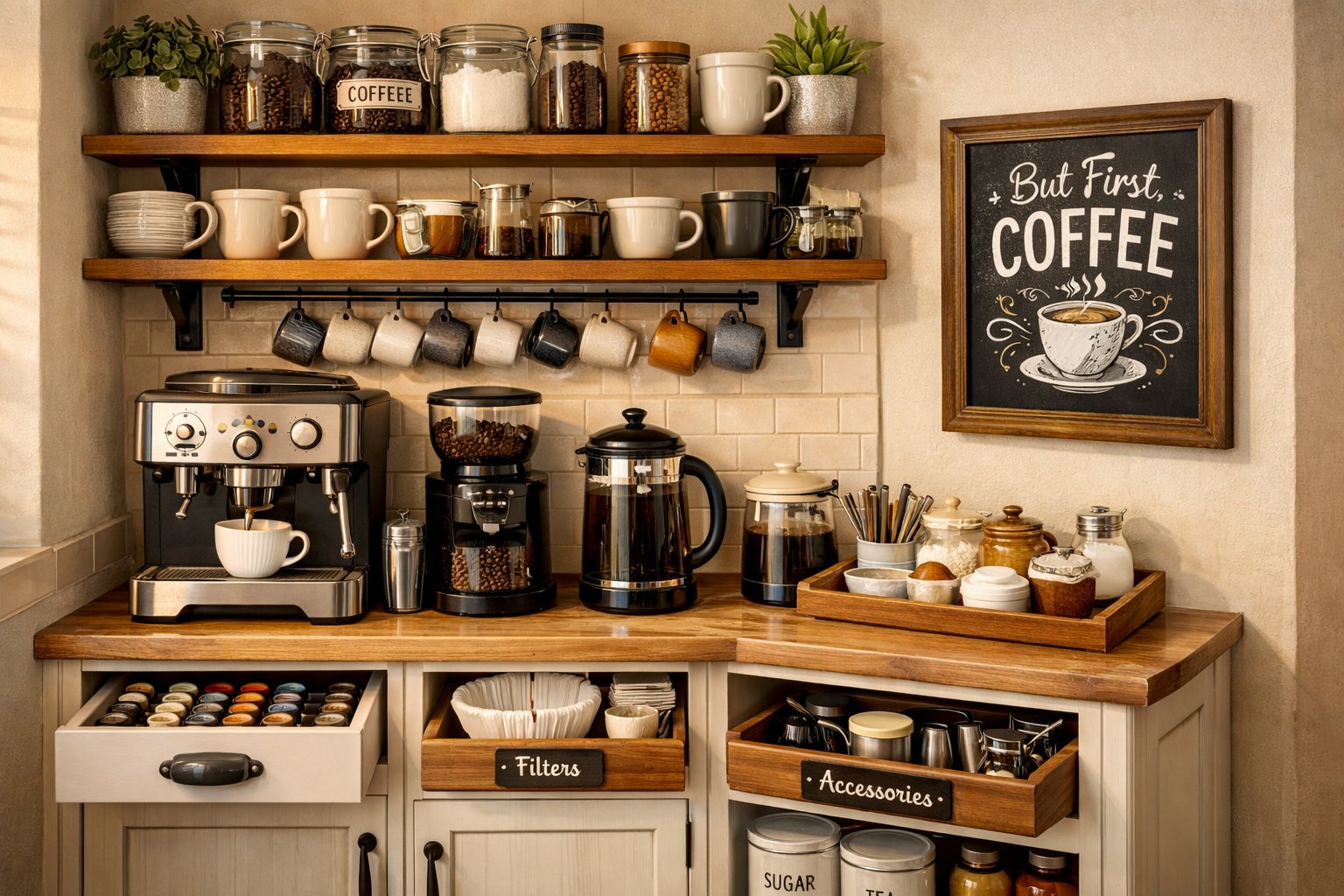

Your morning coffee should feel like a treat, not a hassle. Searching through cabinets for filters, digging for your favorite mug, and juggling coffee supplies across the counter creates stress before you even get that first sip.
A dedicated coffee station keeps everything you need in one organized, easy-to-reach spot. Honestly, it’s a game changer for your routine.
Setting up a home coffee station means picking the right spot, choosing your brewer and grinder, figuring out smart storage, and adding some personal flair. You don’t need a huge kitchen or fancy gear to pull this off.
Even a small corner, a bar cart, or a bit of counter space can become your own coffee bar if you approach it right.
This guide covers layout ideas, space-saving storage, and specific product picks. You’ll see how to pick a location, what equipment actually matters, and how to style your station so it stays organized and looks great.
Key Takeaways
- Pick a spot near outlets with enough room for your brewer, supplies, and workflow
- Use vertical storage, airtight containers, and trays to keep things tidy and functional
- Add decor and good lighting to make your coffee space inviting
Planning Your Home Coffee Station
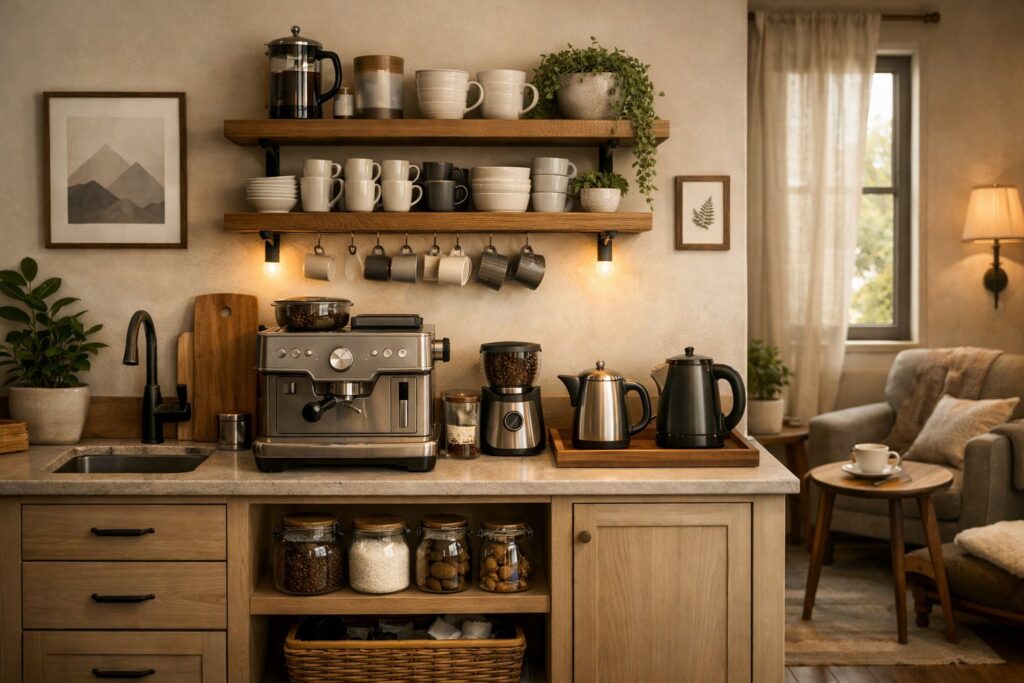
Before you build your coffee station, think about where it will go, what kind of coffee you actually drink, and how much you want to spend. Planning these details now makes your daily routine smoother later.
Assessing Available Space
Start by measuring the area you want to use. You need at least 24 inches of counter width for a basic setup with a coffee maker and a few supplies.
Write down the measurements, including height and depth. Look for spots near electrical outlets and water sources, ideally close to your sink for easy filling and cleaning.
Check if you have vertical space above the counter for shelves or cabinets. Small spaces can work too, honestly. Try a rolling cart, a corner of your counter, or even a narrow console table.
Wall-mounted shelves can hold mugs and supplies without eating up counter space. If your kitchen is tiny, focus on compact equipment and stackable storage.
Defining Your Coffee Preferences
Think about what coffee drinks you make most. If you love drip coffee, you’ll need different gear than someone who makes lattes every day.
Make a list of the drinks you want at your beverage station. Do you need a milk frother? Will you use syrups? How many cups do you usually brew?
If more than one person drinks coffee in your house, take their tastes into account. Your brewing method really matters for planning. Pour-over setups take less space than an espresso machine.
French press fans need less counter space than someone with a big automatic brewer. Choose equipment that fits your taste and your space.
Choosing the Ideal Location
The best spot for your coffee station depends on your routine and your kitchen’s layout. Place it near your breakfast area or along your path to the door if you grab coffee on your way out.
Keep your setup away from the stove so heat doesn’t damage your gear. Think about the work triangle in your kitchen—your coffee nook shouldn’t block the flow between your sink, stove, and fridge.
A corner or the end of a counter works well because it keeps the coffee area separate from cooking. Natural light makes your coffee bar more inviting, but direct sun can ruin your beans.
If your spot is near a window, use opaque containers for beans. Good overhead or under-cabinet lighting helps during those early mornings.
Setting a Realistic Budget
You can start a budget-friendly coffee station for $100 to $150 with basic gear and supplies. That covers a simple coffee maker, storage containers, and a few mugs.
Mid-range setups run $300 to $500 with better gear and more organization. Break your budget down like this:
- Coffee maker: $30-$300
- Grinder: $20-$150
- Storage: $25-$75
- Accessories: $25-$100
- Decor: $20-$50
Don’t feel like you need everything at once. Start with the basics and add as you go. Watch for sales, especially after holidays. Used or refurbished machines can save you a lot if you’re on a tight budget.
Coffee Station Layout Ideas
The right layout turns scattered coffee supplies into an organized, efficient space. Your choice depends on your space, furniture, and how you move around in the morning.
Corner Coffee Nook Setup
A corner coffee nook uses space that usually sits empty. Put a small table or cabinet in an open corner, and add floating shelves above for vertical storage.
This setup makes a cozy nook that feels separate from your main kitchen area. Hang two or three shelves at different heights for mugs, canisters, and decor.
Keep your coffee maker on the lower surface, close to an outlet. Store sugar and stirrers at arm level for quick access. The corner setup works well in small kitchens since it doesn’t block traffic.
Add a tray to group loose items and cut down on clutter. If you get good natural light, set your nook near a window for a pleasant morning vibe.
Coffee Bar Cart and Mobile Solutions
A rolling bar cart gives you flexibility that fixed spots just can’t. Move it near the sink to fill the water tank, or roll it aside for more space.
Most carts have two or three shelves for your coffee maker, mugs, and supplies. Get a cart with locking wheels so it doesn’t roll away while you’re brewing.
Put your coffee maker and grinder on top, and use the lower shelves for backup supplies and decor. Some carts have towel bars on the side—hang mugs there with hooks.
Standard carts are about 16 to 20 inches wide and 30 to 36 inches tall. Double-check your coffee maker’s size before you buy. Metal carts look modern, while wood fits farmhouse or traditional styles.
Built-In and Cabinet Coffee Stations
A coffee bar cabinet hides your gear behind closed doors. Dedicate a cabinet or buy a standalone piece deep enough for your coffee maker.
Install a power strip inside so you can plug in appliances without cords everywhere. Built-in stations blend into your kitchen. You can convert a lower cabinet by removing a door and adding a pull-out shelf for your coffee maker.
Add battery-powered LED strips inside for lighting. Drawer organizers keep filters, pods, and stirrers neat. If your cabinet has doors, try cup hooks inside for mugs.
Vertical and Floating Shelf Configurations
Floating shelves use vertical space without bulky cabinets. Hang two to four shelves above your counter for mugs, canisters, and everyday items.
Space shelves 10 to 14 inches apart so you can fit different items. Open shelving forces you to keep things tidy since everything’s on display.
Use matching canisters for a cohesive look. Place heavier items like grinders on lower shelves, lighter decor up high. Combine shelves with under-cabinet hooks for more mug storage.
A three-shelf setup usually holds 6 to 8 mugs, a few canisters, and some decor. Use sturdy anchors that can handle the weight of your coffee gear.
Essential Coffee Equipment and Tools
Building a functional coffee station starts with picking the right equipment for your habits and tastes. The basics include a reliable coffee maker, a decent grinder, some brewing accessories, and a few extras that make the whole thing better.
Choosing the Right Coffee Machine
Your coffee maker is the heart of your station. A drip coffee maker works if you brew multiple cups daily and want something simple.
They’re affordable, easy to use, and don’t need much effort beyond adding grounds and water. If you prefer espresso or milk drinks like lattes, you’ll want an espresso machine.
Entry-level models start around $100, but fancier ones with steam wands can run several hundred bucks. Think about your counter space and whether you want manual or automatic features.
Single-serve machines like Nespresso offer convenience with pods. They’re fast and easy to clean. If you like hands-on brewing, a French press gives you full-bodied coffee with just hot water and coarse grounds.
Pour-over systems like the Chemex or V60 give you control over every step, great for flavor nerds. The AeroPress is small, versatile, and makes smooth coffee in under two minutes.
Match your choice to your schedule, taste, and how much you like to experiment.
Coffee Grinders and Brewing Gear
Fresh-ground beans really do make better coffee. A burr grinder gives you consistent grounds, which matters for flavor.
Blade grinders are cheaper but make uneven grounds. Burr grinders range from hand-crank models (about $30-50) to electric ones ($100-300+).
A gooseneck kettle is key for pour-over, since it gives you precise water control. Electric kettles with temperature settings help you hit the sweet spot (195-205°F).
Even if you use a drip machine, a good kettle is handy for French press, AeroPress, or tea. Consider a coffee scale to measure beans and water.
Consistent ratios (usually 1:15 to 1:17 coffee to water) help you get repeatable results. Digital scales with timers make it easier to track brew time for methods like pour-over.
Must-Have Accessories
Beyond the main equipment, a few accessories can really improve your coffee routine. A milk frother or handheld frothing wand turns plain milk into café-style foam for lattes and cappuccinos.
If your espresso machine doesn’t have a steam wand, grab a standalone frother. They usually cost $20-50 and work surprisingly well.
It’s smart to keep basic supplies on hand, like paper filters for your drip coffee maker or pour-over. If you use an espresso machine, you’ll want a sturdy tamper and a decent knock box for spent espresso pucks.
A dedicated coffee scoop helps with consistent measurements, especially if you’re not using a scale.
A travel mug with solid insulation keeps coffee hot during your commute. Look for leak-proof lids and sizes that actually fit your car’s cup holder.
Keep a mix of everyday mugs at your station in different sizes, depending on what you like to drink.
Small organizing tools matter more than you might think. Canisters for beans, a utensil holder for spoons and stirrers, and a drip tray to catch spills all help keep your workspace clean and functional.
Recommended Product Picks
Breville Bambino Plus Espresso Machine ($500): This compact machine heats up in three seconds. It comes with an automatic steam wand for microfoam and delivers solid espresso shots without hogging your counter.
Baratza Encore Burr Grinder ($140): A reliable entry-level burr grinder with 40 grind settings. It handles espresso to French press and is built to last.
Fellow Stagg EKG Electric Kettle ($165): It features precise temperature control, a gooseneck spout for accurate pouring, and a sleek design. The built-in timer and hold function keep your target temperature for up to an hour.
Hario V60 Dripper Set ($25): This affordable pour-over setup includes a ceramic dripper, paper filters, and a glass carafe. It’s simple, makes great coffee, and barely takes up any space.
Smart Storage Solutions for Coffee Stations
Keeping your coffee station organized really comes down to having the right storage tools. You want coffee beans, ground coffee, pods, mugs, and accessories accessible but not a mess.
Smart organizers help maximize your space and protect your coffee’s freshness.
Organizing Coffee Beans and Pods
Fresh coffee beans last longer in airtight containers, away from light, heat, and moisture. Move beans out of their bags and into opaque or tinted glass containers with tight lids.
Some containers have one-way valves that let carbon dioxide out but keep oxygen from getting in. Store ground coffee the same way, but remember, it loses flavor faster than whole beans.
Label containers with the roast date and type so you can keep track. Keep them on your counter or shelf for easy access when you’re half-awake in the morning.
For coffee pods, dedicated storage keeps things organized and easy to see. Drawer inserts with slots work if you have the space, while wall-mounted pod holders or rotating carousels sit on your counter and show off all your flavors.
Some pod dispensers stack vertically and release one pod at a time. Place a small bin or basket near your coffee maker to collect used pods for recycling, which keeps things tidy and makes cleanup easier.
Drawer and Shelf Organizers
Drawer organizers help turn chaotic junk drawers into efficient storage for coffee accessories. Use divided inserts to separate filters, spoons, stirrers, sugar packets, and reusable filters.
Clear acrylic organizers let you see what’s inside right away, while bamboo dividers add a bit of warmth. Create a spot for each item type so everything goes back where it should.
Small bins inside drawers keep loose items like sweetener packets or extra filter baskets from wandering. Adjustable organizers let you change things up as your needs shift.
Shelf organizers help you use vertical space. Stackable risers add another level for canisters or appliances, and corner shelves make use of awkward spots.
Under-shelf baskets hang from wire shelves and hold filters or tea bags without taking up counter space. Lazy Susans on pantry shelves make syrups and flavorings simple to grab.
Heavier items belong on lower shelves, with lighter accessories up high.
Displaying and Storing Mugs
Under-shelf hooks let you hang mugs from the bottom of cabinets, making use of space that usually gets ignored. These metal hooks slide on easily and hold several mugs, freeing up shelf space for other stuff.
A wall-mounted mug rack can show off your favorite mugs as part of your decor. There are wood peg racks, metal rails with hooks, or floating shelves with hooks underneath.
Install racks near your coffee maker so mugs are within easy reach. Stackable mug trees on your counter hold four to six mugs vertically, which is great for daily use.
Stash seasonal or specialty mugs in cabinets to cut down on clutter. Open shelving lets you display coordinated mug collections and keeps them handy without too much dust.
Arrange mugs by size, color, or however you like using them.
Space-Saving Accessories
Tiered trays give you extra levels on your counter, perfect for sugar bowls, cream pitchers, and stirrers. Two or three-tier designs keep things visible and close by without taking over your counter.
Magnetic strips on the wall or side of cabinets hold metal tools like measuring spoons and tampers, keeping them easy to grab and out of the drawer chaos.
Over-the-cabinet-door organizers add storage in seconds. Hang them near your station for extra filters, cleaning supplies, or backup coffee gear.
Wall-mounted shelves with towel bars hold supplies above and a dish towel below. Narrow floating shelves fit into tight spots between cabinets or appliances.
Pick shelves with a lip or raised edge so nothing slides off.
Decor and Lighting Tips for a Stylish Coffee Station
Looks matter, even for a coffee station. The right decor makes the space a spot you’ll actually want to use every day, while good lighting helps you see what you’re doing and adds some atmosphere.
Incorporating Personal Style
Pick a style theme to tie your coffee station together. Modern setups look great with sleek containers, neutral colors, and clean lines.
If you like farmhouse vibes, go for wood accents, vintage signs, and mason jars. Gold hardware, like drawer pulls or shelf brackets, adds a little fancy touch.
Show off coffee mugs that match your personality. Stack matching sets for a neat look, or mix and match colorful mugs on open shelves for a more relaxed, eclectic vibe.
Wall-mounted mug racks add some visual interest and save counter space. Add personal touches with small decor items. A framed print with a coffee quote can set the mood, and a little potted plant (succulents are easy) brings some life to the area.
A decorative spoon rest or a vintage coffee tin works as both function and decoration. Stick to three main colors to keep things looking cohesive, even if you have a lot on display.
Lighting Options for Your Coffee Area
Lighting can make or break your coffee spot. Task lighting helps you measure coffee and read instructions, especially on dark mornings.
Under-cabinet lighting strips are easy to install and light up your work surface without hogging counter space. A small table lamp adds a cozy vibe and a bit of style—pick one with a warm bulb for the best effect.
The lamp itself can be a fun decor piece. Natural light is always best, so set up near a window if you can.
If your station is in a dark corner, battery-operated LED puck lights work well and don’t need any wiring.
Adding Functional and Fun Accessories
Smart accessories should look good and work well. A decorative tray can keep smaller items like sugar bowls and stirrers together and define the space.
Tiered stands use vertical space and create a nice display. Label your storage containers with chalkboard labels or printed tags, which helps you find things quickly and adds a polished, café-like feel.
Glass canisters show off the rich color of coffee beans and let you see what’s inside. A small basket for filters, stir sticks, or tea bags adds texture and warmth—woven baskets are especially nice.
Mount a magnetic strip on the wall for metal measuring spoons. Consider swapping out one or two decorative pieces each season to keep things feeling fresh without a full overhaul.
Product Recommendations for Your Coffee Station
The right gear makes a huge difference for your coffee station. A good coffee machine, grinder, and some smart storage lay the groundwork for great coffee and a tidy setup.
Top Coffee Machines
Breville Barista Express is a great pick if you love espresso and want a machine with a built-in grinder. It gives you precise temperature control and rich, café-worthy espresso shots.
The price is about $700, so it’s a mid-range investment. If you want something simpler, check out the Technivorm Moccamaster.
This high-end drip coffee maker brews at just the right temperature and delivers consistent results. It’s Dutch-made, costs around $350, and is known to last for years.
On a budget? The Ninja Specialty Coffee Maker handles classic drips and specialty brews, plus it has a milk frother. At about $170, it’s versatile and doesn’t cost a fortune.
Recommended Grinders and Tools
Baratza Encore is the go-to burr grinder for home use. It offers uniform grinds across 40 settings and works for any brewing method.
The grinder runs about $170 and is built to last. If you prefer manual grinders, the 1Zpresso JX is a solid option.
This hand grinder gives consistent results, fits in small spaces, and costs around $140. It’s especially good for pour-over brewing.
Other must-haves include a gooseneck kettle for precise pouring. The Fellow Stagg EKG gives you temperature control and a sleek look at $195.
A reusable coffee filter like the Able Kone can save you money over time and cut down on waste.
Storage Solutions and Decorative Accessories
Fellow Atmos Vacuum Canister keeps your beans fresh by pulling air out of the container. The stainless steel design looks sharp on any countertop, and sizes start at $40.
A mug rack turns storage into display. The SimpleHouseware 6-Hook rack mounts under cabinets for $15, and wall-mounted options save counter space while keeping your favorite mugs close by.
Try adding a coffee bar tray to keep small items like spoons, stirrers, and sugar packets together. Bamboo or marble trays look great and help keep things organized.
Small glass jars are perfect for storing tea bags, sweeteners, and other daily-use supplies.
Frequently Asked Questions
Setting up a coffee station means making choices about space, gear, and storage. Here are answers to some common questions about working with small spaces, picking the right tools, and keeping things organized.
How can I design a coffee station for a small kitchen space?
Start by finding a corner, empty counter spot, or wall you can dedicate to your coffee setup. Even just 24 to 36 inches wide gives you enough room for a coffee maker and the basics.
Wall-mounted shelves and hanging organizers help you use vertical space. You can put floating shelves above your coffee maker for mugs, beans, and filters.
Magnetic strips are handy for holding metal tools like scoops and stirrers. A rolling cart adds flexibility in tight spaces—you can roll it out to brew and tuck it away afterward.
Look for carts with multiple tiers to keep equipment, supplies, and serving stuff separate. Choose a single-serve machine or pour-over brewer instead of a big drip machine if you need to save space.
What are the essential items to include in a home coffee station?
Your coffee maker forms the foundation of your station. Pick one that fits your favorite brewing style, whether that’s drip, espresso, French press, or pour-over.
A coffee grinder comes next in importance. Burr grinders give you consistent grounds and don’t overheat the beans, which is pretty key if you care about flavor.
If you’re watching your spending, a blade grinder will do the trick for basic needs. You’ll also need some storage containers for your coffee beans.
Grab a scale for measuring grounds and a water kettle if your coffee maker doesn’t include one. Keep filters handy, plus a stirring spoon or two, and maybe a small trash bin for easy cleanup.
If you’re into lattes or cappuccinos, consider adding a milk frother or steam wand. A thermometer can help you nail the right temperature.
Don’t forget a few good mugs and whatever serving supplies you like. That pretty much rounds out the basics.
What storage solutions work best for organizing a coffee bar at home?
Clear airtight containers keep your coffee beans fresh and let you see when you’re running low. Stash beans in a cool, dark cabinet, not out on the counter, to keep the flavor locked in.
Drawer organizers and dividers help separate filters, stirrers, and measuring spoons. You can even use drawer inserts from office supply stores to make your own compartments.
Try a Lazy Susan in a corner cabinet or right on the counter. It makes grabbing syrups, creamers, or sweeteners way easier.
Tiered shelves or risers give you some vertical space, so you can see everything at a glance. Put taller stuff like coffee bags in the back, and shorter things like sugar packets up front.
Labels on containers and baskets help you keep things organized over time. It might seem like overkill, but it really helps.
Could you suggest some home coffee station ideas that are both practical and aesthetically pleasing?
If you’re into rustic style, think reclaimed wood shelves with metal brackets and some vintage canisters. Edison bulbs and chalkboard labels add a cozy, cafe vibe.
Modern minimalists might prefer sharp lines, black or white color schemes, and stainless steel gear. Just keep the essentials out and tuck everything else away in matching bins or cabinets.
For a traditional look, go for dark wood cabinets, ornate drawer pulls, and maybe some copper or brass touches. Hanging up coffee-themed art or displaying an old grinder can make things pop.
Mixing open and closed storage keeps things functional but stylish. Show off your favorite mugs or a cool French press, and stash the less pretty stuff behind doors.
How do I integrate a coffee station into my existing kitchen layout without clutter?
Set aside a specific spot for all your coffee gear. That way, your supplies don’t take over the whole kitchen.
Install pull-out shelves or sliding trays in your cabinets for dedicated coffee storage. These tweaks fit into your kitchen without a full remodel.
Try to match the materials and colors of your coffee station to the rest of your kitchen. Using the same counters, cabinet finishes, and handles pulls everything together.
Put your coffee maker between your water source and where you store your beans and gear. This setup makes the whole process smoother, from brewing to cleanup.
Keep what you use daily on the counter, and tuck away the occasional stuff in a nearby cabinet. Make a habit of clearing out extras so things don’t pile up.
Can you recommend a few products that are must-haves for setting up an efficient home coffee station?
The Baratza Encore burr grinder gives you consistent grinding at a reasonable price. It comes with 40 grind settings and handles everything from espresso to French press.
The motor runs quietly, and those burrs really hold up if you use it regularly. It’s a solid pick for both beginners and coffee nerds who want good results without breaking the bank.
OXO Good Grips airtight coffee storage containers keep your beans fresh for weeks. The stainless steel blocks out light, and the push-button release actually creates a tight seal.
They can hold up to 1.5 pounds of whole beans, so you don’t have to refill all the time. I find them easy to clean, too, which is always a plus.
A Fellow Stagg EKG electric kettle gives you precise temperature control for better brewing. The built-in timer helps you track your pour-over process, and the gooseneck spout makes pouring feel effortless.
You can heat water to any temp between 135 and 212 degrees Fahrenheit. It’s a bit of a splurge, but if you love pour-over or want to dial in your brew, it’s worth it.
SimpleHouseware stackable can rack organizers help you make the most of your cabinet space for coffee supplies. These metal shelves are great for organizing syrups, creamers, or even canned goods.
The adjustable design fits different cabinet heights and depths, so you can tweak your setup as you go. I like how they keep things tidy without much fuss.