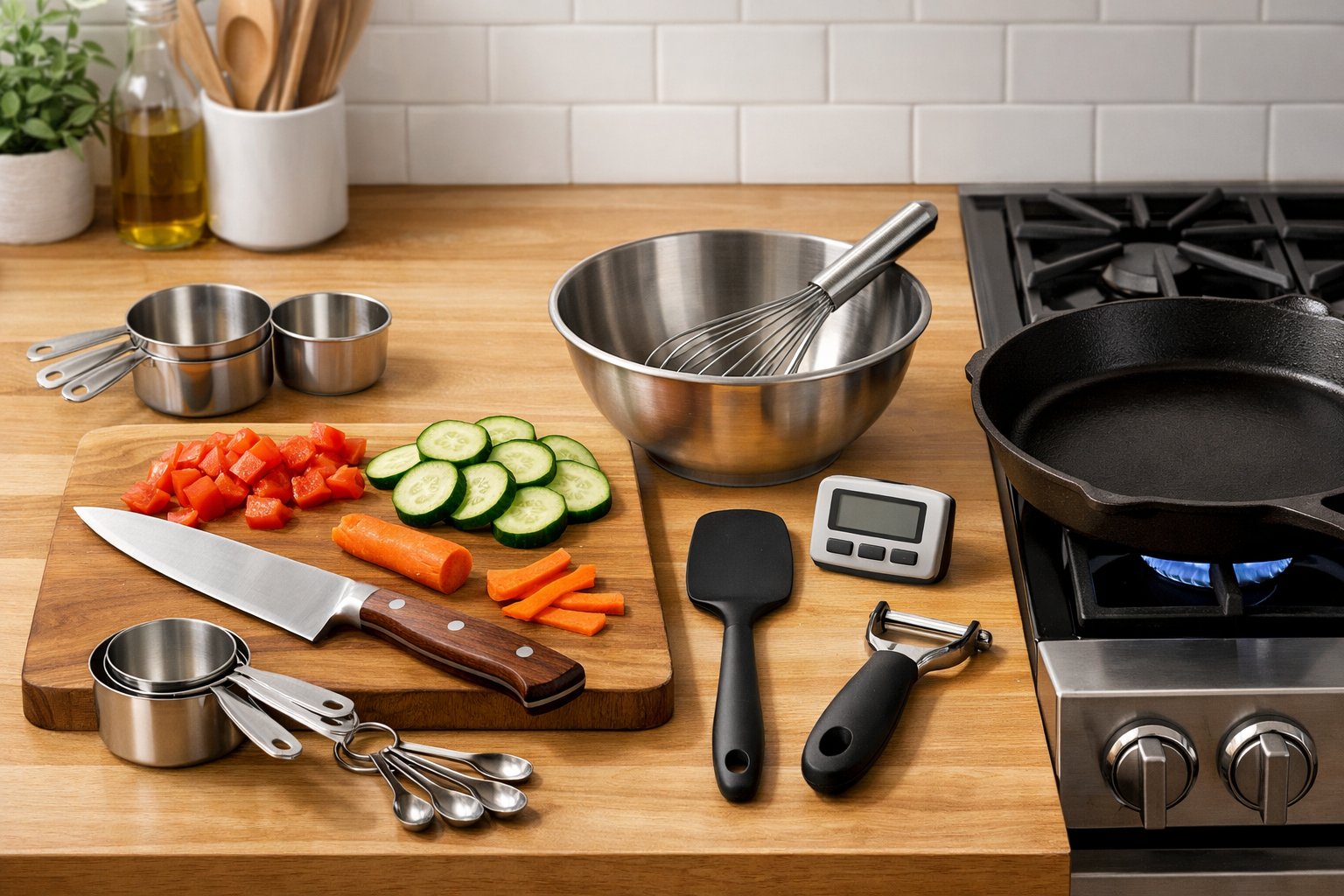

Setting up a kitchen can feel overwhelming with so many tools out there. But honestly, you don’t need every gadget to cook well.
A few essential tools will help you prepare almost any meal with confidence.
The right kitchen tools make cooking easier, safer, and more enjoyable by helping you work faster and get better results. A sharp knife slices through vegetables smoothly.
Good measuring cups help your recipes turn out right every time. Quality pots and pans heat evenly so your food cooks properly.
These basics form the foundation of every successful home kitchen.
This guide covers the most important tools you need and explains why each one matters. You’ll find out how these items improve your cooking and see a few specific products worth buying.
Whether you’re just starting out or upgrading your current setup, these essentials will serve you well for years.
Key Takeaways
- Quality kitchen tools improve cooking results and make meal preparation faster and safer
- Essential items include sharp knives, cutting boards, measuring tools, cookware, and basic utensils
- Investing in the right tools saves time and reduces frustration in the kitchen
Why Essential Kitchen Tools Matter
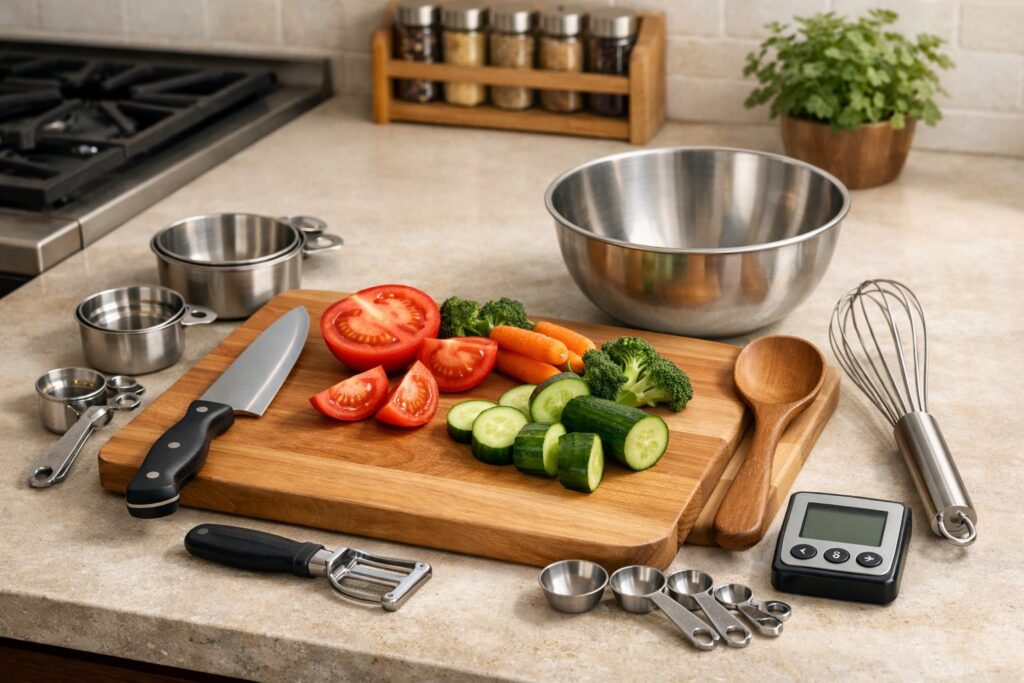
The difference between struggling through a recipe and actually enjoying the process often comes down to your tools. Quality kitchen tools directly affect how your food turns out, how safely you work, and how long your gear lasts.
How the Right Tools Improve Cooking Outcomes
Good kitchen tools help you cook food more evenly and consistently. A sharp chef’s knife gives you uniform cuts, so vegetables cook at the same rate instead of some burning while others stay raw.
A heavy-bottomed pan distributes heat evenly, so you don’t end up with hot spots that scorch your food. The right measuring cups and spoons make sure your recipes turn out the same way every time.
Baking especially depends on precise measurements. Too much flour, for example, makes cakes dense and dry.
Quality mixing bowls, spatulas, and tongs give you better control during cooking. You can fold ingredients without deflating batters or flip delicate fish without it falling apart.
Impact on Safety and Efficiency
Kitchen tools for beginners matter most when it comes to safety. A dull knife forces you to use more pressure, which leads to slips and cuts.
A sharp knife cuts cleanly with minimal force, so you have more control. Heat-resistant tools protect your hands from burns.
Silicone spatulas and metal tongs with long handles keep your fingers away from hot surfaces. A stable cutting board with non-slip grips stops dangerous sliding while you prep.
Time efficiency improves dramatically with proper tools. Tasks that take 15 minutes with poor equipment might take just 5 minutes with good tools.
A quality can opener works smoothly, and good tongs let you turn multiple items quickly instead of struggling with each piece.
Choosing Quality and Durability
Investing in durable kitchen essentials saves money over time. A $30 chef’s knife that lasts 10 years costs less than replacing cheap $10 knives every year.
Quality tools keep their performance instead of degrading after a few uses. Look for these durability markers:
- Stainless steel or high-carbon steel for knives and utensils
- Heavy-gauge aluminum or stainless steel for pots and pans
- Heat-resistant silicone rated to at least 400°F
- Solid construction without loose handles or weak joints
Well-made tools just feel better to use. Comfortable grips reduce hand fatigue during long cooking sessions.
Balanced weight makes tools easier to control. These factors matter especially for home cooking where you use the same tools over and over.
Knife Fundamentals: Building Your Core Set
A strong knife collection starts with three essential blades that handle nearly every kitchen task. Focus on quality over quantity, and learn proper care to improve your cooking speed and safety.
Chef’s Knife, The Heart of the Kitchen
Your chef’s knife is the most important tool you’ll own. It handles about 90% of your cutting tasks, from slicing vegetables to cutting proteins like chicken and beef.
Look for a blade between 8 and 10 inches long. The knife should feel balanced in your hand, with the weight evenly distributed between the blade and handle.
High-carbon stainless steel is your best choice because it stays sharp longer and resists rust. What makes a good chef’s knife:
- Comfortable grip that fits your hand size
- Full tang (metal extends through the handle)
- Balanced weight distribution
- Sharp, slightly curved blade for rocking motion
The right chef’s knife improves your knife skills quickly. You’ll chop faster and with more control.
Your cuts will be more consistent, which helps food cook evenly. Don’t buy the most expensive knife you find.
A mid-range knife from a trusted brand will serve you better than a cheap set or an overpriced professional model.
Paring Knife and Serrated Bread Knife
A paring knife gives you precision for small, detailed work. Use it for peeling fruit, deveining shrimp, or trimming fat from chicken.
The blade is usually 3 to 4 inches long, which makes it easy to control. A serrated bread knife cuts through crusty bread without crushing it.
The saw-like teeth grip the surface and slice cleanly. This knife also works well for slicing tomatoes and cutting cakes.
When to use each knife:
| Knife Type | Best For |
|---|---|
| Chef’s Knife | Chopping vegetables, slicing proteins, mincing herbs |
| Paring Knife | Peeling, trimming, detailed cutting |
| Serrated Knife | Bread, tomatoes, soft fruits |
These three knives cover all your basic needs. You won’t need specialty knives until you develop specific cooking interests.
Knife Care and Safety
Sharp knives are safer than dull ones. A sharp blade cuts where you want it to, while a dull blade slips and needs more pressure.
Wash your knives by hand with soap and water. Never put them in the dishwasher, which damages the blade and handle.
Dry them right away to prevent rust and water spots. Use a honing steel weekly to keep the blade’s edge straight.
This tool straightens the blade without removing metal. You’ll need professional sharpening once or twice a year depending on how often you cook.
Basic knife safety rules:
- Cut away from your body
- Keep fingers curled when holding food
- Use a stable cutting board
- Store knives in a block or on a magnetic strip
Never leave knives in a sink where you can’t see them. Don’t try to catch a falling knife.
Proper storage and handling will keep your knives sharp and your hands safe.
Cutting Boards and Prep Tools for Every Task
The right cutting boards and prep tools make chopping, slicing, and prepping faster and safer. Different materials serve different purposes.
Having basic gadgets like peelers and graters saves time on everyday tasks. You need at least two types of cutting boards in your kitchen.
Cutting Boards: Materials and Usage
Plastic cutting boards work best for raw meat, poultry, and fish because you can sanitize them easily in the dishwasher. Wooden cutting boards are better for vegetables, fruits, and bread because they’re gentler on your knife blades and naturally resist bacteria when properly maintained.
A good wooden cutting board should be at least 12×18 inches to give you enough workspace. Look for bamboo or maple options that won’t warp or crack easily.
Keep your plastic boards separate and use different colors if possible to avoid mixing raw meat surfaces with ready-to-eat foods. Replace your cutting boards when they develop deep grooves or cracks.
These damaged areas trap bacteria and are hard to clean properly. Always wash boards with hot soapy water after each use.
Occasionally treat wooden boards with food-safe mineral oil to keep them from drying out.
Food Prep Must-Haves: Peelers, Graters, and More
A sharp vegetable peeler makes quick work of potatoes, carrots, and other produce. The Swiss-style peelers with swivel blades adapt to different shapes and require less pressure than fixed-blade models.
You’ll prep vegetables faster and waste less of the edible parts. A box grater handles multiple tasks with its different blade sizes.
Use the large holes for shredding cheese and zucchini, the medium holes for softer vegetables, and the fine side for hard cheeses or citrus zest. Look for models with a non-slip base so the grater stays steady while you work.
The microplane zester is essential for adding fresh flavor to your dishes. It creates fine shreds of citrus zest, garlic, ginger, or hard cheese without the bitter pith or large chunks.
This small tool makes a big difference in sauces, marinades, and baked goods where you want concentrated flavor without changing the texture.
Measuring and Mixing Tools for Precision and Organization
Accurate measurements make the difference between a dish that works and one that flops. The right measuring and mixing tools help you follow recipes, maintain consistency, and prep ingredients efficiently.
Dry and Liquid Measuring Cups
Measuring cups come in two types, and you need both. Dry measuring cups have flat rims and come in sets with sizes like 1 cup, ½ cup, ⅓ cup, and ¼ cup.
You fill them to the top and level off the excess with a straight edge. This method works best for flour, sugar, grains, and other solid ingredients.
Liquid measuring cups look different because they have spouts and measurement lines on the side. They usually hold 1, 2, or 4 cups.
You place the cup on a flat surface and check the measurement at eye level for accuracy. The extra space at the top prevents spills when you pour.
Using the wrong type leads to inaccurate measurements. A cup of flour measured in a liquid measuring cup will weigh less than it should.
This matters most in baking, where small differences affect texture and rise.
Measuring Spoons and Kitchen Scale
Measuring spoons handle small amounts of both wet and dry ingredients. A standard set includes 1 tablespoon, 1 teaspoon, ½ teaspoon, and ¼ teaspoon.
You’ll reach for them when measuring spices, baking powder, vanilla extract, or oils. Just fill the spoon and level it off for dry stuff, no fuss.
A digital kitchen scale gives you more accuracy than using cups and spoons. Weight measurements take away the guesswork, like how tightly you pack flour or whether that cup is really level.
Most scales switch between grams and ounces. The tare function lets you zero out your bowl before adding ingredients, which is handy.
Professional bakers usually prefer scales for consistent results. You can portion foods evenly and cut down on waste by measuring only what you need.
Mixing Bowls for Versatile Meal Prep
Mixing bowls are a staple for all sorts of kitchen jobs. You really want at least three sizes on hand.
Small bowls are perfect for whisked eggs or holding measured ingredients. Medium ones are ideal for mixing batters and dressings.
Large bowls come in handy for salads, bread dough, or marinating meat. Stainless steel bowls resist stains and odors, and you can even use them as a double boiler over simmering water.
Glass bowls let you see what’s happening and go in the microwave. Nesting sets make storage less of a headache.
Bowls with non-slip bottoms or pour spouts are a nice touch if you mix a lot. Wide, shallow bowls make whisking easier, while deep bowls keep splatters in check with electric mixers.
Cookware Essentials for Everyday Cooking
Your pots and pans really shape what you can cook at home. The right set means you can handle anything from scrambled eggs to a weekend stew without hunting for missing pieces.
Skillets and Frying Pans: Types and Uses
You’ll want at least two skillets. A 12-inch skillet is great for big batches and family meals.
This size works for searing chicken, stir-fries, or a frittata for four. Non-stick skillets make delicate foods like eggs or fish easy to cook, and you can use less oil.
An 8-10 inch non-stick pan is perfect for smaller portions or quick meals. A cast iron skillet should have a spot in your kitchen too.
It holds heat really well and goes straight from stove to oven. With basic care, it lasts decades. The 10-12 inch size is the sweet spot for most needs.
Saucepans and Stockpots for Versatile Recipes
A 2-3 quart saucepan covers most daily cooking. You’ll use it for soup, rice, oatmeal, and sauces.
Pick one with a heavy bottom to avoid burning. A lid helps things boil faster and keeps heat in while simmering.
Your stockpot should hold at least 8 quarts. That way, you can make big batches of soup, boil pasta, or cook corn on the cob for a crowd.
The tall, narrow shape helps reduce evaporation if you’re cooking for a while. A Dutch oven is another workhorse—it bridges the gap between pots and pans.
This heavy pot with a tight lid is great for braising, baking bread, or making chili. Use it on the stove or in the oven. A 5-7 quart size will handle most recipes.
Utensils and Kitchen Gadgets: Everyday Helpers
Basic kitchen utensils are your daily sidekicks. You need tools to flip, stir, drain, and grab hot food safely—without scratching your pans.
Spatulas, Spoons, and Whisks
Have at least two types of spatulas. Silicone spatulas scrape bowls clean and fold ingredients together, plus they won’t scratch nonstick pans or melt at high heat.
A metal spatula with a thin edge flips eggs, pancakes, and burgers easily. The flat surface slides right under food without tearing it up.
Wooden spoons are classics. They stir sauces, sauté veggies, and don’t conduct heat up the handle.
Wood doesn’t scratch pots or react with acidic foods either. A whisk is key for beating eggs, mixing batter, or making smooth sauces.
An 8 to 10-inch balloon whisk covers most jobs. The wire loops beat air into food and break up clumps better than a spoon.
These tools usually cost $5 to $15 each. Pick ones that feel comfortable in your hand—you’ll reach for them constantly.
Tongs, Strainers, and Colanders
Tongs are basically an extension of your hand. They flip chicken, toss salads, and grab hot corn on the cob.
If you use nonstick pans a lot, look for tongs with silicone tips. A fine-mesh strainer rinses quinoa, drains canned beans, and sifts flour.
The small holes catch more than a colander. You can also strain lumps out of sauces with it.
A colander drains pasta and washes veggies. Get one that sits steady in the sink and has feet or a solid base.
Metal colanders last longer and handle boiling water without warping. Tongs, strainers, and colanders all solve different kitchen problems—each one earns its keep.
Small Appliances That Streamline Cooking
Modern small appliances make repetitive tasks quick and free up your hands for everything else. A good blender or food processor can seriously cut prep time, while mixers make baking way less of a chore.
Blenders, Food Processors, and Immersion Blenders
A stand blender is great for smoothies, soups, and sauces. Look for at least 64 ounces of capacity so you aren’t stopping every two seconds to scrape things down.
These machines have powerful motors that crush ice and frozen fruit without complaining. Food processors chop veggies in seconds and can shred cheese or make dough.
Pick one with at least 11 cups of capacity if you want to avoid doing things in batches. Smaller versions exist, but they can be limiting.
An immersion blender lets you blend soup right in the pot—no need to juggle hot liquid between containers. It’s compact and cleans up fast.
You can also use it for small jobs like salad dressings or baby food. It’s one of those tools you don’t realize you need until you have it.
Hand Mixers, Stand Mixers, and Specialty Appliances
A stand mixer tackles heavy doughs and big baking projects. Go for at least a 5-quart bowl so you aren’t limited by size.
These machines mix, knead, and whip without you holding the device. A hand mixer is cheaper and easier to store, and it works for most baking tasks—just not bread dough.
If you’re following a recipe written for a stand mixer, bump up the speed setting by one. Other handy appliances? An air fryer for crispy food with less oil, a slow cooker for set-it-and-forget-it meals, and an Instant Pot that pressure cooks and more.
A basic rice cooker makes perfect rice every time, which is honestly a relief if you’ve scorched a pot or two before.
Food Storage and Kitchen Organization
Good food storage keeps ingredients fresh and cuts down on waste. The right containers protect your food from air and moisture, and solid baking dishes make cooking and cleanup easier.
Airtight Containers and Food Storage Solutions
Airtight containers are a must for keeping pantry staples fresh and organized. They block out moisture, air, and pests from your flour, sugar, rice, or other dry goods.
Good food storage containers also let you see what you actually have, which helps you avoid buying stuff twice. Look for options made from glass or BPA-free plastic.
Glass containers don’t hold on to odors or stains, and you can pop them in the microwave. Plastic is lighter and won’t shatter if you drop it.
You want a mix of sizes. Small containers are for spices and herbs, medium for snacks and leftovers, and large ones for bulk items like cereal or pasta.
Square or rectangular shapes use shelf space better than round ones. Make sure lids seal tightly but aren’t a pain to open. Stackable designs are a lifesaver for crowded cupboards.
Baking Dishes and Sheet Pans
A rimmed baking sheet (or sheet pan) is one of the most useful things in any kitchen. You can roast veggies, bake cookies, or cook a whole meal on one pan.
The raised edges catch drips before they hit your oven. Get at least two half-sheet pans (18×13 inches)—they fit most ovens and give you room for family meals.
Heavy aluminum pans heat evenly and don’t warp at high temps. Baking dishes and a casserole dish are essential for lasagna, gratins, or baked desserts.
A 9×13-inch glass or ceramic dish covers most recipes. Glass lets you watch food brown on the bottom, while ceramic holds heat and looks nice on the table.
Essential Tools for Food Safety and Accurate Cooking
A thermometer takes the guesswork out of doneness. The right cleaning tools protect your investment and help prevent contamination.
Thermometers for Safe and Perfect Results
An instant-read thermometer is your best friend for juicy chicken or not-overcooked steak. Digital thermometers give you a reading in seconds, so you can pull pork chops at 145°F or check that ground beef is safe at 160°F.
A meat thermometer really helps with roasting big cuts or whole birds. You want a probe that reads quickly and stays accurate. Go for models with a wide temperature range and a clear display—backlit screens are handy in dim kitchens.
Stick the probe into the thickest part of the meat, avoiding bone and fat. Here are a few solid picks:
- ThermoWorks Thermapen ONE – Reads in one second with professional accuracy
- Lavatools Javelin PRO Duo – Budget-friendly with a big display
- ThermoPro TP19 – Waterproof and foldable for easy storage
- Meater Plus – Wireless probe you can monitor remotely
Cleaning and Care Tips for Longevity
Hand-wash knives and wooden boards to keep them from warping or going dull. Dishwasher-safe boards and utensils save time, but high heat can damage handles and finishes after a while.
Cast iron care is simpler than it sounds. Rinse your skillet while it’s still warm, scrub with a stiff brush or chain-mail scrubber, dry it completely, and rub a thin layer of oil on the surface.
Don’t stress about soap—a little won’t ruin your seasoning, but you rarely need it anyway. Use separate cleaning tools for areas where you prep raw meat.
Keep a dedicated brush or sponge for cutting boards that touch meat. Swap out sponges weekly and sanitize boards with diluted bleach or white vinegar. Use gentle scrubbers on stainless steel and nonstick pans to avoid scratches where bacteria can hide.
Top Product Suggestions: Four Essential Picks
When you’re picking kitchen tools, quality beats quantity every time. Good products last longer, work better, and honestly just make cooking less annoying.
Best Chef’s Knife for Home Cooks
The Wüsthof Classic 8-inch Chef’s Knife is a standout for most home cooks. This German-made knife feels balanced and sharp, so you can chop, slice, and mince without your hand getting tired.
The 8-inch blade is a sweet spot for most tasks. You can rock it for mincing garlic or use smooth slicing motions for bigger stuff. Full tang construction means the metal runs through the whole handle, giving better balance and durability.
Victorinox Fibrox Pro 8-inch Chef’s Knife is a great budget pick. It costs less but still works like a pro tool. The textured handle gives you a solid grip, even when things get slippery.
Top-Rated Cutting Board
John Boos Maple Wood Cutting Board protects your knife edges better than plastic or glass. Wood boards come with natural antimicrobial properties and, over time, develop a patina that honestly just looks cool in any kitchen.
Pick a board that’s at least 12 by 18 inches. You want enough space so ingredients don’t keep falling off the sides.
Thicker boards, around 1.5 to 2 inches, stay flat and resist warping. Honestly, thin boards just don’t hold up.
Oil wooden boards about once a month with food-grade mineral oil. This keeps them from cracking and makes the surface feel nice and smooth.
If you lean toward plastic, the OXO Good Grips Carving and Cutting Board is a solid choice. It’s dishwasher safe and has a juice groove to catch any runaway liquids.
Reliable Measuring Cups and Spoons Set
OXO Good Grips Stainless Steel Measuring Cups and Spoons give you accuracy you can count on. The markings stay put, even after loads of washes, and the magnetic handles snap together so you aren’t hunting for missing pieces.
When shopping for measuring tools, check for these:
- Flat tops for leveling off dry ingredients
- Long handles that balance on bowl edges
- Nesting design to save some drawer space
- Measurement markings in both metric and imperial
The basics should be covered: 1 cup, 1/2 cup, 1/3 cup, and 1/4 cup for cups. For spoons, at least 1 tablespoon, 1 teaspoon, 1/2 teaspoon, and 1/4 teaspoon.
Must-Have Skillet or Frying Pan
Lodge Cast Iron Skillet (10 or 12 inches) holds heat like a champ and, with a bit of care, builds up a natural non-stick surface. You can use it on the stove, in the oven, or even over a fire if that’s your thing.
Cast iron needs a little attention, but it’ll last for ages. Wash it with hot water (skip the soap), dry it right away, and rub a thin coat of oil on after each use.
If you’re after easy cleanup, the T-fal Professional Non-Stick Fry Pan is worth a look. Its non-stick surface makes eggs and fish slide right off, and it heats up fast for quick weeknight dinners.
Essential Small Appliance for Everyday Cooking
Vitamix E310 Explorian Blender handles smoothies, soups, and sauces with a motor that really crushes ice and blends frozen fruit smoothly. The 48-ounce container fits most family needs without hogging all your counter space.
Cuisinart Elemental 8-Cup Food Processor takes care of what blenders can’t. It slices veggies evenly, shreds cheese in no time, and whips up pie dough before you know it.
The 8-cup size is just right for prepping ingredients for family meals. Blenders make things silky smooth, while food processors chop and slice but leave some texture. Which one you grab more often totally depends on how you like to cook.
Frequently Asked Questions
Home cooks usually wonder which tools to buy first, how certain items make cooking easier, and what actually gives you the best bang for your buck. Here are some answers to help you build a kitchen that really works for you.
What are the essential kitchen utensils that every home cook should own for daily meal prep?
You need a chef’s knife for pretty much all your cutting, whether it’s veggies, proteins, or herbs. A cutting board keeps your knife and counters safe from damage.
Measuring cups and spoons help you get the right amount of each ingredient. A spatula lets you flip and stir without scratching your pans, while tongs are great for turning meat or tossing a salad.
A wooden spoon is perfect for stirring hot dishes without messing up your cookware. Don’t forget a whisk for mixing and adding some air to your batters.
Can you identify top kitchen gadgets that enhance the efficiency of home cooking?
A box grater makes quick work of shredding cheese, zesting citrus, or grating veggies. A kitchen timer saves you from overcooking by letting you know when food’s done.
Silicone baking mats are a nice swap for parchment paper and make nonstick surfaces for cookies or roasted veggies. A meat thermometer helps you cook proteins to the right temp, no guessing required.
A garlic press gets garlic minced in seconds, and kitchen shears handle herbs, meat, and even opening tricky packages much faster than a knife sometimes can.
Which kitchen appliances are considered must-haves for a well-equipped home kitchen?
A refrigerator keeps your food fresh and safe. A stove or cooktop gives you the heat control you need for most recipes.
An oven opens up baking, roasting, and broiling. A microwave is handy for fast reheating and defrosting.
A toaster or toaster oven covers bread, bagels, and small reheats. If you bake a lot, a stand mixer can be a real time saver, though not everyone needs one.
How do specific kitchen tools contribute to the overall quality and ease of cooking at home?
Sharp knives let you make clean cuts, which keeps food looking and tasting better. Good pots and pans distribute heat evenly, so you don’t end up with burnt spots.
Reliable measuring tools help your recipes turn out right every time. A sturdy colander drains pasta and rinses produce without spills or burned hands.
Heat-resistant spatulas and spoons keep your cookware scratch-free and give you better control. Tongs let you handle hot food without risking your fingers.
Could you suggest a few multipurpose kitchen tools that are particularly helpful for novice cooks?
A chef’s knife covers almost all your cutting needs, from veggies to meat. Kitchen shears do double (or triple) duty as scissors, herb snippers, and poultry trimmers.
A big skillet cooks eggs, veggies, proteins, and even one-pan meals. Tongs can flip, serve, and toss salads, so you don’t need a separate utensil for each job.
Mixing bowls work for prepping, marinating, whisking, and even serving. A box grater takes care of shredding, zesting, and grating without cluttering your drawer with extra gadgets.
What are some high-quality brands or products for essential kitchen tools recommended for home cooks?
Victorinox and Wüsthof both make chef’s knives that hold a good edge. They’re solid picks at different prices, depending on your budget.
OXO has comfortable measuring cups, peelers, and other hand tools. I find their designs easy to use and they usually last a long time.
Lodge cast iron skillets heat evenly and, with a little care, can stick around for decades. If you want cookware sets, Cuisinart and Calphalon both make sturdy options that handle daily use pretty well.
Pyrex glass mixing bowls don’t stain and you can toss them in the microwave without worry. If you bake a lot, KitchenAid stand mixers have a reputation for power and lasting through years of use.