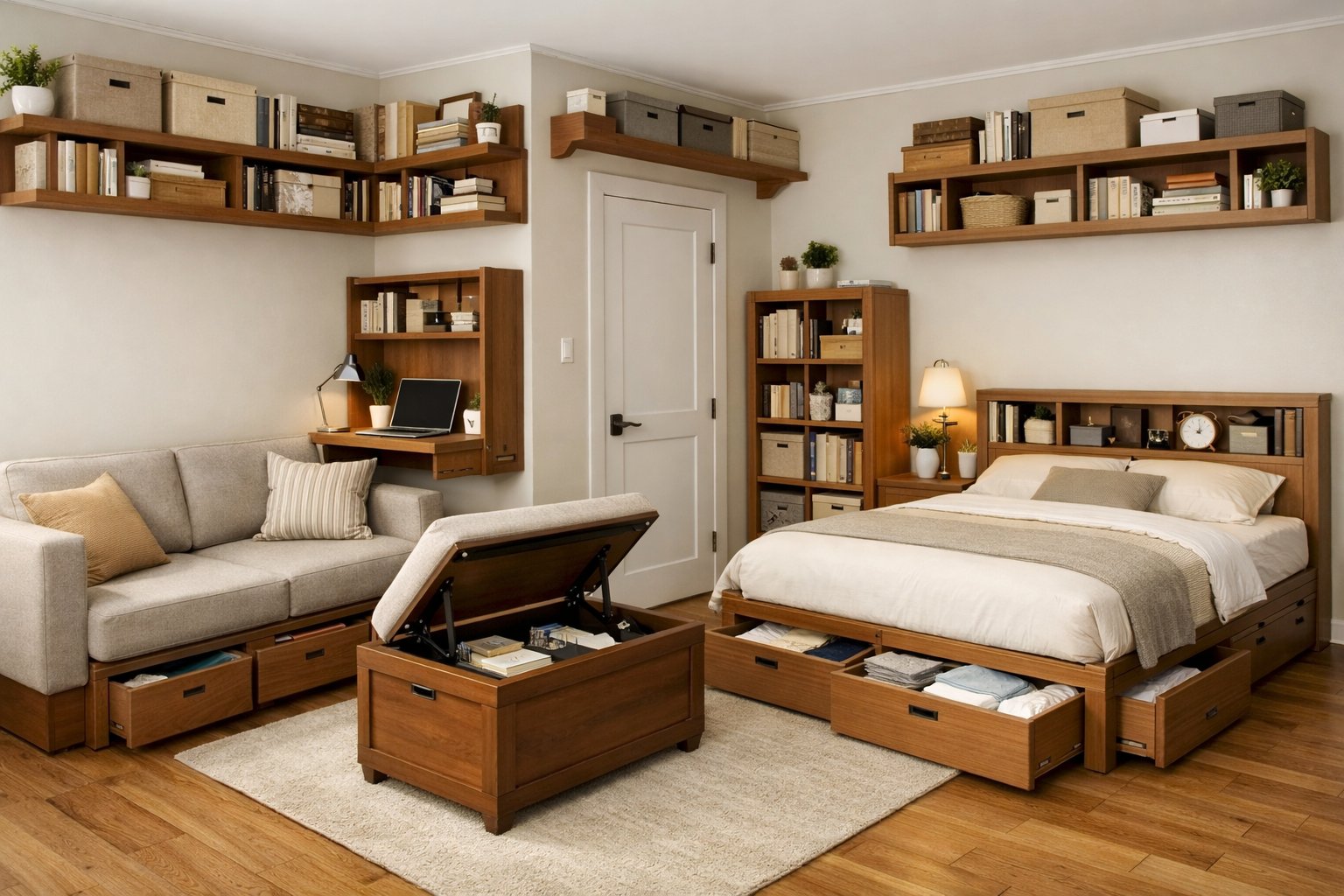

Living in a small space doesn’t mean you have to give up comfort or organization. The key to making small rooms work is picking furniture that serves more than one purpose and offers hidden storage, so you can keep your home tidy but still stylish and functional.
A storage ottoman can stash blankets and double as extra seating. A bed frame with drawers underneath keeps clothes organized, so you might not even need a clunky dresser.
Smart furniture choices and a thoughtful layout help you use every inch of your home. Tight corners can actually become useful with the right pieces.
Slim shelves, fold-down desks, and wall-mounted storage keep floors clear. That way, rooms feel a lot more open than they really are.
This guide walks you through picking furniture that actually works harder in small spaces. You’ll find out which pieces pack in the most storage and how to arrange your rooms for better flow.
These tips are handy for studio apartments, small bedrooms, or honestly, any room where space is tight.
Key Takeaways
- Pick furniture that does double duty and comes with built-in storage
- Use shelves and wall-mounted pieces to make the most of your vertical space
- Arrange furniture along room edges and stick with slim designs to help spaces feel bigger
Fundamental Strategies for Maximizing Storage in Small Spaces
Making every inch count in a small home takes a little creativity. Smart furniture, clever use of vertical space, and a willingness to let go of stuff you don’t need all help turn cramped rooms into organized spaces.
Embracing Multi-Functional Furniture
Multi-functional furniture is the backbone of good small-space living. A storage ottoman gives you both seating and a spot to hide blankets or games.
Murphy tables fold up as wall art when you aren’t using them, then come down as a full dining table when you need it. Drop-leaf tables can be a console, a desk, or a dining table, depending on how you set them up.
If you put two console tables back-to-back, you can create bar-height seating for guests. Benches with lift-top seats hide everything from seasonal clothes to kitchen supplies, all while giving you a comfy place to sit.
Look for beds with drawers or platform bases that create storage under the mattress. Convertible sofas act as seating by day and transform into beds at night, so you don’t have to cram in extra furniture.
These pieces cut down on clutter and free up valuable floor space. It’s honestly kind of fun finding new ways to make furniture do more.
Thinking Vertically for More Storage
Your walls have so much storage potential, but most people just ignore them. Floating shelves let you display books, plants, or decorations while keeping the floor open.
Pegboards make adjustable storage in kitchens, offices, or craft rooms. You can move hooks and shelves around whenever you want.
Hang hooks on walls for bikes, coats, or bags. Tall bookcases that reach the ceiling use vertical space way better than short, wide ones.
Hanging pot racks in the kitchen free up cabinet space and keep your cookware close at hand. Try stacking storage cubes or crates to build custom shelves that even work as room dividers.
Wall-mounted fold-down desks give you workspace when you need it and disappear when you don’t. Even the space under stairs can become useful storage if you add shelves or fit furniture there.
Decluttering and Organizing Essentials
Before you start buying storage solutions, you really have to cut down on what you own. Go through your stuff and get rid of anything you haven’t used in a year.
Donate, sell, or toss things that don’t have a clear purpose in your daily life. Assign a home for every item you keep, and use baskets or bins to group similar things together.
Clear containers make it easy to see what’s inside. Label everything so everyone knows where to put things back.
Store seasonal stuff like winter coats or holiday decorations on high shelves or under the bed. Keep your daily essentials in the most reachable spots.
A shoe cabinet by the door keeps shoes from piling up. Try to declutter every few months to stop new clutter from sneaking back in.
Multipurpose and Space-Saving Furniture Pieces
Furniture that does more than one job helps you store more without hogging the floor. Storage ottomans hide clutter, convertible beds save space, and nesting tables adapt to whatever you need.
Storage Ottomans and Benches
Storage ottomans are basically a win-win. You get a place to sit or rest your feet and a spot to stash stuff out of sight.
Hide blankets, books, or toys inside, and use the top as a seat or footrest. Round ottomans squeeze into corners, while rectangular ones can double as coffee tables if you put a tray on top.
Benches with storage fit perfectly in entryways or at the foot of your bed. You can keep shoes, bags, or seasonal things inside and create a spot to sit while you put on your shoes.
Look for benches with lift-up seats or drawers for easy access. It’s a small change that makes life easier.
Key features to consider:
- Cushioned tops for comfort
- Easy-open lids that don’t need two hands
- Sturdy build that supports adults
- Fabric or leather that fits your style
Convertible and Murphy Beds
Murphy beds fold up against the wall or into a cabinet when you’re not sleeping. That means more floor space for working, exercising, or just hanging out during the day.
Modern Murphy beds sometimes include shelves or desks that stay usable even when the bed is folded up. Sofa beds turn your living room into a guest room in seconds.
They look like regular couches but pull out or fold down into real beds. Storage beds are another clever option, with drawers built into the base or a lift-up mattress for hidden storage.
If you’re shopping for a Murphy bed, look for gas pistons or springs that make lifting it easy. Storage beds with side drawers are better in tight rooms than ones with drawers at the foot.
Nesting Tables and Folding Surfaces
Nesting tables stack together when you don’t need them and spread out when you do. Use one as a side table and pull out the others when friends come over.
They take up the space of one table but give you several surfaces when you need them. Folding tables attach to walls or fold flat, so you can stash them in a closet or under the bed.
Wall-mounted drop-leaf tables can be desks or dining tables, then fold down out of the way. Folding dining tables expand for more people and shrink back for everyday meals.
Best uses for folding surfaces:
- Wall desks for quick workspaces
- Drop-leaf tables in kitchens
- Tray tables that tuck beside your couch
- Console tables that extend for dinner parties
Vertical and Wall-Mounted Storage Solutions
When you run out of floor space, your walls become the next best storage spots. Vertical storage helps you organize without crowding your rooms, and wall-mounted options keep things off the ground but still easy to grab.
Floating Shelves and Wall-Mounted Cabinets
Floating shelves give you storage without the bulk of regular furniture. Install them anywhere to hold books, plants, or daily essentials.
They’re especially great in kitchens for dishes or spices, or in bathrooms for toiletries. Wall-mounted cabinets take it a step further by hiding clutter behind doors, and they don’t touch the floor, so the room feels bigger and cleaning is easier.
Pick shallow cabinets for hallways or deeper ones for bedrooms. Mount shelves at a height you can easily reach, usually somewhere between eye and shoulder level.
Think about what you’ll store and how often you’ll need it before you install cabinets. That way, you’re not climbing on chairs every day.
Tall Bookcases and Vertical Shelving
Tall bookcases stretch from floor to ceiling, making the most of vertical space. They can hold books, display decor, or hide storage bins.
Go for adjustable shelves so you can change the spacing as you need. Vertical shelving systems are even more flexible, letting you add or remove shelves and sometimes even adjust the width.
Some come with drawers or cabinets at the bottom for stuff you want out of sight. Place tall storage in corners or along walls where they won’t block the light.
Put heavy items on the lower shelves for safety, and use the top shelves for things you hardly ever need.
Corner and Overhead Storage
Corner shelves turn awkward spaces into helpful storage spots. These fit right into corners where most furniture just won’t work.
Install corner shelves in bathrooms, kitchens, or any room with wasted corner space. Overhead storage uses the area above doors, windows, or furniture.
Built-in cabinets above your bed or desk add storage without crowding the floor. Over-door organizers hang on regular doors and hold shoes, cleaning stuff, or accessories.
The space above your closet rod is perfect for built-in shelves for seasonal items or extra linens. Just make sure you can reach these spots safely, either by hand or with a small step stool.
Layout Tips and Zoning for Space Efficiency
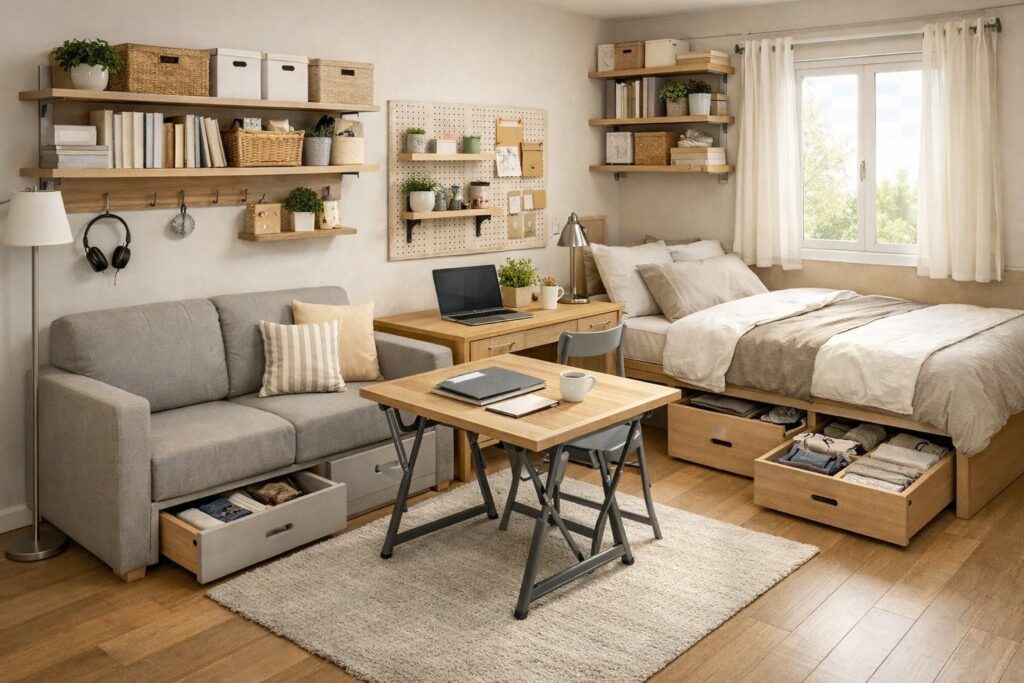
Good layouts can make a cramped space feel like home. Dividing your space into clear zones, managing how you move around, and playing with light and color can open up even the tiniest room.
Creating Zones for Multiple Needs
You need to create zones for different activities in your small space. One room can be your living area, workspace, and dining spot if you use furniture to set boundaries.
Try putting a bookshelf or open shelving unit between your bed and sitting area to separate sleeping from hanging out. Open shelves work better than a solid wall because you keep sight lines and get extra storage.
Area rugs help mark each zone, like one under your desk, another by your sofa, and a third in your dining nook.
Key zoning strategies include:
- Use tall furniture like bookcases as room dividers
- Pick different lighting for each zone, like a desk lamp for work and a floor lamp for reading
- Arrange furniture to face different ways in each zone
- Keep related activities together, like cooking and eating or sleeping and dressing
A floating console table can separate your entryway from your living room and give you a spot for keys and mail. It just makes coming home a little easier.
Maintaining Traffic Flow and Accessibility
Leave at least 24 to 30 inches of clear walkway between furniture pieces. This helps your space feel less cramped and makes daily movement easier.
Push larger furniture against the walls to open up the center of your rooms. Try not to block natural pathways between doors, windows, or high-traffic spots.
Your main walking path should stay clear even when drawers or cabinet doors are open. It’s a little thing, but it makes a big difference in daily life.
Pick furniture with exposed legs instead of pieces that sit flat on the floor. This lighter look creates visual space underneath and makes rooms seem less crowded.
You’ll see more floor, which can trick your eye into thinking the room is bigger. It’s a neat design trick, honestly.
Mount items on walls when you can. Wall-mounted desks, fold-down tables, and floating shelves keep floors open for easy movement.
Optimizing Lighting and Color
Bright spaces just feel bigger. Maximize natural light by keeping windows clear and using sheer curtains instead of heavy drapes.
Add task lighting where you need it most. Place lamps on your desk, wall sconces by your favorite chair, and under-cabinet lights in the kitchen.
Layering different light sources at various heights helps eliminate dark corners. Those dark spots can make rooms feel smaller than they actually are.
Color and reflection techniques:
- Stick with a cohesive palette of light neutrals on walls and large furniture
- Add mirrors opposite windows to bounce sunlight around
- Pick reflective surfaces like glass tabletops or mirrored furniture
- Keep patterns minimal to avoid visual clutter
Light-colored furniture in whites, creams, or pale grays opens up a room more than dark wood does. Minimalist design works well here, so stick to essentials in coordinating colors instead of mixing too many styles and shades.
Room-by-Room Small-Space Furniture Ideas
Each room needs its own furniture solutions to balance storage and daily activities. The right pieces help you use vertical space, add hidden storage, and keep the floor open.
Small Living Room: Modular Sofas and Wall-Mounted TVs
A modular sofa lets you arrange seating to fit your room and your needs. You can add or remove sections as needed.
Many modular sofas include storage compartments under the cushions for blankets or remotes. That’s handy for keeping things tidy.
Wall-mounted TVs free up floor space by removing the need for a bulky entertainment center. Mount the TV at eye level when you’re seated.
This leaves room below for a slim console table with drawers or shelves for your media gear and books. It’s a simple switch that opens things up.
Swap out a traditional coffee table for a storage ottoman. It works as seating, a footrest, and hidden storage all at once.
Pick ottomans with removable lids so you can stash magazines, games, or extra throws inside. That way, clutter stays out of sight.
Side tables with built-in shelves or drawers give you a spot for lamps and drinks while storing things you need close by. Nesting tables are flexible, since you can tuck smaller ones under the bigger table when you don’t need them.
Compact Bedroom: Under-Bed Drawers and Wall-Mounted Nightstands
Under-bed drawers put that empty space beneath your mattress to work. Platform beds with built-in drawers are great for heavy stuff like shoes or out-of-season clothes.
Rolling drawer units slide under standard bed frames and pull out easily. You’ll wonder why you didn’t use that space before.
Wall-mounted nightstands attach to the wall at whatever height you like. They keep the floor clear and make your room look bigger.
Look for versions with small drawers or shelves for books, glasses, or charging cords. It’s just enough storage for the essentials.
Wall-mounted desks fold down when you need to work and fold up flat when you’re done. This setup is perfect for bedrooms that double as home offices.
Add adjustable shelves above the desk to store supplies and keep your work area tidy. It’s a simple way to stay organized.
Window seat storage turns awkward window nooks into usable space. Build or buy a bench to fit the window width, with lift-up seats or drawers underneath for linens and seasonal stuff.
Eat-In Kitchens: Built-In Benches and Drop-Leaf Tables
A built-in bench along your kitchen wall creates a dedicated dining spot without blocking traffic. Add drawers beneath the seat for table linens, serving dishes, or kitchen tools.
Benches usually seat more people per foot than chairs. That’s a win for small kitchens.
Drop-leaf tables expand when you need more dining space and fold down when you don’t. The compact size works for everyday meals, while the extended surface is great for guests.
Pick tables with storage drawers or shelves underneath for placemats and napkins. Every bit of storage helps.
Pair your built-in bench with lightweight folding chairs on the other side. Store the chairs in a closet or hang them on wall hooks when you’re not using them.
This setup gives you flexible seating that adapts to different group sizes. It’s easy to adjust for family or friends.
Window seat storage in the kitchen creates a cozy breakfast nook while hiding pantry overflow, small appliances, or cleaning supplies. Add cushions for comfort during longer meals.
Product Suggestions to Maximize Storage
The right furniture can turn cramped quarters into efficient living spaces. These three product categories offer storage solutions that work double duty in small homes.
Versatile Storage Ottomans
Storage ottomans do a lot: they’re seating, storage, and coffee tables in one. The DocSafe Locking Fireproof Storage Ottoman stands out with its secure combination lock and water-resistant leather exterior.
It supports up to 700 pounds and protects valuables from fire and water. That’s peace of mind and practicality in one package.
For daily use, look for ottomans with gas-lift hinges. They make it easy to grab stored items quickly.
Cube-style ottomans usually give you 15-20 gallons of storage space for blankets, magazines, or hobby supplies.
Many models include removable trays on top, so you get a stable spot for drinks or snacks. Handy for movie nights or guests.
Pick round ottomans if you want flexibility, since you can nest several together when company comes over. Rectangular ottomans work better along walls or at the foot of the bed for extra seating and hidden storage for shoes or linens.
Convertible Murphy Beds
Murphy beds with built-in storage give you a bedroom when you need it, and floor space when you don’t. Modern versions have hydraulic lifts that make raising and lowering the bed smooth and easy.
You’ll find models with shelving units, fold-down desks, or cabinets that you can still use even when the bed’s down. That’s pretty clever.
Look for Murphy beds with reinforced bases that hold at least 500 pounds of stored items underneath. Side-lift versions work best in narrow rooms, while end-lift types fit wider spaces.
Many models now include USB charging ports and LED lighting in the frame. It’s all about making the most of your space.
Murphy bed systems range from basic wall-mount frames to full furniture units with built-in bookcases and storage. Some even look like entertainment centers or home offices when closed.
Expandable Nesting Table Sets
Nesting tables offer flexible surface space that tucks away when you don’t need it. A three-piece set usually includes tables that slide under each other, taking up just the space of the largest table.
Pull out the extras for drinks, snacks, or work materials as needed. It’s an easy way to add surfaces without clutter.
Pick nesting tables with different heights, usually from 18 to 24 inches, to mix things up visually and get more use out of them. Metal frames with wood or glass tops stay durable and keep the look light.
Some sets have built-in storage trays or magazine racks. These tables work well beside sofas, in bedroom corners, or as flexible side tables around the house.
Choose sets with felt pads on the feet to protect your floors and make sliding them around easier.
Sustainable and Long-Term Solutions for Small Spaces
Choosing quality pieces that last, staying organized, and going for a simpler approach will help you create a small space that works for years.
Opting for Sustainable and Durable Furniture
Sustainable furniture made from solid wood, bamboo, or recycled materials lasts longer than cheap alternatives. These pieces handle daily use and look good for years, unlike particle board or flimsy options.
Look for certifications like FSC (Forest Stewardship Council) to make sure your furniture comes from responsibly managed sources.
Durable finishes protect your investment and cut down on replacement needs. Natural oils, water-based stains, and powder-coated metal hold up better than standard finishes.
You’ll save money over time because quality pieces don’t need frequent replacement.
Multi-functional sustainable furniture includes storage ottomans made from recycled materials, modular shelving from reclaimed wood, and convertible sofa beds with metal frames. These items serve more than one purpose while reducing your environmental impact.
The higher upfront cost usually pays off with years of reliable use.
Regular Maintenance and Decluttering
Set aside 15 minutes each week to tidy up your small space. Wipe down surfaces, put things back where they belong, and check for damage that needs fixing.
This routine helps you avoid bigger, more expensive problems later.
Every three months, review what you own. If you haven’t used something, donate or sell it.
Small spaces fill up fast, so regular editing keeps your home functional. Try the one-in-one-out rule: when you bring something new home, get rid of something old.
Clean storage furniture regularly to make it last. Vacuum ottoman interiors, dust shelves, and tighten screws on fold-down tables.
These simple habits keep your furniture working and looking good.
Embracing a Minimalist Approach
Minimalism is about keeping only what you need and use. It’s a natural fit for small spaces, since you can’t hold onto extra stuff.
Pick furniture that serves a clear purpose instead of filling every corner. Fewer things competing for attention makes your space look bigger and more organized.
Go for neutral colors and simple shapes that won’t look dated. You’ll spend less time cleaning and organizing, too.
Buy less, but buy better. Instead of three cheap bookcases, invest in one high-quality shelving unit that fits your storage needs. It cuts down on waste and gives your home a more put-together look.
Frequently Asked Questions
Small-space furniture decisions raise questions about which pieces work best, how to arrange them, and where to find affordable options. Here are some answers to common concerns about multipurpose furniture, layout strategies, and specific product recommendations for compact living areas.
What are the top multipurpose furniture pieces recommended for maximizing storage in small spaces?
Ottomans with hidden compartments are some of the most useful multipurpose pieces for small spaces. Use them as extra seating, a coffee table, or a footrest while storing blankets, magazines, or other items inside.
Sofa tables that convert into desks give you workspace without dedicating a whole room to an office. When you’re done working, the table goes back to being a decorative piece behind your couch.
Storage benches work in entryways, bedrooms, or dining areas. Sit down to put on shoes and store things in drawers underneath. Murphy beds fold up against the wall when you’re not using them, freeing up floor space during the day and providing a full bed at night.
How can one arrange furniture to both save space and increase storage options in a small living room?
Put furniture around the room’s perimeter to keep the center open and make the space feel bigger. Wall-mounted shelves and cabinets add storage without taking up floor space.
Use a storage ottoman in front of your sofa instead of a regular coffee table. You get hidden storage and the same functionality.
If you work from home, set up a slim desk behind your sofa to create a workspace that doesn’t block traffic flow. Use vertical space by installing shelves up to the ceiling. Tall bookcases and cabinets hold more while taking up the same footprint as shorter ones.
Can you provide layout strategies for organizing furniture in small spaces to enhance functionality and storage?
Measure your space before buying furniture to make sure pieces fit. Create zones for different activities by using furniture as dividers, like placing a bookshelf between your living and sleeping areas in a studio apartment.
Pick furniture with exposed legs instead of pieces that sit flat on the floor. This creates visual space underneath and makes rooms feel less crowded.
Put beds against walls to free up walking space, and use the area underneath for storage bins or drawers. Build up instead of out with tall, narrow furniture.
A chest of drawers that’s 14 inches deep takes up less floor space than a wide dresser but still offers lots of storage.
What are some budget-friendly furniture options that offer significant storage solutions for small areas?
Cube storage units with fabric bins give you flexible, affordable storage. You can set up the cubes in different ways and use the bins to hide clutter while keeping things easy to grab.
Rolling carts are handy in lots of rooms and usually cost less than built-in storage. Try one in the kitchen for extra prep space, in the bathroom for toiletries, or even as a living room side table with storage underneath.
Stackable storage baskets fit under benches or tables and give you hidden storage for hardly any money. Floating shelves are another cheap fix, since you can add them without spending much or taking up floor space.
Clothing racks with bottom shelves help when you don’t have a closet. Grabbing a second-hand dresser or nightstand can also save money while giving you the same amount of storage as something new.
What are examples of clever storage-maximizing furniture pieces for those living in small apartments or homes?
Platform beds with built-in drawers cut out the need for a separate dresser. Some versions come with six or more drawers, and you can stash clothing, shoes, or extra bedding in them.
Console tables with shelves and drawers work as entryway drop zones or TV stands. You can even slide one behind the sofa if you want. They give you display space on top and hidden storage below, all while keeping a slim profile, usually just 12 to 16 inches deep.
Corner chairs squeeze into spots where regular furniture just won’t fit. Suddenly, that awkward corner is a cozy little seating area.
Wall-mounted fold-down desks attach right to the wall and flip up out of the way when you’re done, so your workspace just vanishes.
Nesting tables stack up neatly when you don’t need them. When friends come over, you can spread them out for more surfaces.
Trunks pull double duty as coffee tables and storage. You get a spot for your feet and a place to hide blankets or board games, all in one piece.