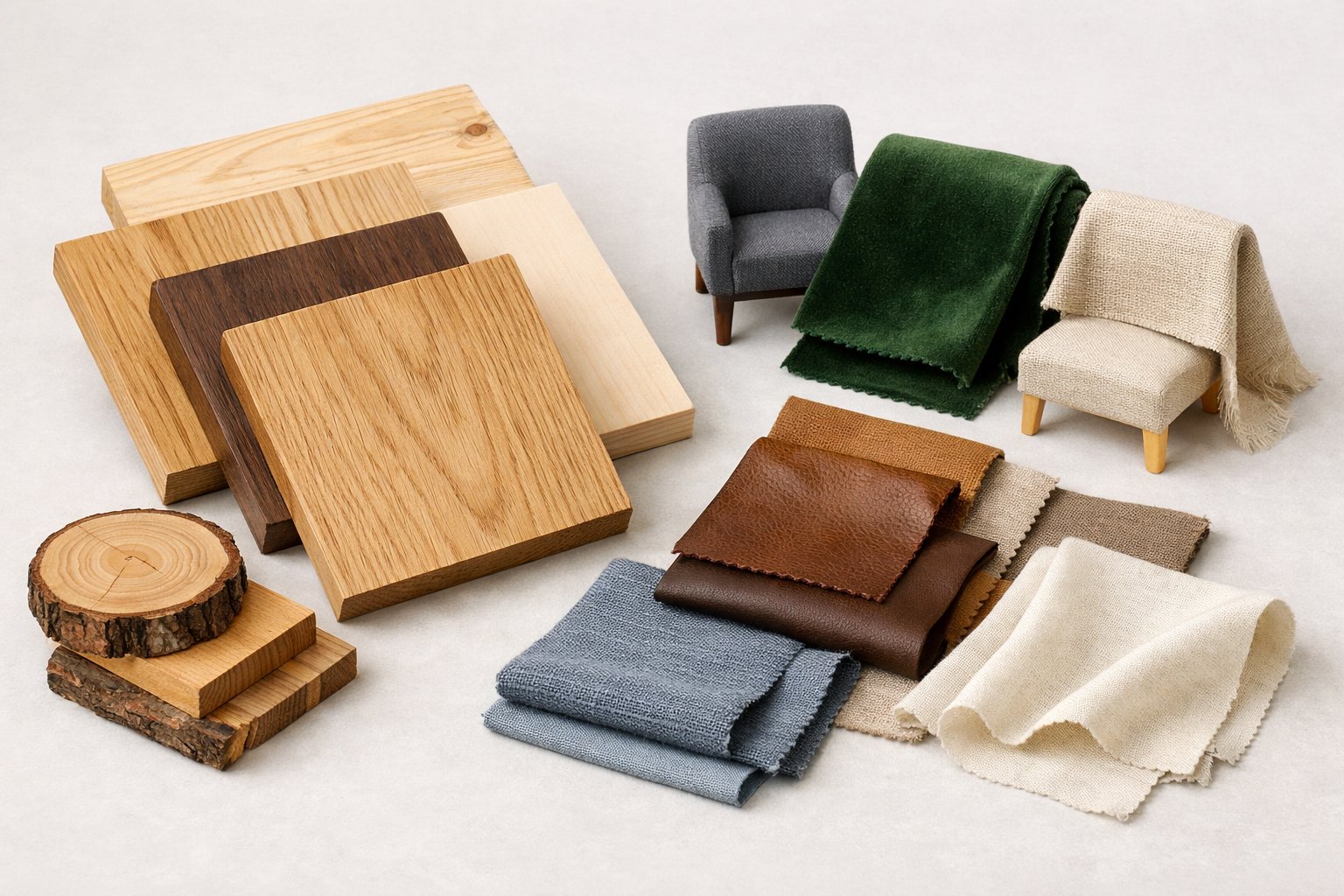

Choosing furniture isn’t just about what catches your eye. The materials you pick really shape how long your furniture lasts, how much work it needs, and whether it fits your lifestyle and budget.
Wood, metal, glass, and fabric all bring something different to the table. There’s the cozy feel of oak, the tough look of steel, or maybe you’re drawn to soft upholstery.
Understanding what goes into your furniture helps you buy smarter. If you know which woods shrug off scratches, or which fabrics hold up to pets, you’ll get more out of your investment.
The right material can mean your favorite chair sticks around for decades, or that it falls apart after a few years. That’s a big difference.
This guide breaks down the most common furniture materials you’ll see when shopping. We’ll look at wood types and what makes each one special.
You’ll get a sense of upholstery options and find real-world tips for keeping your furniture looking sharp. There are even some product picks if you want to see quality at a few different price points.
Key Takeaways
- Wood, metal, glass, and fabric all bring their own strengths when it comes to durability, style, and function
- How you care for each material really changes how long your furniture lasts
- Matching materials to your lifestyle and needs helps you get the most value
Understanding the Importance of Furniture Materials
The materials you choose for furniture decide how long your stuff lasts, how it looks, and how much effort it takes to keep clean. Your budget, lifestyle, and what you like all play a part.
Factors to Consider When Choosing Materials
Your lifestyle should lead the way. Got kids or pets? Look for scratch- and stain-resistant picks like leather or sealed wood.
Busy spaces need tough materials. Hardwood or metal can handle the daily grind without falling apart.
Budget is a big deal. Solid wood costs more upfront but can last a lifetime. Engineered wood like MDF costs less but usually lasts just 5-10 years.
Climate matters too. Wood swells and shrinks with humidity, while metal and plastic barely budge. It’s worth thinking about your local weather before you commit.
Key things to weigh:
- Maintenance – Some options need regular care, others not so much
- Weight – Metal and solid wood are heavy, plastic and bamboo are light and easy to move
- Environmental impact – FSC-certified or recycled materials are better for the planet
- Looks – Natural wood feels warm, metal gives a modern edge
Impact on Durability and Style
Furniture materials don’t all last the same. Solid hardwood can stick around for 25-100+ years. Plastic? Maybe 5-20 years if you’re lucky.
Metal sits somewhere in the middle, lasting 20-50 years if you take care of it. The material you choose sets the mood for your space.
Wood gives off a classic or rustic vibe. Glass and metal create a more modern, minimal look. Rattan and bamboo feel relaxed and eco-friendly.
If you spend more on quality hardwood or metal, you’ll likely save in the long run. A $500 solid wood table that lasts 40 years beats a $150 MDF table you replace every 7 years.
Materials also change with age. Wood gets a nice patina, metal picks up character marks, and plastic tends to fade or get brittle.
Wood Furniture: Types and Characteristics
Wood furniture comes in all shapes, from solid hardwood to engineered and reclaimed pieces. Each type brings something different in strength, price, and environmental footprint.
Solid Wood vs Engineered Wood
Solid wood furniture uses whole timber cut straight from trees. It’s strong, lasts ages, and you can refinish it over and over.
You’ll spot solid wood by the grain running right through the piece. Popular choices include oak, maple, walnut, and cherry.
Engineered wood is a mix of wood fibers, chips, or layers glued together. Plywood uses thin sheets stacked in alternating directions, so it resists warping.
MDF (Medium Density Fiberboard) is made from compressed wood fibers. It’s smooth and great for painted pieces. Particleboard uses chips and sawdust with resin, and it’s the cheapest of the bunch.
Solid wood costs more but can last a lifetime. Engineered wood is easier on the wallet, but it doesn’t handle moisture well. Your choice depends on what you need and what you want to spend.
Hardwood and Softwood Varieties
Hardwood comes from trees that lose their leaves every year and grow slowly. These woods are tough and resist dents and scratches.
Oak has a strong grain, perfect for tables and cabinets. Maple is pale and smooth, great for kitchens. Walnut is dark and dramatic, while cherry deepens to a rich red over time.
Softwood comes from evergreen trees that grow faster. Pine is light and knotty, showing up in casual or kids’ furniture.
Cedar has natural oils that keep bugs away, so it’s good for closets and outdoor projects. Softwoods dent more easily but are more affordable and easy to stain. You’ll see them in shelves, bed frames, and budget furniture that doesn’t get heavy use.
Reclaimed and Sustainable Woods
Reclaimed wood comes from old barns, buildings, or discarded furniture. It’s salvaged and given a new life, often with nail holes and weathered marks that make each piece unique.
You’ll pay more for reclaimed wood, but you get something with history. Sustainable woods are harvested in ways that protect forests and wildlife.
Look for FSC or PEFC labels. Rubberwood comes from old rubber trees that no longer produce latex, so it’s a smart reuse. Acacia grows fast and bounces back quickly. Bamboo isn’t technically wood, but it’s super strong and grows like crazy without replanting.
Picking reclaimed or certified sustainable wood helps the environment and still gets you sturdy furniture. If you care about your impact, these are great choices.
Metal Furniture: Durability and Design
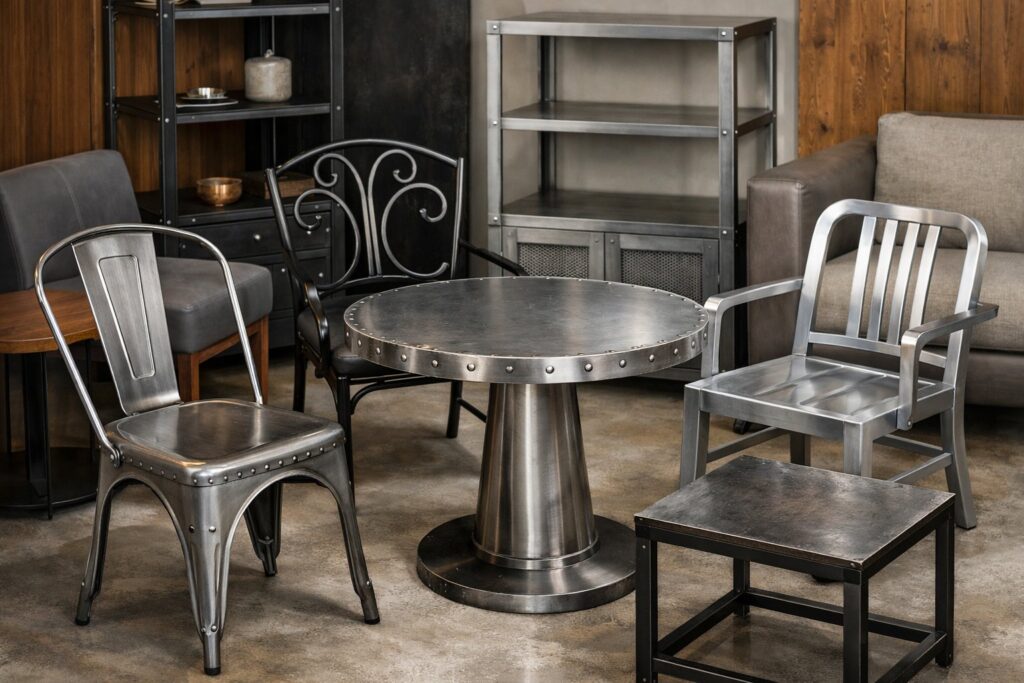
Metal furniture brings real strength and a modern vibe to any room. Steel, aluminum, and iron each have their perks for different uses, and coatings help keep rust at bay.
Common Metals Used in Furniture
Stainless steel is a go-to for indoor furniture that needs to look sharp. It shrugs off rust and fits right in kitchens or dining rooms.
You’ll see it in table legs, chairs, and shelves. Wrought iron turns up in outdoor and decorative pieces. It’s heavy, super strong, and doesn’t bend under weight.
Garden benches and patio sets often use wrought iron because it stands up to the weather—just make sure it’s sealed. Aluminum is much lighter than steel or iron, so you can move it around easily.
It never rusts, which makes it perfect for poolside or balcony furniture. Brass and copper add a warm touch and develop a patina over time—great for accent pieces like side tables.
Recycled metal is on the rise, with old metal turned into new chairs, shelves, and frames. It cuts down on waste and often costs less than brand-new metal.
Benefits and Drawbacks of Metal
Metal furniture handles daily life better than a lot of other stuff. A powder-coated steel chair can survive decades in a busy home.
The frames don’t sag or warp. Cleaning is easy—just a damp cloth for dust, or mild soap for stubborn spots. No need for fancy cleaners.
Metal looks great in modern or industrial spaces. You get clean lines and smooth finishes, from matte black to shiny chrome.
But it’s not all perfect. Metal dents if you drop something heavy. Scratches show up on shiny surfaces. If steel or iron isn’t coated, it’ll rust if it gets wet.
Metal can feel cold, especially in winter. Toss on a cushion or throw to make it cozier. Some pieces can be noisy, like chairs scraping the floor, but felt pads help with that.
Best Uses for Metal in the Home
Outdoor furniture works best in metal. Aluminum patio sets handle rain and sun without falling apart. Wrought iron benches stay strong through storms, as long as the finish is intact.
Kitchens and dining rooms love stainless steel or powder-coated metal. Bar stools with metal frames put up with constant use. Metal table bases hold up even the heaviest tops.
Office spaces benefit from metal shelving and desks. They can take the weight of books and equipment. Steel filing cabinets last for years of daily use.
Bedrooms get a minimalist look with metal bed frames. They don’t creak like some wood ones and provide solid support for any mattress.
Don’t use bare metal furniture in humid bathrooms unless it’s treated for moisture. And if it doesn’t have a good coating, keep it away from spots where spills happen a lot.
Glass, Plastic, and Composite Furniture Materials
Glass, plastic, and composite materials give you modern alternatives to traditional wood or metal. They offer a mix of design options, easy care, and can be easier on the wallet.
Each one brings something different to both home and office spaces, whether you want flexibility, low maintenance, or just something that looks a little different.
Glass Furniture Types and Care
Tempered glass pops up everywhere in furniture. It’s popular because it resists shattering and handles bumps better than regular glass.
You’ll see it in coffee tables, dining tables, and shelves. It helps a room feel open and clean, which is always nice.
Frosted and etched glass bring in some privacy and a touch of style to furniture pieces.
Glass furniture fits well in small spaces since it doesn’t block your view. The surface is non-porous, so cleaning is a breeze—just grab some glass cleaner and a soft cloth.
Basic Care Requirements:
- Wipe spills right away to dodge water spots
- Stick to microfiber cloths to avoid scratches
- Use circular motions with your glass cleaner
- Check the corners and joints now and then to make sure they’re sturdy
Fingerprints and dust show up fast on glass, so you’ll probably clean it more often than wood or metal. Tempered glass can take a beating, but don’t drag heavy stuff across it.
Features of High-Quality Plastic Furniture
Polypropylene and polyethylene are the main plastics you’ll find in solid furniture. They shrug off moisture, bugs, and sun damage, which is why they’re everywhere outside.
Good plastic furniture keeps its color and shape for years. It doesn’t just stop at lawn chairs, either.
Modern plastic pieces show up in dining sets, storage, and even accent furniture. The material lets designers go wild with shapes and colors you just can’t get from wood or metal.
Quality Indicators:
- Thickness: Heavier pieces usually mean denser, tougher plastic
- Finish: Look for smooth, even surfaces without ugly seams
- Flexibility: Should bend a little, but not crack
- UV protection: Built-in stabilizers keep colors from fading
Good plastic furniture feels sturdy, not flimsy. If it creaks or cracks when you sit, maybe keep looking. Always check the weight limits, especially for chairs.
Overview of Composite and Engineered Materials
Composites mix two or more materials to make furniture with better features. Engineered woods like plywood, MDF, and particleboard use wood fibers or chips glued together. They’re cheaper than solid wood and resist warping.
Some composites use natural fibers like bamboo, hemp, or recycled wood with binding agents. You’ll spot these in eco-friendly lines trying to cut down on waste. Wood-plastic blends mimic the look of wood for outdoor furniture.
Manufacturers control the process, so composites offer more consistent quality. They’re great for furniture that needs to be the same size every time, like cabinets or modular storage.
Using recycled stuff in composites cuts waste and keeps things durable. Many pieces now come with labels showing recycled content or low emissions. You can refinish some, but most won’t sand down like solid wood.
Upholstery Fabrics: Comfort and Style
The fabric you pick for your furniture shapes both the vibe of your room and how long your stuff lasts. Each material brings its own perks for comfort, durability, and cleaning.
Popular Upholstery Fabrics
Cotton feels soft and lets air through, so it’s comfy for sofas and chairs you use a lot. It soaks up dyes well, so you get tons of color choices. But, it can stain easier than synthetics.
Polyester stands up to fading and wear, which is handy in busy rooms. This synthetic fabric shrugs off wrinkles and can look a lot like natural fibers for less money.
Microfiber is a tightly woven synthetic that shrugs off water and stains. It’s super soft, and if you have kids or pets, spills wipe up without much fuss.
Linen gives a casual, textured look and breathes well. It does wrinkle and wear a bit faster than other fabrics, though.
Velvet brings a plush, rich feel. It catches light in cool ways, but you’ll need to fluff and care for it to avoid crushing the pile.
Blends mix natural and synthetic fibers to get the best of both worlds. You’ll usually find a nice balance of comfort and toughness.
Choosing Between Fabric and Leather
Leather furniture ages well and picks up character over time. It wipes clean with a damp cloth and doesn’t collect pet hair or allergens much. Full-grain leather is the top tier—super durable, but bonded leather is cheaper and wears out faster.
Fabric upholstery brings a lot more colors, patterns, and textures. It usually feels softer and warmer than leather. Synthetic fabrics tend to be budget-friendly, too.
Think about your lifestyle. Leather’s easy to clean and lasts ages. Fabric’s got more style options and feels cozy. If you’ve got kids, microfiber is a lifesaver. For fancier rooms, leather or velvet just looks sharp.
Maintenance and Cleaning Tips
Vacuum your upholstery every week with a soft brush to pull out dust and crumbs. It’s a simple habit that keeps things looking fresh.
Blot spills right away with a clean, dry cloth. Don’t rub, or you’ll push stains deeper. Check the cleaning code before using any products.
Flip and rotate cushions every few weeks to spread out wear. Keep fabrics out of direct sunlight to avoid fading.
For leather, wipe it with a slightly damp cloth and rub in conditioner every 6 to 12 months. That keeps it from drying or cracking.
Most fabric upholstery benefits from a pro cleaning every year or two, depending on use. In between, spot clean as needed with the right cleaners for your fabric.
Durability and Maintenance Tips
Taking care of your furniture keeps it looking good and working right for years. Each material asks for a little something different, but a few habits go a long way.
General Care for Different Materials
Dust wood furniture regularly with a soft cloth so grime doesn’t build up. Polish it every few months to keep the finish happy and the wood from drying out.
Keep wood away from direct sunlight and heat vents, since those can cause fading and cracks. Wipe up spills with a damp cloth, no waiting.
Upholstered furniture needs vacuuming every week to get rid of dust and crumbs. Rotate cushions monthly for even wear. Treat stains right away, using whatever method fits your fabric. Leather likes conditioning twice a year to avoid cracking.
Metal furniture is pretty easy. Just wipe it down with damp cloth and a little mild soap. For outdoor metal, check for rust and touch up paint if you spot any. Glass needs regular cleaning to keep fingerprints and smudges at bay.
Extending the Life of Your Furniture
Use coasters, placemats, and tablecloths to protect surfaces from heat, spills, and scratches. Felt pads under lamps and vases help prevent scratches, too.
Try not to put furniture in direct sunlight, since it can fade wood and fabrics. Stick to the weight limits on chairs and shelves, or you might end up with a broken leg or a saggy seat.
Tighten any loose screws or bolts as soon as you notice them. That stops wobbles before they get worse.
Clean spills right away so they don’t soak in. For outdoor stuff, bring cushions inside during storms or store them in waterproof bins. Cover outdoor furniture in winter to keep it safe from snow and ice.
Recommended Furniture Products
Here are three solid furniture picks at different price points and materials. Each one’s chosen for durability and real-life value.
Solid Wood Dining Table Pick
Solid oak or walnut dining tables are tough and never go out of style. Look for tops at least an inch thick and sturdy legs. Oak shrugs off scratches better than softer woods.
Walnut tables have a deeper, darker color. Both types take stain well if you want to switch up the look later. Mortise and tenon joinery beats just screws or brackets for strength.
If you’re on a budget, ash dining tables are a good choice. Ash is cheaper than oak or walnut but still strong. The grain looks a lot like oak, just lighter. A 36 by 60 inch table fits four to six people comfortably.
Top Affordable Sofa Option
Polyester and microfiber give the most bang for your buck if you’re shopping for a sofa under $800. These synthetics resist stains better than cotton or linen. Microfiber sofas clean up easily with water and mild soap.
Pick sofas with hardwood frames, not particle board or plywood. Birch and pine are more affordable but still sturdy. Corner blocks at the joints add extra strength.
High-density foam in the cushions holds its shape longer. Aim for foam rated at least 1.8 pounds per cubic foot. Pocket coil springs under the cushions add comfort and support. Three-seater sofas between 78 and 84 inches usually fit most living rooms nicely.
Outdoor Furniture Recommendation
Cedar or acacia wood outdoor furniture holds up against rot and bugs without chemicals. Cedar naturally fights off moisture and stays solid in humid weather. Acacia has a tighter grain and darker look, and it handles temperature swings well.
Teak is the gold standard for outdoor furniture—super weather resistant thanks to its natural oils. It won’t crack or warp easily. All three woods need oiling now and then to keep their color and stop them from turning gray.
Look for stainless steel hardware to avoid rust. Slatted chairs and tables let water drain off instead of pooling. A water-based sealant every year or so helps outdoor pieces last even longer.
Frequently Asked Questions
Picking the right furniture material can get confusing—so many choices, so many claims. Here are some common questions people ask about wood, fabrics, durability, and care.
What are the different types of wood commonly used in furniture making?
Hardwoods like oak, maple, cherry, and walnut are tried and true for furniture. They’re dense, durable, and stand up to heavy use. Oak has a bold grain and comes in both red and white. Maple is smooth and light, making it easy to finish however you like.
Cherry starts off pale and deepens to a rich reddish-brown over time. Walnut’s got those dark brown tones and a straight grain—always looks classy. Both are favorites for high-end pieces.
Softwoods like pine, cedar, and fir cost less. Pine is light and easy to work with, but it dents more easily. Cedar fights off bugs and rot, so it’s great for storage furniture.
How do I choose the right upholstery fabric for my furniture?
Your daily life really decides which fabric is best. Got kids or pets? Go for tightly woven fabrics that resist stains and wear. Microfiber and polyester are easy to clean and tough enough for daily messes.
Cotton and linen breathe well and feel great, but they stain more easily. You can treat them with special coatings to help, though.
Leather lasts a long time and looks better with age. It shrugs off spills better than most fabrics and just needs the occasional conditioning. Performance fabrics blend the look of natural fibers with better stain and moisture resistance.
Check the rub count for durability. Anything above 15,000 is good for heavy use. Lower counts are fine for pieces that don’t get much action.
What qualities should I look for to ensure furniture material durability?
Dense hardwoods like maple, oak, and hickory are long-lasting. Solid wood pieces should use good joinery, like dovetails or mortise and tenon—not just glue or staples. Construction quality really matters.
For upholstery, tight weaves and high thread counts are key. The fabric should feel sturdy, not thin. Double-rub ratings over 15,000 mean it’ll handle daily use.
Metal frames should use thick steel or aluminum with welded joints. Thin metals bend too easily. Powder-coated finishes protect against rust and scratches better than paint.
Plywood works well for furniture if it’s made with several layers and strong glue. Avoid particle board in structural pieces, since it doesn’t handle moisture well.
Can you provide maintenance tips for various furniture materials?
Wood furniture needs dusting with a soft cloth every week. Clean up spills right away with a damp cloth, then dry the area.
Apply furniture polish or wax every few months to protect the finish. Keep wood away from direct sunlight and heat sources to avoid fading and cracking.
Vacuum upholstered furniture weekly using the brush attachment. Blot liquid spills quickly with a clean cloth.
Most fabrics do better with professional cleaning every year or two. Always check the manufacturer tags for specific cleaning codes—they’re easy to forget about, but they matter.
Wipe leather with a slightly damp cloth for routine cleaning. Apply leather conditioner every 6 to 12 months so it doesn’t dry out or crack.
Keep leather furniture out of direct sun and away from heat. Honestly, nothing ruins leather faster than a sunny window.
Metal furniture needs a wipe-down with a damp cloth to get rid of dust and debris. Dry it off completely to prevent rust.
Touch up scratches in powder-coated finishes with matching paint if you spot them. For outdoor metal pieces, apply protective wax or sealant once a year.
What are some recommended furniture pieces showcasing quality materials and craftsmanship?
A solid oak dining table shows how durable hardwood stands up to daily use. Look for tables with thick tops and sturdy legs.
The wood grain should look consistent, and the finish should feel smooth. You can usually tell when something’s well-made just by running your hand over it.
Leather sofas from established manufacturers highlight quality upholstery work. Top-grain or full-grain leather lasts way longer than bonded leather.
Check that cushions have high-density foam cores for comfort that sticks around. If you’re investing in leather, you want it to age well, not sag in a year.
Hardwood bedroom dressers with dovetail drawer construction really show off solid craftsmanship. Drawers should glide smoothly and joints need to fit tight.
A good finish protects the wood and brings out its natural beauty. There’s just something about real wood that feels right in a bedroom.
What is the importance of understanding furniture material when selecting pieces for my home?
If you know your materials, you can actually match furniture to how you use your space. A family room needs something different than a formal dining room, right?
When you get these differences, you avoid buying pieces that just won’t hold up to your lifestyle. It’s frustrating to realize something’s too delicate after you’ve already brought it home.
Your material knowledge also shapes your budget. Hardwood costs more at first, but if you take care of it, it’ll last for decades.
Engineered wood comes in cheaper, but you might have to replace it sooner. That’s where you can decide what’s worth the extra money.
Each material wants its own care routine. Wood likes a good polish every now and then, while upholstery just needs a vacuum.
When you know what you’re buying, you can actually keep it looking good for longer. That’s just smart if you ask me.
Material choice really changes how furniture looks at home. Wood tones, fabric textures, metal finishes, they all play a part in your design.
If you understand these details, you can pull together a look that feels intentional and balanced across your rooms.