
Picking the right sofa can feel overwhelming with so many choices online or in a showroom. You have to consider how it’ll fit in your space, whether it matches your lifestyle, and if it’ll still look good after a few years.
The best sofa for your living room balances proper measurements, comfort that fits your habits, durable materials, and a style that feels right for your home.
A sofa is one of the biggest purchases you’ll make for your home. It usually takes up the most space in your living room and gets used more than just about any other piece of furniture.
Getting it right the first time saves money, stress, and the hassle of returns. This guide covers everything you should know before you buy.
You’ll learn how to measure your space, pick the right size and layout, choose comfortable cushions, select long-lasting materials, and find a style that won’t get old fast. There are even some product recommendations to help narrow things down.
Key Takeaways
- Always measure your room, doorways, and pathways before buying to ensure your sofa fits through your home and works with your space
- Choose materials and comfort levels based on how you actually use your living room and who lives in your home
- Balance your budget with quality since a well-made sofa lasts longer and saves money over time
Measuring Your Space and Sofa Dimensions
Measuring before you buy a sofa can save you from expensive mistakes. You have to measure both your room and the sofa you want to make sure everything fits comfortably.
How to Measure Your Living Room
Start by measuring the wall where you plan to put your sofa. Use a tape measure and write down the width in inches.
Next, measure the depth from the wall to where the front of the sofa will sit. Leave at least 18-24 inches between your sofa and the coffee table so you can move around easily.
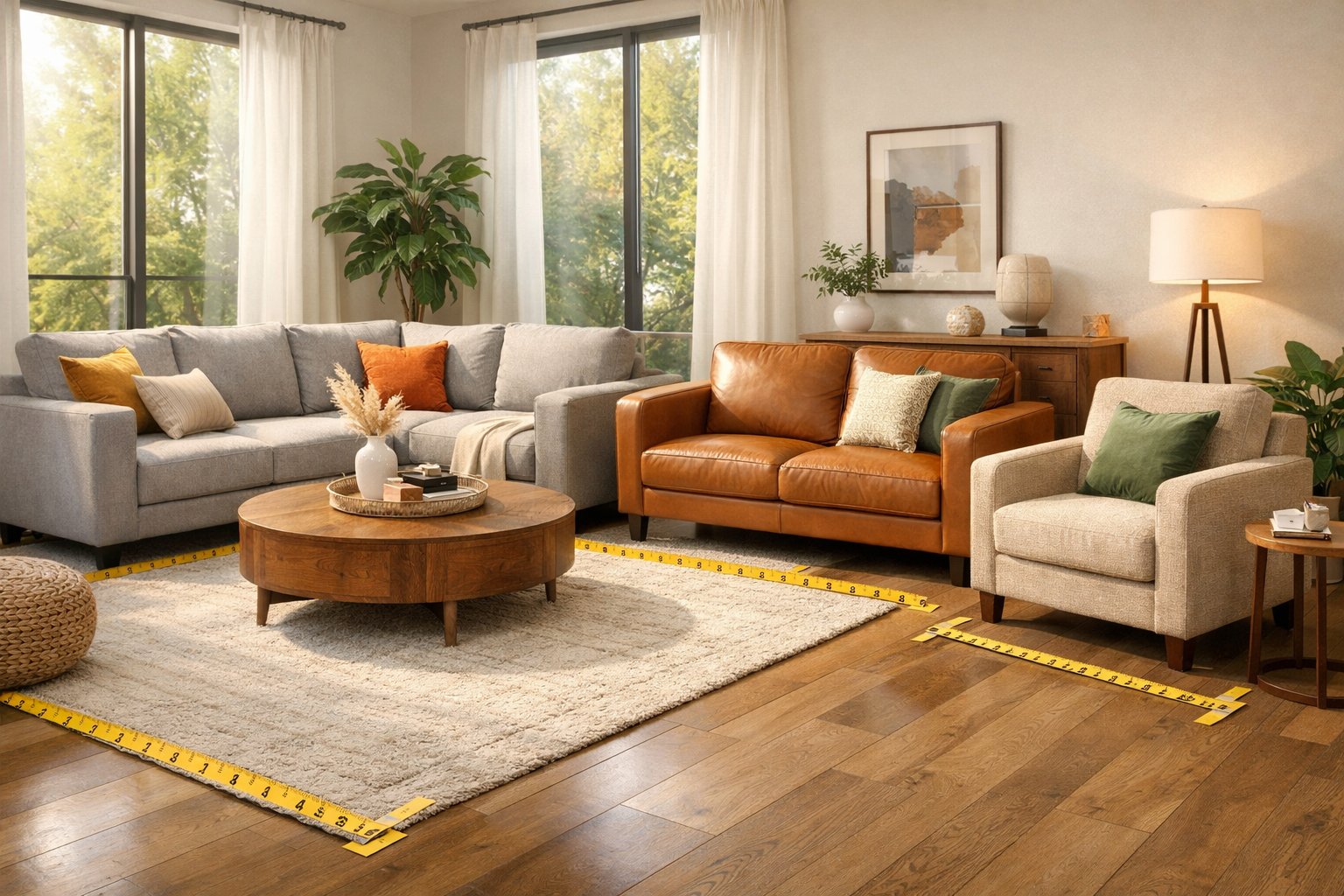
For main walkways, you need 30-36 inches of space. Use painter’s tape on the floor to outline your sofa’s footprint. This trick really helps you see how much room it’ll take up.
Walk around the taped area to check if the space still feels open. Measure your ceiling height and any windows behind where the sofa will go.
The sofa back shouldn’t block windows or look awkwardly tall in the room. A quick check here can make a big difference.
Understanding Sofa Dimensions
Sofa dimensions include several key measurements. Sofa width is the distance from the outer edge of one armrest to the other.
Sofa depth is measured from the front of the seat to the back.
Here are standard sofa sizes:
| Sofa Type | Width | Depth | Seats |
|---|---|---|---|
| Loveseat | 52-65 inches | 38 inches | 2 |
| Three-Seater | 84-90 inches | 38 inches | 3 |
| Four-Seater | 100-117 inches | 38 inches | 4 |
| Sectional Sofa | 90-120+ inches | Varies | 5+ |
Seat depth for standard sofas is usually 21-24 inches. Deeper seats (26-28 inches) are great for lounging, while shallower seats are better if you want your feet to touch the floor.
Seat height is typically 17-20 inches from the floor. Back height changes how much neck support you get and affects the look of the sofa in your room.
Always check the spec sheet for any sofa you’re considering. It lists all the important measurements so you can compare different options.
Navigating Doorways and Delivery Pathways
Measure every doorway, hallway, and stairwell the sofa will need to pass through. Write down the width and height of each opening.
Pay attention to tight corners, too. Measure the diagonal space at corners because movers usually have to angle furniture to get it through.
Watch for low ceilings, hanging lights, or narrow passages. Most sofas fit through a 30-inch doorway if you angle them, but sectionals and larger pieces need more space.
Some sofas have removable legs to make delivery easier. If your entryways are tight, ask the retailer if the sofa legs or back come off.
Matching Sofa Size and Layout to Room and Lifestyle
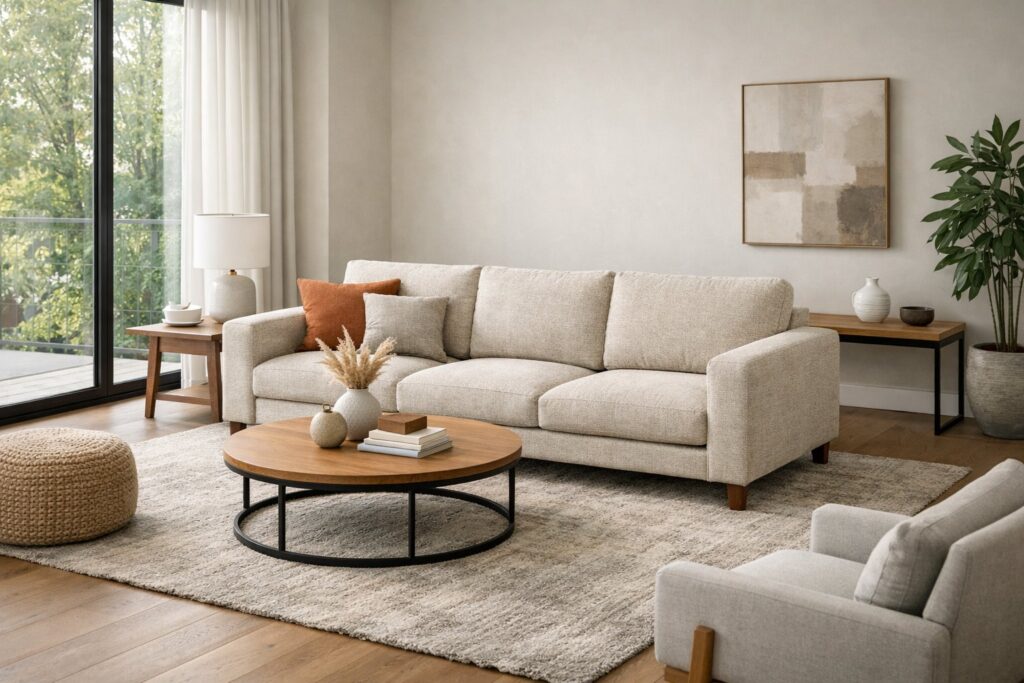
The right sofa size and layout depends on your room’s measurements and how you actually use the space. Your lifestyle and room dimensions really work together here.
Selecting the Proper Sofa Size for Your Space
Start by measuring your room’s length and width in feet. Write down the numbers so you don’t forget.
You should also measure doorways, hallways, and staircases for delivery. The sofa width should take up about two-thirds of your wall length.
For example, if your wall is 12 feet long, look for sofas between 7 and 8 feet wide. Most standard sofas range from 72 to 96 inches in width.
Sofa depth matters too. Most sofas are 36 to 40 inches deep. Leave at least 30 inches between your sofa and coffee table for walking space.
In a small room under 150 square feet, try a compact loveseat at 58 to 64 inches wide. Check the arm width and seat height as well, since wide arms can add 8 to 12 inches to the total width and eat up seating space.
Choosing the Right Sofa Layout
A standard three-seat sofa works for most medium to large living rooms and seats 3 to 4 people comfortably. An L-shaped or sectional sofa fits well in corners and offers more seating without extra chairs.
Modular sofas are flexible since you can rearrange the pieces as needed. You can add or remove sections over time, but check reviews because some modular sofas slide apart with regular use.
Sleeper sofas and sofa beds are handy if you host overnight guests but don’t have a guest room. These usually need 50 to 60 inches of space in front to open up fully.
Loveseats work well for apartments or as part of a bigger seating setup. They’re 52 to 72 inches wide and seat two people comfortably.
Traffic Flow and Arrangement Considerations
Map out your walking paths before placing your sofa. People should be able to move around without squeezing past furniture.
Keep 30 to 36 inches clear for main pathways. Place your sofa facing the room’s focal point, whether that’s a TV, fireplace, or window.
Try not to block natural light or heating vents with your furniture. If you have pets or young kids, skip the massive sectional that takes over the whole room.
Large sofas don’t always get used fully and can make the space feel crowded. Choose performance fabrics that resist stains and wear if you have a busy household.
Think about how you actually use your living room. If you host big gatherings, a sectional gives you more seats. For formal spaces, a standard sofa with a couple of accent chairs creates a nice balance.
Evaluating Comfort and Cushioning
The right comfort level comes down to how your body fits the sofa and what materials support you. Seat dimensions affect your posture, while cushion types decide how the sofa feels and holds up over time.
Seat Depth and Seat Height
Seat depth measures from the front edge to the back cushion. Most fall between 20 and 24 inches.
If you’re shorter, look for depths around 20 inches so your back reaches the cushion and your feet touch the floor. Taller folks usually prefer 22 to 24 inches for better leg support.
Seat height is from the floor to the top of the cushion, usually 17 to 19 inches. Standard 18-inch heights work for most people.
Lower seats make it harder to stand up, especially for older adults or anyone with mobility issues. Higher seats are easier to get in and out of but might leave shorter people’s feet dangling.
Always test the sofa by sitting for at least five minutes. Your knees should bend comfortably, and you shouldn’t feel pressure behind your thighs.
Your back should rest against the cushion without needing to scoot forward. If it doesn’t feel right, keep looking.
Cushion Firmness and Fill Options
Foam cushions give steady support and come in different densities. High-resiliency foam keeps its shape longer than standard foam and usually lasts longer too.
Look for foam with a density of at least 1.8 pounds per cubic foot for durability. Down-filled cushions feel softer and more luxurious but need regular fluffing.
They compress over time and take more maintenance. Many sofas combine down wrapping over foam cores to balance comfort and structure.
Spring systems like sinuous springs (those S-shaped wires) support the cushions from below. They add bounce and help prevent sagging.
Quality sofas use eight-way hand-tied springs for maximum durability, but those cost more. Firmness is a personal call.
Firm cushions support your body better for sitting upright and tend to last longer. Soft cushions feel cozy for lounging, but they may not hold up as well for long reading sessions.
Back Height and Arm Design
Back height affects head and neck support. Low backs (under 30 inches) fit modern spaces but don’t support your head.
High backs and tufted back designs provide full support for relaxing or napping. Reclining sofas and recliners often have built-in headrests for extra comfort.
Rolled arms add width and give a traditional look, plus they’re comfy for side rests. Track arms (straight and boxy) save space in small rooms.
Slim arms maximize seating width, while thick padded arms give you a spot to rest your elbows or lean against. Think about how you use your sofa most.
If you watch TV for hours, prioritize back support and proper seat depth. For reading, look for higher backs and firmer cushions that help you keep good posture.
Sofa Materials and Upholstery Options
The material you pick changes how your sofa looks, feels, and holds up over the years. Different upholstery options work better for different lifestyles and budgets.
Performance Fabrics and Durability
Performance fabrics resist stains, moisture, and wear better than standard materials. These fabrics have special treatments that make them ideal if you have kids or pets.
They clean easily with just water and mild soap in most cases.
Look for fabrics rated above 15,000 double rubs in durability tests. This number tells you how many times the fabric can be rubbed before showing wear.
Higher numbers mean longer-lasting upholstery.
Key features of performance fabrics:
- Stain-resistant coatings
- Water-repellent properties
- Easy to clean and maintain
- Fade-resistant colors
Microfiber feels soft but stands up to daily use. Crypton and Sunbrella offer extra protection if you want something even tougher.
You can request fabric swatches from retailers to test the texture and durability at home before buying.
Leather, Velvet, and Fabric Choices
Leather sofas develop a natural patina over time and last for decades with proper care. Full-grain leather is the most durable and expensive option.
Top-grain leather costs less but still offers good quality.
Velvet sofas add luxury and softness to your space. The fabric catches light in different ways and creates visual interest.
However, velvet shows wear patterns and needs regular brushing to look its best.
Cotton and linen fabric sofas breathe well and feel comfortable in warm weather. These natural materials wrinkle more easily than synthetic options.
Polyester blends combine affordability with better wrinkle resistance.
Material comparison:
| Material | Durability | Maintenance | Price Range |
|---|---|---|---|
| Leather | High | Low | High |
| Velvet | Medium | Medium | Medium-High |
| Cotton | Medium | High | Low-Medium |
| Polyester | High | Low | Low-Medium |
Evaluating Frame and Construction Quality
The frame determines how long your sofa lasts, no matter what upholstery you pick. Hardwood frames from kiln-dried maple, oak, or ash provide the best support.
Avoid frames made entirely from particleboard or plastic.
Corner blocks reinforce the joints where frame pieces meet. These triangular supports prevent wobbling and add years to your sofa’s life.
Check that corner blocks are glued and screwed into place, not just stapled.
Eight-way hand-tied springs offer superior support and comfort. Sinuous springs cost less and work well for lighter use.
Webbing is the least expensive support system but wears out faster.
Ask about the frame warranty before you buy. Quality manufacturers offer at least 10 years of coverage on frames.
Lift one end of the sofa to test its weight, heavier pieces usually mean better construction.
Sofa Styles and Aesthetic Considerations
Your sofa style shapes how your entire living room looks and feels. The right combination of style, color, and design details creates a space that reflects your taste while staying practical for everyday use.
Popular Sofa Styles Explained
Modern sofas feature clean lines, low backs, and minimal details. They usually have slim arms or no arms, with legs exposed to keep things airy.
These work best in spaces with simple decor and neutral color schemes.
Traditional sofas include rolled arms, tufted backs, and structured cushions. You’ll often see wooden legs, decorative trim, and classic fabrics like velvet or damask.
These pieces add formality and work well in rooms with classic furniture and detailed woodwork.
Mid-century modern sofas sit lower to the ground with angled legs and button tufting. They balance retro appeal with current trends and fit into both modern and eclectic spaces.
Sectionals come in L-shapes, U-shapes, or curved designs. They’re practical for large families and open floor plans where you need flexible seating arrangements.
Choosing Colors and Finishes
Neutral colors like gray, beige, and cream remain popular because they adapt to changing decor trends. These shades work with almost any accent color and won’t limit your design options later.
Bold sofa colors make strong statements but require more commitment. If you choose a bright or patterned sofa, keep other large furniture pieces neutral.
Navy, emerald green, and terracotta add personality without overwhelming your space.
Consider these factors for sofa color selection:
- Light colors show dirt and stains faster but make small rooms feel larger
- Dark colors hide wear better and create cozy, intimate spaces
- Patterned fabrics disguise spills and pet hair more than solid colors
- Your existing wall colors and flooring should guide your choice
Matching Sofa Style to Interior Design
Your sofa should complement your room’s overall design direction. In a modern space, avoid heavy traditional pieces with ornate details.
In a classic room, ultra-minimal sofas can look out of place.
Mix different furniture styles intentionally rather than matching everything exactly. If your chairs have skirted bottoms, try a sofa with exposed legs.
This creates visual interest and keeps your room from feeling too coordinated.
Custom sofas let you control exact dimensions, fabrics, and details. You can match specific design elements to your space, though they cost more and take longer to deliver than ready-made options.
Pay attention to small design details like nail head trim, welting along seams, and leg finishes. These elements define your sofa’s style but shouldn’t compete with each other.
Pick two or three details that matter most to you instead of adding every decorative option available.
Top Sofa Picks: Product Suggestions
The right sofa depends on your space, lifestyle, and how you use your living room. These three picks address common needs: flexible layouts, guest accommodation, and tight spaces.
Best Modular Sofa for Versatility
A modular sofa lets you rearrange pieces as your needs change. You can split it into separate seats for game night or push sections together for movie marathons.
This works well if you move frequently or like changing your layout. Look for modular sofas with individual pieces that connect securely but separate easily.
The Lovesac Sactionals system uses washable covers and replaceable cushions. Burrow’s modular sectionals ship in boxes and snap together without tools.
Most modular options use performance fabrics that resist stains and wear. Check that each piece has sturdy legs and a solid frame.
Some brands let you add or remove sections later, which helps if your space grows or shrinks.
Recommended Sleeper Sofa for Functionality
A sleeper sofa gives you seating during the day and a bed for overnight guests. Modern sofa beds don’t look bulky like older models did.
They blend into your living room until you need them. The best sleeper sofas use memory foam mattresses instead of thin metal bars.
West Elm’s Harmony sleeper and Crate & Barrel’s Davis model both offer full-size mattresses with decent support. Look for pull-out mechanisms that operate smoothly without pinching fingers.
Your guests will sleep better on a sofa bed with at least a 4-inch mattress. Test the pull-out system in the store to make sure it feels sturdy.
Check if the mattress folds completely flat without a gap in the middle.
Top Pick for Compact Living Rooms
Small spaces need sofas under 72 inches long that don’t block traffic flow. A compact sofa should still seat two people comfortably without feeling cramped.
IKEA’s Friheten corner sofa fits tight spaces while adding storage underneath. Article’s Ceni sofa measures 67 inches and works in apartments or condos.
Both use firm cushions that don’t sag quickly. Look for sofas with exposed legs instead of skirts, it makes the room feel more open.
Armless designs or sofas with thin arms save several inches of width. Choose lighter colors to keep your space from feeling closed in.
Final Checks and Practical Buying Tips
Before you commit to a sofa purchase, take time to test it properly and understand what protection you have after the sale.
Testing Comfort and Support Before Purchase
Sit on the sofa the way you actually use furniture at home. Spend at least five minutes testing different positions.
Lean back, sit upright, and try lying down if that’s how you plan to use it. Push down on the seat cushions to check for firmness and bounce-back.
High-quality foam and spring systems should feel supportive, not mushy. If the cushion bottoms out easily, it probably won’t hold up well over time.
Check the seat depth by sitting all the way back. Your feet should touch the floor comfortably without the edge cutting into your knees.
Test the armrest height by resting your arm naturally. Bring family members who will use the sofa regularly.
What feels comfortable to you might not work for someone taller, shorter, or with different body needs.
Reviewing Warranties and Return Policies
Read the warranty details before buying. Frame warranties typically last longer than fabric or cushion coverage.
Most quality sofas offer at least a one-year warranty on the frame, with better models covering five to ten years. Ask what the warranty actually covers.
Some only protect against manufacturing defects, not normal wear and tear. Know if you need to keep receipts, register the product, or meet specific care requirements.
Check the return window and any restocking fees. Many stores charge 15-25% to return custom-ordered sofas.
Ask about exchange options if the sofa doesn’t fit your space as expected. Get all promises in writing, including delivery dates and assembly services.
Frequently Asked Questions
Finding the right sofa involves understanding spatial requirements, comfort features, material durability, and aesthetic harmony with your existing decor.
What are the key considerations for selecting a sofa that fits my living room layout?
You need to measure your space multiple times before shopping. Take measurements of the room where the sofa will sit, including the width, depth, and height available.
Measure all pathways the sofa must pass through during delivery. This includes doorways, hallways, stairwells, and any tight corners.
Missing these measurements can lead to delivery problems where the sofa cannot reach its destination. Consider the scale of the sofa relative to your room size.
A sofa that technically fits can still make your space feel cramped if it’s too large for the room’s proportions.
How can I determine the ideal sofa dimensions for my living room size?
Your sofa should leave enough space for traffic flow around the room. Aim for at least 30 inches of walking space between the sofa and other furniture or walls.
The sofa length should be proportional to your wall length. A good rule is to choose a sofa that takes up about two-thirds of the wall it sits against.
For sectionals, avoid filling the entire room with seating you won’t use. Many people choose oversized sectionals that rarely get fully occupied, which wastes valuable floor space.
What factors should I consider to ensure comfort when buying a new couch?
Seat depth affects how you sit and relax on your sofa. Standard seat depth ranges from 21 to 24 inches, but deeper seats work better if you like to lounge or curl up.
Cushion firmness impacts both comfort and longevity. Medium-firm cushions usually offer the best balance of support and comfort while maintaining their shape over time.
Test the sofa in person when possible. Sit in different positions for at least 10 minutes to assess whether the height, depth, and firmness work for your body and usage habits.
Which sofa materials offer durability and ease of maintenance for a busy living room?
Performance fabrics resist stains and wear better than traditional upholstery. These materials are treated to repel liquids and stand up to heavy use from kids and pets.
Leather and faux leather wipe clean easily. They’re good choices for households with young children or pets, though genuine leather needs occasional conditioning to prevent cracking.
Tightly woven fabrics like microfiber or canvas hold up well to daily use. Avoid loosely woven materials or delicate fabrics like silk if your living room sees high traffic.
Could you provide guidance on matching sofa styles with existing living room decor?
Your sofa style really ought to complement your room’s overall vibe. Modern rooms usually look great with clean-lined sofas that skip the extra detailing.
If your space feels more traditional, you might want to try sofas with rolled arms or decorative touches. Sometimes, a little classic charm just works better.
Color choice depends on whether you want your sofa to blend in or stand out. Neutrals like gray, beige, or navy can anchor the room and adapt if you ever switch things up.
On the other hand, bold colors can turn your sofa into the main event. It’s a bit of a commitment, but sometimes that’s what a room needs.
Think about the visual weight of your sofa too. Sofas with exposed legs can make small spaces feel lighter and more open.
Skirted sofas or those with a lower profile tend to look more substantial and grounded. It’s all about the mood you’re after, really.
What are some top recommended sofas that combine quality, comfort, and style?
The Burrow Nomad Sofa brings modular flexibility, so you can rearrange it to fit your space. The pieces connect securely, so you won’t deal with annoying shifting.
It comes with stain-resistant fabric, which is honestly a lifesaver if you have kids or pets. Burrow ships it in boxes that actually fit through standard doorways, so delivery is a breeze.
The Article Sven Sofa leans into that mid-century modern look, and the solid birch frame feels sturdy. Its tufted bench seat cushion holds its shape, which is nice if you don’t want to constantly fluff individual cushions.
The IKEA Kivik Sectional is a solid pick if you’re watching your budget. You get washable covers, which makes cleaning up spills way less stressful.
It also comes with a 10-year frame warranty. If you want to keep it comfy, swap out the cushions every few years.