
The way you arrange furniture can totally change how a room feels and works. Poor placement creates cramped spaces and awkward movement, while a little strategy can make even small rooms feel open and comfortable.
Strategic furniture placement helps create clear pathways, defines different areas, and makes sure each piece serves a purpose without blocking natural flow.
Getting furniture arrangement right isn’t just about pushing pieces against the walls. You have to think about how you move through each space and where people naturally gather.
Small changes in placement can fix problems like crowded walkways or rooms that feel off-balance. Sometimes, the tiniest shift makes all the difference.
This guide covers the spacing rules that designers swear by. You’ll find layout ideas for every room and a few product suggestions to help your space work better.
Key Takeaways
- Keep at least 3 feet of walking space around furniture for easy movement
- Arrange furniture based on your room’s focal point and how you actually use the space
- Don’t push all furniture against walls or block natural pathways
Principles of Furniture Arrangement
Good furniture arrangement creates clear pathways and highlights key features. It organizes your space by activity too.
These three principles work together to make rooms that look good and actually work for you. It’s not just about style, it’s about living well.
Understanding Room Flow
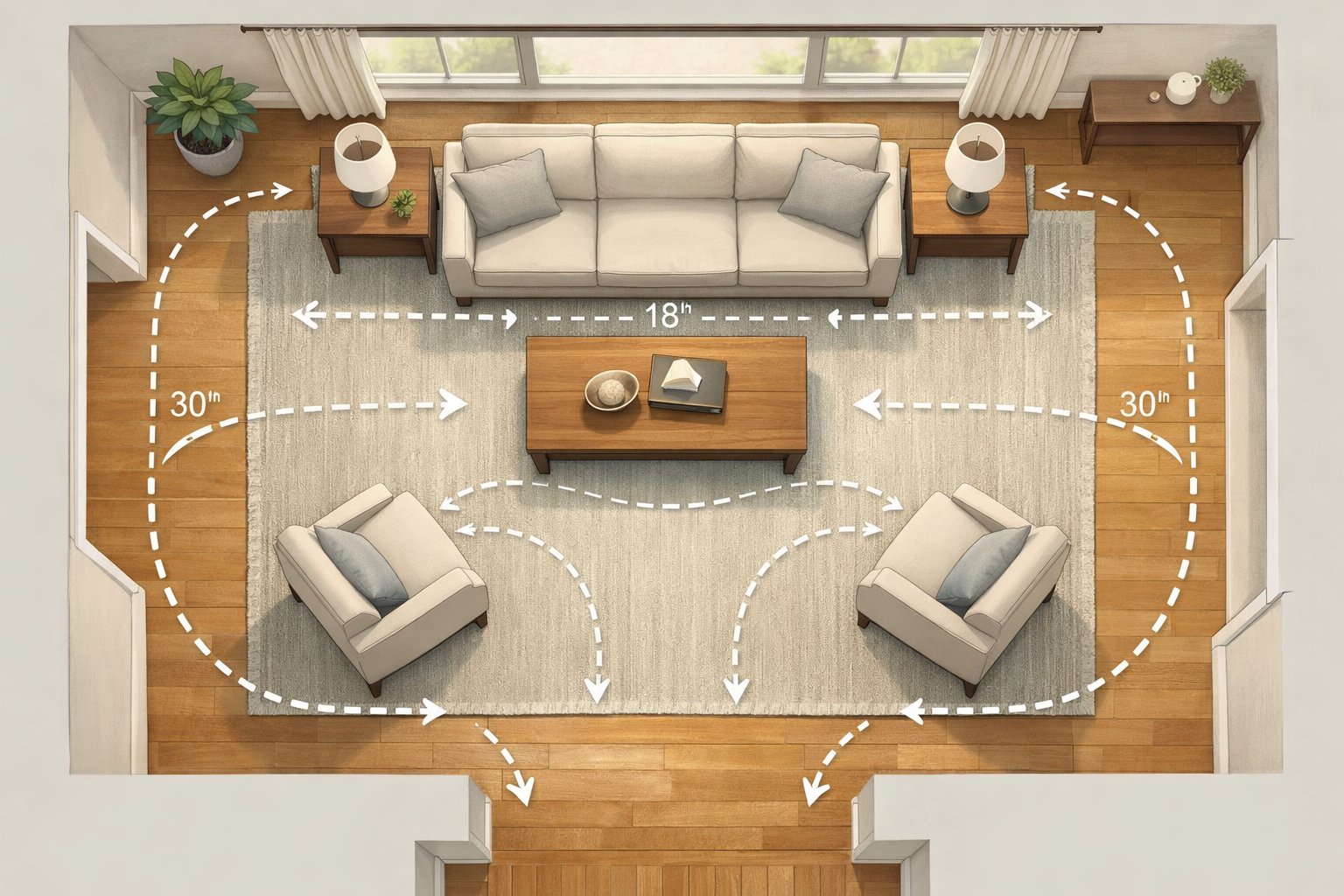
Room flow is all about how easily people move through your space. You need clear paths between doorways, furniture, and high-traffic zones.
Leave three to four feet of space in busy walkways, like routes between rooms or spots people use all the time. In less busy areas, two to three feet usually does the trick.
Around beds, aim for at least two feet of clearance on each side where people walk. That way, you can make the bed and move around without bumping into anything.
Dining areas need three feet around the table so chairs can pull out easily. Watch how people naturally move through your rooms. Nobody should have to squeeze past furniture or take weird detours just to get around.
The Role of Focal Points
Every room needs a focal point that draws your eye and anchors your furniture. Maybe it’s a fireplace, a big window, or the TV.
Arrange your main seating to face the focal point. In living rooms, put your sofa across from or angled toward this feature, then add chairs and tables to complement it.
If your room doesn’t have a natural focal point, create one with a large piece of art, a bookshelf, or an accent wall. Place your biggest furniture piece nearby to really emphasize it.
Try not to let focal points compete. If the room has a few strong features, pick one as the main event and arrange furniture around it. The rest can play supporting roles.
Defining Functional Zones
Functional zones break up your room by activity, making spaces more organized and useful. Each zone serves a specific purpose, like conversation, dining, or reading.
Use rugs to mark different zones visually. All the furniture in a conversation area should at least have the front legs on the rug. It creates a clear boundary without needing walls.
In open spaces, arrange furniture to create natural dividers. A sofa can face away from the dining area to separate it from the living space. Bookcases or console tables work as room dividers too.
Keep related activities together and make life easier. Put a side table next to reading chairs for books and drinks. Place TV viewing furniture within comfortable sight lines.
Space Planning and Spacing Rules
Getting the spacing right between your furniture pieces is key. It makes the difference between a room that feels cramped and one that flows naturally.
Proper measurements and clear pathways help you move through your space comfortably. Visual harmony matters too, even if you’re not a designer.
Measurement and Scale
Measure your room and your furniture before moving anything. Write down the length and width of your room, then measure each piece you plan to use.
Space planning works best when you know the exact dimensions. A sofa that looks perfect in the store might totally overwhelm your space if you don’t check the numbers first.
Create a simple floor plan on graph paper or use a free online planner. Mark where your windows, doors, and outlets are. It really helps you see what layouts will actually fit.
Pay attention to scale when you choose furniture. Big, bulky pieces make small rooms feel even smaller. Lighter, more streamlined furniture keeps things open in compact spaces.
Proportion and the ⅔ Rule
The ⅔ rule says your rug should cover about two-thirds of your floor space in a seating area. This creates visual balance and helps define different zones.
All your seating should have at least the front two legs on the rug. It anchors your furniture grouping and makes the space feel intentional, not random.
Coffee tables should measure about two-thirds the length of your sofa. If the table’s too small, it looks lost. Too big, and it blocks movement around your seating area.
Artwork should take up two-thirds to three-quarters of the wall space above your furniture. Hang pieces at eye level, around 55-57 inches from the floor, or about 10 inches above the back of your sofa.
Establishing Clear Pathways
You need 3 to 4 feet of space in high-traffic areas, like main walkways between rooms and paths from doorways. In lower-traffic areas, 2 to 3 feet between furniture works.
Around dining tables, leave at least 3 feet so people can pull out chairs and sit down comfortably. Bedrooms work best with 4 feet of clearance around the bed if you can swing it.
If your room is smaller, aim for at least 2 feet on the sides where you get in and out. Clear pathways keep people from having to squeeze past furniture or dodge obstacles.
Map out how people naturally move in your room and keep those routes open. Nobody likes a maze at home.
Furniture Layout Ideas for Different Rooms
Each room in your home needs its own approach to furniture arrangement. The right layout helps you create comfy areas for relaxing, sleeping, and dining, while keeping traffic patterns clear.
Living Room Layouts
Start by picking a focal point like a fireplace, TV, or big window. Position your main seating around that spot, keeping sofas and chairs no more than 8 feet apart for easy conversation.
Floating furniture away from walls often works better than pushing everything to the edges. It gives a more balanced look and helps define the space. Try a large rug and coffee table to anchor seating pieces in the center.
For symmetrical setups, put matching chairs across from a sofa near the focal point. Add end tables on both sides for drinks and lamps. This works well if you entertain a lot.
In small living rooms, use fewer but slightly larger furniture pieces instead of a bunch of tiny ones. A sectional can provide plenty of seating without visually cluttering the space.
Bedroom Furniture Arrangement
Place your bed as the main focal point. Leave at least 2 feet of space on each side for easy bed-making and walking. Don’t put the bed within 3 feet of the door or you’ll block natural flow.
In long, narrow bedrooms, face the bed toward a window to get natural light and a view. Add a desk or dressing table opposite the doorway to balance things out.
Square bedrooms work well with the bed centered on one wall and a big rug extending at least 2 feet on each side. Use tall storage pieces like armoires to save floor space. Small dressers can double as nightstands if you’re tight on space.
Go with a lighter headboard style if your bed feels too big for the room. Metal or open designs take up less visual space than chunky wood headboards.
Dining and Multi-Purpose Spaces
Match your table shape to your room shape. Rectangular tables work in rectangular rooms, while round pedestal tables fit well in square or tight spaces. Always leave at least 36 inches from the table edge to the wall.
Give each place setting 20 to 24 inches of width and 15 inches of depth. Leave 6 inches between chairs for elbow room. Position the table so chairs can slide out without blocking walkways.
In big dining rooms, don’t fill the space with an oversized table you don’t need. Pick a size that fits your usual guest count. Add flexible seating like benches or lightweight chairs that you can bring in when needed.
For multi-purpose rooms, add storage along the walls with cabinets or shelves. Use adjustable lighting like chandeliers with long cords or dimmers to change the mood for different activities.
Designing for Traffic Flow and Conversation
Good furniture placement creates clear paths and makes it easy for people to talk with each other. The right seating setup and strategic rugs define spaces without blocking movement.
Seating Arrangements for Interaction
Face your seating toward each other, not just the TV. A U-shaped or L-shaped layout lets everyone see each other during conversations.
Place seats 4 to 8 feet apart so people can chat comfortably without feeling squished. A coffee table in the center acts as a natural focal point and keeps things balanced.
Leave at least 18 inches between the coffee table and sofas or chairs so people can walk through. In bigger rooms, you can create multiple conversation zones instead of one big area.
Don’t line all your furniture against the walls. That setup makes conversation awkward and forces people to shout across the room. Pulling furniture toward the center feels more inviting and encourages better interaction.
Floating Furniture Techniques
Floating furniture means pulling pieces away from the walls by 6 to 12 inches. It creates a more intimate feel and helps define your conversation area.
A sofa a few feet from the wall can anchor a room and keep traffic flow open behind it. Use a console table behind a floating sofa for extra function and visual interest.
This setup adds depth to your layout and gives you a spot for lamps or decorative stuff. Floating arrangements work especially well in open-concept homes where you need to separate activity zones.
Keep main pathways at least 30 to 36 inches wide around floating furniture. That way, people can move through the room without squeezing between pieces or interrupting conversations.
Zone Definition with Rugs
Area rugs help mark conversation zones without blocking traffic. Place your rug so the front legs of all seating pieces rest on it, or put all the furniture completely on the rug if you have space.
Leave 18 to 24 inches of bare floor between the rug edge and walls to keep proportions right. The rug should extend at least 12 inches beyond each side of your furniture grouping.
A rug that’s too small makes your arrangement look disconnected and awkward. Use different rugs to separate zones in open spaces. It’s a simple way to define a living area versus a dining space without adding walls.
Maximizing Space with Versatile Solutions
Smart furniture choices can transform cramped rooms into open, functional areas. Multi-functional pieces, light colors, and properly scaled furniture work together to create the illusion of more space while serving practical needs.
Integrating Multi-Functional Furniture
Multi-functional furniture does more than just look good, it actually helps you cut down on clutter and opens up floor space. A sofa bed can turn your living room into a guest bedroom in a pinch.
Storage ottomans hide away blankets and magazines, plus they give you extra seating. Extendable dining tables expand for dinner parties and shrink back down for daily meals.
This kind of flexibility lets you change up your space for different activities, so you don’t have to buy a million separate pieces. Coffee tables with built-in shelves or lift-top surfaces give you more function without eating up extra space.
Look for furniture that combines storage, seating, and surface area. Nesting tables stack together when you don’t need them, then spread out when you do.
Product Suggestion: The Novogratz Brittany Sofa Futon flips from couch to full-size bed in seconds. It’s a solid pick for studios or home offices where every inch counts.
Tips for Small Spaces
Try to keep pathways at least 30 inches wide so you can move around easily. Instead of pushing everything up against the walls, pull furniture a few inches out to create depth and make things feel bigger.
Pick pieces with exposed legs instead of those that sit flat on the floor. Seeing more floor space underneath makes the room feel lighter.
Wall-mounted shelves and floating desks help you skip bulky storage units. Choose furniture that fits the scale of your room, not just what looks good in the store.
A giant sectional will swallow a small living room, but a compact loveseat with an armchair keeps things in proportion. Try not to block windows or natural light with tall furniture.
Utilizing Light-Colored and Scaled Pieces
Light-colored furniture bounces more light around and just makes rooms look bigger. Whites, creams, and pale grays feel open compared to dark, heavy stuff.
Paint and fabric colors really change how spacious a room feels. Choose furniture that’s sized right for your place.
Small apartments need compact pieces with clean lines, not oversized options. Always measure your doorways and room before buying, trust me, it’s worth it.
Glass and acrylic pieces like coffee tables or chairs physically take up space but don’t feel visually heavy. Mirrors behind or near furniture can bounce light and make everything feel deeper.
Product Suggestion: The IKEA SÖDERHAMN sofa comes in a light beige fabric and has low-profile arms that won’t crowd small rooms. Its modular design means you can add or remove sections as your space changes.
Common Mistakes to Avoid
Furniture arrangement mistakes can make your room feel cramped or awkward. Getting the right scale, traffic flow, and rug placement makes a space work and look intentional.
Overcrowding and Poor Scale
Too many furniture pieces or items that just don’t fit your room’s size create chaos. A big sectional in a small living room makes moving around tough.
A tiny loveseat in a room with high ceilings looks kind of lost. Choose furniture that fits your room’s dimensions.
In smaller spaces, go for fewer pieces with clean lines and lower profiles. This way, you can move around without squeezing past furniture.
Pay attention to height between pieces. Coffee tables should line up with the top of your sofa cushions, and end tables need to sit even with sofa arms so you can reach stuff.
Three well-chosen pieces beat six crammed together, every time.
Blocking Pathways and Light
Furniture that blocks movement paths or windows messes with how your room works. You need clear paths between entry points and seating areas.
Think about how people enter and move through the space before you commit to a layout. Leave at least 30 inches of walking space between pieces in high-traffic spots.
Main pathways should be about 36 inches wide so people can pass comfortably. Avoid putting beds where they cover part of a window, it just looks unfinished and messes with light.
Position your bed on a solid wall if you can, or use a low platform bed that sits below the window frame. Don’t block windows with tall furniture or set up seating where it creates shadows.
Let natural light flow through the room, don’t let furniture get in its way.
Incorrect Rug Placement
Rug placement really changes how put-together your room feels. The most common mistake? Rugs that are too small.
This makes furniture look like it’s floating, not anchored. All furniture legs should rest on your area rug if possible.
If your rug isn’t big enough, at least get the front legs of sofas and chairs on it. Dining room rugs need to extend 24 inches beyond the table on all sides so chairs stay on the rug even when pulled out.
Living room rugs should fit under your coffee table and the front part of the surrounding seating. Layer smaller rugs over bigger neutral ones if you can’t find the right size, it works and looks cool.
Top Product Suggestions to Improve Room Flow
The right furniture can totally change how your space feels. Multi-functional items, smart area rugs, and clever storage keep pathways clear and make the most of your room.
Recommended Sofa Beds
Sofa beds pull double duty as seating and sleeping space, perfect for small rooms or anywhere you need flexibility. Look for models with storage under the seat for bedding or pillows.
Pick a sofa bed with a sturdy frame that can handle daily use. Metal frames with wooden slats usually hold up better than cheaper builds.
Mattress thickness matters, too, so aim for at least 4 inches of foam or a decent innerspring. Consider how the bed opens before you buy.
Pull-out designs need about 6 feet of space in front, while click-clack styles fold flat and take less room. Always measure your space to make sure you have enough clearance.
Key features to look for:
- Easy conversion mechanism
- Built-in storage drawers
- Removable, washable covers
- Neutral colors that work with lots of decor
Flexible Area Rugs
Area rugs define zones in your space without blocking movement. Place a rug under your seating area that extends at least 2 feet beyond the furniture on all sides to anchor the group.
Pick rugs that work with your traffic patterns, not against them. Rectangular rugs suit long rooms, while round or square ones are great for compact spaces.
Low-pile rugs make moving furniture easier and cut down on tripping. Natural fibers like jute or sisal add texture and last a long time, while synthetics resist stains and cost less.
Always use rug pads underneath to prevent slipping and protect your floors. Popular rug sizes and uses:
- 5×7 feet: Small seating areas or bedrooms
- 8×10 feet: Standard living rooms
- 9×12 feet: Large open spaces
Space-Saving Storage Solutions
Multi-functional furniture with built-in storage clears clutter that can block pathways. Ottoman benches hide blankets, games, or seasonal stuff while giving you a place to sit.
Wall-mounted shelves keep the floor open and create vertical storage. Floating shelves are perfect for tight spots where cabinets would feel bulky.
Install shelves at least 12 inches above furniture for balance. Storage consoles against walls serve lots of purposes, from entryways to behind sofas or in dining rooms.
Pick pieces with legs instead of solid bases to keep things feeling open. Nesting tables slide together when you don’t need them and pull apart when you do, so they never block walkways for long.
Frequently Asked Questions
Getting furniture layout right means knowing how much space you need, what to avoid, and how to work with your room’s quirks. Here are some answers to common challenges you might run into.
What are some effective furniture layout strategies for a small living room?
Use fewer, slightly bigger pieces instead of stuffing in lots of small ones. This keeps the floor open and the room looking cleaner.
Go for pieces that do double duty, like coffee tables with storage or nesting tables you can stash away. Round pedestal tables make great side tables since their curves make it easier to move around them.
Try putting at least one piece of furniture away from the wall, even if your room is small. It adds depth and keeps things from feeling flat.
Pick visually lighter furniture for tight spaces. An open-frame chair or a headboard with metal details takes up less visual space than something solid and chunky.
Could you provide tips for incorporating a television and fireplace into a living room arrangement?
Mount your TV above the fireplace if you want both as focal points. This works when the wall and fireplace can handle it safely.
Arrange seating to face both features if they’re on the same wall. Try a semicircle or U-shape so everyone can see the screen and enjoy the fireplace.
Keep the TV facing away from windows and sunlight to avoid glare and screen damage. Viewing distance should be between 8 and 12 feet for standard TVs.
Don’t set up seating so people have to walk between viewers and the screen. Keep traffic paths behind the seats to avoid interruptions.
What spacing rules should be considered to ensure proper room flow when arranging furniture?
Leave 30 inches between pieces you need to walk around, so you’re not squeezing through. Keep 14 to 18 inches between your coffee table and sofa, enough for legs and easy reach.
Allow at least 36 inches from your dining table to the wall on all sides. This gives chairs plenty of space to pull out and lets people move around easily.
For conversation, keep seating no more than 8 feet apart. More than that and it becomes hard to talk comfortably.
Leave at least 2 feet on both sides of the bed for making it and moving around. Try not to put the bed within 3 feet of the door, or it’ll just feel like an obstacle.
At the dining table, each place setting needs about 20 to 24 inches of width and 15 inches of depth. Leave 6 inches between chairs so people aren’t crammed together.
Can you outline common mistakes to avoid when planning the layout of living room furniture?
Pushing everything against the walls makes rooms feel disconnected. Even in small spaces, floating one piece adds movement and interest.
Too many small pieces clutter the room and break up the flow. Fewer, larger pieces make things look more cohesive.
Don’t put furniture too far from light sources. Arrange seating near windows or lamps so you have enough light for reading or talking.
Keep scale in mind. A massive sectional in a tiny room or scattered small pieces in a big space both end up looking awkward.
Never block entryways with furniture. Keep pathways open and direct movement around, not through, conversation areas.
Try to follow the two-thirds rule: your biggest furniture should take up about two-thirds of the room, with the rest left for open space and smaller accents.
What are some innovative layout ideas for an open-concept living space?
Use furniture to create zones instead of walls. Place a sofa with its back to the dining area to separate spaces while keeping things open.
Area rugs help define different zones. Put a big rug under living room seating and a separate one under the dining table to mark each area without blocking views.
Arrange furniture in conversation islands in bigger spaces. Two sofas facing each other in one spot, a group of chairs with side tables in another, whatever fits your lifestyle.
Put a console table or bookshelf behind a sofa to act as a subtle divider. It adds storage and display space without closing off the room.
Angle seating toward focal points in each zone. Living room furniture can face the fireplace or TV, while dining chairs might look out to a window view. Give each area its own vibe.
How can I utilize digital tools or apps to visualize and plan my furniture arrangement?
Try downloading a room planner app from your app store. You can create digital layouts before you even start dragging furniture around.
These tools let you enter your room’s measurements and your furniture’s dimensions. You can play with different arrangements and see what actually fits.
If you want a hands-on approach, grab some painter’s tape and mark out furniture sizes right on your floor. It’s a simple trick, but it really helps you see how much space each piece will take up.
Another idea: tape together newspaper sheets or flatten some cardboard boxes in the shape of your furniture. Move these around to test layouts, and you won’t have to lift a thing.
Take a few photos of your empty room and print them out. Sketching your ideas on paper gives you a fresh perspective, almost like a bird’s-eye view.
Don’t forget to measure your furniture and doorways before you start moving stuff. Digital tools can quickly show if something will fit through the door or into that tricky corner you’ve got your eye on.