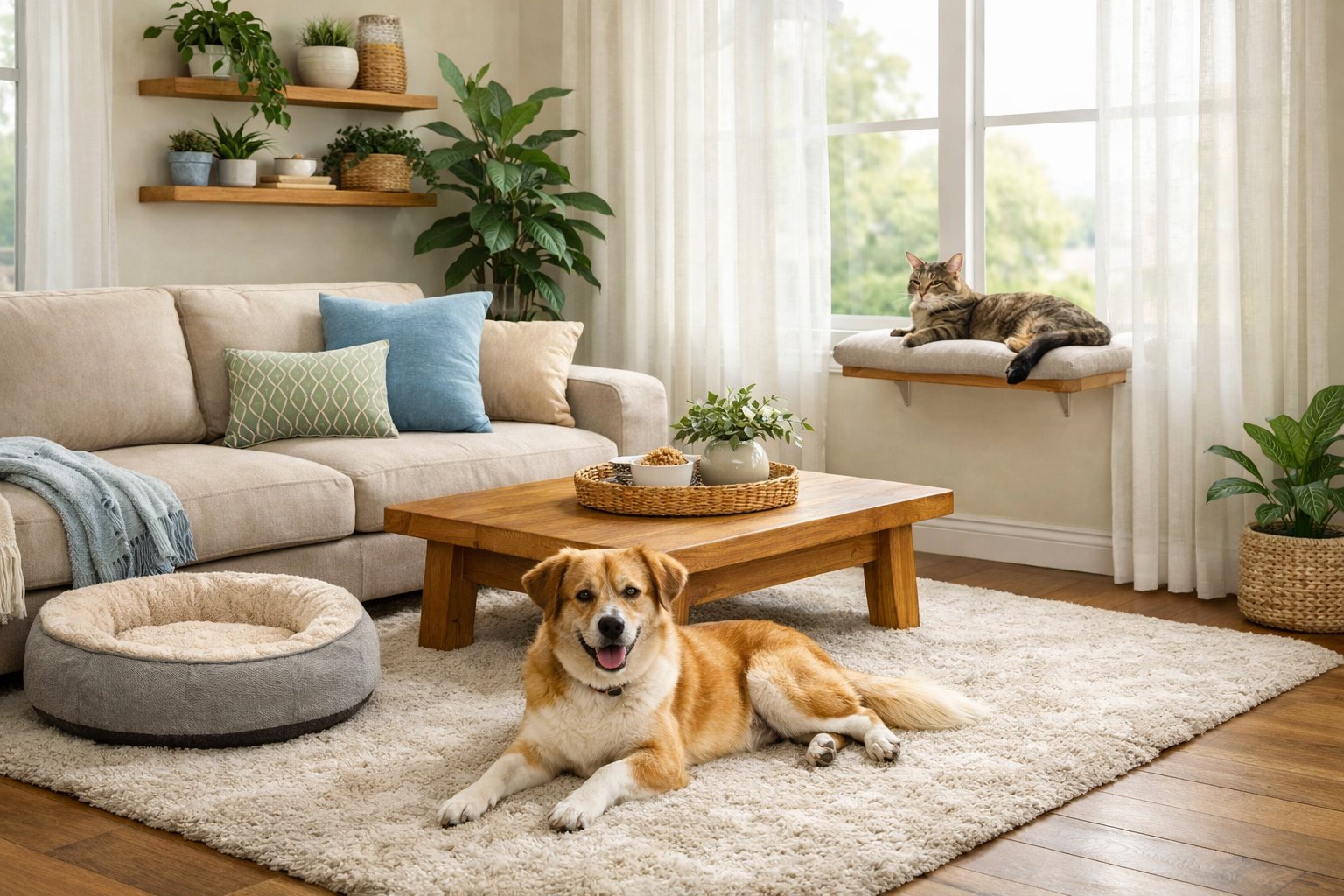

Living with pets doesn’t mean you have to give up on having a beautiful home. A lot of pet owners think stylish decor and furry companions can’t coexist, but honestly, it’s more doable than you might expect.
With the right fabric selections, furniture choices, and smart layout planning, you can create a home that looks magazine-worthy while standing up to paws, claws, and the occasional accident.
The real trick is picking materials that actually work for your lifestyle. Durable doesn’t have to mean ugly, and pet-safe doesn’t mean you have to ditch your style.
Microfiber sofas resist stains, and hardwood floors handle scratches. Modern options let you design spaces that serve both you and your pets.
This guide will walk you through practical fabric picks, furniture that lasts, layout strategies that make sense, and cleaning tips that actually save you time.
You’ll also find some specific product ideas that blend durability with good looks. You really can have both a stylish home and happy pets under one roof.
Key Takeaways
- Select scratch-resistant furniture and stain-proof fabrics like microfiber and leather to maintain style while handling pet wear
- Design dedicated pet zones with built-in feeding stations and sleeping areas that blend with your existing decor
- Choose durable flooring options like luxury vinyl plank and porcelain tile paired with medium-toned colors to hide pet hair effectively
Essential Elements of Pet-Friendly Home Decor
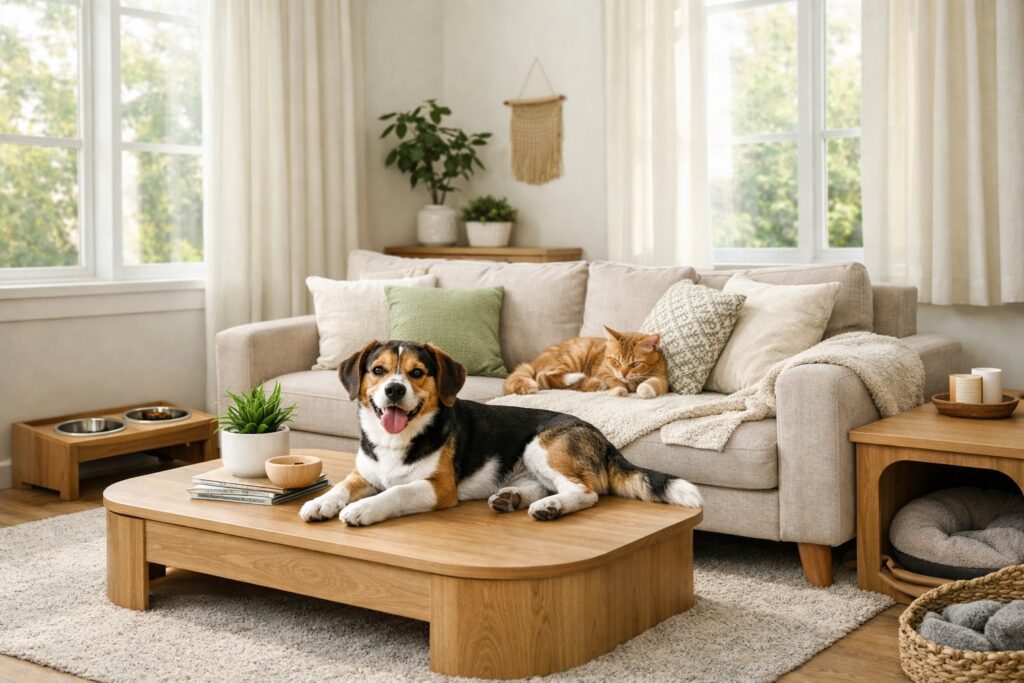
Pet-friendly design is all about picking materials that can handle daily wear from animals. At the same time, you want your space to stay clean and attractive.
The right choices make an environment where both pets and people feel comfortable. Nobody wants to stress about messes all the time.
What Defines Pet-Friendly Design
Pet-friendly design puts durability, easy maintenance, and pet comfort first, but it doesn’t mean you have to give up on visual appeal. The focus is on materials and layouts that can handle scratching, shedding, and accidents, but still look intentional and pulled together.
Key characteristics include:
- Scratch-resistant surfaces that maintain their appearance
- Stain-repellent fabrics and finishes
- Washable materials for quick cleanup
- Strategic furniture placement that accommodates pet movement
- Integrated pet zones that blend with your overall aesthetic
It’s worth paying attention to your pet’s actual habits before you start buying stuff. Where do they sleep, scratch, or play most often?
This kind of info helps you invest in solutions that actually work for your life, not just in theory.
Modern pet-friendly options blend advanced materials with some pretty sophisticated looks. Performance fabrics and luxury vinyl flooring, for example, prove you can have both function and style in the same space.
Psychological Benefits for Pets and People
Spaces designed with pet needs in mind reduce anxiety for both animals and their owners. Pets feel more secure when they have designated areas and appropriate surfaces for natural behaviors.
When your home handles pet-related challenges easily, you experience less daily stress. You don’t worry about every scratch or accident because your materials can handle them.
Benefits you’ll notice:
- Reduced pet anxiety and destructive behavior
- Less owner stress about home damage
- More time enjoying your pet instead of constant cleaning
- Better behavior from pets who feel their needs are met
If your pets have scratching posts, comfy resting spots, and safe play areas, you’ll probably see fewer behavioral issues. Investing in good design pays off for everyone at home.
Pet-Safe Materials and Non-Toxic Solutions
Pet-safe materials don’t include toxic stuff that can hurt animals if they chew or touch them. You’d be surprised how many household items contain chemicals that are risky for pets, even in tiny amounts.
Safe material choices:
- Fabrics: Organic cotton, microfiber, natural wool, and performance fabrics without flame retardants
- Flooring: Luxury vinyl plank, sealed concrete, porcelain tile, bamboo (which has natural antimicrobial properties)
- Furniture finishes: Water-based sealants and stains instead of oil-based products
- Cleaning products: Enzyme-based cleaners without harsh chemicals
Steer clear of furniture treated with stain-resistant chemicals containing perfluorinated compounds. Pets spend a lot of time on these surfaces, and those chemicals aren’t great for them. Look for Greenguard or similar certifications that mean low chemical emissions.
Plants are another thing to watch. Spider plants, Boston ferns, and parlor palms are safe, but lilies, philodendrons, or rubber plants? Nope, don’t bring those home if you have pets.
Always check product labels and certifications before you buy. If you aren’t sure, it’s worth calling the manufacturer to double-check.
Smart Fabric Choices for Style and Durability
Choosing the right fabrics protects your furniture from pet damage and keeps your place looking good. The best pet-friendly fabrics resist stains, scratches, and moisture, and they can handle frequent cleaning.
Performance Fabrics and Washable Options
Performance fabrics are built to handle whatever your pets throw at them. They use tight weaves and special treatments that resist stains, moisture, and odors.
Brands like Crypton and Sunbrella make fabrics that look nice but clean up easily with just soap and water. That’s pretty handy when accidents happen.
Washable slipcovers give you flexibility. Just pull them off and toss them in the wash when you need to.
Look for slipcovers made from tightly woven canvas or denim. These hold their shape after washing and don’t get all saggy over time.
Cotton blends are a solid choice since they’re durable and easy to care for. Aim for a thread count between 200 and 400 for the right mix of strength and comfort.
Microfiber is another favorite. Its ultra-fine fibers create a tight surface that repels liquids and resists pet hair.
Skip delicate materials like silk, velvet, or loose-weave linens. They snag easily and show every little mark. Stick with washable fabrics that can handle regular cleaning without fading or shrinking.
Stain-Resistant and Scratch-Resistant Surfaces
Stain-resistant fabrics use protective coatings or synthetic fibers to keep spills from soaking in. Look for fabrics treated with Scotchgard or similar stuff.
Outdoor fabrics work indoors too, since they’re built to resist water, sun damage, and mildew. Synthetics like polyester and nylon naturally resist stains better than natural fibers, and they dry faster after cleaning.
For upholstery, stick to tightly woven fabrics with a thread count above 200. Leather and faux leather also resist scratches better than most fabrics, and distressed or textured leather hides minor scratches well.
Just avoid bonded leather, because it peels and cracks with pet claws. Canvas and denim are surprisingly scratch-resistant because of their dense weave.
These easy-to-clean materials can be spot-cleaned or machine-washed, depending on your furniture. They also come in modern colors and patterns, so you don’t have to settle for boring.
Selecting Pet-Friendly Rug Materials
Flat-weave rugs are your best bet with pets. They don’t have loops for claws to snag, and they trap less pet hair and dander than shag or high-pile rugs.
Materials like jute, sisal, and seagrass are durable natural options. Washable rugs are a lifesaver too. Lots of brands now make machine-washable rugs in stylish patterns, even up to 8×10 feet.
Indoor-outdoor rugs made from polypropylene resist stains and moisture, and you can just hose them down outside if needed.
Wool rugs naturally resist stains and odors, but they need professional cleaning. If you go for wool, pick darker colors or patterns to hide dirt between cleanings.
Light colors show every paw print, so they’re not the most practical choice with pets.
| Material | Best For | Cleaning Method |
|---|---|---|
| Polypropylene | High traffic, accidents | Hose or machine wash |
| Jute/Sisal | Scratch-resistant | Vacuum, spot clean |
| Cotton | Easy care | Machine washable |
| Wool | Odor resistance | Professional cleaning |
Furniture Solutions for Pet-Friendly Living
Smart furniture choices mix durability with style and meet your needs and your pet’s comfort. The right pieces resist damage, hide pet essentials, and create better traffic patterns for everyone at home.
Choosing Pet-Friendly Furniture Styles
Pick furniture with tightly woven fabrics and solid construction. Microfiber stands out since its tight weave resists stains and pet claws, and it doesn’t show damage easily.
The smooth surface keeps pet hair from getting stuck deep in the fabric. Leather is another solid option, cleaning up easily with a damp cloth and developing a natural patina over time that hides small scratches.
Performance fabrics are a good bet too, since they’re made for high-traffic spots where spills and messes are common.
Steer clear of these materials in a pet-friendly home:
- Velvet (traps pet hair)
- Silk and delicate fabrics
- Wicker or rattan (pets chew through them)
- Light-colored woods that show every mark
For wood furniture, go for hardwoods like oak or maple. These resist scratches better than softwoods because of their dense grain.
Darker stains hide scratches more than light finishes. If you like the distressed look, that’s even better, since extra marks from pets just blend in.
Multi-Functional and Hidden Pet Furniture
Built-in solutions help you keep pet essentials organized while keeping your home stylish. Under-stair spaces make great pet nooks if you add bedding and built-in bowls.
These areas give your pet a cozy retreat and keep supplies tucked away. Hidden litter boxes disguised as end tables or cabinets get rid of eyesores in your living room.
Look for pieces with ventilation holes and easy access for cleaning. Dog crates built into console tables do the same for dogs.
Window seats double as cat trees if you add climbing shelves and scratching surfaces. Use cushions that match your furniture for a cohesive look.
Elevated feeding stations built into kitchen islands make mealtime easier and keep bowls off the floor.
Consider these multi-functional options:
- Console tables with hidden dog crate compartments
- Ottoman-style hidden litter boxes with ventilation
- Bench seating with built-in pet bed storage underneath
Durable Furniture That Blends In
Pet furniture doesn’t have to stick out like a sore thumb. These days, modern pet beds come in styles that actually match both contemporary and traditional spaces.
Pick dog beds with washable covers in colors that play nicely with your room’s palette. That way, your dog’s stuff won’t look out of place.
Cat trees aren’t just those old carpet towers anymore. Now you can find designs made from natural wood, sisal rope, and neutral fabrics.
Wall-mounted cat shelves give cats climbing fun without eating up your floor space. They’re a smart move if you don’t want a bulky tower in the middle of everything.
Product Suggestion: The Tuft & Paw Milo Cat Tree has a minimalist look with solid walnut and cream cushions, so it won’t mess with your modern vibe. For dogs, the Mahabis Pet Bed brings a Scandinavian touch with machine-washable covers in lots of neutral shades.
Instead of tossing the whole bed when covers get worn, just swap out the covers. Keep a couple of extras handy, so there’s always a clean one ready.
This way, you save money and your pet furniture always looks fresh.
Layout Strategies for Comfort and Flow
Place furniture so your pets have natural pathways. Leave open routes between rooms, so animals don’t have to jump over stuff or squeeze through tight spots.
Put sturdy pieces along the walls where pets like to rub. That keeps your layout practical and pet-friendly.
Keep fragile decor up high, away from wagging tails. Coffee tables with lower shelves work better than ones loaded with breakables at tail height.
Secure tall furniture, like bookcases, to the wall in case your pet decides to climb. No one wants a surprise crash.
Give your pets their own little zones in each main room. A cozy corner with a pet bed gives them a go-to place to relax.
Set these spots away from busy walkways but where your pets can still see what’s going on. They like to keep an eye on the action.
Don’t shove furniture right against the wall. Leave enough space so pets don’t get wedged behind things.
This also makes it easier to vacuum up pet hair. Arrange seating so pets can hang out near you without blocking the flow of the room.
Creating Dedicated Pet Zones in Your Home
Great pet zones mix function with your existing decor by using matching materials, clever storage, and smart placement. The right setup keeps pet stuff organized and your space looking tidy.
Integrated Feeding Stations and Pet Nooks
Integrated feeding stations cut down on floor mess and protect your surfaces from spills. Built-in options work best in kitchen islands or lower cabinets, where you can add pull-out drawers for food and elevated bowls for your pet’s comfort.
Stick to the same finishes as your cabinets, so the station looks like it belongs. No one wants a feeding area that screams “afterthought.”
Under the stairs is a sneaky spot for a pet nook. Toss in a cushion that matches your living room and add a water bowl on an easy-clean tile base.
Small cubbies for toys and treats keep everything in one place. It’s nice when pet clutter doesn’t take over.
In the mudroom, set up a pet station with hooks for leashes, a tile section for muddy paws, and a bench for quick wipe-downs. This keeps dirt from traveling through the whole house.
Designing Play and Rest Areas
Window seats give cats the high perches they crave and double as cool architectural features. Add cushions in tough microfiber or canvas that go with your color scheme.
Wrap the sides in sisal rope for scratching, so your furniture elsewhere stays safe. It’s a small thing, but it works.
Built-in dog crates that look like end tables or consoles offer safe spots for your dog to rest without messing up your decor. Pick wood finishes that match your other furniture and add a comfy pad inside.
The top works as regular furniture for lamps or decor. No one guesses there’s a crate underneath.
For cats, wall-mounted shelves in geometric patterns create vertical climbing fun. Stain or paint them to blend in, and suddenly you’ve got a pet zone that also feels like modern art.
Pet Gates and Space Dividers
Modern pet gates actually look good now, with wood and metal designs that feel like furniture. Pick clean lines and finishes that match your home hardware for a polished look.
Freestanding gates are handy if you only need barriers sometimes. They’re easy to move around as needed.
Built-in gates between rooms keep sightlines open while controlling where pets can go. Half-walls with spindles or sleek metal railings make for permanent boundaries that still look nice.
Try them between kitchens and dining rooms to keep pets out during meals. You don’t have to close off the space visually.
Decorative dividers with solid lower panels and open tops let air and light through but stop small pets from wandering. Look for wood or woven panels that add texture to your space.
Layout and Cleaning Considerations
Smart room layouts help prevent accidents and cut down on mess. The right surfaces and cleaners keep your home looking sharp without putting your pets at risk.
Optimizing Room Layout for Pets
Put pet beds away from busy areas so your pets get a little peace and quiet. Food and water stations work best on tile or waterproof mats for easy cleanup.
Give your pets clear walkways, so they don’t knock over decor or bump into furniture. It just makes life easier for everyone.
Keep litter boxes or pet stations in quiet corners with good airflow. Don’t stick them near heating vents or in cramped spaces.
If you’ve got cats, make sure they can reach windows or perches without having to leap onto fragile stuff. They’ll thank you for it.
Hide electrical cords or run them behind furniture. Use cord covers if you have to.
Store pet toys in bins or baskets near play areas. It keeps things organized and makes cleanup way faster.
Flooring Choices and Surface Protection
Luxury vinyl plank is honestly one of the best floors for pet owners. It shrugs off scratches, repels water, and cleans up with no fuss.
Tile and sealed concrete are also solid picks because accidents won’t ruin them. They’re tough and pretty forgiving.
If you have hardwood, lay down area rugs where your pets hang out most. Go for rugs with rubber backing to stop slipping.
Scratch-resistant surfaces like sealed hardwood or laminate with a protective coat last longer in a pet-filled home.
Put washable mats under food bowls to catch messes. Use protectors on couch and chair legs to stop scratching.
Try clear film on high-traffic spots or door frames where pets come and go. It’s a simple fix that helps a lot.
Cleaning and Maintenance Tips
Use pet-safe cleaners that skip harsh stuff like ammonia or bleach. Pets lick things, so it’s better safe than sorry.
Enzyme-based cleaners break down odors and stains naturally. They’re a lifesaver for pet messes.
Keep a little cleaning kit in each room with a lint roller, microfiber cloth, and stain remover. That way, you can jump on messes before they set.
Vacuum at least twice a week to keep hair and dander under control. It’s not fun, but it helps.
Wash pet bedding weekly in hot water. Wipe down pet-safe decor monthly to clear out dust and hair.
Clean bowls daily with hot soapy water. Steam clean carpets and upholstery every few months to get rid of deep-set odors and allergens.
Incorporating Pet-Friendly Style and Decor
You can actually make your home look better and keep pets safe. Choose non-toxic plants, stash pet gear in nice storage, and add some pet-themed accents that aren’t tacky.
Pet-Safe Houseplants and Botanical Touches
Spider plants are a top pick for pet owners since they’re totally non-toxic for cats and dogs. Plus, they’re tough and look great in hanging baskets or planters.
Boston ferns add a lush vibe and are safe if your pet takes a nibble. No worries there.
Other good choices include:
- Parlor palms for a tropical touch in low light
- Ponytail palms if you want something sculptural
- Prayer plants with cool leaf patterns
Skip toxic plants like lilies, philodendrons, and pothos. Always check the ASPCA’s plant database before buying new greenery.
Put safe plants where your pets explore, so you don’t have to stress about accidental snacking.
Chic Storage for Pet Essentials
Built-in storage keeps leashes, toys, and grooming stuff out of sight. Add pull-out drawers in benches or entryway tables for daily essentials.
Woven baskets in neutral colors blend in while keeping toys from taking over. It’s a simple fix that actually works.
Designated storage solutions:
- Wall hooks at the right height for leashes and harnesses
- Ottoman storage boxes that double as extra seating
- Kitchen cabinets with pull-out food bins
Repurpose furniture by adding fabric bins inside consoles or buffets. Pick storage pieces that match your room’s style, so it all feels intentional.
Accent Pieces and Pet-Themed Artwork
Pet-themed art doesn’t have to be cheesy. Black and white pet photos in gallery frames look surprisingly classy.
Abstract animal silhouettes work well in modern spaces. You can get creative without going overboard.
You might want to display:
- Framed vintage dog or cat breed prints
- Sculptural animal bookends
- Throw pillows with subtle paw prints
Keep fragile decor on higher shelves, away from tails. Pick sturdy accent pieces made from metal or stone instead of breakable ceramics.
Let your pet-inspired decor fit with your color scheme and style. It should feel like part of the room, not the main event.
Product Recommendations for a Pet-Friendly Home
The right products make pet-friendly decorating way easier. These three handle daily pet chaos and still look good in your home.
Recommended Washable Rug: Ruggable Chenille Rug
Ruggable rugs really solve the classic pet owner problem. The two-piece system has a non-slip pad and a machine-washable top layer you can just toss in the wash.
No need to panic over accidents, muddy paws, or pet hair. The chenille version feels soft underfoot and hides pet hair better than flat-weave rugs.
There are tons of patterns and colors to pick from. You can match any space, really.
These rugs work on any hard floor. When something spills, just pull up the top layer and wash it. The pad stays put, so you don’t have to move all your furniture.
Prices change by size, but being able to wash the rug saves money over time. No more professional cleanings or early replacements.
Stylish Pet Bed Option: Casper Dog Bed
The Casper Dog Bed uses the same comfort tech as their mattresses, so your pet gets real support. The memory foam base helps aging pets and stands up to daily use.
The removable cover goes right in the wash. The design looks like actual furniture, with clean lines and neutral colors that fit into living rooms or bedrooms.
You get three color options, so you can match your style. The bed comes in several sizes for different breeds.
Most of the fur stays on the bed, not your couch. The cover resists moisture and doesn’t trap odors the way some fabrics do.
Multi-Functional Furniture: Fable Pets Signature Crate
The Fable Pets Signature Crate doubles as a dog crate and a side table. The powder-coated steel frame comes in trendy colors like sage green and terracotta.
The top holds lamps, books, or plants, just like any side table. This saves space, especially in smaller homes.
You don’t need separate spots for pet crates and furniture. The open wire design lets air move and gives your dog a good view.
The crate comes with a removable cushioned mat for washing. Assembly is quick and doesn’t need any tools.
It’s sturdy enough for dogs up to 70 pounds, depending on the size you choose. Some models even have hidden storage underneath for leashes and toys.
The furniture look means you can put it in the main living area without it standing out as a crate.
Frequently Asked Questions
Pet-friendly decor means picking fabrics like microfiber or leather, furniture with tight weaves and solid build, layouts that give pets clear paths, and keeping up with regular cleaning using enzyme sprays and lint rollers.
What are the best durable fabrics to use for pet-friendly home decor?
Microfiber is a top pick for pet-friendly fabrics. Its tightly woven synthetic fibers resist stains and scratches, and pet hair doesn’t get stuck in it as easily.
Leather is another strong option. You can wipe it clean quickly, and it develops a patina over time that hides small claw marks.
Performance fabrics like Crypton come with liquid-proof barriers and antimicrobial properties. They fight stains and help prevent odors after pet accidents.
Canvas and duck cloth work well for removable covers. You can toss them in the washing machine when needed.
Steer clear of velvet, silk, and delicate fabrics if you have pets. Velvet loves to trap hair and shows every little mark, while silk tears and stains for good.
How can one choose furniture that is both stylish and suitable for pets?
Choose furniture with tightly woven upholstery and solid wood construction. The tight weave keeps claws from snagging threads and tearing fabric.
Go for hardwoods like oak or maple for frames and legs. These dense woods handle scratches better than pine, and a distressed finish hides minor damage.
Pick simple furniture with minimal decorative elements. Pieces without ornate details or delicate carvings stand up better to pets.
Skip wicker, rattan, or anything your pet might want to chew. Those materials rarely survive long in a pet home.
Think about furniture height for your pet’s needs. A low-profile sofa helps older pets climb up, while taller pieces keep surfaces out of reach from jumpers.
What are effective layout strategies for a home with pets to enhance both style and functionality?
Make clear pathways so pets can move around easily. Place sturdy furniture along walls where pets like to rub, and keep fragile pieces in quieter spots.
Set up pet beds and feeding stations in the same spots. Pets feel more comfortable with routine, and it keeps essentials from wandering everywhere.
Put breakable decor on higher shelves, away from wagging tails. Floating shelves or tall bookcases keep fragile items safe and out of reach.
Try blending pet zones with your overall style. Maybe build a crate into a console table, or turn an under-stair nook into a spot for food bowls.
Leave some space between furniture pieces for cleaning. You’ll want to reach under sofas and behind chairs to vacuum up pet hair.
What are some cleaning tips for maintaining a pet-friendly and stylish home?
Use enzyme cleaners for pet accidents. These break down odor-causing compounds, not just cover up smells.
Keep a lint roller in every room for quick hair pickup. Roll upholstery, lampshades, and curtains weekly to keep hair under control.
Vacuum at least twice a week with a pet-specific vacuum. Models with rubber brushes pull up fur better than regular bristles.
Wash pet bedding weekly in hot water. Toss in some white vinegar during the rinse to fight odors without harsh chemicals.
Put washable mats under food and water bowls. They catch spills and look nice, plus they protect your floors.
Wipe down leather furniture monthly with a damp cloth. Use leather conditioner after to keep it supple and prevent cracks.
Can you recommend any pet-resistant home decor products that also add to the aesthetic of the space?
Luxury vinyl plank flooring looks like hardwood but is totally waterproof. It resists scratches and doesn’t warp from pet accidents.
Outdoor rugs work great indoors for pet areas. They’re stain-resistant, easy to clean with a hose, and come in tons of stylish designs.
Slipcover sofas let you wash covers when needed. IKEA and Pottery Barn have machine-washable slipcovers in loads of colors and styles.
Performance fabric throw pillows add color and can take a beating from pets. Look for stain-resistant or washable covers to match your decor.
Custom built-in pet gates that match your trim or cabinets can keep pets where you want them. Wood gates look a lot better than the usual metal ones.
What are some design tips for creating a calming and relaxing living room that accommodates pets?
Go for a neutral color palette in medium tones that help hide pet hair. Beiges, grays, and warm taupes feel serene and do a good job camouflaging fur between cleanings.
Bring in soft textures with pet-friendly materials. Microfiber throw blankets and washable cotton pillows feel cozy but don’t trap hair or stains as much.
Pick a pet bed that actually fits your color scheme. Elevated beds with wood frames or geometric shapes can look intentional, not just tossed in the corner.
Try dimmable lighting to set a relaxing vibe. Pets notice calmer environments too, and adjustable lights let you tweak the mood for everyone.
Consider pet-safe plants like spider plants or Boston ferns. They add a bit of nature and won’t cause trouble if your pet decides to take a bite.
Keep clutter down by storing toys in decorative baskets. Woven baskets or fabric bins in matching colors keep things peaceful and you won’t have to hunt for essentials.