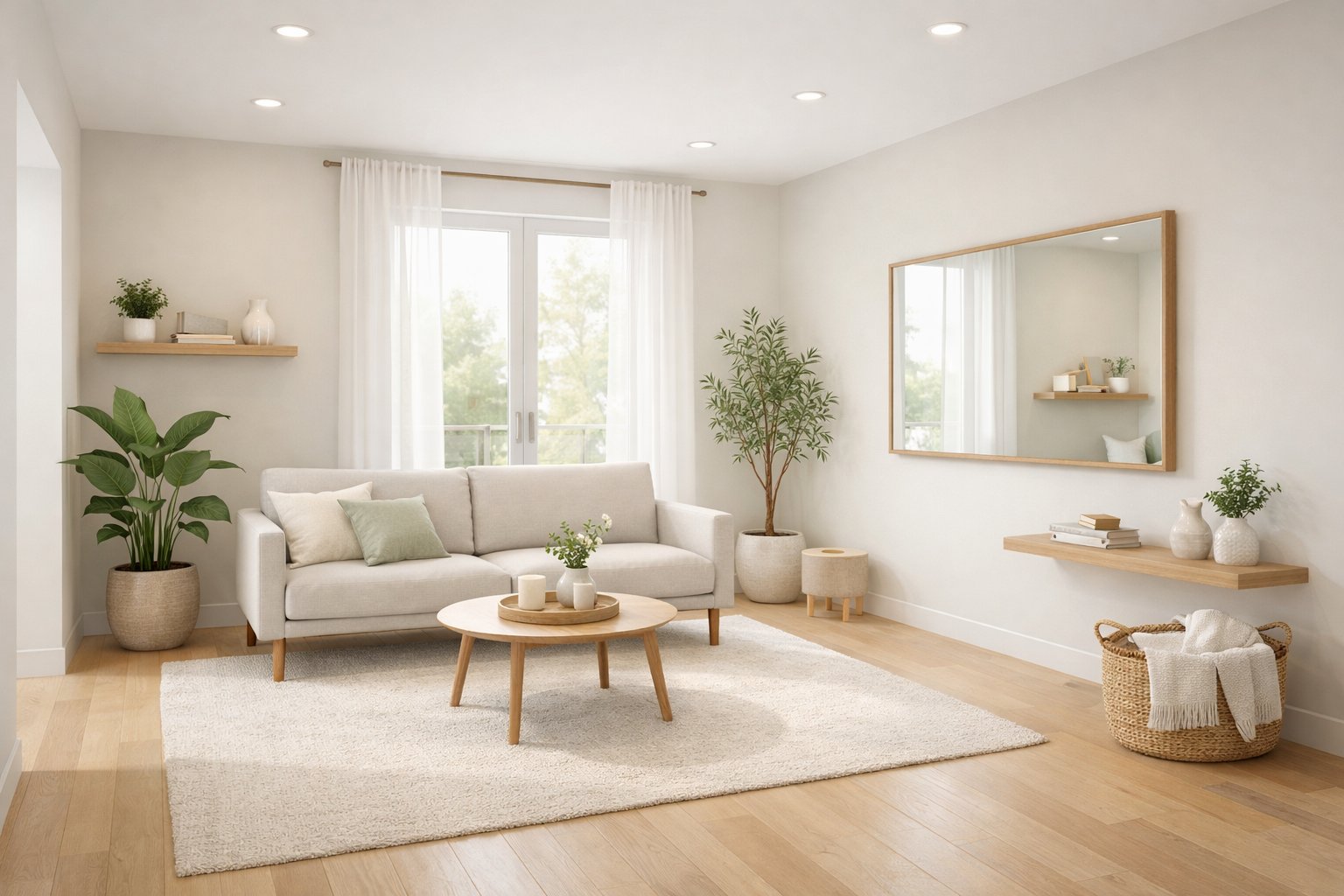

A small living room doesn’t have to feel cramped or cluttered. With the right furniture, smart layouts, and thoughtful color, you can turn even the tiniest space into a room that feels open, airy, and honestly, just more comfortable.
The real trick? Work with your space, not against it.
People often think small living rooms mean giving up style or comfort. That’s just not true.
By sticking to a few basic ideas—like picking furniture that fits, using light colors, and keeping layouts simple—you can make a space that looks great and actually works for you.
- Pick furniture with legs and lighter colors to open up your room visually
- Go for multipurpose pieces and vertical storage to keep things functional but not crowded
- Layer lighting and add mirrors to bounce natural light around and make everything feel bigger
Assessing Your Space for Optimal Layout
Before you buy anything, really look at your room. Measure it—length, width, and height matter—and pay attention to how people actually move through the space.
Mapping out traffic patterns helps you make smarter choices about where things go. It’s way easier to create a living room that feels open if you plan ahead.
Measuring and Planning for Functionality
Grab a tape measure and jot down your room’s size. Don’t forget to note where windows, doors, outlets, and any weird permanent stuff (like radiators) are.
Draw a quick floor plan on paper or use a free app—nothing fancy, just something to help you visualize. Mark which way doors swing open since that’ll mess with where you can put things.
Pay attention to where sunlight comes in during the day. That’ll matter later.
If you already have furniture, measure that too—or check the sizes of anything you’re thinking about buying. Leave at least 30 to 36 inches for main walkways and about 14 to 18 inches between the sofa and coffee table.
Pick a focal point for the room, like a fireplace, a big window, or maybe the TV wall. Arrange your furniture so it faces that spot and gives the room a sense of purpose.
Defining Walkways and Traffic Flow
Think about how people naturally come and go in your living room. Keep the main pathway clear so no one has to shimmy past a coffee table or trip over a chair.
Try for at least 30 inches of space in your main traffic lanes. If your living room connects to other rooms, don’t block those in-and-out routes with furniture.
If it helps, use painter’s tape to outline where you want furniture to go. Walk through the space a few times—does it feel natural? If not, tweak it.
Creating Visual Zones in Compact Areas
Even in a small living room, you can carve out “zones” without building walls. An area rug can anchor your seating area and make it feel separate from, say, a dining nook.
Arrange furniture so each area has a purpose. Face a sofa and chairs toward each other for chatting, or aim everything at the TV if you’re more about movie nights.
Use low furniture or open shelving as gentle dividers. A console table behind a sofa or a bookshelf set sideways can separate spaces without blocking your line of sight.
Smart Furniture Selection and Placement
The right furniture (and where you put it) can totally change the vibe of a small living room. Focus on pieces that fit the room’s size and, ideally, do more than one job.
Arrange them so people can actually move around without bumping into everything. It makes a huge difference.
Choosing Scaled and Low-Profile Pieces
Pick furniture that matches your room’s size. Big, bulky pieces just eat up space and make it hard to move.
Measure before you shop. Compact sofas—think 60-72 inches wide—work better than the standard giant ones.
Armless sofas and chairs are lifesavers in tight spaces. They take up less visual space and keep things feeling light.
Low-profile furniture with exposed legs lets you see more floor, which somehow just makes everything feel bigger.
Some good options:
- Compact sofas (60-72 inches wide)
- Armless chairs that fit into corners
- Furniture with legs at least 4-6 inches high
- Shallow seating (28-32 inches deep)
Skip the huge recliners or massive sectionals unless you’re sure they’ll actually fit. Sometimes a small accent chair plus a properly sized sofa is all you really need.
Multifunctional and Double-Duty Furniture Choices
Multifunctional furniture is a game changer. A sofa bed lets guests crash without needing a guest room. Storage benches? You get extra seats and a place to stash blankets or random stuff.
Ottomans can be footrests, extra seats, or coffee tables—just throw a tray on top. Look for ones with hidden storage inside if you can.
Nesting tables are great too. Stack them when you’re not using them, spread them out when you need more surface space.
Popular double-duty picks include:
- Storage ottomans with lift-up lids
- Coffee tables with shelves underneath
- Console tables that convert to dining tables
- Behind-the-sofa storage units that double as room dividers
Optimal Arrangement Tips for Small Spaces
Don’t shove all your furniture against the walls. Floating pieces a few inches out can actually make the room feel bigger.
Arrange seating to encourage conversation, not just TV watching. Angle an accent chair for a little visual interest.
Try to keep walkways at least 24-30 inches wide. It’s just more comfortable.
Start with your biggest pieces, then fill in with smaller stuff like nesting tables or poufs. Use tall, narrow shelving to draw the eye up—makes the ceiling seem higher.
Mount your TV on the wall if you can. It frees up valuable floor space.
Maximizing Light and Visual Openness
Light changes everything in a small living room. The right mix of lighting, good window treatments, and some reflective surfaces can make your space feel way bigger than it is.
Layered Lighting Strategies
Don’t rely on just one overhead light. Layer in a few sources at different heights—overhead, wall sconces, table or floor lamps.
Overhead lights with dimmers let you set the mood. Wall sconces can push light up and make your ceiling look taller.
Put a lamp near your favorite reading spot or next to the sofa. A statement pendant can add some cool style without hogging floor space.
Try to hit three levels: ceiling, mid-level (sconces or table lamps), and low (floor lamps). This helps avoid dark corners that shrink the room.
- Ambient: Ceiling fixtures with dimmers
- Task: Reading lamps or desk lights
- Accent: Wall sconces for up/down lighting
- Statement: One decorative piece for flair
Maximizing Natural Light with Window Treatments
Skip heavy drapes—they just block out sunlight. Sheer curtains let in light but still give you privacy.
Mount your curtain rods close to the ceiling and use long curtains to draw the eye up. It’s a nifty trick to make the room feel taller.
Keep window sills clear. Even a little dust on the glass can cut light by a surprising amount. If you need more privacy, try roller shades or blinds that disappear when open.
Choose light-colored or white window treatments. They reflect more light around and keep things looking fresh.
Strategic Use of Mirrors and Reflective Surfaces
Hang a big mirror across from your main window. It’ll bounce natural light around and make the room look twice as big.
Mirrored coffee tables or furniture with shiny finishes also help. Glass and acrylic tables let light pass through, so they don’t weigh the room down visually.
Try to position mirrors so they reflect something nice—a window, a plant, or a lamp. Reflective surfaces like polished metal or lacquered finishes amplify your lighting without adding more lamps.
Color Palettes and Decorative Finishes

The right colors can make your small living room feel way bigger. Lighter shades bounce light around and open things up, while well-chosen colors keep the eye moving (and the clutter feeling low).
Embracing Neutral and Light Tones
Neutrals are your best friend here. Paint your walls in soft whites, light grays, or gentle beiges with a Light Reflectance Value above 60.
These shades bounce light and blur the edges of the room, so it doesn’t feel boxed in. Benjamin Moore’s Chantilly Lace or Sherwin-Williams Alabaster are nice picks—bright, but not cold.
Stick to light colors for your main furniture too—cream, taupe, or pale gray sofas and chairs help keep the whole look cohesive.
Keep your floors light as well. Pale wood or a neutral jute rug carries that airy vibe from top to bottom. Dark floors can look cool, but they do make a room feel a bit smaller.
Color Drenching and Limited Color Palettes
Color drenching is when you paint the walls, trim, and ceiling all in one shade. It’s a trick that can make your living room feel bigger, since your eye just glides around without stopping at contrasting edges.
Pick one main color for the whole room. Light blue-grays like Benjamin Moore’s Glass Slipper or soft blush tones like First Light really suit this look.
Use that color everywhere—just switch up the finish. Maybe matte on the walls, satin on the trim, and so on. That way, you get a bit of subtle depth without losing the cohesive vibe.
A limited palette keeps things simple. Stick to two or three colors max. It helps avoid that chaotic, cramped feeling in a small space.
Your base neutral counts as one color, so you’re really only adding one or two accent shades. That’s plenty.
Play with finishes within your color family. Matte on the walls, satin on the trim, and pull the same tone into your fabrics and a few decor pieces.
Adding Colorful Accents Thoughtfully
Colorful cushions add personality, but don’t go overboard. Two to four pillows in coordinating accent colors do the trick on your sofa.
Medium-sized pillows work better than those giant ones that just take over the space.
Try a geometric rug for pattern and interest. Pick one with your accent colors woven in, but keep the pattern simple and set it against a neutral base.
That way, it anchors your seating area without making the room feel heavy.
Layered lighting can really boost your colors. Table lamps with warm bulbs make neutrals glow, and wall sconces highlight your paint color while saving floor space.
LED strip lights behind furniture add depth and make the walls seem to pull back a bit.
Keep decorative objects to a minimum. Three small items grouped on a side table look intentional and tidy. More than that, and the clutter shrinks your space fast.
Stick to accent pieces in your chosen color palette to keep everything harmonious.
Strategic Storage and Space-Saving Solutions
Smart storage keeps your small living room clutter-free and saves precious floor space. Go for wall-mounted options, open displays, and furniture with hidden compartments to build an organized, open-feeling room.
Vertical and Wall-Mounted Storage Ideas
Use your vertical space. Install storage that reaches up, not out. Wall-mounted shelving can hold books, baskets, and decor without eating up the floor.
Tall bookcases draw the eye up, making the ceiling feel higher. Floating cabinets above the sofa or on empty walls stash away stuff you don’t use every day.
Practical vertical storage options:
- Pegboards with hooks for hanging accessories
- Stacked cube organizers that reach near the ceiling
- Wall-mounted TV units with integrated shelving
- Vertical ladder shelves that lean against walls
Corner shelving units fit into those awkward spots that usually go unused. They turn corners into handy storage zones and keep the room feeling open.
Open Shelving and Floating Shelves
Open shelving gives you storage without the heaviness of closed cabinets. Mount floating shelves at different heights to add dimension and display your favorite things in a tidy way.
Try floating shelves behind your sofa for books, plants, or photos. It’s a sneaky way to use dead space without blocking light or walkways.
Keep open shelves neat by using matching baskets or boxes for smaller items. You get the accessibility of open storage, but without the mess. Pick shelves that match your wall color so they blend in.
Hidden and Built-In Storage Features
Furniture with hidden compartments is a lifesaver in small living rooms. Ottoman coffee tables with lift-up lids stash blankets and remotes while giving you a spot to put your feet up.
Built-in seating along walls can hide drawers or storage under lift-up cushions. Window seats with storage underneath make the most of tricky spaces and offer extra seating.
Wall-mounted foldable desks drop down when you need them and disappear when you don’t. Console tables behind sofas with drawers keep everyday items out of sight. Room divider units with shelves can split up a space and give you storage on both sides—super handy in studios or open layouts.
Inspiring Design Examples & Product Suggestions
Real living rooms prove that smart choices can make tight spaces feel open and breezy. Let’s look at some actual examples with furniture, colors, and layouts that really work for small rooms.
Modern Minimalist Small Living Room
Modern minimalism keeps a small living room feeling open with clean lines and just the essentials. Try a low-profile sofa in light gray or beige to anchor the space without blocking sightlines.
Glass coffee tables are perfect—you can see right through them, so the floor looks uninterrupted.
Add a jute rug in natural tan to define the seating area. The round Safavieh Natural Fiber Jute Rug (6-foot diameter) softens sharp lines and adds texture without visual heaviness.
Nesting tables are a win for minimalism. The Nathan James Nesting Side Tables in light oak give you surfaces when you need them, but tuck away easily. Stick to white or soft gray walls, and limit decor to one or two bold pieces—maybe a big plant or an abstract art print.
Cozy Cottage and Farmhouse Inspiration
Farmhouse style can work in a small living room if you focus on light woods and creamy tones instead of bulky, dark furniture. A slipcovered sofa in white or ivory keeps the vibe bright and relaxed.
Layer in poufs for flexible seating you can tuck away. The Christopher Knight Home Tufted Velvet Ottoman Pouf in cream offers soft seating without eating up floor space. A jute rug under the coffee table brings cozy texture without clutter.
Pick furniture with turned legs or open bases so you can see the floor underneath. A glass coffee table with a simple wood frame mixes farmhouse charm with that airy, see-through feel. Stick to whites, creams, and light woods to keep things open.
Chic Urban Spaces with Reflective Accents
Urban small living rooms get a boost from mirrors and reflective surfaces. Place a big mirror opposite your window to bounce natural light and visually double your space.
A glass coffee table with a metal frame adds a modern touch and keeps things light. Nesting tables in metallic finishes—think brass or chrome—catch the light and look chic. The Kate and Laurel Celia Round Nesting Tables in gold add a bit of glam and extra surface area.
Pick one pouf in a bold jewel tone like navy or emerald as your accent, then keep everything else neutral. A jute rug grounds the space and keeps all the shiny surfaces from feeling cold. Mount floating shelves instead of bookcases to display your stuff without blocking the walls.
Finishing Touches: Art, Texture, and Personality
The final layer is what brings warmth and character without cluttering things up. Artwork, textures, and accessories finish the look but keep the space feeling open.
Gallery Walls and Statement Artwork
A gallery wall gives you visual interest with zero floor space lost. Rather than scattering little art everywhere, group it all on one wall for a strong focal point—especially nice above a sofa or on a paneled wall.
Use frames in the same color to keep things cohesive. White or black usually works best. Arrange pieces close together for more impact and less visual noise.
If a gallery wall feels like too much, just hang one big statement piece. A single oversized artwork draws the eye up and makes the ceiling seem taller. Hang it at eye level, about 57-60 inches from the floor to the center.
Try these placements:
- Above the sofa as a central focal point
- On the wall opposite the entrance
- Against exposed brick for texture contrast
Woven and Natural Materials
Woven materials like rattan, jute, and seagrass add texture without heaviness. They bring warmth, and their open construction keeps things feeling airy. These touches soften modern rooms and add depth to neutrals.
Look for woven baskets that double as storage and decor. A big basket by the sofa holds blankets and adds a touch of nature. Smaller baskets on shelves keep clutter out of sight.
Try a rattan side table or woven pendant light for character without overwhelming the room. Natural tones blend with almost any palette and work with both warm and cool colors.
Softening with Rugs and Accessories
A geometric or jute rug anchors your seating area and adds some warmth underfoot. Make sure it’s big enough that at least your furniture’s front legs rest on it. That connects everything and helps the space feel bigger.
Light rugs with simple patterns work best—dark, heavy ones can make the room feel smaller. Jute in natural tones keeps things open and defines the seating area.
Keep accessories minimal and thoughtful. Two or three items on the coffee table is enough. Maybe a small plant, a stack of books, and a decorative piece. Use trays to corral little things and keep surfaces tidy.
Frequently Asked Questions
Small living rooms need some strategy—furniture placement, color, and layout matter a lot. With the right moves, even a tiny space can feel comfy and functional.
What are effective furniture arrangement strategies for a small living room area?
Put your biggest piece of furniture against the longest wall. That keeps the center open and makes it easier to move around.
Try floating furniture a few inches from the wall. It sounds odd, but it actually makes the room feel bigger by giving everything a little breathing room.
An L-shaped sectional in the corner maximizes seating without blocking pathways. Modular pieces you can rearrange are a smart bet.
Give yourself at least 18 inches of walking space between pieces. That way, it won’t feel crowded and you’ll keep traffic flowing nicely.
Which color schemes are best to enhance the feeling of space in a compact living space?
Light and neutral colors reflect natural light and make walls seem to recede. Whites, creams, light grays, and soft beiges are your friends here.
Paint the walls and ceiling the same light color to blur boundaries. It’s a simple way to make the room feel endless.
Layer two or three shades from the same color family. Use the lightest on walls, a medium for bigger furniture, and keep darker accents to a minimum.
Save bold patterns and bright colors for small accents like pillows or art. Too many competing colors can make a small room feel chaotic fast.
What are the key considerations when choosing furniture for a small living room to maximize space?
Pick furniture with legs that show the floor underneath—it opens things up and makes cleaning easier, too.
Look for pieces that do double duty, like ottomans with storage or sofa beds. Fewer pieces means more space.
Sleek, simple designs beat bulky, ornate pieces. Streamlined furniture takes up less visual space even if it’s the same size.
Measure your room and doorways before you buy. If it’s too big, it’ll make your space feel cramped the second it arrives.
How can you layout a small living room to accommodate a television without overcrowding the space?
Mount your TV on the wall to save floor space. It also lets you pick the perfect height for viewing.
Set your seating about 6 to 8 feet from the TV. That’s usually ideal in smaller living rooms and means you don’t have to push everything against the walls.
Use a slim media console or floating shelf under the TV for storage. They’ll hold your devices and accessories without hogging space.
If your layout is awkward, try putting the TV in a corner at an angle. It can actually help with traffic flow and creates a cozy viewing spot.
Are there budget-friendly decorating tips that can visually expand a tiny living room?
Hang a big mirror across from a window. It’ll bounce natural light around and make your view feel twice as wide.
You don’t need a pricey mirror—grab one from a discount store and it’ll do the trick.
Swap in sheer or pale curtains. Pull them back during the day and let your space soak up the sunlight.
Suddenly, your windows look bigger and the whole room feels brighter.
Try adding tall bookshelves or curtains that reach all the way to the ceiling. This draws your eyes up and tricks your brain into thinking the ceiling’s higher.
Keep things tidy and only hold onto what you actually use or love. Less clutter means the room feels more open and honestly, it’s just nicer to be in.
Lay down a light-colored area rug to mark out your seating spot. It helps anchor your furniture but still keeps everything airy and put-together.
Can you provide practical examples of small living room designs that are both modern and space-efficient?
Picture a 10×12 foot living room. You can fit a 72-inch loveseat against the long wall, then place two small accent chairs opposite it.
Add a 30-inch round coffee table—nothing too bulky. Toss a floor lamp in the corner, and you’ve got a complete, cozy setup.
In an open-concept studio, try using a low-back sofa as a room divider. Pop a console table behind it to create a sense of separation between living and sleeping areas, but don’t block the light or the view.
If you’ve got a narrow 8×14 foot room, arrange furniture along one long wall. A slim sofa and wall-mounted TV work well, and you can squeeze in an accent chair in an L-shape, keeping the other side open for walking space.
For a square 11×11 foot space, center a small sectional facing a wall-mounted TV. A glass coffee table keeps things airy, and floating shelves on either side of the TV add storage and some visual balance.
Prefer a minimalist look? Go for a 60-inch sofa and two cube ottomans that tuck under a console table. Wall-mounted lighting saves space, and you’ll still have flexible seating for four people without cluttering the room.