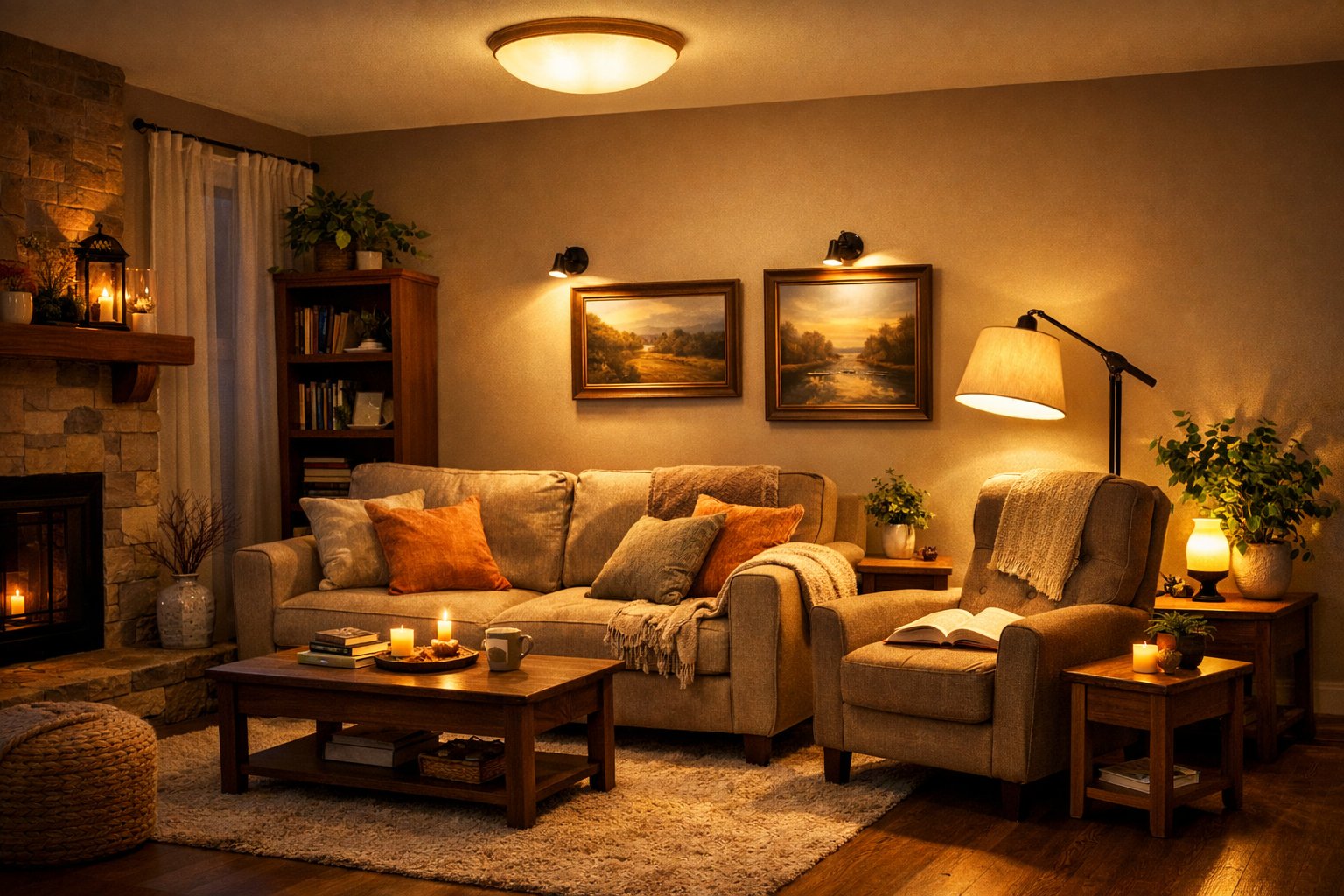

A cozy home honestly starts with the right lighting, and the secret is using multiple light sources that work together instead of just blasting everything with one bright overhead fixture.
Layered lighting combines three types of light, ambient, task, and accent, to create depth, warmth, and the perfect atmosphere in every room.
This approach gives you control over how your space looks and feels at different times of day.
You don’t need expensive renovations to transform your home with better lighting.
Simple changes like adding warm-toned bulbs, placing lamps in the right spots, and including accent lights can make any room feel more inviting.
The right lighting design turns a basic space into somewhere you actually want to spend time.
This guide breaks down each layer of light and shows you exactly how to use them in your home.
You’ll pick up which fixtures work best for different rooms, how to choose the right bulbs, and which products give you the most value for creating that cozy feeling you’re after.
Key Takeaways
- Layered lighting uses ambient, task, and accent light sources together to create warm and functional spaces
- Warm-toned bulbs between 2700K and 3000K combined with dimmers give you the most control over your lighting plan
- Strategic placement of multiple light sources in each room eliminates harsh shadows and adds depth to your home
Understanding Layered Lighting
Layered lighting uses three distinct types of light sources working together to make a room both functional and inviting.
This approach gives you control over brightness and lets you adjust the mood of any space throughout the day.
What Is Layered Lighting?
Layered lighting is a lighting scheme that combines three types of lighting in one room.
These three layers are ambient lighting, task lighting, and accent lighting, and each layer serves a specific purpose in your space.
Ambient lighting provides the general lighting for your entire room.
Task lighting focuses on specific work areas where you need brighter light.
Accent lighting highlights your favorite features like artwork or plants.
When you use all three layers together, you create a flexible lighting system.
You can turn different lights on or off based on what you’re doing.
A bedroom might use overhead lights for ambient lighting, a bedside lamp for reading, and a small spotlight to highlight a painting.
Benefits of the Layered Lighting Approach
The layered lighting approach gives you control over your home’s atmosphere.
You can adjust brightness levels to match different activities throughout the day.
Reading a book requires different lighting than watching a movie or hosting dinner guests.
This method also reduces eye strain and improves safety in your home.
Task lighting keeps you from working in shadows, while ambient lighting helps you move around safely at night.
The varied light sources eliminate harsh shadows and dark corners.
Your home looks more polished and intentional with layered lighting.
The depth created by multiple light sources makes rooms feel larger and more interesting.
You can highlight architectural details, create focal points, and add visual interest that a single overhead light just can’t do.
The Role of Ambient Lighting in Cozy Spaces
Ambient lighting forms the foundation of your home’s overall illumination and sets the mood for every room.
The right ambient light sources and proper control through dimmers let you adjust brightness levels to match different activities and times of day.
Ambient Lighting Explained
Ambient lighting provides general illumination that fills your entire room with light.
It serves as the base layer that lets you move safely through your space and see basic details without harsh shadows or dark corners.
This type of lighting comes from overhead fixtures that distribute light evenly throughout the room.
The goal is to create soft, comfortable brightness rather than intense, focused beams.
Your ambient lighting shouldn’t be too bright or too dim on its own.
The best ambient lighting mimics natural light in how it spreads throughout your space.
Think of it as the background glow that makes your room functional before you add other lighting layers.
Warm color temperatures between 2700K and 3000K work best for creating cozy environments because they produce a golden, inviting tone similar to sunset or candlelight.
Popular Ambient Light Sources and Fixtures
Ceiling-mounted fixtures offer the most common solution for ambient lighting in homes.
These include:
- Recessed lighting, lights installed into your ceiling that sit flush with the surface
- Flush mounts, fixtures that attach directly to the ceiling with minimal gap
- Pendant lights, hanging fixtures that work well in rooms with higher ceilings
- Chandeliers, decorative options that provide ambient light while serving as focal points
- Downlights, fixtures that direct light downward to spread across floors and walls
Cove lighting creates indirect ambient light by bouncing illumination off your ceiling or walls.
This technique produces extremely soft, shadow-free light that feels natural and comfortable.
Ceiling fans with integrated lighting serve dual purposes by providing air circulation and ambient illumination.
Natural light from windows and skylights also counts as ambient lighting during daytime hours.
You should plan your artificial lighting sources to complement and extend the natural light you get throughout the day.
The Importance of Dimmers and Light Intensity
Dimmers give you control over your ambient lighting intensity to match different needs and moods.
A dimmer switch lets you reduce brightness during evening hours or bump it up when you need more visibility for tasks.
Installing dimmers on your ambient lighting fixtures gives you flexibility that fixed-brightness lights just can’t offer.
You can create bright, energizing light for morning routines and soft, relaxing light for evening wind-down time.
Light intensity really affects how cozy your space feels.
Too much brightness from your ambient lighting sources creates a clinical, unwelcoming atmosphere.
Too little light makes your room feel cave-like and uncomfortable.
Dimmers fix this problem by letting you find the perfect middle ground for any situation.
The ability to adjust your lighting fixtures means you can adapt one room to serve multiple purposes throughout the day without swapping bulbs or changing fixtures.
Task Lighting: Enhancing Function and Comfort
Task lighting targets specific areas where you need focused light for activities like reading, cooking, or working.
The right task lighting reduces eye strain and makes daily tasks easier while adding comfort to your space.
Defining Task Lighting and Its Uses
Task lighting provides concentrated light for specific activities that require clear visibility.
Unlike ambient lighting that fills a whole room, task lighting directs bright light exactly where you need it most.
You need task lighting in areas where you read, cook, work, or do hobbies.
In the kitchen, it helps you see what you’re chopping on the counter.
At your desk, it keeps you from squinting at paperwork or your keyboard.
Next to your bed, it lets you read without disturbing someone sleeping beside you.
The best task lighting uses warm, natural light that feels easy on your eyes.
Position the light so it shines directly on your work surface without creating harsh shadows or glare.
An adjustable fixture lets you move the light as needed for different tasks throughout the day.
Best Task Lighting Fixtures and Placement
Different rooms need different types of task lighting fixtures based on what you do in each space.
Desk lamps work well in home offices and study areas.
Choose one with an adjustable arm so you can point light where you need it.
Place it on the opposite side of your writing hand to avoid shadows on your work.
Under-cabinet lighting is essential in kitchens.
Under-cabinet LED strips or puck lights illuminate countertops where you prep food.
Install them toward the front of the cabinet to reduce shadows on your workspace.
Vanity lights belong in bathrooms near mirrors.
Mount them on both sides of the mirror at eye level to eliminate shadows on your face.
This setup works better than a single light above the mirror.
Reading lamps fit beside chairs or beds where you read.
Floor lamps with adjustable heads work great next to sofas.
Table lamps on nightstands should be tall enough that the bottom of the shade sits at shoulder height when you’re seated.
Product Suggestions for Task Lighting
BenQ e-Reading Desk Lamp offers adjustable brightness and color temperature with an auto-dimming sensor.
The curved head provides wide coverage without glare, making it ideal for desks and workspaces where you spend long hours.
Philips Hue Lightstrip Plus works as under-cabinet LED strips in kitchens.
These flexible LED strips stick beneath cabinets and connect to smart home systems.
You can adjust brightness and choose from millions of colors to match your mood or task needs.
Brightech Sky LED Torchiere Floor Lamp provides bright upward light that bounces off the ceiling for general illumination, but also includes a flexible reading lamp attachment.
This dual-function design gives you both ambient and task lighting in one fixture, perfect for living rooms or bedrooms where space is limited.
Accent Lighting: Adding Warmth and Personality
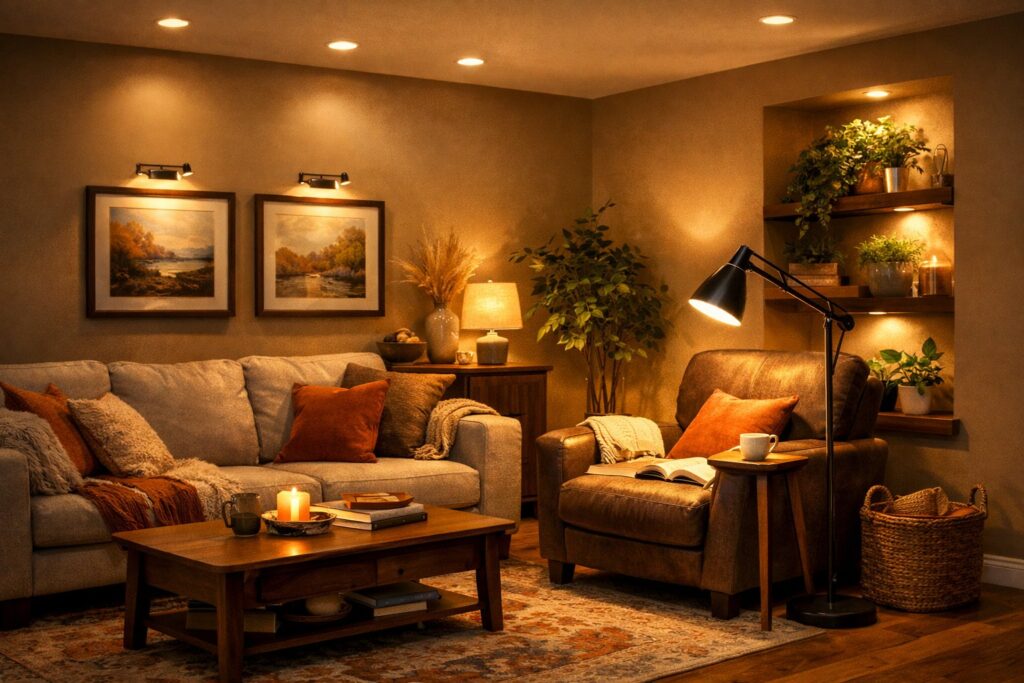
Accent lighting brings visual interest and emotional warmth to your space by highlighting specific features and creating focal points.
This layer lets you express your style while controlling the mood of each room through strategic placement and color temperature choices.
Purpose and Benefits of Accent Lighting
Accent lighting draws attention to specific elements in your home while adding depth to your overall lighting scheme.
Unlike ambient lighting that illuminates entire rooms, accent lights create visual hierarchy by spotlighting what matters most.
This lighting layer eliminates flat, sterile spaces by introducing shadows and highlights.
You can use it to showcase artwork, architectural details, plants, or textured walls.
The contrast between lit and unlit areas adds dimension that makes rooms feel larger and more dynamic.
Accent lighting also works as mood lighting during evenings.
When you dim or turn off your ambient and task lights, accent lights alone can create a relaxing atmosphere.
Warm-toned accent lighting between 2000K and 2700K produces a cozy, inviting feeling that works well for unwinding after work.
Accent Lighting Techniques and Examples
Wall sconces work well on either side of artwork, mirrors, or fireplaces.
Install them at eye level, typically 60 to 66 inches from the floor.
Sconces add both uplight and downlight, creating gentle shadows that enhance texture on walls.
Picture lights mount directly above frames to illuminate artwork without glare.
These small fixtures focus attention on specific pieces and work best with a beam angle between 25 and 40 degrees.
Track lighting and spotlights offer flexibility for renters or people who like to change displays often.
You can adjust the direction of each light head to highlight different features as needed.
Aim for three times more light on your accent feature than the surrounding ambient light.
LED strip lights installed under shelves, inside cabinets, or behind furniture create subtle glows that add warmth without harsh brightness.
These strips work particularly well for highlighting collections or creating backlighting effects.
String lights or fairy lights provide soft, decorative accent lighting in bedrooms, reading nooks, or outdoor spaces.
While less focused than other options, they contribute to a relaxed, casual atmosphere.
Recommended Accent Lighting Products
| Product Type | Best For | Key Features |
|---|---|---|
| Adjustable Wall Sconces | Living rooms, hallways | Directional heads, dimmer compatible, multiple finish options |
| Wireless Picture Lights | Art galleries, entryways | Battery-powered or rechargeable, no wiring required, adjustable brightness |
| Smart LED Strip Lights | Under cabinets, behind TVs | Color-changing capability, app control, cuttable to custom lengths |
Try to find dimmable accent lights so you can tweak the intensity as the day goes on. Fixtures with warm color temperatures work best for living areas and bedrooms.
Put accent lights on separate switches from your main lighting, so you can control each layer on its own. Think about the size of what you want to highlight before picking a fixture.
Bigger artwork needs a wider beam, while smaller objects look better with narrow, focused beams. That way, you won’t get light spilling where you don’t want it.
Essential Lighting Design Principles for Coziness
The right lighting can turn a plain room into a warm retreat. Color temperature shapes the mood, and the bulbs and controls you pick give you flexibility.
Balanced light helps you avoid harsh spots, which nobody really wants. Let’s talk about how that all comes together.
Color Temperature and Its Impact on Mood
Color temperature tells you how warm or cool your light looks, measured in Kelvin (K). Warm light, somewhere between 2700K and 3000K, gives you that cozy feeling people crave at home.
This range feels like candlelight or firelight, which most brains connect with comfort and safety. If you go above 4000K, the light gets pretty cool and works better in garages or work areas, but it’s not great for relaxing spaces.
Bedrooms and living rooms really need those warmer bulbs to feel inviting. Kitchens can handle a slightly cooler range, maybe 3000K to 3500K for prepping food, but keep dining areas on the warmer side.
Color-changing LED bulbs can help you shift temperatures throughout the day. Set cooler tones in the morning to wake up, then switch to warmer tones as you wind down.
This approach lines up with your natural rhythms. It just feels right for whatever you’re doing.
Choosing the Right Bulbs and Controls
LED bulbs give you the best mix of efficiency and good light. Look for ones labeled “soft white” or “warm white” if you want that cozy vibe.
Smart bulbs and smart lighting systems let you control brightness and color temperature from your phone. You can set up scenes for movie night, dinner, or reading, which is pretty fun.
If you don’t want to mess with apps, dimmer switches work well too. Just keep things simple if that’s your style.
Light intensity matters a lot. Your main lighting should be bright enough to see but not so bright it feels like a waiting room.
Task lighting needs to be stronger for reading or cooking. Accent lighting should stay lower, just enough to add some depth.
Preventing Glare and Creating Balance
Glare happens when light shines right in your eyes or bounces off shiny stuff. Place lamps so bulbs sit below your eye level when you’re sitting down.
Lampshades or frosted bulbs help soften harsh light. Using more than one light source at different heights keeps your space from looking flat or shadowy.
Floor lamps in corners, table lamps on side tables, and wall sconces at mid-height spread light around more evenly. It’s a simple trick, but it works.
Skip bright white walls or glossy finishes near your lights. They bounce too much light and can get uncomfortable.
Matte surfaces and warm paint colors absorb some of that brightness, making everything feel softer.
Layering Light in Key Rooms of the Home
Each room needs a different lighting approach, depending on how you use it. Mixing ambient, task, and accent lights helps every space work better and feel more inviting.
Living Room Lighting Strategies
The living room has to do a lot, so flexible lighting is key. Start with a ceiling fixture for overall light, but don’t lean on it alone.
That kind of lighting can feel flat and unwelcoming. Add floor lamps next to seats for reading or working.
Put table lamps on side tables to create cozy pools of light around the edges. These task lights let you see clearly but keep the vibe relaxed.
Wall sconces are great for highlighting artwork or interesting features. Picture lights can draw eyes to wall decor.
Rechargeable lamps on coffee tables or shelves add soft light in unexpected spots. Try placing lights at different heights to add depth and make the room feel bigger.
Keep pendant lights about 75 cm above surfaces to avoid glare and keep sightlines open.
Kitchen Lighting Layering
Kitchen lighting needs to be bright for prepping food, but you also want it to feel inviting. Use recessed spotlights or ceiling pendants for the main layer.
Track lighting works if you have skylights. Under-cabinet lights are a must for shadow-free task lighting on countertops.
These make chopping and cooking safer and easier. Hang statement pendants over islands or tables, at least 75 cm from the surface.
Accent lighting inside glass cabinets with LED strips or small spotlights shows off your dishes and adds warmth. Strip lights on open shelves do the same thing.
Don’t light the whole kitchen evenly. Create zones instead.
Put task lights where you work, and use decorative fixtures over eating areas. Wire each light type on separate circuits so you can adjust them as needed.
Bedroom Lighting for Relaxation
Bedroom lighting should be softer since this is where you relax and sleep. Go for a chandelier if you have high ceilings, or a flush mount fixture for standard heights as your main light.
Keep the brightness lower than in active rooms. Install reading lights next to the bed for your task layer.
Wall-mounted fixtures, pendants, or headboard lights all work. Table lamps on nightstands add a warm glow without being too intense.
If you do makeup in your bedroom, light your dressing table from the sides. This keeps harsh shadows off your face.
A mirror with built-in LEDs spreads out soft, flattering light. Add LED strips inside wardrobes so you can actually see your clothes.
Try hiding linear LEDs behind crown molding to wash light across the ceiling. It makes the room feel taller and adds gentle ambient light.
Frequently Asked Questions
Getting layered lighting right means knowing how each type works in your rooms and picking fixtures that fit your needs and style.
How can I effectively combine ambient, task, and accent lighting for a balanced home atmosphere?
Start with ambient lighting as your base to light up the whole space. Put it on a dimmer switch so you can adjust as needed.
Add task lighting where you do specific things, like reading or cooking. Place these lights to the side of your work area to avoid shadows.
Layer in accent lighting at about three times the brightness of your ambient lights. This contrast makes features pop. Make sure each lighting type has its own control so you can tweak things for different activities or moods.
What are some prime examples of accent lighting fixtures I could consider for my living room?
Track lighting lets you point light at multiple focal points, like art or cool architecture. You can adjust the heads to hit different spots.
Picture lights above frames give your wall art a gallery look. Wall sconces that wash light up or down highlight textures or details.
Directional spotlights focus on specific things like plants, sculptures, or bookcases. These add depth and contrast to the room.
Could you give me practical task lighting ideas for a home office space?
A desk lamp with an adjustable arm lets you aim light exactly where you want it. Put it to the side of your workspace to keep shadows off your keyboard or papers.
Under-shelf lighting brightens your desk without taking up space. LED strips are great for this.
If you’re on a computer, don’t put lights directly behind your monitor. That just creates glare. Use lights that spread even illumination across your desk from the side or above at an angle.
What is the best way to set up a lighting scheme that enhances the coziness of a bedroom?
Use warm-toned ambient lighting with a dimmer as your main source. Lower the brightness in the evening to help your body get ready for sleep.
Add bedside reading lamps or wall sconces for task lighting. Place them so the light hits your book or tablet, not your eyes.
Try accent lighting like LED strips behind the headboard or under the bed for a soft glow. Small table lamps on dressers also work as gentle accent lights, adding warmth without being overpowering.
Can you suggest a few lighting products that are both functional and stylish for my kitchen refurbishment?
Install under-cabinet LED strips to light up counters for food prep. They give you direct light without the shadows from overhead fixtures.
Pendant lights over the island combine task and ambient lighting and also look great. Go for adjustable heights so you can set them about 30 to 36 inches above the counter.
Recessed can lights with dimmers offer flexible ambient lighting all over the kitchen. Brighten them for cooking, dim them for dining or hanging out.
What kind of lighting is recommended for a reading nook to reduce eye strain and create a relaxing environment?
A floor lamp beside your chair is a solid choice for focused reading light. Try to find one with a shade that points light down onto your book and keeps the bulb out of your line of sight.
Adjustable reading lamps are handy since you can tweak the angle or height whenever you want. Warm bulbs, somewhere in the 2700K to 3000K range, usually feel more inviting for reading.
You want enough light to read comfortably, but not so much that the page glares back at you. Lamps with three-way bulbs or a dimmer switch make it easy to dial in just the right brightness.