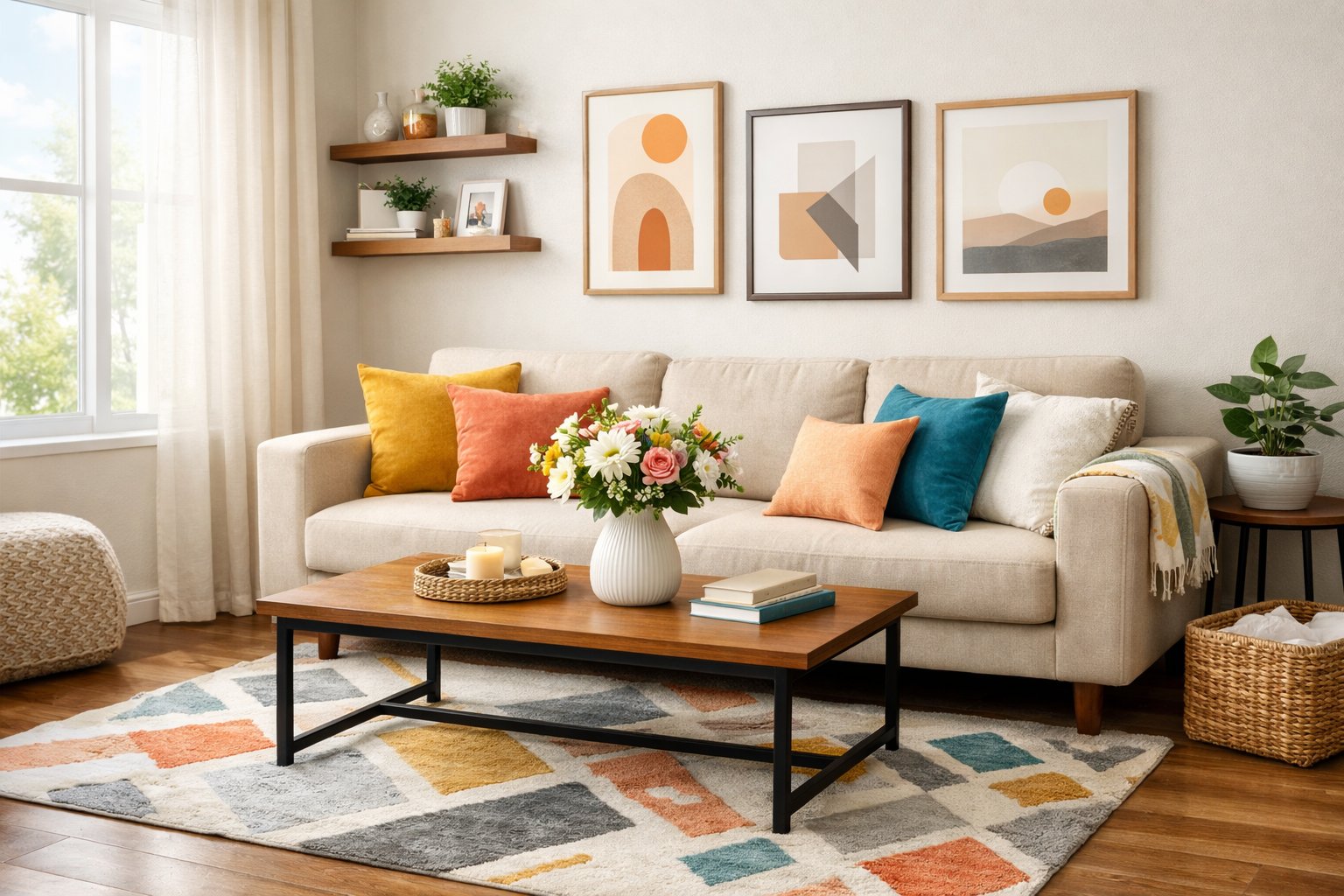

You don’t have to drop thousands just to make your home feel fresh and inviting. Simple upgrades like new light fixtures, throw pillows, wall art, or swapping out hardware can honestly change how a room looks and feels—without blowing your budget.
These little tweaks matter because they’re the things you see and touch every single day.
Most affordable home decor upgrades take less than a day. You can chip away at them one by one as your budget allows.
Maybe you want to refresh your living room, update your bedroom, or just add a little personality to your kitchen. The right touches make your home feel more welcoming, more “you.”
This guide dives into practical ways to upgrade your space—no major renovation required. You’ll find real product suggestions and tips that actually work in everyday homes.
Each idea here focuses on changes that give you the most visual bang for your buck (and effort).
Key Takeaways
- Switch up lighting, add textiles like throw pillows and rugs, and refresh your walls with art or paint for instant room upgrades.
- Try replacing cabinet hardware, swapping bathroom fixtures, or adding plants—these small changes can elevate your space without spending much.
- Tackle one or two upgrades at a time to spread out costs, and pick items that vibe with your current decor style.
Lighting Makeovers That Transform Ambiance
Lighting really changes how a room feels—maybe more than any other affordable upgrade. Smart bulbs, statement fixtures, under-cabinet strips, and layered table lamps can totally shift your space’s mood, and they’re easy on the energy bill too.
Upgrade to LED Bulbs and Smart Lighting
LED bulbs use about 75% less energy than old-school incandescents, and they last way longer. You’ll see the difference on your electric bill and in the quality of light.
Smart lighting takes things up a notch. You can control brightness and color temperature from your phone, set schedules, dim the lights for movie night, or switch to warmer tones in the evening. Most smart bulbs play nice with Alexa or Google Home.
Dimmer switches give you manual control over how intense your lighting feels. They usually cost $15–$40 per switch and work with most LED bulbs.
Adjusting lighting for the time of day or activity lets you create the exact mood you want. It’s a small change with a big impact.
Product suggestions: Philips Hue White and Color Ambiance bulbs (about $50 for a starter kit), LIFX smart bulbs (no hub, $45–60), or Lutron Caseta dimmer switches ($25–35).
Incorporate Statement Lighting: Pendant Lights and Chandeliers
Statement lighting acts like functional art. A great pendant or chandelier draws the eye and adds personality to spaces that might otherwise feel a little blah.
Pendant lights work over kitchen islands, dining tables, or entryways. They hang from the ceiling and come in tons of styles—industrial metal, woven rattan, you name it. Decent options start at $80–150.
Chandeliers aren’t just for formal dining rooms anymore. Modern ones with geometric shapes or mixed materials like brass and wood fit right into casual spaces. Plenty of plug-in options exist if you don’t want to mess with wiring.
When picking statement lighting, think about the size. A pendant should be about one-third the width of your table. Chandeliers need enough clearance above head height so you’re not bumping into them.
Install Under-Cabinet Lighting
Under-cabinet lights get rid of shadows on kitchen counters, making prep work safer and easier. LED strip lights are a favorite—they’re thin, energy-efficient, and barely get warm.
You can go with plug-in strips or battery-powered puck lights. Plug-in strips stay bright and you don’t have to worry about batteries. Battery pucks are easier to install and don’t leave cords dangling.
Both usually have sticky backs for easy mounting. Under-cabinet LED strips run $20–$60, depending on length.
Look for a color temperature around 3000K for a warm white that’s not too harsh. Some strips even have dimming or motion sensors for extra convenience.
Most DIYers can install these in 30 minutes or less. Just clean the cabinet, stick the strips, and plug them in or pop in batteries.
Add Table Lamps for Layered Illumination
Table lamps add warm light at eye level, making rooms feel cozier. If you only use overhead lighting, things can feel a bit flat or sterile.
Try lamps on end tables, bookshelves, nightstands, or even kitchen counters. Mixing light sources at different heights adds depth and interest.
Quality table lamps often start at $30–50, and ceramic bases are tough and affordable. Swapping out a lampshade can totally change the vibe for under $20.
Go bold with patterned shades or keep it simple with neutral linen. The shade material makes a difference—linen diffuses light softly, while paper gives you sharper shadows.
Don’t be afraid to mix lamp styles in the same room. Maybe pair a ceramic base with a woven shade, or use two similar shapes in different finishes. You get to decide how bright or mellow each corner of your room feels.
Textile Upgrades for Coziness and Style
Textiles bring warmth and personality to any space—color, texture, and pattern work wonders. Swapping out pillows, bedding, curtains, or rugs gives a room a new look, no major reno (or spending spree) required.
Use Decorative Pillows to Add Color and Texture
Decorative pillows can totally transform a sofa, chair, or bed. Mix up textures like velvet, linen, faux fur, and cotton for a layered look.
Try three to five pillows in different sizes on a sofa—larger 22-inch ones in back, smaller 18-inch in front. Pick colors that play well with your furniture but add some energy.
If your walls and furniture are neutral, try bold jewel tones like emerald or navy. If the space is busy, go for subtle patterns or solids.
Budget tip: Grab pillow covers with zippers instead of full pillows. Reuse the inserts and swap covers seasonally for $15–20 each. Sets of four to six covers online are usually a better deal.
This way, you can change your room’s mood all year without storing a pile of bulky pillows.
Refresh Bedding with a New Duvet Cover
Switching out your duvet cover can change your bedroom vibe in minutes. Duvet covers slip over your existing insert and cost way less than buying a whole new comforter.
Good ones run $40–80 and look much pricier. Pick fabrics that suit you—cotton percale is crisp and cool, while sateen is softer and has a slight sheen.
Linen duvet covers add texture and get softer with every wash, but they do wrinkle. Large florals or bold geometrics make a statement in big bedrooms, while small rooms look better with subtle patterns or solids.
White or light gray covers give a hotel feel and match any decorative pillows you already have.
Update Window Treatments: Roman Shades and Curtains
Window treatments control light, give privacy, and frame your windows. Roman shades look neat and tailored, folding into horizontal pleats when raised.
Curtains soften the room and make ceilings seem taller if you hang them near the ceiling line. Mount rods 4–6 inches above the window, and let panels just kiss the floor or puddle a bit for a luxe look.
Light-filtering fabrics work well in living spaces where you want sun but also some privacy. Blackout curtains are better for bedrooms.
Try layering sheers under heavier drapes for more control over the light. Neutral colors like cream, gray, or soft blue play nicely with most decor and won’t clash if you switch things up later.
Elevate Floors with Area Rugs
Area rugs anchor your furniture and define zones in open layouts. Make sure the rug fits under the front legs of sofas and chairs, or under everything in smaller rooms.
Too-small rugs make rooms feel awkward. In living rooms, aim for at least 8×10 feet. Bedrooms need rugs that stick out 18–24 inches past the bed.
Material matters for looks and durability. Wool rugs last forever and resist stains, but they’re pricier. Polypropylene and other synthetics are tough, easy to clean, and cheaper.
Natural fiber rugs like jute or sisal add texture but feel rougher underfoot. Stick to low-pile or flatweave in high-traffic spots so no one trips and vacuuming stays easy.
Creative Wall Art and Decorative Accents
Wall art can turn a blank wall into a statement. Simple things like gallery walls, peel-and-stick wallpaper, or floating shelves add character—no expensive remodel needed.
Create a Gallery Wall for Personalized Impact
Start with three to five frame sizes for a balanced base. Mix 8×10, 11×14, and 16×20 inch frames for variety.
Put your biggest frame at eye level, about 57–60 inches from the floor, and arrange the smaller ones around it. Mixing frame styles adds personality—maybe modern black with vintage gold, or wood with metal.
This keeps your wall from looking too matchy-matchy. Choose two to four colors that already show up in your room. Use one color for about 60% of your art, a second for 30%, and the rest for little pops of accent.
Personal photos make the wall feel like yours. Mix family pics with travel shots, local art, or quotes you love.
Lay everything out on the floor first to test arrangements before you start hammering nails. Trust me, it saves a lot of patching later.
Apply Peel-and-Stick Wallpaper for an Instant Makeover
Removable wallpaper gives you style without the stress of commitment. It goes on easily and comes off clean, so it’s perfect for renters or anyone who likes to switch things up.
Focus on just one accent wall for the biggest impact—like behind your bed or sofa. Bold patterns really shine when they define a space.
Large geometrics or vibrant florals work well in living rooms and bedrooms. For smaller rooms, avoid oversized prints that can make things feel crowded.
Pick a wallpaper that fits your color scheme. Test samples first to see how they look in different lighting.
Popular brands offer tons of designs at all price points. Don’t be afraid to experiment a little—sometimes the riskier patterns end up being your favorite part of the room.
Use Floating Shelves to Showcase Decor
Install floating shelves to add storage and display space without bulky furniture. They work in any room and usually cost way less than bookcases or cabinets.
Mix books with decorative objects for interesting displays. Layer smaller items in front of larger books for some depth.
Add ceramic vases, framed photos, small plants, or collectibles that really show off who you are. Vary shelf heights to keep things visually interesting.
Try installing shelves at different levels instead of sticking to straight lines. This staggered look feels more relaxed and lets you display items of all sizes.
Pick slim shelves for narrow spaces like hallways. You can even put shelves above existing furniture to use up empty wall space.
Corner shelves work great in spots where regular furniture just won’t fit.
Product suggestions:
- IKEA LACK floating shelves (available in multiple sizes and colors)
- Command Picture Hanging Strips (damage-free hanging solution)
- Tempaper Removable Wallpaper (wide pattern selection, easy application)
Affordable Furniture and Hardware Updates
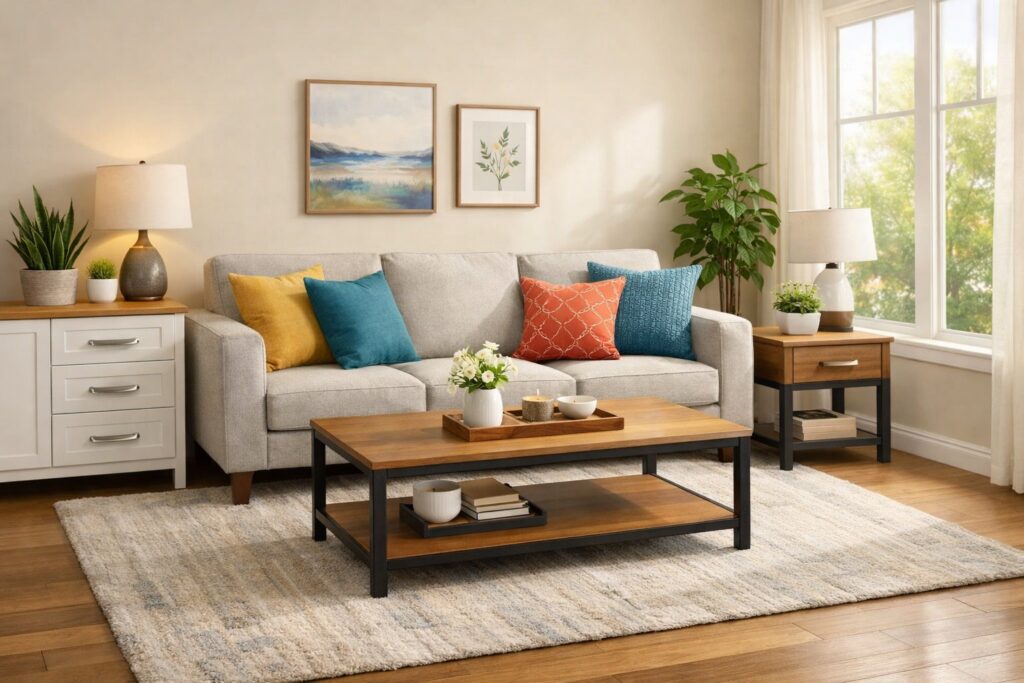
Small furniture additions and hardware swaps can quickly refresh your space. You don’t need much effort, but the impact is real—both in style and function.
Swap Out Cabinet Hardware for a Modern Look
Cabinet hardware is like jewelry for kitchens and bathrooms. Swapping out old knobs and pulls takes less than an hour and instantly changes the vibe.
Matte black hardware runs $2 to $8 per piece and fits modern spaces. Brushed gold or brass, usually $3 to $10, brings warmth to traditional kitchens.
Chrome or nickel finishes are a safe, timeless bet at similar prices. You’ll just need a screwdriver for most installations.
Measure your existing holes before buying new hardware to avoid extra drilling. Most pulls are spaced 3 inches apart, and knobs use single holes.
Product suggestions:
- Liberty Hardware 3-inch bar pulls in matte black
- AmazonBasics brushed nickel cabinet knobs
- GlideRite 5-inch modern pulls in champagne bronze
Add Small Furniture Pieces for Function and Flair
Small furniture fills empty corners and adds storage without making things feel crowded. A slim console table behind your sofa gives you a spot to display things and usually costs $80 to $200.
Accent chairs in the $150 to $300 range add extra seating and a pop of color. Storage pieces like ladder shelves or cube organizers keep things tidy and double as decor.
Closet organizers can turn chaos into order. Rolling carts are lifesavers in kitchens, bathrooms, or home offices and often cost under $100.
Look for pieces that do double duty. Ottoman storage benches hide clutter and offer a place to sit. Nesting tables give you extra surfaces when you need them, then tuck away easily.
Budget-Friendly Kitchen and Bathroom Enhancements
Kitchens and bathrooms can start looking tired fast, but you really don’t need a full reno to freshen things up. Little changes like a new backsplash, fresh caulk, or updated switch plates can make a big difference.
Install Peel-and-Stick Backsplash for Style
A backsplash brings personality and keeps your walls safe from splashes. Peel-and-stick tiles are an easy, affordable way to upgrade without hiring anyone or dealing with grout.
You’ll find all kinds of styles—subway tile, geometric patterns, faux ceramic, glass, or stone. Most packs cost $15 to $40 and cover about 10 square feet, which is usually enough for behind a stove or sink.
Installation’s pretty simple. Clean the wall, measure and cut, peel and stick. You can even use these tiles in bathrooms as a quick accent.
Top product suggestions:
- Tic Tac Tiles – Realistic subway tile patterns starting at $20
- Art3d Peel and Stick Backsplash – Heat-resistant options perfect for behind stoves
- Commomy Hexagon Tile Stickers – Modern geometric designs for contemporary kitchens
Refresh with Fresh Caulk and Towel Bars
Old caulk makes even the cleanest bathrooms look dingy. Scrape away the old stuff and add a fresh bead along tub edges, shower seams, and sinks for less than $10.
Use a caulk removal tool, clean the area with rubbing alcohol, and apply a thin line of silicone caulk. Smooth it out with your finger or a tool, then let it dry for a day before getting it wet.
New towel bars add both function and style. Matte black, brushed nickel, or brass finishes can match your faucets and hardware. Good towel bars usually run $15 to $35 each online or in stores.
Replace Switch Plates for a Polished Finish
Switch plates are easy to overlook, but once you notice dirty or cracked ones, you can’t unsee them. Swapping them out in your kitchen and bathroom takes less than half an hour and costs just a few bucks per plate.
Sure, basic white plates work, but why not upgrade? Stainless steel looks sharp in modern kitchens, while brass or bronze fits traditional spaces. Glass or ceramic can tie in with your backsplash or counters.
First, turn off the power at your breaker box. Unscrew the old plates, pop on the new ones, and make sure everything matches for a put-together look.
Smart Home Touches and Practical Tips
Smart devices can add convenience and a modern feel without blowing your budget. A smart thermostat or lock brings real upgrades to your day-to-day life, no major renovation needed.
Upgrade to a Smart Thermostat for Modern Comfort
Smart thermostats let you control your home’s temperature from your phone and help save on energy bills. They learn your routine and adjust heating and cooling on their own.
You can set different temps for different times, or tweak things when you’re out. Installation usually takes 30-45 minutes if you’re replacing an old thermostat.
Most models work with standard systems. The Ecobee comes with room sensors to balance temperature throughout your place.
Smart thermostats display weather, time, and temp on a sleek touchscreen. They even give you monthly energy reports and tips to save more. Expect to pay $120-250, and you might see 10-23% savings on your energy bills—these things can pay for themselves in a couple years.
Add a Smart Lock for Security and Convenience
Smart locks replace your deadbolt and mean you don’t have to fumble for keys. Unlock your door with your phone, a keypad, or even by voice if you’re into smart home setups.
Handy for guests, cleaners, or contractors—you can make temporary codes without making extra keys. You’ll get notifications when someone unlocks the door, which adds a bit of peace of mind.
Most smart locks only need a screwdriver and take 15-30 minutes to install. They fit standard doors, so you shouldn’t need to drill anything new. Battery-powered options mean no wires, and prices usually range from $100-300 depending on features.
Simple Curb Appeal Boosts
Your home’s exterior sets the tone for visitors and neighbors. Swapping out house numbers and doing some quick landscaping can really freshen things up without much work or money.
Update House Numbers for Modern Style
New house numbers give your place an instant update. Pick numbers that contrast with your door or siding for better visibility—black for light houses, brass or gold for dark ones.
Modern house numbers come in all sorts of styles:
- Floating numbers: Attach with hidden hardware for a clean look
- Plaques: Classic, with all numbers grouped together
- Vertical layouts: Great for narrow entryways
- LED-backlit: Light up your address at night
You’ll find good options for $20 to $50. Go for at least 4-inch numbers so people can actually see them. Clean the spot before you install, and use a level to keep things straight.
Try Simple Landscaping for a Welcoming Entry
Basic landscaping can totally change your front yard. Trim back overgrown bushes, pull out any dead plants, and lay down fresh mulch for a cleaner look. A couple of inches of mulch usually costs $25-40 for most yards.
Brighten things up with flowers in pots by your door. If you want low-maintenance, try:
- Petunias: Lots of color all summer, love the sun
- Hostas: Perfect for shade
- Marigolds: Tough and handle heat well
Define your walkway with stone or metal edging. Keep weeds in check and mow the lawn regularly. These little things add up and make your place way more inviting.
Frequently Asked Questions
Upgrading your home on a budget brings up a lot of practical questions. Lighting, textiles, wall art, and compact furniture can all transform a room—no expensive reno required.
What are some budget-friendly lighting options that can enhance a living room’s ambiance?
LED strip lights are a cheap way to add a cozy glow under shelves or behind furniture. Decent sets run $15 to $30 and stick on easily. They make a living room feel warmer and more welcoming.
Table lamps with fabric shades add both light and a little style for $25 to $60. Try to find ones with adjustable brightness so you can set the mood. Mixing lamp heights around the room helps prevent harsh overhead lighting.
Floor lamps with arched arms fit nicely in corners or behind chairs. They’re usually $40 to $100 and don’t take up much space. Go with LED bulbs to cut electricity costs by up to 75% over old-school bulbs.
Can you suggest practical textile upgrades for boosting comfort and style in a home?
Throw pillows are a quick win—mix up textures and patterns for $10 to $25 each. Velvet, linen, and cotton blends all feel different and keep your seating area interesting.
Area rugs help define spaces and add warmth to hard floors. You can grab decent rugs at IKEA or Wayfair starting at $50 for small sizes. Make sure the rug extends at least 6 inches past your furniture for the best look.
Light window treatments let in sunshine but soften up bare windows. Roman shades or sheer curtains usually cost $20 to $60 per window. Bamboo blinds are another solid choice and add a bit of texture.
Throw blankets tossed over furniture add comfort and style for $15 to $40. Chunky knits or faux fur give a little texture, especially in minimalist rooms. Keep them handy for chilly days—they’re not just for looks.
How can one incorporate wall art to revitalize a room without overspending?
Gallery walls with a mix of framed prints can totally change the feel of a room for under $100. Print high-res images at home or use an online service for just $2 to $5 each, then grab affordable frames from discount shops.
Arrange the frames in odd numbers and switch up the sizes for a more lively, less predictable look. It’s a simple trick, but it works wonders.
Large canvas prints can make a bold statement without breaking the bank. You’ll find online retailers selling prints up to 24 by 36 inches for $30 to $60.
Hang one big piece above a sofa or bed. It anchors the wall and draws your eye upward, making the whole space feel more intentional.
Wall decals and removable wallpaper panels add pattern and personality, but you don’t have to commit forever. These usually run $15 to $50, so they’re renter-friendly.
Stick to one accent wall with these to keep things balanced. Too much can overwhelm the space, but a single wall? That’s just right.
Floating shelves can break up blank walls and give you a spot to display your favorite objects. A set of three shelves usually costs $30 to $60, which isn’t bad for the impact.
Mix in books, plants, and small art pieces. Play around with the heights to keep it feeling balanced but not too staged.
What small furniture pieces make a big impact on a room’s aesthetic at a low cost?
Accent chairs bring in color and extra seating, usually for $100 to $200. Hunt for compact chairs that tuck into corners or sit by windows without crowding the room.
Chairs with unique shapes or bold fabrics can really pop, even if the rest of your furniture is pretty neutral.
Ottomans are the unsung heroes—footrest, extra seat, or even a coffee table if you need one. You’ll find round or square ottomans with storage for $50 to $100, which helps cut down on clutter.
Try placing one in front of your sofa, or use two smaller ones instead of a traditional table. There’s no rulebook here.
Console tables slip behind sofas or into entryways, giving you surface space without hogging the floor. Narrow options run $60 to $120 and usually measure 10 to 12 inches deep.
Style them with a lamp, a plant, or a decorative tray. It’s an easy way to make a space feel intentional without much effort.
Nesting tables are surprisingly handy, especially if you like to entertain. A set costs $40 to $80, and you can tuck them away when you don’t need them.
Pull them out for extra surface area, or stack them for a layered look. Their different heights add a bit of dimension to your setup.
What are the latest trends in living room design that are both stylish and affordable?
Neutral color palettes with warm undertones are edging out stark whites and cool grays these days. Think beige, taupe, and warm white for a calming, modern vibe.
Layer in natural wood tones and a few black fixtures for contrast. It’s subtle, but it makes a difference.
Curved furniture and rounded edges are popping up everywhere. Affordable curved-arm chairs or round coffee tables bring in those softer shapes.
In small spaces, these curves help a lot—hard corners can make things feel cramped, don’t you think?
Natural materials like rattan, jute, and wood add texture and warmth. Woven baskets for storage cost about $15 to $40 and look great while keeping things tidy.
These materials just seem to work with neutral palettes, adding interest without needing loud colors.
Maximalist touches are making a comeback, but you don’t have to go all in. Try a patterned rug or a set of colorful pillows to dip your toes into the trend.
Mix patterns in similar color families if you want things to feel cohesive. It’s a fun way to shake up your space without too much risk.
Could you recommend affordable home decor products that offer a luxurious feel?
Brass or gold hardware on cabinets and drawers instantly gives your space a high-end vibe for just $3 to $8 per piece. Swapping out old hardware is quick—you really just need a screwdriver.
Matte brass feels a lot more modern than those super shiny gold tones, honestly.
Faux fur or velvet throw pillows bring in texture that’s pretty close to the real thing. You can usually find good faux options at HomeGoods or Target for $15 to $30, and they actually look convincing up close.
I’d stick to rich colors like emerald, navy, or burgundy if you want that luxe look.
Framed mirrors with decorative borders can make a small space feel bigger and a bit more elegant. Try to find mirrors with metal frames in trendy finishes—usually $40 to $80.
Hang one across from a window and you’ll get more natural light bouncing around, which just makes the whole room feel lighter.
LED candles in glass holders give you that cozy ambiance but without any waxy mess.