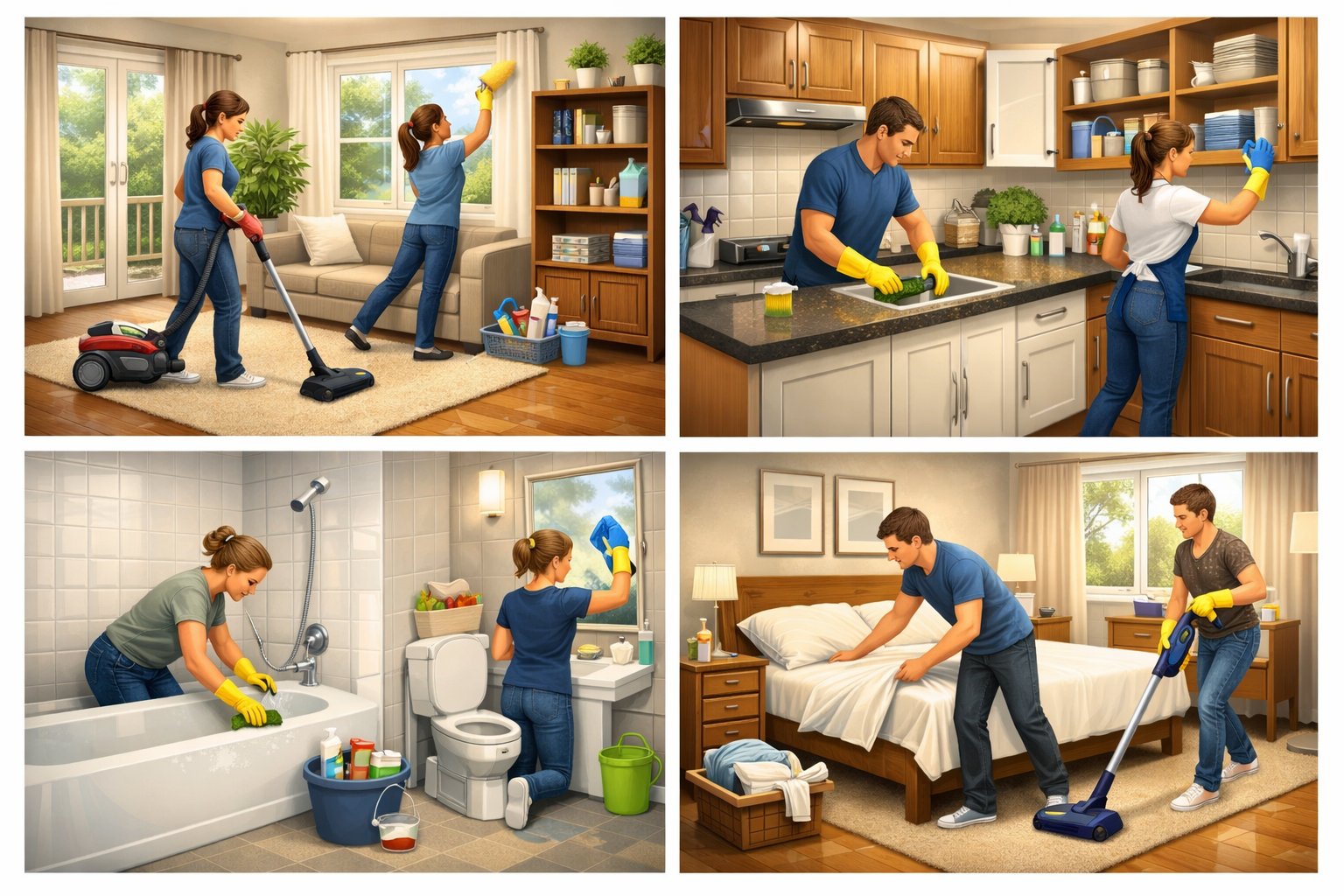

Deep cleaning your whole home in just one afternoon sounds wild, right? But if you’ve got a plan and the right tools, it’s actually possible.
You can deep clean your home in one afternoon by working room by room, starting with the dirtiest spaces first, and using time-saving techniques like letting cleaning products sit while you move to other tasks.
The trick is prepping ahead, staying focused, and knowing which spots need the most elbow grease.
Most of us put off deep cleaning because it just feels like too much. But if you break it into small steps and hit high-traffic spots like kitchens and bathrooms first, it’s manageable.
You don’t have to scrub every inch perfectly. Just go after the grime that regular cleaning usually misses.
Key Takeaways
- Gather all your supplies, declutter each room, and make a realistic schedule before you begin
- Clean top to bottom in each room, and start with kitchens and bathrooms when you’ve got the most energy
- Let cleaning products sit while you tackle other spots, and get help if you can
Essential Preparation Steps for Fast and Effective Deep Cleaning
If you prep well, you’ll save a ton of time and avoid doubling back. Start by decluttering, then grab all your supplies, decide your cleaning route, and set time limits for each room.
Declutter All Rooms Efficiently
Walk through each room with three boxes: donate, trash, and relocate. Pull out anything that doesn’t belong before you even think about cleaning.
This keeps you from wasting time cleaning around piles of stuff. Focus on flat surfaces first: countertops, tables, dressers, you name it.
Clear these off completely so you can actually clean them later. Anything that belongs in another room goes in the relocate box, and you’ll deal with it at the end.
Set a 15-minute timer for each room so you don’t get stuck organizing. You’re not deep organizing right now, just making space to clean.
Gather the Right Cleaning Supplies and Tools
Grab all your cleaning gear and toss it in a portable caddy before you start. Trust me, this saves you so many trips back and forth.
You’ll want microfiber cloths, an all-purpose cleaner, glass cleaner, disinfectant, and a few scrub brushes. Also, don’t forget your vacuum with attachments, mop and bucket, duster, and rubber gloves.
Having everything in one spot can easily save you 20 or 30 minutes.
Here’s what you’ll want for an afternoon deep clean:
- Microfiber cloths (at least 6-8 for different rooms)
- All-purpose cleaning solution
- Disinfectant spray or wipes
- Glass cleaner
- Scrub brushes in multiple sizes
- Vacuum with HEPA filter
- Mop and appropriate floor cleaner
- Trash bags
Create a Room-by-Room Cleaning Plan
Start with rooms farthest from your main entrance and work toward the exit. That way, you won’t track dirt back over clean floors.
Your checklist should hit high-traffic areas first. Bathrooms need toilets, sinks, and showers cleaned. Kitchens need appliance and cabinet cleaning. Bedrooms get fresh linens and dusted surfaces.
Group similar tasks together across rooms. Dust everywhere first, then vacuum, then mop. It’s way faster than finishing one room at a time.
Set Up a Realistic Cleaning Schedule
Break your afternoon into 30-minute blocks for each room, give or take. Bathrooms usually take 20-25 minutes, kitchens and living rooms need 35-40.
Take a 10-minute break every couple of hours so you don’t burn out. If your master bedroom has a bathroom, count those as two time slots.
Here’s a rough idea for timing:
| Room Type | Time Needed |
|---|---|
| Bathroom | 20-25 minutes |
| Bedroom | 25-30 minutes |
| Kitchen | 35-40 minutes |
| Living Room | 30-35 minutes |
| Hallway/Entry | 10-15 minutes |
Add a 30-minute buffer at the end for rooms that take longer than you expect. That way, you won’t feel rushed or skip stuff you meant to do.
Recommended Cleaning Tools and Solutions for a Spotless Home
Having the right tools ready makes deep cleaning way easier. A well-stocked cleaning kit with versatile supplies and a few time-saving gadgets helps you work faster.
Must-Have Supplies for a Deep Clean
Start with microfiber cloths because they grab dust better than regular rags and won’t scratch stuff. You’ll want four to six so you don’t drag dirt from room to room.
A vacuum with attachments is a must for floors, upholstery, and those tricky corners. Crevice tools, brush attachments, and hose extensions help you get baseboards, fans, and furniture without swapping tools.
Keep a few scrub brushes in different sizes. Use a stiff one for tile and grout, a soft one for counters and sinks, and a little detail brush for corners and faucets.
You’ll also want a mop and bucket, toilet brush, sponges, and an extendable duster. A squeegee is great for windows and glass shower doors. Don’t forget rubber gloves, especially if you’re using strong cleaners.
Choosing Between Chemical and Natural Cleaning Solutions
All-purpose cleaner works for most surfaces, from counters to appliances. Store-bought ones cut through grease fast, but natural options with baking soda and vinegar get the job done too.
Baking soda scrubs out tough stains without scratching. Mix it with water for a paste on sinks, tubs, and stovetops.
Vinegar is great for soap scum and hard water. Mix equal parts vinegar and water in a spray bottle for an easy cleaner.
Glass cleaner keeps windows and mirrors streak-free. If you don’t have any, just mix one part vinegar with four parts water.
For disinfecting, use bleach-based cleaners in bathrooms or hydrogen peroxide if you want something more natural. Wood surfaces need special polish or even a mix of olive oil and lemon juice.
Time-Saving Tools for Speed and Efficiency
A vacuum with attachments saves loads of time since you can hit multiple surfaces without swapping tools. Use the brush for dusting vents and light fixtures instead of climbing up with a rag.
Electric scrubbers (battery-powered) make bathroom cleaning go way faster. The spinning heads do the hard work on grout and tubs. Spin mops with wringers speed up floor cleaning and keep your hands dry.
Extendable dusters get ceiling fans and corners without a ladder. Spray mops with refillable bottles let you clean and apply solution in one go. Magic erasers wipe away scuffs from walls and baseboards fast, no extra cleaner needed.
Keep everything in a caddy so you can carry it all from room to room. You’ll avoid backtracking and keep your momentum up.
Room-by-Room Deep Cleaning Instructions
Going room by room helps you stay on track and not get overwhelmed. Hit high-traffic spots first, then move to the rest, always working from top to bottom in each space.
Kitchen Deep Clean Guide
Start with the fridge. Pull everything out and wipe down shelves with warm, soapy water. Toss expired food and wipe down condiment bottles before putting them back.
Ovens usually need extra attention. If you’ve got a self-cleaning oven, run the cycle. Otherwise, spray it down with oven cleaner and let it sit while you do other things. Wipe it out after about 15-20 minutes.
Take off stovetop grates and burner covers, soak them in hot soapy water, and scrub any burnt-on mess with baking soda paste.
Wipe cabinet fronts and handles with all-purpose cleaner. Pick one or two messy drawers, empty and wipe them out.
Scrub your sink with baking soda, then run hot water and dish soap down the drain to finish up.
Bathroom Deep Cleaning Routine
Spray shower walls and the tub with bathroom cleaner and let it sit while you work on other stuff. That gives the cleaner time to do its thing.
For the toilet, apply bowl cleaner under the rim and let it sit. Wipe down the outside, including the base and behind, then scrub the bowl and flush.
Go back to the shower and scrub the walls, focusing on grout lines. Use an old toothbrush for corners. Clean mirrors with glass cleaner and wipe down the sink and counter.
If your shower curtain liner looks gross, just replace it. Toss bath mats in the wash and put out fresh towels to wrap up.
Bedrooms: Washing and Organizing
Strip all the bedding and wash it in hot water, including sheets, pillowcases, duvets, and mattress protectors. While that’s going, flip or rotate your mattress.
Dust everything from top to bottom: ceiling fans, lights, dressers, nightstands, and baseboards. Wipe down light switches and door handles too.
Take a quick pass through your closet and pull out stuff you never wear. Vacuum or dust the closet floor. If you’ve got carpet, vacuum in a couple of directions to lift out dirt.
Wipe mirrors and windows with glass cleaner. Finish up by making the bed with clean sheets. There’s just something about fresh bedding, isn’t there?
Living Room and Common Areas
Dust every surface, including shelves, entertainment centers, and picture frames. Ceiling fans, light fixtures, and the tops of door frames collect dust too, so hit those spots.
Vacuum upholstered furniture using the attachments. Get into crevices where crumbs and pet hair hide.
Fluff and rotate cushions to even out wear. For carpets, vacuum slowly in overlapping paths and go over high-traffic areas twice.
If you have hardwood or tile floors, sweep first. Mop with the right cleaner for your floor type.
Wipe down electronics, remotes, and light switches with disinfecting wipes. Clean windows and glass doors with glass cleaner.
Straighten up throw pillows and blankets. That little touch finishes the space.
Detailed Kitchen Deep Cleaning Steps
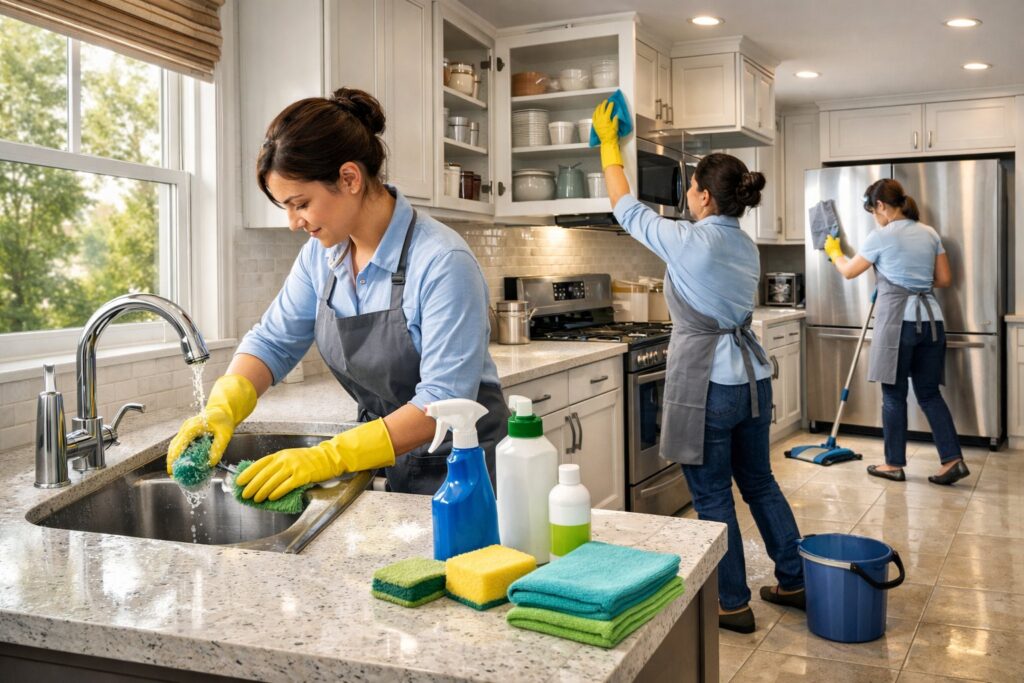
The kitchen needs focused attention on appliances, sinks, and storage areas. Different cleaning methods tackle grease, grime, and built-up residue.
Cleaning and Organizing Appliances
Start with the oven. Remove the racks and soak them in hot, soapy water for 30 minutes.
If your oven is self-cleaning, run that cycle according to your manual. For manual cleaning, make a baking soda and vinegar paste and spread it inside, avoiding heating elements.
Let it sit for 15 minutes, then scrub with a damp sponge and rinse. Clean the microwave by heating a bowl of water with lemon juice for 2 minutes, letting the steam loosen stuck food.
Wipe down the inside with a vinegar and water mix. For the fridge, pull everything out and toss expired food.
Take out shelves and drawers, then wash them in soapy water. Spray the inside with equal parts water and vinegar plus a drop of dish soap, wipe, and dry before putting everything back.
Use glass cleaner on the exterior if it’s stainless steel. Empty crumbs from the toaster and wipe down the coffee maker with a damp cloth.
Sanitizing Sinks and Surfaces
Your sink holds more bacteria than you think. Mix 1 ounce bleach with 2 cups water and a teaspoon of dish soap, then spray the whole sink.
Wait 5 minutes and scrub with a brush. Grab an old toothbrush for the faucet base and drain edges.
Clean the garbage disposal by pouring 1/2 cup baking soda and vinegar down the drain. Let it bubble for a minute, then flush with hot water and grind lemon peels for a fresh scent.
Wipe countertops with hot, soapy water. For stains, use a baking soda paste on laminate or quartz, and lemon with salt for wood counters.
Move small appliances like the toaster and coffee maker so you can clean underneath. Clean grout lines between tiles with hydrogen peroxide mixed with baking soda.
Cleaning Cabinets and Drawers
Remove all cabinet knobs and handles and soak them in hot, soapy water. While they dry, mix 1 part vinegar and 2 parts water in a spray bottle.
Wipe down all cabinet fronts, focusing on areas around handles where fingerprints build up. Use a soapy toothbrush on grooved cabinet fronts to reach into crevices.
Wipe everything with a damp cloth, then dry with a microfiber towel. Empty one drawer at a time and use your vacuum’s brush attachment to get crumbs out of corners.
A lint roller works well for tiny particles. Wipe the inside with a damp cloth if needed.
Replace the cabinet hardware once everything dries. While organizing, check under the sink for leaks or expired cleaning products.
Intensive Bathroom Deep Clean Protocol
The bathroom needs attention on soap buildup, toilet sanitation, reflective surfaces, and tile maintenance. Getting it truly clean doesn’t have to take forever, but you do have to be thorough.
Remove Soap Scum and Grime
Start with the shower and tub, where soap scum loves to hang out. Spray all wall tiles, shower doors, and the tub interior with a good bathroom cleaner.
Let the cleaner sit for 5 to 10 minutes. Use a sponge or scrub brush in circles, hitting corners and grout lines.
For stubborn soap scum on glass doors, spray again and scrub with a non-abrasive pad. Rinse everything with hot water from the showerhead.
Wipe down with a microfiber cloth to prevent water spots. That step saves you trouble later by keeping buildup away.
Disinfect Toilets and Fixtures
Apply toilet cleaner inside the bowl, making sure to coat under the rim. Let it sit while you clean the outside.
Wipe down the tank, lid, seat (both sides), hinges, and base with a cloth and all-purpose cleaner. Scrub the inside of the bowl with a toilet brush, focusing on the waterline and trapway, then flush.
Wipe all exterior surfaces again with a clean, damp cloth. Clean faucets, showerheads, and handles with the same cleaner.
Dry and polish metal fixtures with a microfiber cloth for a streak-free shine. This process usually takes about 10 minutes per toilet.
Clean Mirrors and Glass
Spray glass cleaner directly onto mirrors and any glass surfaces. Use a microfiber towel to wipe in straight lines from top to bottom.
For mirrors with toothpaste splatters or hairspray, spray extra cleaner on those spots. Wipe with a bit more pressure using your fingertip behind the cloth.
Check the mirror from different angles to catch streaks. Clean glass shelves, shower doors, or decorative glass with the same method.
One microfiber cloth does the trick for all the glass. This usually takes about 5 minutes for an average bathroom.
Refresh Floors and Grout
Sweep or vacuum the bathroom floor to get rid of hair and dust before mopping. Mix all-purpose cleaner with hot water in a bucket.
Use a mop or cloth to clean the floor tiles, working from the far corner toward the door. For dirty grout lines, use a narrow brush or old toothbrush dipped in cleaner.
Scrub along the grout with firm pressure to lift dirt. Focus on areas around the toilet base and under the sink where dust and moisture mix.
Rinse your mop or cloth often in clean water. Let the floor air dry or speed it up with a dry towel.
Final Touches: High-Traffic Zones and Frequently Overlooked Areas
Entryways and hallways collect dirt fast. Baseboards, vents, and windows usually get skipped, so give them some attention.
Dust and Clean Windows and Walls
Start at the top of your walls and work downward using a microfiber cloth on an extendable duster. Knock down cobwebs from corners and ceiling edges first.
For windows, mix equal parts white vinegar and water in a spray bottle. Spray the glass and wipe with a lint-free cloth or squeegee in straight lines from top to bottom.
Clean both sides of the window. Get the sills and tracks while you’re at it.
Wipe down light switches, door frames, and wall spots where fingerprints gather. A magic eraser works on stubborn scuffs that regular cleaning can’t handle.
If you have textured walls, use a dry microfiber cloth. Moisture can get stuck in those grooves.
Clean mirrors with the same vinegar solution you used on windows. Buff them dry to keep streaks away.
Detail Attention to Baseboards and Vents
Baseboards trap dust and pet hair that sweeping misses. Wipe them down with a damp microfiber cloth or a cleaning wipe.
For stubborn grime, use a bit of all-purpose cleaner and a scrub brush. Remove vent covers from air ducts and vacuum both sides well.
Wash plastic or metal vent covers in warm, soapy water and let them dry before putting them back. Use your vacuum’s crevice tool to reach inside the duct opening and suck out dust.
Check return air vents and change your HVAC filter if needed. A clean filter helps your air quality and keeps your system running smoother.
Wipe the area around thermostats and light fixtures where dust collects. It’s amazing how fast it builds up there.
Freshen Air with Natural Solutions
Open windows for 10 to 15 minutes and let some fresh air in. That simple step clears out cooking smells and stale air.
Simmer water with lemon slices, cinnamon sticks, or vanilla extract on your stovetop for 20 minutes for a natural air freshener. Place small bowls of baking soda in rooms that need to absorb odors, like bathrooms or closets.
Add a few drops of essential oils like lavender or eucalyptus to cotton balls and tuck them in drawers or closets. You can even spray fabric surfaces like curtains or pillows with water mixed with a few drops of your favorite essential oil, but check the fabric first.
Frequently Asked Questions
Deep cleaning your home in one afternoon takes planning and a good strategy. Here are some questions people always seem to ask.
What essentials should be on a deep clean house checklist for a thorough one-afternoon cleanup?
Focus on high-impact areas that make the biggest difference. Start with kitchen appliances, bathroom fixtures, and floors in every room.
Wipe down all surfaces, clean windows, and vacuum upholstery. Prioritize visible dirt and grime over hidden spots for a one-afternoon clean.
Add scrubbing the toilet, cleaning the stovetop, and mopping hard floors. Dust ceiling fans, light fixtures, and baseboards too.
Save cleaning behind appliances or organizing closets for another day. You have to balance thoroughness with time limits.
Can you provide a comprehensive room-by-room deep cleaning guide to complete the process efficiently?
Start in the kitchen. Clean the fridge exterior, wipe cabinet fronts, and scrub the sink.
Clean the microwave, stovetop, and countertops, then sweep and mop the floor. Move to bathrooms, scrub the toilet, shower, and tub, clean mirrors, wipe counters, and disinfect the sink.
Mop the bathroom floor last. In bedrooms, change bed linens and vacuum under the bed.
Dust all surfaces, clean mirrors or windows, and finish with the floors. For living areas, dust furniture and electronics, vacuum upholstery and carpets, clean windows, wipe hard surfaces, and finish with the floors.
What are the time-saving strategies to consider when attempting to deep clean a house in one day?
Clean from top to bottom in each room so dust and debris fall downward. That way, you don’t have to clean the same surface twice.
Work on one room at a time to stay focused and see progress. Use multi-surface cleaners to cut down on products and spray surfaces so solutions can sit while you do something else.
This breaks down grime without extra scrubbing. Set a timer for each room to keep yourself on track and gather all your supplies in a caddy before you start.
How frequently should a full house deep clean be scheduled to maintain a clean living environment?
Deep clean your home at least twice a year. Spring and fall usually work best for most people.
This keeps your home fresh without overwhelming your routine. If you have pets or kids, you might need to deep clean every three or four months.
Bathrooms and kitchens benefit from monthly deep cleans. Your regular weekly cleaning should keep things in check between the big sessions.
Which tools and cleaning supplies are recommended to achieve the best results when deep cleaning a home?
You’ll want a vacuum cleaner with attachments for all sorts of surfaces. Microfiber cloths usually beat paper towels, and you can toss them in the wash afterward.
Pick up scrub brushes in a few different sizes. That way, you can tackle everything from grout lines to baseboards without frustration.
A mop and bucket come in handy for hard floors. I always keep an all-purpose cleaner, a glass cleaner, and a solid bathroom disinfectant nearby.
Rubber gloves save your hands when you’re scrubbing or using harsh products. For tile work, grab a grout brush, and for windows or shower doors, a squeegee really makes a difference.
Magic erasers are a lifesaver for scuff marks and stubborn stains. Honestly, it’s surprising how much easier cleaning feels when you have the right tools.
What is the most effective way to organize tasks when deep cleaning a house one room at a time?
Start with the rooms that need the most time or are the messiest. Kitchens and bathrooms usually demand the most effort, so it makes sense to tackle these first when you’ve still got energy.
In each room, begin at the top and work your way down. Dust the ceiling fixtures before you move to shelves or counters, then finish with the floors.
This way, you won’t end up cleaning the same spot twice or missing anything obvious. I find it helps to keep things moving.
Try grouping similar tasks together across rooms. For instance, dust all the rooms before you even think about vacuuming.
Honestly, this method feels faster than finishing one whole room before starting another. It lets you build a bit of momentum as you go.