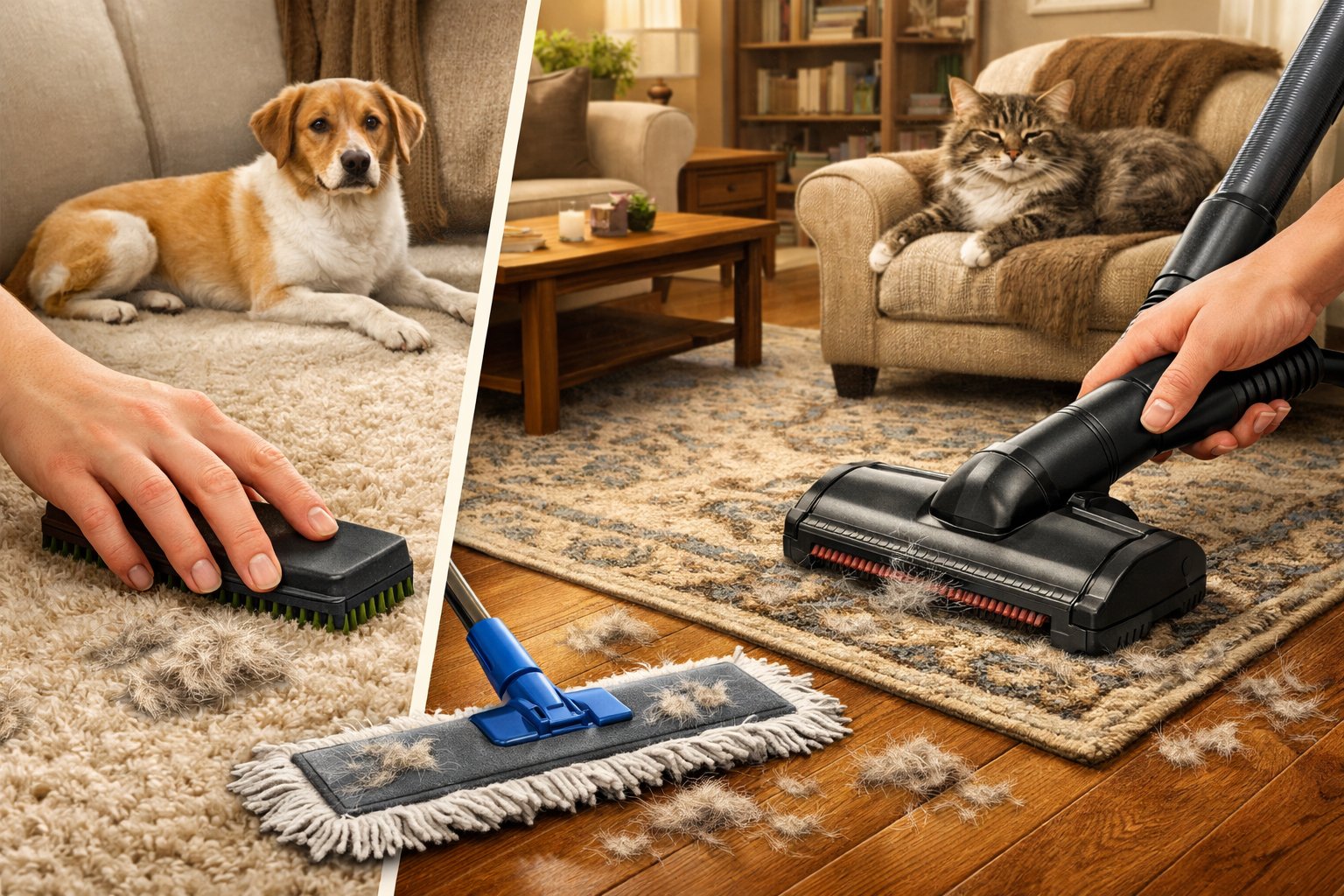

Pet hair on your furniture, carpets, and floors is a headache for just about every pet owner. Sure, your furry friends bring a lot of joy, but their shedding? That can turn cleaning into a job that never seems to end.
The good news, though, is you don’t have to suffer. With the right tools and a bit of know-how, getting rid of pet hair doesn’t have to be such a pain.
The most effective way to remove pet hair is to use a combination of tools like lint rollers for furniture, rubber squeegees or carpet rakes for carpets, and microfiber mops for hard floors. Each surface in your home needs a different approach because pet hair sticks differently to fabric, carpet fibers, and smooth floors.
Understanding which tools work best for each surface will save you a lot of time and frustration. This guide covers everything you need to know about getting rid of pet hair in your home.
You’ll find out which tools work best for different surfaces and how to prevent hair from building up in the first place. Whether your pet sheds a little or a ton, these methods can help you keep things under control.
Key Takeaways
- Different surfaces need specific tools, like lint rollers for clothes, rubber gloves for furniture, and microfiber mops for hard floors
- Regular grooming and washing pet bedding weekly are the best ways to cut down on pet hair in your home
- Fabric softener, dryer sheets, and anti-static sprays help loosen pet hair and make it easier to remove
Why Pet Hair Sticks to Surfaces
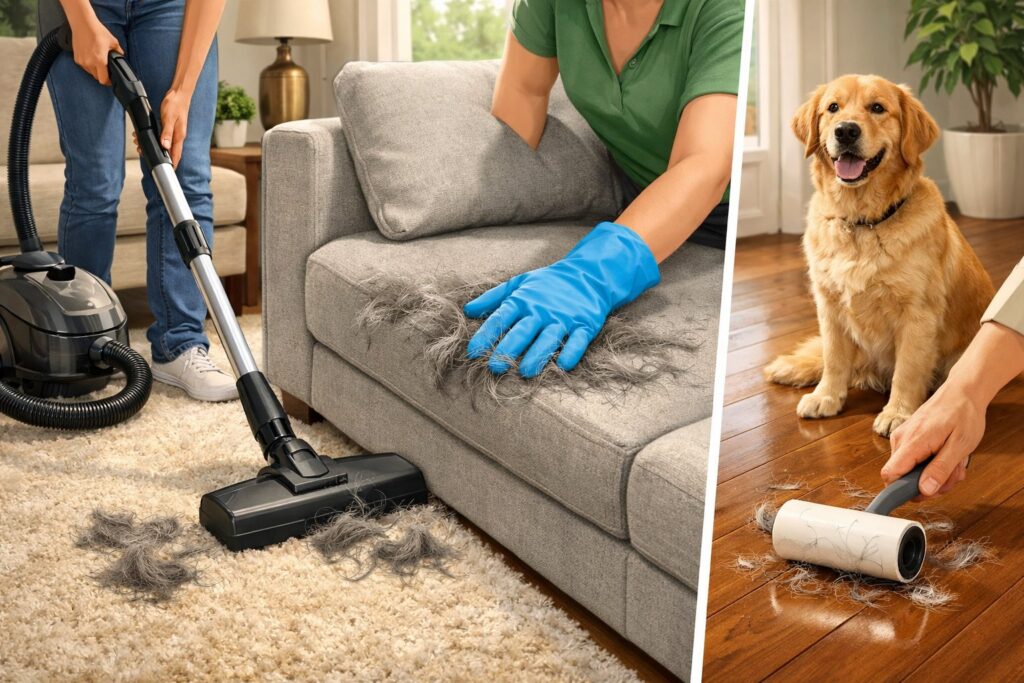
Pet hair clings to your furniture, clothes, and floors because of static electricity, the texture of different materials, and the way animal fur works. Once you get why this happens, it gets easier to pick the right removal methods for each spot in your home.
Electrostatic Charges and Clinging
Pet hair carries an electrostatic charge, so it sticks to most surfaces like a magnet. When your pet moves around, the friction between their fur and your stuff creates static electricity.
This static charge makes individual hairs cling tightly to fabrics, carpets, and even smooth surfaces. Dry indoor air makes it worse, especially in winter when heaters dry things out and boost static buildup.
Lower humidity means more static, so you’ll probably spot more pet hair on your couch in January than in July. The hair itself is so light, static can easily overpower gravity and keep it stuck to wherever it lands.
Surface Material Impact
Different materials attract and hold pet hair in their own ways. Fabric surfaces like couches, blankets, and clothing have tiny fibers that trap hair between the threads.
Velvet, corduroy, and other textured fabrics are especially bad because their raised patterns give hair more places to hide. Smooth surfaces like leather and vinyl don’t trap hair as much, but static still makes the hair cling.
Hard floors like wood or tile let hair collect in corners and along baseboards instead of getting stuck in the floor itself. Synthetics tend to create more static than natural fibers, so polyester furniture often ends up with more pet hair than cotton does.
Carpet pile height matters too. Deep pile carpets trap hair much more than low-pile ones, which can make cleanup really frustrating.
Pet Hair Types and Shedding Patterns
Your pet’s coat type has a huge effect on how much hair you’ll be picking up. Dogs and cats with double coats shed a lot during seasonal changes, dumping thick undercoats in the spring and fall.
Single-coated breeds shed year-round, but usually not as much overall. Long hair forms bigger clumps that are easier to see and grab, while short hair gets deep into fabrics and carpets.
Fine, fluffy undercoat hair floats through the air longer before landing, so it ends up everywhere. Some breeds barely shed, while others seem to lose fur by the handful every day.
Regular grooming really helps keep loose hair off your furniture and floors. It’s one of those simple things that can make a big difference if you stay on top of it.
Essential Tools and Products for Pet Hair Removal
The right tools really speed up pet hair removal. Each one works a little differently, whether it’s sticky, uses friction, or just has a strong vacuum.
Lint Rollers and ChomChom Roller
Lint rollers have sticky sheets that grab hair from clothes and furniture. You just roll them over the surface and peel off the sheet when it’s full.
They’re great for quick jobs and small spots. The ChomChom roller is a step up for most people. It’s reusable, with a textured fabric brush inside a rolling mechanism.
You roll it over your furniture, and the hair collects in a compartment you can empty. It’s pretty wide, so you can cover big areas fast. Plus, you don’t have to keep buying refills or batteries, which is nice.
Just remember to empty the fur compartment after each use so it doesn’t jam up.
Rubber Gloves and Rubber Broom
Rubber gloves work by creating friction that lifts pet hair from fabric. Just put on a damp glove and rub your hand over the surface. The hair clumps together and sticks to the glove, so you can rinse it off and keep going.
A rubber broom, like the Furemover, works on floors the same way. It has rubber teeth on one side and a squeegee edge on the other. The squeegee side is great for pulling hair from carpet, tile, and linoleum without just pushing it around.
You’ll need to put in a bit of elbow grease with a rubber broom. The handle extends for comfort, which is a thoughtful touch. After you’re done, use a vacuum to pick up the loose hair and any leftover debris.
Vacuum Cleaners with HEPA Filters
Pet vacuums with HEPA filters are lifesavers. They suck up hair and trap allergens at the same time. A handheld vacuum like the Shark UltraCyclone Pet Pro+ gives you about 25 minutes of cordless suction, and the silicone fins help stop hair from wrapping around the roller.
For big carpeted spaces, upright vacuums with pet attachments are better. Motorized brush rolls really help with embedded fur. The HEPA filters catch almost all the pet dander and keep it from blowing back out.
Always empty the canister after each use. Clean or change filters as the manufacturer suggests to keep your vacuum running strong.
Electrostatic and Microfiber Cloths
Microfiber cloths attract pet hair because of static electricity. Use them dry on hard surfaces like tables and shelves. For floors, a microfiber mop with Swiffer Pet Heavy Duty cloths works well for picking up soft undercoat hair.
These cloths have thousands of tiny fibers that trap hair and dust. They’re best for smooth surfaces and softer hair types, but might not handle coarse hair as well.
You can wash and reuse microfiber cloths over and over, which saves money compared to disposable ones. That’s always a plus.
How to Remove Pet Hair from Furniture
Furniture traps pet hair in different ways depending on what it’s made of. Rubber tools use static and friction, vacuum attachments pull hair out of fabric, and microfiber cloths grab loose strands pretty well.
Damp Rubber Glove Method
Grab a standard rubber cleaning glove and get it a little bit damp. Run your gloved hand across the furniture in one direction. The rubber and moisture work together to lift and clump the hair.
You’ll see the hair ball up, making it easy to pick up and toss. This works especially well on fabric upholstery, microfiber sofas, and cushions where hair really digs in.
If you don’t want to use your hands, a rubber broom or squeegee can work too. Just rinse the glove when it’s covered in hair and keep going until the whole surface is clean.
This method barely costs anything and you probably already have what you need at home.
Vacuum Attachments and Handheld Vacuums
A handheld vacuum is probably the easiest way to tackle pet hair on furniture. Look for one with a motorized brush roll that actually agitates the fabric and pulls out the hair.
Standard vacuums with upholstery attachments work too, as long as you vacuum slowly and make several passes. Use short, overlapping strokes and try vacuuming in different directions to get hair that’s lying flat.
Don’t forget to focus on crevices between cushions and seams where hair piles up. A lint roller is handy for touch-ups between vacuuming sessions.
Empty the vacuum canister often, since hair can clog filters and kill suction fast. Keep up with filter cleaning or replacement on schedule to keep things working right.
Microfiber Cloth and Anti-Static Spray
A dry microfiber cloth grabs pet hair thanks to its fine fibers and static charge. Wipe down furniture with firm pressure and you’ll see the hair cling to the cloth.
Shake the cloth outside or rinse it off when it gets full, then keep going. Anti-static spray is a nice touch after you clean, since it cuts down on static and keeps hair from sticking as much next time.
You can spray the anti-static stuff right on your microfiber cloth too. This combo works really well on leather furniture and other smooth surfaces where hair just sits on top.
Removing Pet Hair from Carpets and Rugs
Carpets and rugs are a whole other beast, since they trap pet hair deep in the fibers. The best way to get it out is to use mechanical tools like rubber brooms and carpet rakes, plus vacuums and maybe a few household tricks.
Rubber Broom and Carpet Rake Techniques
A rubber broom uses static and friction to pull hair out of carpet fibers. Just run the broom over your carpet in short, overlapping strokes. The rubber bristles gather the hair into clumps you can pick up by hand.
Carpet rakes have stiff bristles that dig deeper into the pile. Push the rake in one direction with steady pressure. You’ll see hair come up to the surface, ready for the vacuum.
Both tools work best on dry carpets. For stubborn spots, make a few passes in different directions. If you have a long-haired pet, these methods can make a big difference.
Pet Vacuums with Rotating Brush Heads
Pet vacuums come with rotating brush heads that stir up carpet fibers and lift out embedded hair. Look for models with strong suction, usually measured in air watts.
The brush roll should have stiff bristles and spin quickly. Vacuum in a few different directions to catch hair from all angles.
Make slow, overlapping passes to give the vacuum enough time to pull out fur. Empty the canister or change the bag often, since pet hair fills them up fast.
HEPA filters trap dander and allergens that come up with the hair. Clean or swap out filters about once a month to keep suction strong.
Models with tangle-free brush rolls stop hair from wrapping around the mechanism. That alone can save you a headache.
Fabric Softener and Baking Soda Methods
Mix one part fabric softener with three parts water in a spray bottle. Lightly spray your carpet and let it sit for five minutes.
The softener loosens hair’s grip on the carpet fibers. Once the carpet dries, vacuum thoroughly.
Baking soda is a dry alternative. Sprinkle it generously over the carpet and let it sit for 15 minutes.
The powder works into the fibers and helps separate hair from the carpet. Vacuum a few times in different directions to get up both the baking soda and the loosened fur.
It’s smart to test both methods on a small, hidden area first, just in case they stain or damage the carpet. Better safe than sorry.
Best Practices for Pet Hair Removal from Floors
Hard floors need a different approach than carpets when it comes to picking up pet hair. The right mop and vacuuming technique can stop hair from flying everywhere, and help keep corners and baseboards clean too.
Microfiber and Electrostatic Mops
Microfiber mops work great for daily pet hair cleanup on hard floors. Their fine fibers trap and hold hair instead of just pushing it around.
Dampen the mop a little before use, since a touch of moisture helps grab loose hair better. An electrostatic mop, on the other hand, uses static charge to attract pet hair without any water.
This dry method is ideal for quick cleanups between deeper cleaning sessions. It also avoids water damage on wood floors and still collects hair well.
Both mop types need regular cleaning to stay effective. Shake out or rinse your microfiber mop head after each use.
For electrostatic mops, pull the collected hair off the pad and wipe it down. Replace mop heads every few months, depending on how much you use them.
Vacuuming Hard Floors
Your pet vacuum should have a hard floor setting that turns off the brush roll. This stops hair from scattering all over while you clean.
Switch to this mode before vacuuming tile, laminate, or wood. Vacuum in a few directions to grab hair that lies flat against the floor.
Start at one end of the room and work your way across. A rubber broom can help loosen stubborn hair before you vacuum, making the job easier.
Empty your vacuum canister when it’s half full. Pet hair compacts quickly and kills suction if you wait too long.
Clean or replace filters every month to keep your vacuum running strong.
Cleaning Baseboards and Corners
Pet hair loves to pile up in corners and along baseboards where mops can’t reach. Use a vacuum crevice tool to pull hair from these tight spots.
Run the tool along the full length of your baseboards in each room. An electrostatic duster grabs hair from vertical surfaces and corners without scratching paint.
Wipe down baseboards every week to stop buildup. For stubborn hair stuck in corners, wrap a damp microfiber cloth around a flat tool and reach into the angle where the wall meets the floor.
Prevention Tips to Reduce Pet Hair Buildup
The best way to handle pet hair? Stop it from spreading in the first place. Brushing your pet regularly, covering furniture with washable covers, and running air purifiers with HEPA filters can seriously cut down on the amount of hair that ends up everywhere.
Regular Pet Grooming and Furminator Use
Brush your pet a few times a week to remove loose fur before it lands on your floors or furniture. Short-haired pets need brushing two or three times a week, while long-haired breeds may need daily grooming.
A Furminator or similar deshedding tool works wonders for pulling out the undercoat where most loose fur hides. These tools have fine teeth that reach beneath the top layer to grab dead hair.
Use gentle strokes and don’t press too hard on your pet’s skin. Here’s a quick guide:
- Short-haired pets: 2-3 times per week
- Medium-haired pets: 3-4 times per week
- Long-haired pets: Daily brushing recommended
Regular baths help too. Washing your pet every four to six weeks loosens dead fur that comes out during the bath instead of all over your couch.
Use a pet-safe shampoo and brush your pet while their coat is still damp to get even more loose hair.
Washable Covers and Furniture Choices
Washable furniture covers create a barrier between pet hair and your upholstery. Toss them in the washing machine every week instead of deep-cleaning the whole couch.
Look for covers made from tightly woven fabrics that don’t trap fur as easily. Some materials just repel hair better:
- Leather and faux leather (hair wipes off easily)
- Microfiber with tight weave
- Outdoor fabrics made to resist moisture and debris
Avoid velvet, corduroy, and loosely woven fabrics, since they grab onto pet hair. When shopping for new furniture, go for smooth surfaces or removable, washable cushion covers.
Throw washable blankets or throws on your pet’s favorite spots. Change these covers twice a week and shake them outside before washing to get rid of loose hair.
Cleaning Routine and Air Purifiers
Vacuuming two or three times a week keeps pet hair from building up in carpets and along baseboards. Focus on spots where your pet hangs out the most, like by windows or their usual napping places.
An air purifier with HEPA filters captures airborne pet hair and dander before it lands on surfaces. Put the purifier in rooms where your pet spends the most time.
HEPA filters trap particles as small as 0.3 microns, so they catch most pet hair and dander. Here’s a quick cleaning checklist:
- Vacuum all floors and furniture
- Wipe down hard surfaces with a damp microfiber cloth
- Shake out or vacuum pet beds
- Change air purifier filters monthly
Running your air purifier non-stop in high-traffic pet areas cuts down on floating hair. Empty your vacuum canister after each use to keep suction strong. Replace vacuum filters every three to six months if you have pets.
Product Recommendations for Pet Hair Removal
The right tools can make pet hair removal so much easier. These three products tackle different surfaces and use various tricks to capture stubborn fur.
ChomChom Roller
The ChomChom Roller is a reusable lint roller with a textured fabric pad that collects pet hair without sticky sheets or batteries. It’s 7.5 inches wide, so you can cover large areas pretty quickly.
Just roll it across furniture, clothes, or bedding in one direction, and the hair collects in an internal compartment. To empty it, flip open the fur reservoir and pull out the hair.
You’ll want to clean it after each use, or it can jam up. The roller works best on upholstery but also handles blankets and jackets pretty well.
The button placement can be annoying, honestly. Sometimes you might hit the empty button by accident while rolling. It works better on tight or stretched-out surfaces, so hold clothing or bedding firmly when you use it.
Rubber Broom
A rubber broom combines squeegee and rake features to pull pet hair from floors using friction. It has rubber teeth on one side and a squeegee edge on the other.
Both sides attract and collect hair from carpet, tile, concrete, and linoleum. The squeegee side works best on hard floors and short carpets.
The broom side can sometimes toss debris into the air, so it’s not perfect for every job. Most rubber brooms have adjustable handles, usually between 36 and 60 inches, so you can set it to a comfy height.
This tool takes a bit of muscle to use well. You’ll probably need to vacuum up the piles of hair and debris it collects afterward.
Furminator Deshedding Tool
The FURminator tackles shedding at the source by removing loose undercoat fur from your pet before it lands everywhere. It uses a stainless steel edge that reaches through the topcoat to grab loose undercoat hair.
Regular brushing with this tool can cut down shedding by up to 90 percent. Brush your pet in the direction of hair growth, using gentle strokes.
The tool works for both dogs and cats, but you need to choose the right size and edge length for your pet’s coat. Short-haired pets need a different edge than long-haired breeds.
Use the FURminator once or twice a week during normal shedding, and more often during heavy shedding seasons. Less hair on your pet means less hair on your stuff, plain and simple.
Frequently Asked Questions
Pet owners run into the same problems with fur all the time. Simple household items and some smart prevention can make a real difference in controlling pet hair.
What are effective natural methods for removing cat hair from furniture?
Rubber gloves work surprisingly well for lifting cat hair off upholstered furniture. Dampen a pair of gloves and run your hands across the fabric in one direction.
The hair sticks to the gloves, and you just rinse them clean between passes. A dry sponge can also grab cat hair effectively. Wipe the sponge across your furniture in smooth strokes, and the texture lifts loose fur without hurting the fabric.
Dryer sheets are another easy option. They cut down static electricity that makes cat hair cling to surfaces. Just rub a dryer sheet over your furniture to neutralize the charge and make hair easier to collect.
What home remedies work best for extracting dog hair from couches?
Mix equal parts fabric softener and water in a spray bottle. Lightly mist your couch, then wipe it down with a soft cloth.
The fabric softener helps loosen the fur from the fibers. Wrap tape around your hand with the sticky side out, then pat the couch cushions and surfaces to pick up dog hair. It’s a cheap homemade lint roller, honestly.
A window squeegee can also pull dog hair out of couch fabric. Run the rubber blade across the furniture in long strokes, and the hair will clump together for easy removal.
What are the most efficient strategies for getting rid of dog hair on all types of flooring?
A microfiber mop works well on hardwood and tile floors. The fibers trap dog hair instead of just moving it around.
Dampen the mop a bit for better results. Use a rubber broom on any floor type, since the rubber bristles create static that attracts and lifts hair.
These brooms work on hardwood, tile, laminate, and even low-pile carpet. Vacuum with the right attachment for your floor, and empty the vacuum often to keep suction strong.
Are there techniques to remove dog hair from carpets without using a vacuum?
A pumice stone can lift dog hair out of carpet fibers. Rub the stone gently across the carpet in one direction, and the rough texture grabs hair so you can collect it by hand.
Spray your carpet lightly with water mixed with fabric softener, then use a carpet rake or stiff brush to work through the fibers. The hair will clump together, making it easier to pick up.
Put on damp rubber gloves and run your hands over the carpet. The friction pulls hair from deep in the pile, especially on low to medium pile carpets.
How can one prevent pet hair accumulation in their home?
Brush your pet regularly to get rid of loose fur before it falls off. Daily brushing during shedding season stops a lot of hair from ending up on your floors and furniture.
Use a de-shedding tool for pets with thick undercoats. Cover furniture with washable blankets or pet covers, and wash them weekly to keep hair contained.
Vacuum and sweep at least twice a week. Frequent cleaning keeps hair from working deep into carpet and fabric. Keep your cleaning tools handy so you can spot-clean whenever you need to.
Which products are recommended for effectively tackling embedded dog hair in upholstery?
The ChomChom Roller uses a rolling brush system to lift embedded hair from upholstery. You don’t need batteries or sticky paper for it, so it’s reusable and pretty cost-effective.
It even has a built-in receptacle that collects the hair, so you can just pop it open and toss the mess out.
Pet hair removal stones, made from recycled glass, work well on stubborn embedded fur. Their rough texture pulls hair from deep within fabric, but doesn’t seem to damage upholstery.
If the stone gets dirty, just rinse it under water, and it’s good to go again.
A dedicated pet hair vacuum attachment with rubber bristles can actually reach deep into upholstery. It’s smart to look for attachments meant for furniture that combine suction with rubber nubs.
These tools usually lift hair that standard vacuum attachments just can’t grab.