
Hardwood floors add beauty and value to your home, but keeping them looking great takes the right cleaning habits. It’s surprisingly easy to damage these floors with too much water, harsh chemicals, or just the wrong tools.
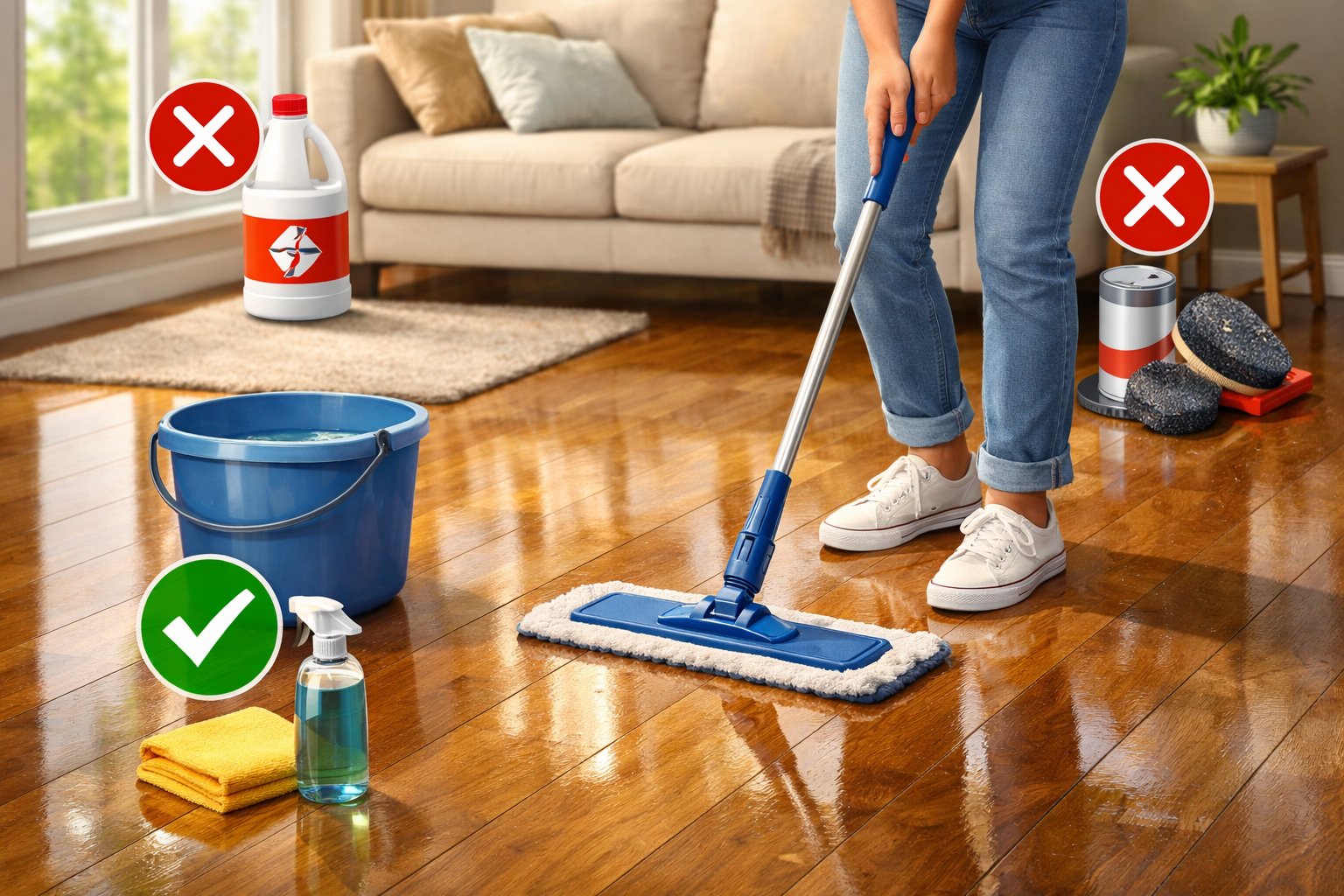
The trick to cleaning hardwood safely? Stick with pH-neutral cleaners, use as little moisture as you can, and reach for gentle tools like microfiber mops. Steer clear of steam mops, vinegar, and anything abrasive.
It doesn’t matter if you have solid hardwood or engineered wood, cleaning them right means more than just sweeping up crumbs. You need to know which cleaners are safe for your floor’s finish, how often to clean, and what to avoid if you don’t want scratches or dull, warped boards.
This guide walks you through daily sweeping, deep cleaning, and how to keep your floors looking good for years. Let’s see what actually works, and what you can skip.
Key Takeaways
- Clean hardwood floors daily with dry sweeping or vacuuming, then damp mop weekly with pH-neutral cleaners made for wood
- Skip steam mops, vinegar, ammonia, and lots of water, all of which can mess up the finish or warp the wood
- Prevent scratches by using felt pads under furniture, trimming pet nails, and keeping indoor humidity between 35-55%
Understanding Hardwood Floors
Different hardwood floors need different care. The wood type, how it’s constructed, and the finish all play a part in how you should clean them.
Types of Hardwood Flooring
You’ve got two main types: solid hardwood and engineered hardwood. Solid hardwood is just one chunk of wood, cut straight from a tree. Oak, maple, cherry, and walnut are all popular choices. Each one has its own hardness and grain pattern.
Engineered hardwood is a little different. It’s made from layers of wood pressed together, with a real hardwood veneer on top and plywood or similar material underneath. This makes engineered wood more stable if your home has big swings in humidity or temperature.
Common Hardwood Species:
- Oak (red and white)
- Maple
- Cherry
- Hickory
- Walnut
- Ash
The species matters. Softer woods like pine need gentler cleaning than hard ones like hickory.
Engineered Hardwood Versus Solid Wood
Solid wood floors are usually 3/4 inch thick, so you can sand and refinish them many times. With good care, they last for decades. You might get up to 7-10 refinishes depending on thickness.
Engineered hardwood is thinner, maybe 1/4 to 1/2 inch thick. The top layer is real wood, but you can only sand it once or twice—sometimes not at all if the veneer is really thin.
Both types need similar cleaning routines, but engineered hardwood doesn’t handle water as well. Too much moisture can make the layers separate, so you’ll want to be extra careful with spills and wet mopping.
Surface Finishes and Their Impact on Cleaning
The finish on your floor decides what cleaners and methods are safe. Polyurethane finishes are the most common. They form a protective coating that handles light moisture but still needs gentle care.
Oil finishes soak into the wood, giving a more natural look. These need special cleaners—regular hardwood cleaners won’t work.
Wax finishes are rare these days but show up in older homes. Only use wax-based products and skip anything water-based.
Sealed floors have a protective barrier, so they’re easier to clean. Unsealed floors soak up liquids fast, so if you spill something, you have to move quickly.
Essential Tools and Products for Safe Cleaning
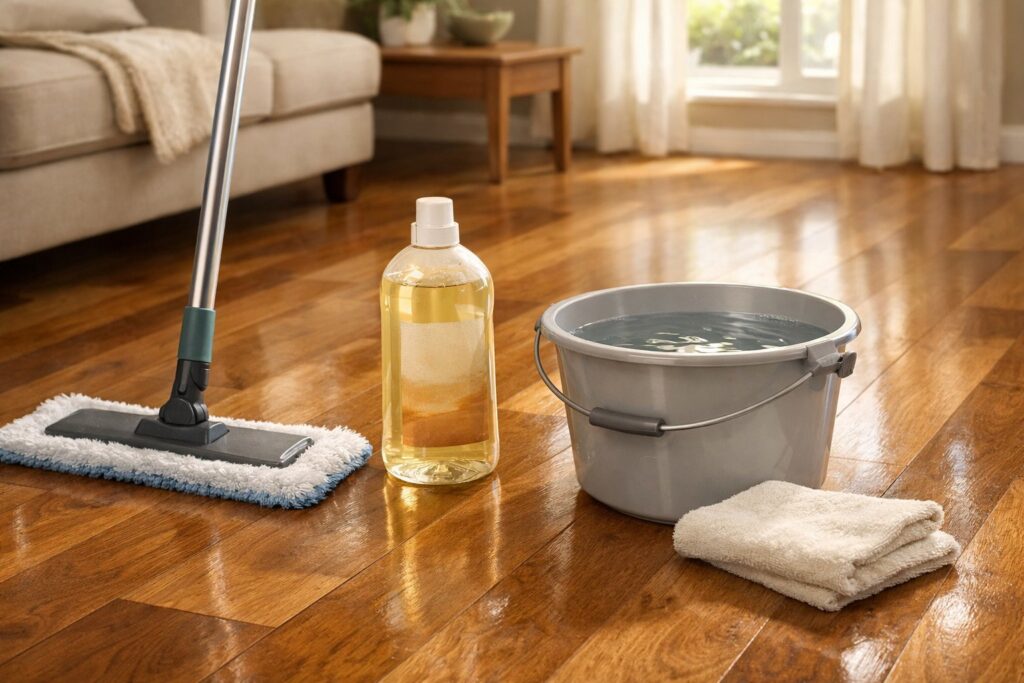
The right tools make a huge difference. Microfiber mops, pH-neutral cleaners, and the correct vacuum attachments help protect your floor’s finish and actually get rid of dirt.
Choosing the Right Microfiber Mop
Go for a microfiber mop with a big, flat head. Those tiny fibers grab dust from cracks and grooves without scratching anything. Removable, machine-washable pads save money and cut down on waste.
Swiffer Sweepers are popular, but brands like Old Home Kitchen sell reusable pads—less than $15 for two. Pick a mop that lets you wring out water easily. The pad should be damp, not soaking wet.
Skip traditional string mops. They hold way too much water and can actually harm your floors over time.
Recommended Wood Floor Cleaners
Stick with pH-neutral, wax-free, and petroleum-free cleaners for surface-finished floors. Bona PowerPlus Hardwood Floor Deep Cleaner is a solid choice. If you like DIY, mix ¼ cup dish soap with a gallon of warm water.
If you have oil-finished floors, use solvent-based cleaners. Mineral spirits work for old wax buildup, and you can follow up with a solvent-based wax like Trewax Paste Wax to bring back shine.
Dr. Bronner’s castile soap is safe if you dilute just a couple of drops in a spray bottle of water. For really dirty floors, you can use white vinegar—just make sure it’s diluted, about ½ cup per gallon of water. Never use vinegar straight, though, or you’ll mess up the finish.
Vacuuming Without Damaging the Finish
Use a vacuum with a floor-brush attachment. The soft bristles clean without scratching up your floors. Make sure you turn off the beater bar, since that spinning brush can leave dents or marks.
Pay extra attention to spots where floorboards meet. Dirt collects in those seams. Move slowly so the vacuum has time to do its job.
Vacuum once a week to stop dirt from building up and scratching the floor.
Routine Cleaning Methods for Hardwood Floors
Regular cleaning keeps your hardwood floors safe from grime and scuffs. A good routine means daily dry cleaning, weekly damp mopping, and quick action on spills.
Daily Dry Dusting and Sweeping
Sweep or dust your floors every day to get rid of dirt and grit. Even tiny particles can scratch up the finish over time.
Use a soft-bristle broom or a microfiber dust mop. These grab dust instead of just moving it around. If you prefer vacuuming, pick one with a hardwood floor or brush setting. Never use a beater bar attachment, since it can gouge the finish.
Focus on high-traffic spots like doorways, hallways, and kitchens. Microfiber mops are great because they attract dust and pet hair. For corners and edges, a dry microfiber cloth works wonders.
Weekly Damp Mopping Technique
Give your floors a deeper clean once a week with a damp mop. This helps get rid of any residue left after sweeping.
Start by clearing away loose dirt with a broom or vacuum. Mix a pH-neutral hardwood floor cleaner with water, following the instructions. Dip your microfiber mop in, then wring it out so it’s just barely damp—almost dry, really.
Mop in small sections, always following the grain. Rinse your mop often, so you aren’t just spreading dirt around. When you’re done, dry each area with a soft towel. Don’t let water sit on the floor, since even a little bit can sneak into the seams and cause damage.
Avoid vinegar, ammonia, or dish soap for regular cleaning. Those can strip the finish and leave your floors looking dull.
Spot Cleaning Spills Correctly
Deal with spills right away to keep them from staining or soaking in. The longer liquid sits, the more likely it is to cause problems.
Blot up spills with a dry, absorbent cloth. Don’t wipe, since that can spread the mess and push it into cracks. For sticky stuff like juice, use a cloth that’s just barely damp with water or hardwood cleaner. Press it onto the spot and lift straight up.
Dry the area with a clean towel. Once it’s dry, check to make sure there’s no sticky feeling left. If there is, go over it again with your damp mop and towel it off.
Deep Cleaning and Stain Removal
Deep cleaning takes a bit more effort, but it lifts out dirt that regular sweeping can’t touch. Different stains need different tricks, and the right method will keep your floors safe while making them look great again.
How to Deep Clean Hardwood Floors
First, vacuum or dust mop to get rid of loose dirt. Mix a pH-neutral cleaner with warm water, following directions. Dampen your mop and wring it out until it’s almost dry.
Work in small areas, moving with the wood grain. Never let water pool up, since moisture can seep between boards and cause warping. Dry each section right away with a clean microfiber cloth.
If your floors haven’t had a deep clean in a while, you might need to go over busy areas twice. For textured or hand-scraped floors, use a soft-bristled brush to get into the grooves. Finish by buffing the whole floor with a dry cloth to bring back the shine and pick up leftover cleaner.
Removing Common Stains Safely
Water stains show up as white rings if moisture only hits the finish. Lay a dry cloth over the spot and press it with a warm iron for a few seconds at a time. For darker water stains that go deeper, try a cloth soaked in 3% hydrogen peroxide and leave it on for a few hours.
Pet stains need enzyme cleaners to break down the mess and get rid of odors. Put the cleaner right on the stain and let it sit as the label says. You can use hydrogen peroxide to lighten any discoloration after treating with enzymes.
Grease and oil come up best with a little dish soap and water. Blot, don’t rub. For ink or wine, dab with isopropyl alcohol, starting at the edges and working inward so it doesn’t spread.
Avoiding Damage During Intensive Cleaning
Don’t use vinegar undiluted, since its acidity can strip away your floor’s protective finish over time. Steam mops create too much heat and moisture, which makes boards expand or even crack.
Abrasive scrubbers like steel wool or rough sponges? Skip them, they’ll scratch the surface fast.
Test any new cleaning product on a hidden spot first, just in case. Letting cleaning solutions sit on the floor for too long is a bad idea.
Avoid ammonia-based products unless they’re made for hardwood, since they can cloud finishes.
If you’re fighting stubborn stains, don’t go wild with scrubbing. Gentle, repeated treatments usually work better than one aggressive attack.
If a stain just won’t budge after a few tries, it might be time to sand and refinish that section instead of risking bigger damage with stronger chemicals.
The Do’s and Don’ts of Cleaning Hardwood Floors
Taking care of hardwood floors is a decent investment, but it really pays off. The right cleaning methods keep your floors looking good and help you avoid expensive repairs or replacements later.
Best Practices for Everyday Care
Sweep or dust mop your hardwood floors every day to catch dirt and grit before they scratch the surface. Even tiny particles act like sandpaper under your feet and cause wear.
Vacuum once or twice a week using a hardwood floor setting or a soft brush attachment. Never use the beater bar, since it can scratch and dent the wood.
If you need to wet clean, grab a barely damp microfiber mop and a pH-neutral hardwood floor cleaner. That’s usually enough.
Wipe up spills right away with a dry or slightly damp cloth. Blot, don’t smear it around, so you don’t spread the mess.
Standing water can sneak between boards and cause warping or stains, so don’t let any puddles linger.
Put doormats at every entrance to catch dirt and moisture before they hit your floors. Add felt pads under all furniture legs, so moving chairs or tables doesn’t leave marks.
Trim your pets’ nails regularly to minimize surface scratches from claws.
Common Mistakes That Cause Damage
Steam mops might look convenient, but they’re tough on hardwood floors. The steam drives moisture deep into the wood, leading to warping, buckling, or finish damage.
Stick with damp mopping instead. Never leave water standing on your floors after cleaning, since excess moisture leads to swelling, gaps, or stains.
Always wring out your mop really well before using it.
Dragging heavy furniture across hardwood makes deep scratches and gouges. Lift furniture or use sliders when moving things around.
Abrasive scrub pads and steel wool will mess up the finish if you try to tackle tough stains with them.
Ignoring humidity control is risky. Wood expands and contracts with the seasons, so keep indoor humidity between 35 and 55 percent. Use a humidifier in winter, dehumidifier in summer if needed.
Big swings in humidity cause gaps, cupping, or cracking in your floors.
Choosing Products That Protect Your Floors
Only use cleaners made for hardwood floors. Look for pH-neutral formulas that won’t damage the finish, and check that the label says “safe for hardwood.”
Microfiber mops are your best bet for maintenance, since they pick up dirt without scratching. Avoid string mops because they hold too much water and can soak your floors.
Pick furniture pads made of felt instead of rubber or plastic. Rubber-backed mats and pads can trap moisture or stain the wood underneath.
Replace pads regularly, since dirt can collect underneath and cause scratches.
Stick with commercial hardwood floor cleaners recommended by your floor’s manufacturer. These are tested to work with specific finishes and won’t mess up your warranty.
Safe Ingredients to Use and Avoid
pH-neutral hardwood floor cleaners are the safest for regular cleaning. They clean without stripping the finish or leaving a residue.
If you’re in a pinch, a drop of mild dish soap in a gallon of water works, but go easy on it. Never use vinegar, ammonia, or lemon juice on hardwood floors.
These acidic ingredients break down the finish and dull the wood. Some folks swear by vinegar, but honestly, it can cause permanent damage over time.
Skip oil-based soaps and waxes on prefinished floors. They create buildup that makes refinishing harder later, and can leave a dull film that attracts more dirt.
Harsh chemicals like bleach or abrasive cleaners will strip your floor’s protective coating. Stick to products made for hardwood care, and always check the ingredient list for strong solvents or alkalis.
Long-Term Maintenance and Protection Strategies
Keeping hardwood floors in great shape is more than just daily cleaning. You have to shield them from scratches and sun, follow seasonal routines, and know when to call in the pros for deep cleaning or refinishing.
Preventing Scratches, Dents, and Sun Fading
Add felt pads under all furniture legs to prevent scratches when you move chairs and tables. Change them out every few months as they wear down.
Use area rugs in busy spots like hallways and entryways. Rugs catch dirt and debris before it hits your floors.
Put doormats at every entrance to trap outdoor particles that scratch the wood. Trim your pets’ nails regularly to avoid claw marks.
Keep food and water bowls on mats to catch spills before they hit the wood. Install curtains or blinds on windows that let in direct sunlight.
UV rays fade hardwood floors and cause discoloration. Close window coverings when the sun’s at its strongest to protect the finish.
Take your shoes off indoors to avoid dents from heels and tracking in grit. Keep a shoe rack near the door to make it easier for everyone.
Seasonal and Annual Maintenance Tips
Check your home’s humidity levels year-round. Wood expands in humidity and contracts when air is dry.
Keep humidity between 35 and 55 percent using humidifiers in winter and dehumidifiers in summer. Inspect your floors every few months for signs of wear.
Look for spots where the finish has dulled or worn through, and deal with them quickly to prevent deeper damage. Deep clean twice a year with products designed for your floor’s finish.
This gets rid of built-up residue regular mopping misses. For polyurethane floors, use something like Bona hardwood cleaner. For oil-finished floors, apply maintenance coats of oil as recommended by your flooring manufacturer.
Recoat high-traffic areas every three to five years to keep protection up. Adding a fresh layer of finish helps your floors look new and puts off full refinishing for longer.
Professional Hardwood Floor Cleaning Services
Call in professionals if you see deep scratches, warping, or a lot of finish wear. They’ll assess the damage and suggest recoating or refinishing if needed.
Pros have equipment that cleans deeper than your usual tools. Professional hardwood floor cleaning gets rid of embedded dirt and grime that regular cleaning can’t touch.
They can also refinish your floors when they need a full reset. This involves sanding down the surface and applying new finish coats.
Book professional maintenance every few years, depending on how much traffic your floors get. Busy homes may need it more often.
Professional care helps you avoid expensive repairs and keeps your floors looking good for decades.
Frequently Asked Questions
Hardwood floor care isn’t rocket science, but it does take specific cleaning methods, the right products, and a little know-how about what actually damages wood. Here are some common questions that come up when you’re trying to keep your floors in top shape.
What is the ideal method for regular maintenance of hardwood floors?
For regular upkeep, dry mop with a microfiber or cotton mop several times a week. This picks up dust and dirt before they scratch the floor.
For weekly cleaning, use a damp mop with warm water and a hardwood-specific cleaner. Wring out the mop so it’s just barely damp, not wet.
Too much water is always bad news for wood. Vacuum once or twice a week with a soft brush attachment, and make sure your vacuum doesn’t have a rotating brush that could scratch the wood.
Which cleaning agents should be avoided to prevent damage to hardwood floors?
Never use bleach or ammonia-based cleaners on hardwood. They strip away the finish and leave floors looking dull and vulnerable.
Avoid two-in-one cleaners or polishes with acrylics or urethane, since they create sticky buildup that’s tough to remove. Murphy’s Oil Soap is pretty popular, but it leaves residue that builds up and dulls your floor’s finish.
What are the essential do’s and don’ts when cleaning hardwood floors?
Do use cleaning products made for your floor’s finish. Polyurethane and oil-finished floors need different cleaners, so follow your flooring pro’s advice.
Do put area rugs in high-traffic spots to protect the wood. Clean up spills right away to prevent stains and water damage.
Don’t use steam mops, ever. The heat and moisture can warp and delaminate the wood, causing permanent damage.
Don’t let water pool on your floors. Even with damp mopping, dry the area quickly to keep moisture from seeping into seams.
Can natural solutions be effectively used to clean hardwood floors, and if so, which ones?
White vinegar diluted in water is a gentle natural cleaner for hardwood. Mix a small amount with warm water and use it sparingly with a well-wrung mop.
This is safer than strong chemicals, but too much liquid is still risky for wood, no matter what you use. For oil-finished floors, stick with specialized natural oil soaps designed for wood. These clean and nourish the wood while keeping the finish healthy.
How should one go about deep cleaning very dirty hardwood floors without causing harm?
Start by vacuuming or dry mopping thoroughly to get rid of loose dirt. This helps prevent scratches when you move to wet cleaning.
Use a damp mop with a cleaner made for your floor’s finish. Work in small sections and dry each area right away with a clean cloth.
For stubborn spots, put a little cleaner directly on the area and gently wipe with a soft cloth. Don’t scrub hard or use abrasive tools, since that can damage the finish.
What are some professional tips for keeping hardwood floors in pristine condition?
Adjust how often you clean based on each room’s traffic. Living rooms and dining areas usually need more attention than bedrooms, which see less foot traffic.
Think about your floor’s finish before picking cleaning products or tools. Oil-finished floors do best with cotton mops and oil-specific cleaners.
If you have polyurethane floors, try a microfiber mop and something like Bona hardwood cleaner. It really makes a difference in how the floor looks and feels.
When you start seeing deep scratches, warping, or the finish looking tired, it’s probably time to call in the pros. They can refinish or recoat your floors, bringing back the shine without having to replace everything.