back to top
Home Blog

Refreshing Old Furniture: Painting, Refinishing, and Easy Upgrades

0

Old furniture doesn’t have to end up on the curb. You can give worn pieces a second life by painting, refinishing, swapping hardware, or adding simple upgrades.

These projects help you save money and let you design pieces that actually fit your home and style.

Most furniture refreshes need just a few basics: sandpaper, a cleaner, some paint or stain, and maybe new knobs or pulls.

Once you get the hang of the steps, the process feels pretty straightforward.

You’ll pick up how to prep surfaces, apply finishes that last, and make upgrades that look good and actually work for you.

Maybe you want to paint an old dresser, refinish a table, or just swap out those dated brass handles.

This guide covers each step in detail, with tips on tools, avoiding rookie mistakes, and getting results that look pro without draining your wallet.

Key Takeaways

  • Clean and prep furniture before adding new paint or stain so it sticks and lasts
  • Pick painting for bold color changes, or refinishing if you want to show off the wood grain
  • Swapping hardware and adding a topcoat can totally finish the look and make it last longer

Setting Up for Success: Tools, Materials, and Workspace
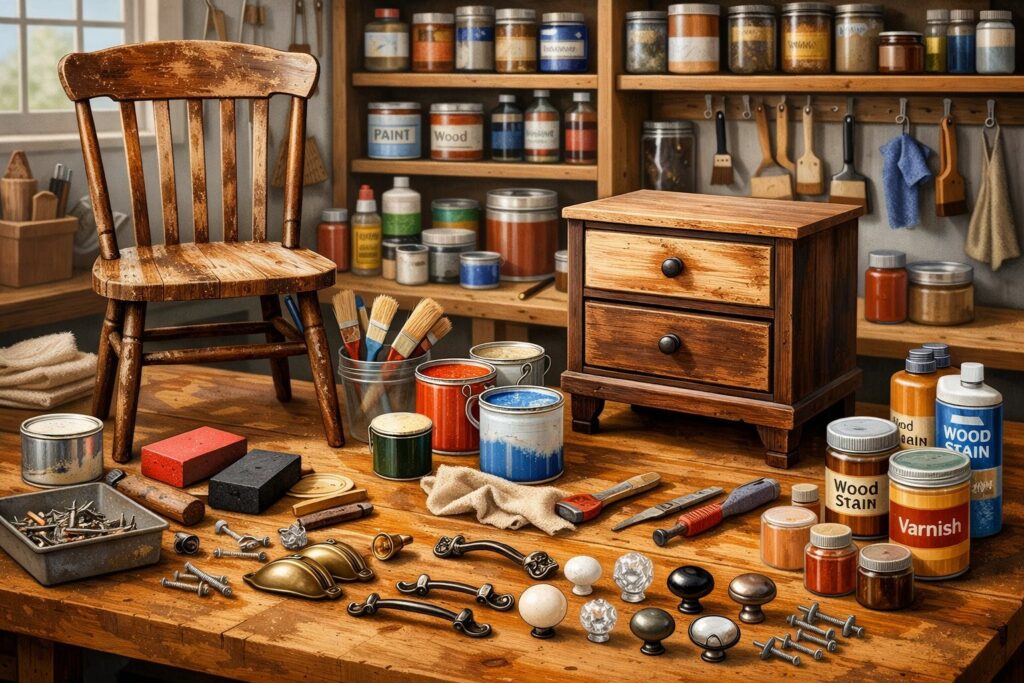
Gathering your supplies and setting up a good workspace before you start makes things way easier.

You’ll want some basic tools for cleaning, stripping, sanding, and finishing, plus safety gear and a spot with good airflow.

Essential Refinishing Supplies and Tools

Get a random orbital sander for smoothing big flat areas like tabletops. It saves your arms and does a better job than sanding by hand.

Use 60-grit sandpaper for the first pass, then 220-grit to smooth things out between coats.

For corners and tight spots, a sanding block is your friend. It lets you get into places the power sander can’t reach.

Pick up a tack cloth to grab dust after sanding. Regular rags just don’t cut it for the fine stuff.

Wood filler is great for patching up scratches and holes. Spread it with a putty knife, let it dry, then sand it smooth.

If you need to strip old paint, a heat gun works without chemicals, but be careful not to scorch the wood.

Other supplies you’ll want: Krud Kutter or dish soap for cleaning, screwdrivers for taking off hardware, paint stripper (like Citristrip), a scraper, primer (Zinsser 123 is solid), paintbrushes, and foam rollers. Don’t forget your paint or stain and maybe a topcoat.

Safety Gear and Preparation Tips

Wear safety glasses when sanding or using strippers. You don’t want to mess around with dust or chemicals near your eyes.

Nitrile gloves keep your skin safe from harsh stuff in cleaners and finishes.

A dust mask or respirator protects your lungs from dust and fumes. An N95 is the bare minimum, but a proper respirator is even better if you’re doing this often.

Cover your work area with drop cloths or plastic. Old sheets can work, but they might soak through if you’re using liquid strippers.

Take off all hardware before you start, and toss the screws in labeled bags so you don’t lose them.

Choosing a Workspace and Ventilation Best Practices

Work outside if you can. Fresh air is your best friend when you’re dealing with fumes or dust.

Garages with doors open are usually fine, but don’t use a closed basement unless you can get good airflow.

If you have to work inside, open all the windows and use fans to push air through. Set one fan blowing in and another blowing out to keep things moving.

Check the weather before you start if you’re working outdoors. Paint and finish need temps between 50 and 85°F to dry right.

Skip painting in direct sun. It dries too fast and can leave ugly brush marks.

Evaluating and Preparing Old Furniture

Before you get started, look over your piece and see what you’re dealing with. Good prep saves you headaches later and helps you get a finish that lasts.

Assessing Furniture Condition and Type

Figure out if your piece is solid wood, veneer, or laminate. Solid wood can take a lot of sanding and stripping.

Veneer is a thin wood layer glued onto cheaper material, so go easy or you’ll sand right through. Laminate is basically plastic, so it won’t take stain, but you can still paint it.

Look for damage: cracks, loose joints, water stains, or missing veneer. Check if the hardware is all there and if drawers and doors actually work.

Decide if it’s worth fixing. Little scratches or a tired finish are easy, but if it’s falling apart or waterlogged, maybe skip it for now.

Cleaning and Disassembly

Take off all the hardware and stash the screws in a labeled bag. Pull out drawers and take off doors if you can.

This makes the job easier and gives you cleaner results.

Clean every surface with a degreaser like Krud Kutter, or just use Dawn dish soap and water in a spray bottle. Wipe it all down with an old t-shirt or soft rag.

You’ll be surprised how much grime comes off, even if it looked clean.

Wipe it again with clean water to get rid of any soap, then let it dry all the way. A few hours is usually enough.

Minor Repairs Before Refinishing

Glue loose joints and clamp them until dry, usually about a day.

Fill cracks and holes with wood filler and let it dry as the directions say.

Sand those spots smooth after they’re dry. If veneer is peeling, glue it down and clamp it flat.

A warm iron over a cloth can help reactivate old glue on veneer, but test it somewhere hidden first.

Tighten any loose screws or swap out stripped ones for slightly bigger screws. Make sure drawers and doors work right before you start refinishing.

Removing Old Finishes: Stripping and Sanding Techniques

Getting old paint or finish off takes the right approach so you don’t wreck the wood. Chemical strippers work well for thick or stubborn finishes, while sanding is good for lighter jobs and smoothing things out.

How to Remove Old Finish Safely

Set up your workspace somewhere with lots of fresh air, like outside or in a garage. Basements hold on to chemical fumes, which isn’t safe.

Put on safety gear before you start: chemical-resistant gloves, splashproof goggles, and a respirator with fresh filters. An apron helps keep chemicals off your clothes.

Cover your surface with newspaper. Keep a metal tray handy to catch extra stripper you can reuse.

Take off all hardware and label the pieces with numbers or take photos so you remember where everything goes.

Test your stripper on a hidden spot first. Brush on a thick coat and wait for the finish to bubble up.

Don’t dump chemical waste down the drain or outside. Call your local waste folks to find out how to toss it safely.

Choosing Between Chemical Strippers and Sanding

Chemical strippers break down thick paint or finish fast. They’re best for:

  • Furniture with lots of old paint layers
  • Detailed carvings or curves
  • Getting rid of varnish, lacquer, or shellac

There are a few kinds. Eco-friendly strippers take longer but are less toxic. Medium-fast ones are a balance. Methylene chloride-based strippers work fastest but are pretty nasty, so only use them if you really have to.

Sanding is good for lighter finishes or prepping the surface. It’s great for:

  • Furniture with thin or beat-up coatings
  • Smoothing out after stripping
  • Getting the surface ready for paint or stain

Start with 100-grit sandpaper. Only move to finer grits if you need extra smoothness. Sanding makes a lot of dust, so wear a mask and keep the air moving.

Sanding Techniques for the Best Results

Always sand with the grain. Going against it leaves scratches that show through your finish.

Use 100-grit sandpaper for most stripping. Keep your pressure even and check your progress so you don’t sand too much.

A cork-padded block helps avoid swirl marks on flat spots.

For curves, wrap sandpaper around something flexible or use sanding sponges that bend with the shape. Use fine-grit sponges for carved details.

Let the wood dry all the way after stripping before you sand. Stripping raises the wood grain, so a light sanding smooths it back down.

Stop once the surface feels even. If you sand too much, you can lose the character of old pieces.

Lightly sand between coats of new finish. It helps each layer stick and gives you a better look in the end.

Painting and Refinishing for a Fresh Look

Painting and refinishing are both solid ways to update old furniture. Paint covers everything, while refinishing lets the wood show through.

How to Paint Furniture for Lasting Results

Start by cleaning the piece with Krud Kutter or a dish soap and water mix. This gets rid of grease and grime that can mess up your paint.

Sand the surface with 120 or 150 grit sandpaper. You don’t need to take off all the old finish, just rough it up a bit.

Wipe away all the dust with a damp cloth before moving on.

Use a primer made for furniture. BIN shellac primer is great for blocking stains and stopping old finishes from bleeding through.

If you’re painting dark colors, skip the white primer and use a tinted one close to your final color. White under dark paint just shows chips more.

Use furniture paint, not wall paint. It’s tougher and holds up to daily use.

Paint in thin coats with a brush, foam roller, or sprayer. Let each coat dry before adding the next. Usually, two or three coats are enough.

Finish with a protective topcoat like water-based polyurethane. This helps prevent scratches and water damage.

Let it cure for at least 24 hours before you use the furniture.

Product suggestions: Zinsser BIN Shellac-Based Primer and General Finishes High Performance Water-Based Topcoat

Using Stains to Revive Wood Grain

Wood stain brings out natural grain patterns and adds color. You can pick from water-based stains, oil-based ones, or gel stains.

Water-based stains dry quickly and clean up with soap and water. Gel stains sit on top of the wood, so they’re great for surfaces that absorb unevenly.

Sand your furniture to 220 grit for smooth, even stain absorption. Coarser grits leave scratches that get darker when you stain.

Test your stain on a hidden spot first to see the color. Apply it with a brush or cloth, following the grain.

Let the stain sit for 5 to 15 minutes, depending on how dark you want it. Wipe off extra stain with a clean cloth before it dries.

The longer you leave the stain, the deeper the color gets. If you want a richer tone, add more coats, but let each one dry first.

Seal the stained wood with polyurethane, lacquer, or hardwax oil to protect it. Water-based polyurethane stays clear and doesn’t yellow over time.

Refinishing Methods for Different Wood Types

Solid wood can handle aggressive sanding. Start with 80 or 100 grit to remove old finish, then move up through 120 and 150 grit, finishing at 180 or 220 grit.

You don’t have to worry about sanding too deep on solid wood. It’s more forgiving than veneer.

Veneer furniture needs a gentler touch since the wood layer is thin. Start with 150 grit or finer and use light pressure.

Check your progress often to avoid sanding through. If the finish is thick, try a chemical stripper instead of heavy sanding.

For heavy paint or varnish, use paint stripper first. This softens layers so you can scrape them away without sanding too hard.

Work in a well-ventilated area and wear gloves and goggles when stripping. Safety first, always.

Once you’ve stripped or sanded, you can paint, stain, or just use a clear finish. Clear finishes like polyurethane protect wood and show off its natural look.

Sealing and Protecting Your Finish

A good topcoat protects your furniture from scratches, moisture, and daily wear. Your choice depends on the project and the look you want.

Applying Protective Topcoats: Polyurethane, Lacquer, and More

Polyurethane is super popular for protecting furniture. It creates a tough layer that handles heavy use.

You can brush it on, use a foam applicator, or spray it. Lacquer dries faster and gives a smooth, glassy finish.

If you need to apply several coats quickly, lacquer is handy. Spray it on in thin layers, either with a spray gun or an aerosol can.

Other options? Shellac, hardwax oils, and wax. Shellac dries quickly and offers good protection, but it’s not as tough against water or heat.

Hardwax oils soak in and keep a natural look. Wax adds a soft sheen but doesn’t protect much, so it’s best as a final touch over another finish.

Sand lightly between coats with 220 grit sandpaper. This makes each layer stick better and leaves a smoother finish.

Choosing Between Water-Based and Oil-Based Finishes

Water-based polyurethane dries clear and doesn’t yellow. It’s perfect for white or light-colored furniture.

It dries in about 2 to 3 hours and cleans up with soap and water. Oil-based polyurethane is tougher and more scratch-resistant.

It gives wood a warm amber tone, which can really bring out stains. The downside? It takes 6 to 8 hours to dry and you need mineral spirits for cleanup.

For painted surfaces, definitely use water-based to avoid yellowing. For natural wood or stained pieces, either option works.

Oil-based finishes give you more working time to fix bubbles or streaks. Always apply 2 or 3 thin coats rather than one thick one.

Thin layers dry more evenly and help avoid drips or brush marks.

Hardware Swaps and Simple Upgrades

Switching out hardware or adding details can make old furniture look fresh and modern. These changes usually take less than an hour per piece and cost between $20 and $100.

Replacing Pulls, Knobs, and Hinges

Measure your current hardware before buying new ones. You’ll need the center-to-center measurement for pulls, usually 3 or 3.75 inches, and single-hole for knobs.

Take off old hardware by unscrewing it from the back. Wipe the area with a damp cloth and let it dry.

If there’s old glue or grime, use a little rubbing alcohol on a cloth. Install new hardware by threading screws from the front and tightening from the back.

Check that pulls are level before tightening all the way. If the new hardware doesn’t fit the old holes, fill them with wood filler, sand smooth, and drill new ones.

Hinges can make a big difference. Swap old brass hinges for matte black or brushed nickel, or go for hidden European-style hinges for a cleaner look.

Product suggestions: Liberty Hardware has drawer pulls starting at $3 each. Amerock offers modern cabinet knobs in several finishes, usually $5 to $15 each.

Adding Decorative Accents and Accessories

Stick-on trim pieces add depth to flat drawer fronts. You can find wooden appliqués at craft stores and attach them with wood glue.

Sand them smooth, then paint to match your furniture. Changing furniture legs can totally change the style of a piece.

Screw-in legs come in mid-century, traditional, or modern metal hairpin styles. Most attach with hanger bolts or mounting plates in the corners.

Edge banding covers chipped or damaged laminate edges. It’s a thin strip of wood veneer or plastic with heat-activated adhesive on the back.

Press it on with a household iron set to medium. Decorative corner brackets add vintage style to plain bookcases or cabinets.

Metal or wooden brackets attach with small screws or nails. Put them at the top corners or along the base for a custom look.

Fast, High-Impact Upgrades Anyone Can Do

Swap out basic wooden knobs for leather pulls on dressers or cabinets. You can make these with leather strips and screws, or buy pre-made ones.

Add contact paper or peel-and-stick wallpaper inside drawers. It only takes about 10 minutes per drawer and adds a nice surprise when you open them.

Cut the paper a bit smaller than the drawer so it doesn’t catch. Install soft-close drawer slides to stop drawers from slamming shut.

These slides cost $15 to $30 per drawer and make furniture feel more expensive. You’ll need a drill and screwdriver to change them out.

Stick felt pads or furniture feet on the bottom to protect floors and make moving pieces easier. Felt pads are cheap, usually under $5 for a pack of 20.

Product suggestion: Waddell wooden legs come in lots of styles and heights, usually $8 to $25 for a set of four.

Recommended Products for Refreshing Furniture

The right products make refinishing furniture easier and give you better results. Good tools and materials save time and help avoid rookie mistakes.

Top Choices: Paint Stripper

Citristrip is a favorite paint stripper for furniture. It clings to vertical surfaces and works through multiple layers of old paint or varnish.

It smells like citrus, not harsh chemicals, so you can use it indoors. Brush it on, cover with plastic wrap to keep it moist, and let it sit for 30 minutes to 24 hours.

Scrape off the softened finish with a plastic scraper. Smart Strip is another solid option, though it works slower.

It’s safer for antiques since it won’t harm the wood. Smart Strip removes oil-based paint, latex, and polyurethane too.

Best Sanding Tools

A random orbital sander makes refinishing go way faster. The DeWalt DWE6423K is reliable and easy for beginners to use.

It has variable speed and a 3 amp motor, so it’s not too aggressive. Use different grits for different steps.

Start with 60 or 80 grit for rough spots and old finish. Move to 120 grit for smoothing, then finish with 220 grit before painting or staining.

Sanding blocks help in corners and curved spots where your sander can’t reach. Foam blocks are fine and cheap, but they wear out quickly, so keep extras.

Go-To Finishing Products

Zinsser 123 Primer makes a great base for painted furniture. It blocks stains and sticks better than cheaper primers.

Two coats prevent most paint problems before they start. For topcoats, Minwax Polycrylic Protective Finish is great for painted pieces.

This water-based polyurethane dries clear and doesn’t yellow. You can pick from matte to gloss finishes.

General Finishes High Performance Water Based Topcoat is another solid pick. It’s tougher than regular polyurethane and resists water rings and scratches.

That’s especially nice for tables and dressers that see a lot of use.

Frequently Asked Questions

Painting old furniture starts with cleaning and sanding. Hardware swaps need you to measure the existing holes.

Chalk paint is a quick way for beginners to transform pieces without much prep.

What steps are involved in painting and rejuvenating worn-out furniture?

First, clean your furniture with a degreaser like Krud Kutter, or just use Dawn and water. This gets rid of dirt and grease that can keep paint from sticking.

Sand with 120 or 150 grit sandpaper to give the primer something to grab. You don’t have to remove all the old finish unless it’s peeling.

Apply a good primer like Zinsser BIN shellac-based primer. Let it dry fully, following the directions on the can.

Use paint made for furniture, not wall paint. Furniture paint stands up to daily wear better.

Apply two thin coats for the best coverage. Sand lightly between coats with 220 grit for a smoother finish.

Seal your work with a water-based polyurethane topcoat. This adds durability and protects against scratches and moisture.


Can you refinish wood furniture without using a stripper, and if so, how?

You can refinish furniture without stripper by cleaning and sanding the existing finish. Use a degreaser first so your sandpaper doesn’t clog up.

Start sanding with 150 grit on a random orbital sander. This removes the finish gradually, no mess or fumes.

Work up through 180 and 220 grit for smoothness. If you’re sanding by hand, go with the grain to avoid scratches.

Be extra gentle with veneer since the wood layer is so thin. Start with 180 grit and use light pressure.

Once it’s smooth, wipe with a tack cloth. You can stain or clear-coat right on the prepped wood.


What are creative yet simple upcycling ideas for revamping old furniture?

Swap out old hardware for modern pulls or knobs. Brass, matte black, or brushed nickel can totally change the look.

Paint just the outside of a dresser and leave the drawer fronts natural for a two-tone effect. It’s an easy way to add interest.

Add decorative trim or molding to plain drawers or cabinet doors. You can find cheap trim at home improvement stores and glue or nail it on.

Switch solid cabinet doors for glass or wire mesh inserts for an airy feel. This works nicely on china cabinets or bookcases.

Stick wallpaper or contact paper inside drawers or on cabinet backs for a pop of pattern. It’s renter-friendly and easy to remove later.

Cover table or dresser tops with contact paper that looks like marble or wood. It protects the surface and gives it a new look.


When replacing hardware on furniture, what are the best practices to follow?

Start by measuring the distance between your existing screw holes before you shop for new hardware. This measurement, known as the center-to-center distance, helps you avoid drilling extra holes later.

Take off one piece of old hardware at a time, then pop the new one on right away. Otherwise, it’s surprisingly easy to mix up which holes go with which drawer or door.

If your new hardware doesn’t match the old holes, fill the old ones with wood filler. Wait for it to dry, sand it smooth, and then drill new pilot holes for your replacement hardware.

Grab a drill bit that’s just a bit smaller than your screw diameter to make pilot holes. This step keeps the wood from splitting when you put in the new hardware.

Keep your screws together in a small container or bag as you take them out. Sometimes, the original screws fit the new hardware if the threading lines up.

Tighten the hardware so it’s snug, but don’t go overboard. If you overtighten, you might strip the wood or even crack the pull. If a screw feels loose, try adding a drop of wood glue to the hole before you put it back in.


What products are recommended for effectively refinishing and upgrading furniture?

General Finishes gel stains give you a lot of control over color, and they’re great for beginners since they don’t drip or run. You can use these stains on both raw and finished wood.

Varathane water-based polyurethane protects your furniture without turning yellow. It dries clear and stands up to scratches and water on painted or stained surfaces.

Rust-Oleum spray primers make things easier on pieces with lots of carvings or spindles. The spray gets into all those little crevices that brushes tend to miss.

Bondo wood filler is great for deep repairs and doesn’t shrink or expand, no matter the temperature. It’s a lot tougher than standard wood filler and works for big gouges or missing veneer.

A random orbital sander, like the Dewalt DWE6423K, really speeds up stripping and smoothing. This tool sands in every direction and doesn’t leave obvious swirl marks, which is a relief.


How can a beginner approach upcycling furniture with Chalk paint?

Chalk paint makes things easy, since you don’t have to do much prep. Just clean the surface with soap and water, and you’re basically ready to go.

Grab a synthetic brush meant for water-based paints. Try to use thin, even coats, and honestly, you’ll probably need two or three layers to get it looking right.

Let each coat dry for at least one or two hours. Chalk paint dries pretty fast, but if you rush, you might mess up the layer underneath.

If you want that vintage, worn-in vibe, sand the edges with 220 grit sandpaper after your last coat dries. Concentrate on spots like corners and edges, where furniture usually gets scuffed up anyway.

To protect your work, seal the paint with wax or water-based polyurethane. Wax leaves a soft, matte look, while polyurethane is tougher and works better for stuff you’ll use a lot.

Wash your brushes right away with soap and water. If chalk paint dries on them, good luck getting it out.
Furniture Materials: Types, Durability, and Expert Maintenance Tips

0

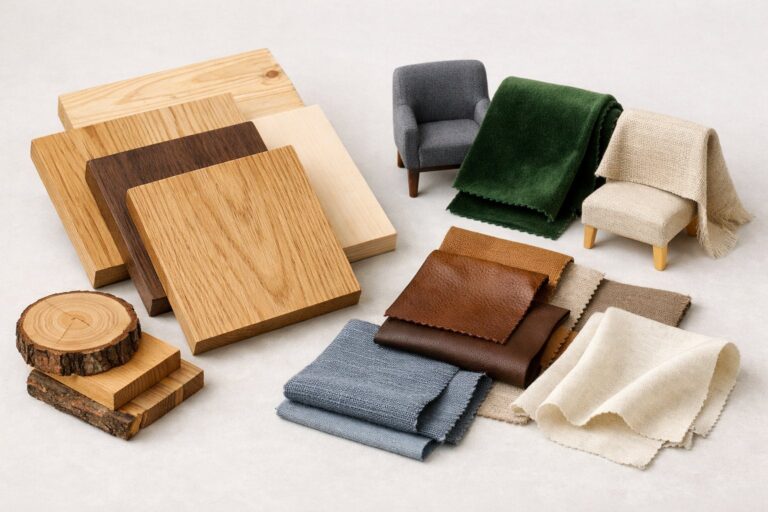
Choosing furniture isn’t just about what catches your eye. The materials you pick really shape how long your furniture lasts, how much work it needs, and whether it fits your lifestyle and budget.

Wood, metal, glass, and fabric all bring something different to the table. There’s the cozy feel of oak, the tough look of steel, or maybe you’re drawn to soft upholstery.

Understanding what goes into your furniture helps you buy smarter. If you know which woods shrug off scratches, or which fabrics hold up to pets, you’ll get more out of your investment.

The right material can mean your favorite chair sticks around for decades, or that it falls apart after a few years. That’s a big difference.

This guide breaks down the most common furniture materials you’ll see when shopping. We’ll look at wood types and what makes each one special.

You’ll get a sense of upholstery options and find real-world tips for keeping your furniture looking sharp. There are even some product picks if you want to see quality at a few different price points.

Key Takeaways

  • Wood, metal, glass, and fabric all bring their own strengths when it comes to durability, style, and function
  • How you care for each material really changes how long your furniture lasts
  • Matching materials to your lifestyle and needs helps you get the most value

Understanding the Importance of Furniture Materials

The materials you choose for furniture decide how long your stuff lasts, how it looks, and how much effort it takes to keep clean. Your budget, lifestyle, and what you like all play a part.

Factors to Consider When Choosing Materials

Your lifestyle should lead the way. Got kids or pets? Look for scratch- and stain-resistant picks like leather or sealed wood.

Busy spaces need tough materials. Hardwood or metal can handle the daily grind without falling apart.

Budget is a big deal. Solid wood costs more upfront but can last a lifetime. Engineered wood like MDF costs less but usually lasts just 5-10 years.

Climate matters too. Wood swells and shrinks with humidity, while metal and plastic barely budge. It’s worth thinking about your local weather before you commit.

Key things to weigh:

  • Maintenance – Some options need regular care, others not so much
  • Weight – Metal and solid wood are heavy, plastic and bamboo are light and easy to move
  • Environmental impact – FSC-certified or recycled materials are better for the planet
  • Looks – Natural wood feels warm, metal gives a modern edge

Impact on Durability and Style

Furniture materials don’t all last the same. Solid hardwood can stick around for 25-100+ years. Plastic? Maybe 5-20 years if you’re lucky.

Metal sits somewhere in the middle, lasting 20-50 years if you take care of it. The material you choose sets the mood for your space.

Wood gives off a classic or rustic vibe. Glass and metal create a more modern, minimal look. Rattan and bamboo feel relaxed and eco-friendly.

If you spend more on quality hardwood or metal, you’ll likely save in the long run. A $500 solid wood table that lasts 40 years beats a $150 MDF table you replace every 7 years.

Materials also change with age. Wood gets a nice patina, metal picks up character marks, and plastic tends to fade or get brittle.

Wood Furniture: Types and Characteristics

Wood furniture comes in all shapes, from solid hardwood to engineered and reclaimed pieces. Each type brings something different in strength, price, and environmental footprint.

Solid Wood vs Engineered Wood

Solid wood furniture uses whole timber cut straight from trees. It’s strong, lasts ages, and you can refinish it over and over.

You’ll spot solid wood by the grain running right through the piece. Popular choices include oak, maple, walnut, and cherry.

Engineered wood is a mix of wood fibers, chips, or layers glued together. Plywood uses thin sheets stacked in alternating directions, so it resists warping.

MDF (Medium Density Fiberboard) is made from compressed wood fibers. It’s smooth and great for painted pieces. Particleboard uses chips and sawdust with resin, and it’s the cheapest of the bunch.

Solid wood costs more but can last a lifetime. Engineered wood is easier on the wallet, but it doesn’t handle moisture well. Your choice depends on what you need and what you want to spend.

Hardwood and Softwood Varieties

Hardwood comes from trees that lose their leaves every year and grow slowly. These woods are tough and resist dents and scratches.

Oak has a strong grain, perfect for tables and cabinets. Maple is pale and smooth, great for kitchens. Walnut is dark and dramatic, while cherry deepens to a rich red over time.

Softwood comes from evergreen trees that grow faster. Pine is light and knotty, showing up in casual or kids’ furniture.

Cedar has natural oils that keep bugs away, so it’s good for closets and outdoor projects. Softwoods dent more easily but are more affordable and easy to stain. You’ll see them in shelves, bed frames, and budget furniture that doesn’t get heavy use.

Reclaimed and Sustainable Woods

Reclaimed wood comes from old barns, buildings, or discarded furniture. It’s salvaged and given a new life, often with nail holes and weathered marks that make each piece unique.

You’ll pay more for reclaimed wood, but you get something with history. Sustainable woods are harvested in ways that protect forests and wildlife.

Look for FSC or PEFC labels. Rubberwood comes from old rubber trees that no longer produce latex, so it’s a smart reuse. Acacia grows fast and bounces back quickly. Bamboo isn’t technically wood, but it’s super strong and grows like crazy without replanting.

Picking reclaimed or certified sustainable wood helps the environment and still gets you sturdy furniture. If you care about your impact, these are great choices.

Metal Furniture: Durability and Design

Metal furniture brings real strength and a modern vibe to any room. Steel, aluminum, and iron each have their perks for different uses, and coatings help keep rust at bay.

Common Metals Used in Furniture

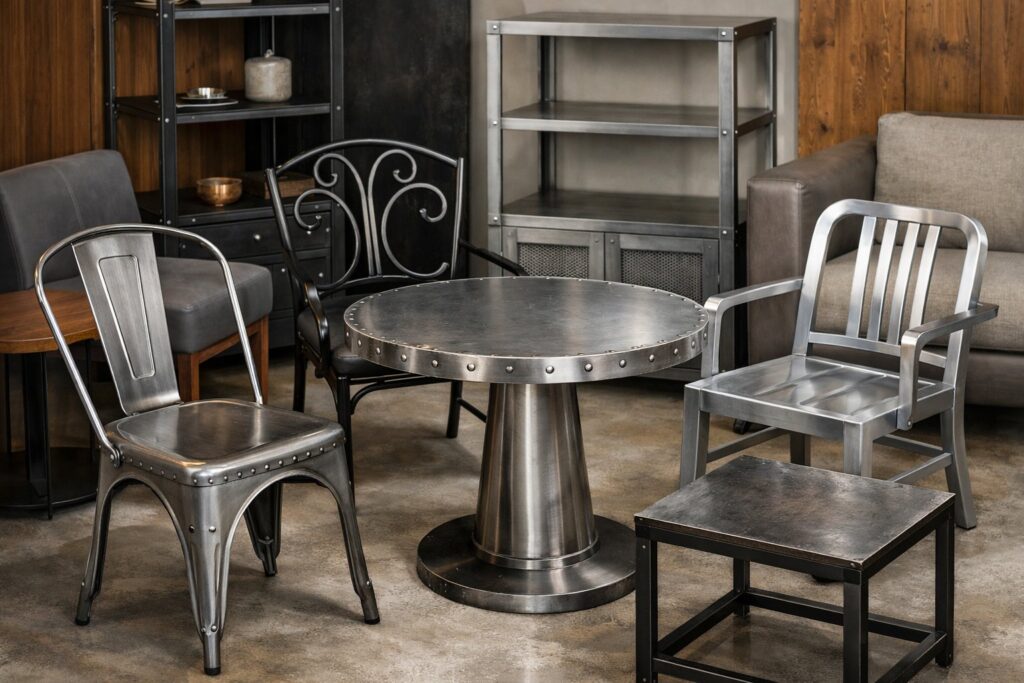
Stainless steel is a go-to for indoor furniture that needs to look sharp. It shrugs off rust and fits right in kitchens or dining rooms.

You’ll see it in table legs, chairs, and shelves. Wrought iron turns up in outdoor and decorative pieces. It’s heavy, super strong, and doesn’t bend under weight.

Garden benches and patio sets often use wrought iron because it stands up to the weather—just make sure it’s sealed. Aluminum is much lighter than steel or iron, so you can move it around easily.

It never rusts, which makes it perfect for poolside or balcony furniture. Brass and copper add a warm touch and develop a patina over time—great for accent pieces like side tables.

Recycled metal is on the rise, with old metal turned into new chairs, shelves, and frames. It cuts down on waste and often costs less than brand-new metal.

Benefits and Drawbacks of Metal

Metal furniture handles daily life better than a lot of other stuff. A powder-coated steel chair can survive decades in a busy home.

The frames don’t sag or warp. Cleaning is easy—just a damp cloth for dust, or mild soap for stubborn spots. No need for fancy cleaners.

Metal looks great in modern or industrial spaces. You get clean lines and smooth finishes, from matte black to shiny chrome.

But it’s not all perfect. Metal dents if you drop something heavy. Scratches show up on shiny surfaces. If steel or iron isn’t coated, it’ll rust if it gets wet.

Metal can feel cold, especially in winter. Toss on a cushion or throw to make it cozier. Some pieces can be noisy, like chairs scraping the floor, but felt pads help with that.

Best Uses for Metal in the Home

Outdoor furniture works best in metal. Aluminum patio sets handle rain and sun without falling apart. Wrought iron benches stay strong through storms, as long as the finish is intact.

Kitchens and dining rooms love stainless steel or powder-coated metal. Bar stools with metal frames put up with constant use. Metal table bases hold up even the heaviest tops.

Office spaces benefit from metal shelving and desks. They can take the weight of books and equipment. Steel filing cabinets last for years of daily use.

Bedrooms get a minimalist look with metal bed frames. They don’t creak like some wood ones and provide solid support for any mattress.

Don’t use bare metal furniture in humid bathrooms unless it’s treated for moisture. And if it doesn’t have a good coating, keep it away from spots where spills happen a lot.

Glass, Plastic, and Composite Furniture Materials

Glass, plastic, and composite materials give you modern alternatives to traditional wood or metal. They offer a mix of design options, easy care, and can be easier on the wallet.

Each one brings something different to both home and office spaces, whether you want flexibility, low maintenance, or just something that looks a little different.

Glass Furniture Types and Care

Tempered glass pops up everywhere in furniture. It’s popular because it resists shattering and handles bumps better than regular glass.

You’ll see it in coffee tables, dining tables, and shelves. It helps a room feel open and clean, which is always nice.

Frosted and etched glass bring in some privacy and a touch of style to furniture pieces.

Glass furniture fits well in small spaces since it doesn’t block your view. The surface is non-porous, so cleaning is a breeze—just grab some glass cleaner and a soft cloth.

Basic Care Requirements:

  • Wipe spills right away to dodge water spots
  • Stick to microfiber cloths to avoid scratches
  • Use circular motions with your glass cleaner
  • Check the corners and joints now and then to make sure they’re sturdy

Fingerprints and dust show up fast on glass, so you’ll probably clean it more often than wood or metal. Tempered glass can take a beating, but don’t drag heavy stuff across it.

Features of High-Quality Plastic Furniture

Polypropylene and polyethylene are the main plastics you’ll find in solid furniture. They shrug off moisture, bugs, and sun damage, which is why they’re everywhere outside.

Good plastic furniture keeps its color and shape for years. It doesn’t just stop at lawn chairs, either.

Modern plastic pieces show up in dining sets, storage, and even accent furniture. The material lets designers go wild with shapes and colors you just can’t get from wood or metal.

Quality Indicators:

  • Thickness: Heavier pieces usually mean denser, tougher plastic
  • Finish: Look for smooth, even surfaces without ugly seams
  • Flexibility: Should bend a little, but not crack
  • UV protection: Built-in stabilizers keep colors from fading

Good plastic furniture feels sturdy, not flimsy. If it creaks or cracks when you sit, maybe keep looking. Always check the weight limits, especially for chairs.

Overview of Composite and Engineered Materials

Composites mix two or more materials to make furniture with better features. Engineered woods like plywood, MDF, and particleboard use wood fibers or chips glued together. They’re cheaper than solid wood and resist warping.

Some composites use natural fibers like bamboo, hemp, or recycled wood with binding agents. You’ll spot these in eco-friendly lines trying to cut down on waste. Wood-plastic blends mimic the look of wood for outdoor furniture.

Manufacturers control the process, so composites offer more consistent quality. They’re great for furniture that needs to be the same size every time, like cabinets or modular storage.

Using recycled stuff in composites cuts waste and keeps things durable. Many pieces now come with labels showing recycled content or low emissions. You can refinish some, but most won’t sand down like solid wood.

Upholstery Fabrics: Comfort and Style

The fabric you pick for your furniture shapes both the vibe of your room and how long your stuff lasts. Each material brings its own perks for comfort, durability, and cleaning.

Popular Upholstery Fabrics

Cotton feels soft and lets air through, so it’s comfy for sofas and chairs you use a lot. It soaks up dyes well, so you get tons of color choices. But, it can stain easier than synthetics.

Polyester stands up to fading and wear, which is handy in busy rooms. This synthetic fabric shrugs off wrinkles and can look a lot like natural fibers for less money.

Microfiber is a tightly woven synthetic that shrugs off water and stains. It’s super soft, and if you have kids or pets, spills wipe up without much fuss.

Linen gives a casual, textured look and breathes well. It does wrinkle and wear a bit faster than other fabrics, though.

Velvet brings a plush, rich feel. It catches light in cool ways, but you’ll need to fluff and care for it to avoid crushing the pile.

Blends mix natural and synthetic fibers to get the best of both worlds. You’ll usually find a nice balance of comfort and toughness.

Choosing Between Fabric and Leather

Leather furniture ages well and picks up character over time. It wipes clean with a damp cloth and doesn’t collect pet hair or allergens much. Full-grain leather is the top tier—super durable, but bonded leather is cheaper and wears out faster.

Fabric upholstery brings a lot more colors, patterns, and textures. It usually feels softer and warmer than leather. Synthetic fabrics tend to be budget-friendly, too.

Think about your lifestyle. Leather’s easy to clean and lasts ages. Fabric’s got more style options and feels cozy. If you’ve got kids, microfiber is a lifesaver. For fancier rooms, leather or velvet just looks sharp.

Maintenance and Cleaning Tips

Vacuum your upholstery every week with a soft brush to pull out dust and crumbs. It’s a simple habit that keeps things looking fresh.

Blot spills right away with a clean, dry cloth. Don’t rub, or you’ll push stains deeper. Check the cleaning code before using any products.

Flip and rotate cushions every few weeks to spread out wear. Keep fabrics out of direct sunlight to avoid fading.

For leather, wipe it with a slightly damp cloth and rub in conditioner every 6 to 12 months. That keeps it from drying or cracking.

Most fabric upholstery benefits from a pro cleaning every year or two, depending on use. In between, spot clean as needed with the right cleaners for your fabric.

Durability and Maintenance Tips

Taking care of your furniture keeps it looking good and working right for years. Each material asks for a little something different, but a few habits go a long way.

General Care for Different Materials

Dust wood furniture regularly with a soft cloth so grime doesn’t build up. Polish it every few months to keep the finish happy and the wood from drying out.

Keep wood away from direct sunlight and heat vents, since those can cause fading and cracks. Wipe up spills with a damp cloth, no waiting.

Upholstered furniture needs vacuuming every week to get rid of dust and crumbs. Rotate cushions monthly for even wear. Treat stains right away, using whatever method fits your fabric. Leather likes conditioning twice a year to avoid cracking.

Metal furniture is pretty easy. Just wipe it down with damp cloth and a little mild soap. For outdoor metal, check for rust and touch up paint if you spot any. Glass needs regular cleaning to keep fingerprints and smudges at bay.

Extending the Life of Your Furniture

Use coasters, placemats, and tablecloths to protect surfaces from heat, spills, and scratches. Felt pads under lamps and vases help prevent scratches, too.

Try not to put furniture in direct sunlight, since it can fade wood and fabrics. Stick to the weight limits on chairs and shelves, or you might end up with a broken leg or a saggy seat.

Tighten any loose screws or bolts as soon as you notice them. That stops wobbles before they get worse.

Clean spills right away so they don’t soak in. For outdoor stuff, bring cushions inside during storms or store them in waterproof bins. Cover outdoor furniture in winter to keep it safe from snow and ice.

Recommended Furniture Products

Here are three solid furniture picks at different price points and materials. Each one’s chosen for durability and real-life value.

Solid Wood Dining Table Pick

Solid oak or walnut dining tables are tough and never go out of style. Look for tops at least an inch thick and sturdy legs. Oak shrugs off scratches better than softer woods.

Walnut tables have a deeper, darker color. Both types take stain well if you want to switch up the look later. Mortise and tenon joinery beats just screws or brackets for strength.

If you’re on a budget, ash dining tables are a good choice. Ash is cheaper than oak or walnut but still strong. The grain looks a lot like oak, just lighter. A 36 by 60 inch table fits four to six people comfortably.

Top Affordable Sofa Option

Polyester and microfiber give the most bang for your buck if you’re shopping for a sofa under $800. These synthetics resist stains better than cotton or linen. Microfiber sofas clean up easily with water and mild soap.

Pick sofas with hardwood frames, not particle board or plywood. Birch and pine are more affordable but still sturdy. Corner blocks at the joints add extra strength.

High-density foam in the cushions holds its shape longer. Aim for foam rated at least 1.8 pounds per cubic foot. Pocket coil springs under the cushions add comfort and support. Three-seater sofas between 78 and 84 inches usually fit most living rooms nicely.

Outdoor Furniture Recommendation

Cedar or acacia wood outdoor furniture holds up against rot and bugs without chemicals. Cedar naturally fights off moisture and stays solid in humid weather. Acacia has a tighter grain and darker look, and it handles temperature swings well.

Teak is the gold standard for outdoor furniture—super weather resistant thanks to its natural oils. It won’t crack or warp easily. All three woods need oiling now and then to keep their color and stop them from turning gray.

Look for stainless steel hardware to avoid rust. Slatted chairs and tables let water drain off instead of pooling. A water-based sealant every year or so helps outdoor pieces last even longer.

Frequently Asked Questions

Picking the right furniture material can get confusing—so many choices, so many claims. Here are some common questions people ask about wood, fabrics, durability, and care.

What are the different types of wood commonly used in furniture making?

Hardwoods like oak, maple, cherry, and walnut are tried and true for furniture. They’re dense, durable, and stand up to heavy use. Oak has a bold grain and comes in both red and white. Maple is smooth and light, making it easy to finish however you like.

Cherry starts off pale and deepens to a rich reddish-brown over time. Walnut’s got those dark brown tones and a straight grain—always looks classy. Both are favorites for high-end pieces.

Softwoods like pine, cedar, and fir cost less. Pine is light and easy to work with, but it dents more easily. Cedar fights off bugs and rot, so it’s great for storage furniture.


How do I choose the right upholstery fabric for my furniture?

Your daily life really decides which fabric is best. Got kids or pets? Go for tightly woven fabrics that resist stains and wear. Microfiber and polyester are easy to clean and tough enough for daily messes.

Cotton and linen breathe well and feel great, but they stain more easily. You can treat them with special coatings to help, though.

Leather lasts a long time and looks better with age. It shrugs off spills better than most fabrics and just needs the occasional conditioning. Performance fabrics blend the look of natural fibers with better stain and moisture resistance.

Check the rub count for durability. Anything above 15,000 is good for heavy use. Lower counts are fine for pieces that don’t get much action.


What qualities should I look for to ensure furniture material durability?

Dense hardwoods like maple, oak, and hickory are long-lasting. Solid wood pieces should use good joinery, like dovetails or mortise and tenon—not just glue or staples. Construction quality really matters.

For upholstery, tight weaves and high thread counts are key. The fabric should feel sturdy, not thin. Double-rub ratings over 15,000 mean it’ll handle daily use.

Metal frames should use thick steel or aluminum with welded joints. Thin metals bend too easily. Powder-coated finishes protect against rust and scratches better than paint.

Plywood works well for furniture if it’s made with several layers and strong glue. Avoid particle board in structural pieces, since it doesn’t handle moisture well.


Can you provide maintenance tips for various furniture materials?

Wood furniture needs dusting with a soft cloth every week. Clean up spills right away with a damp cloth, then dry the area.

Apply furniture polish or wax every few months to protect the finish. Keep wood away from direct sunlight and heat sources to avoid fading and cracking.

Vacuum upholstered furniture weekly using the brush attachment. Blot liquid spills quickly with a clean cloth.

Most fabrics do better with professional cleaning every year or two. Always check the manufacturer tags for specific cleaning codes—they’re easy to forget about, but they matter.

Wipe leather with a slightly damp cloth for routine cleaning. Apply leather conditioner every 6 to 12 months so it doesn’t dry out or crack.

Keep leather furniture out of direct sun and away from heat. Honestly, nothing ruins leather faster than a sunny window.

Metal furniture needs a wipe-down with a damp cloth to get rid of dust and debris. Dry it off completely to prevent rust.

Touch up scratches in powder-coated finishes with matching paint if you spot them. For outdoor metal pieces, apply protective wax or sealant once a year.


What are some recommended furniture pieces showcasing quality materials and craftsmanship?

A solid oak dining table shows how durable hardwood stands up to daily use. Look for tables with thick tops and sturdy legs.

The wood grain should look consistent, and the finish should feel smooth. You can usually tell when something’s well-made just by running your hand over it.

Leather sofas from established manufacturers highlight quality upholstery work. Top-grain or full-grain leather lasts way longer than bonded leather.

Check that cushions have high-density foam cores for comfort that sticks around. If you’re investing in leather, you want it to age well, not sag in a year.

Hardwood bedroom dressers with dovetail drawer construction really show off solid craftsmanship. Drawers should glide smoothly and joints need to fit tight.

A good finish protects the wood and brings out its natural beauty. There’s just something about real wood that feels right in a bedroom.


What is the importance of understanding furniture material when selecting pieces for my home?

If you know your materials, you can actually match furniture to how you use your space. A family room needs something different than a formal dining room, right?

When you get these differences, you avoid buying pieces that just won’t hold up to your lifestyle. It’s frustrating to realize something’s too delicate after you’ve already brought it home.

Your material knowledge also shapes your budget. Hardwood costs more at first, but if you take care of it, it’ll last for decades.

Engineered wood comes in cheaper, but you might have to replace it sooner. That’s where you can decide what’s worth the extra money.

Each material wants its own care routine. Wood likes a good polish every now and then, while upholstery just needs a vacuum.

When you know what you’re buying, you can actually keep it looking good for longer. That’s just smart if you ask me.

Material choice really changes how furniture looks at home. Wood tones, fabric textures, metal finishes, they all play a part in your design.

If you understand these details, you can pull together a look that feels intentional and balanced across your rooms.


Arranging Furniture for Better Room Flow: Tips, Layouts & Mistakes

0

The way you arrange furniture can totally change how a room feels and works. Poor placement creates cramped spaces and awkward movement, while a little strategy can make even small rooms feel open and comfortable.

Strategic furniture placement helps create clear pathways, defines different areas, and makes sure each piece serves a purpose without blocking natural flow.

Getting furniture arrangement right isn’t just about pushing pieces against the walls. You have to think about how you move through each space and where people naturally gather.

Small changes in placement can fix problems like crowded walkways or rooms that feel off-balance. Sometimes, the tiniest shift makes all the difference.

This guide covers the spacing rules that designers swear by. You’ll find layout ideas for every room and a few product suggestions to help your space work better.

Key Takeaways

  • Keep at least 3 feet of walking space around furniture for easy movement
  • Arrange furniture based on your room’s focal point and how you actually use the space
  • Don’t push all furniture against walls or block natural pathways

Principles of Furniture Arrangement

Good furniture arrangement creates clear pathways and highlights key features. It organizes your space by activity too.

These three principles work together to make rooms that look good and actually work for you. It’s not just about style, it’s about living well.

Understanding Room Flow

Room flow is all about how easily people move through your space. You need clear paths between doorways, furniture, and high-traffic zones.

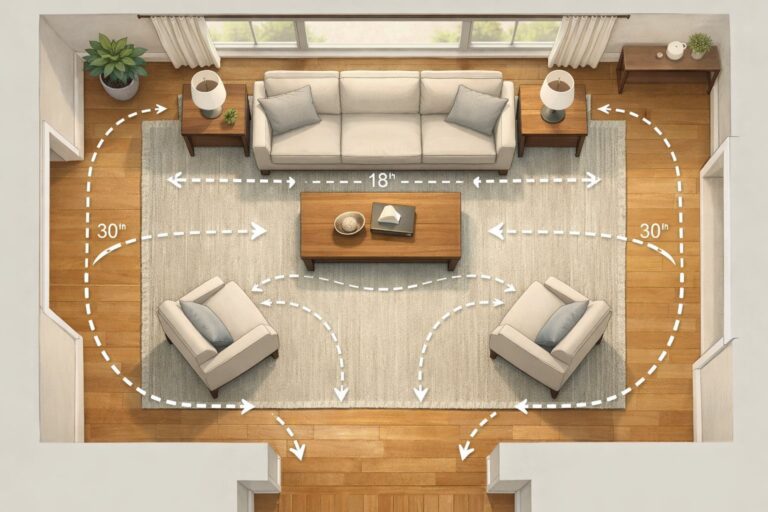
Leave three to four feet of space in busy walkways, like routes between rooms or spots people use all the time. In less busy areas, two to three feet usually does the trick.

Around beds, aim for at least two feet of clearance on each side where people walk. That way, you can make the bed and move around without bumping into anything.

Dining areas need three feet around the table so chairs can pull out easily. Watch how people naturally move through your rooms. Nobody should have to squeeze past furniture or take weird detours just to get around.

The Role of Focal Points

Every room needs a focal point that draws your eye and anchors your furniture. Maybe it’s a fireplace, a big window, or the TV.

Arrange your main seating to face the focal point. In living rooms, put your sofa across from or angled toward this feature, then add chairs and tables to complement it.

If your room doesn’t have a natural focal point, create one with a large piece of art, a bookshelf, or an accent wall. Place your biggest furniture piece nearby to really emphasize it.

Try not to let focal points compete. If the room has a few strong features, pick one as the main event and arrange furniture around it. The rest can play supporting roles.

Defining Functional Zones

Functional zones break up your room by activity, making spaces more organized and useful. Each zone serves a specific purpose, like conversation, dining, or reading.

Use rugs to mark different zones visually. All the furniture in a conversation area should at least have the front legs on the rug. It creates a clear boundary without needing walls.

In open spaces, arrange furniture to create natural dividers. A sofa can face away from the dining area to separate it from the living space. Bookcases or console tables work as room dividers too.

Keep related activities together and make life easier. Put a side table next to reading chairs for books and drinks. Place TV viewing furniture within comfortable sight lines.

Space Planning and Spacing Rules

Getting the spacing right between your furniture pieces is key. It makes the difference between a room that feels cramped and one that flows naturally.

Proper measurements and clear pathways help you move through your space comfortably. Visual harmony matters too, even if you’re not a designer.

Measurement and Scale

Measure your room and your furniture before moving anything. Write down the length and width of your room, then measure each piece you plan to use.

Space planning works best when you know the exact dimensions. A sofa that looks perfect in the store might totally overwhelm your space if you don’t check the numbers first.

Create a simple floor plan on graph paper or use a free online planner. Mark where your windows, doors, and outlets are. It really helps you see what layouts will actually fit.

Pay attention to scale when you choose furniture. Big, bulky pieces make small rooms feel even smaller. Lighter, more streamlined furniture keeps things open in compact spaces.

Proportion and the ⅔ Rule

The ⅔ rule says your rug should cover about two-thirds of your floor space in a seating area. This creates visual balance and helps define different zones.

All your seating should have at least the front two legs on the rug. It anchors your furniture grouping and makes the space feel intentional, not random.

Coffee tables should measure about two-thirds the length of your sofa. If the table’s too small, it looks lost. Too big, and it blocks movement around your seating area.

Artwork should take up two-thirds to three-quarters of the wall space above your furniture. Hang pieces at eye level, around 55-57 inches from the floor, or about 10 inches above the back of your sofa.

Establishing Clear Pathways

You need 3 to 4 feet of space in high-traffic areas, like main walkways between rooms and paths from doorways. In lower-traffic areas, 2 to 3 feet between furniture works.

Around dining tables, leave at least 3 feet so people can pull out chairs and sit down comfortably. Bedrooms work best with 4 feet of clearance around the bed if you can swing it.

If your room is smaller, aim for at least 2 feet on the sides where you get in and out. Clear pathways keep people from having to squeeze past furniture or dodge obstacles.

Map out how people naturally move in your room and keep those routes open. Nobody likes a maze at home.

Furniture Layout Ideas for Different Rooms

Each room in your home needs its own approach to furniture arrangement. The right layout helps you create comfy areas for relaxing, sleeping, and dining, while keeping traffic patterns clear.

Living Room Layouts

Start by picking a focal point like a fireplace, TV, or big window. Position your main seating around that spot, keeping sofas and chairs no more than 8 feet apart for easy conversation.

Floating furniture away from walls often works better than pushing everything to the edges. It gives a more balanced look and helps define the space. Try a large rug and coffee table to anchor seating pieces in the center.

For symmetrical setups, put matching chairs across from a sofa near the focal point. Add end tables on both sides for drinks and lamps. This works well if you entertain a lot.

In small living rooms, use fewer but slightly larger furniture pieces instead of a bunch of tiny ones. A sectional can provide plenty of seating without visually cluttering the space.

Bedroom Furniture Arrangement

Place your bed as the main focal point. Leave at least 2 feet of space on each side for easy bed-making and walking. Don’t put the bed within 3 feet of the door or you’ll block natural flow.

In long, narrow bedrooms, face the bed toward a window to get natural light and a view. Add a desk or dressing table opposite the doorway to balance things out.

Square bedrooms work well with the bed centered on one wall and a big rug extending at least 2 feet on each side. Use tall storage pieces like armoires to save floor space. Small dressers can double as nightstands if you’re tight on space.

Go with a lighter headboard style if your bed feels too big for the room. Metal or open designs take up less visual space than chunky wood headboards.

Dining and Multi-Purpose Spaces

Match your table shape to your room shape. Rectangular tables work in rectangular rooms, while round pedestal tables fit well in square or tight spaces. Always leave at least 36 inches from the table edge to the wall.

Give each place setting 20 to 24 inches of width and 15 inches of depth. Leave 6 inches between chairs for elbow room. Position the table so chairs can slide out without blocking walkways.

In big dining rooms, don’t fill the space with an oversized table you don’t need. Pick a size that fits your usual guest count. Add flexible seating like benches or lightweight chairs that you can bring in when needed.

For multi-purpose rooms, add storage along the walls with cabinets or shelves. Use adjustable lighting like chandeliers with long cords or dimmers to change the mood for different activities.

Designing for Traffic Flow and Conversation

Good furniture placement creates clear paths and makes it easy for people to talk with each other. The right seating setup and strategic rugs define spaces without blocking movement.

Seating Arrangements for Interaction

Face your seating toward each other, not just the TV. A U-shaped or L-shaped layout lets everyone see each other during conversations.

Place seats 4 to 8 feet apart so people can chat comfortably without feeling squished. A coffee table in the center acts as a natural focal point and keeps things balanced.

Leave at least 18 inches between the coffee table and sofas or chairs so people can walk through. In bigger rooms, you can create multiple conversation zones instead of one big area.

Don’t line all your furniture against the walls. That setup makes conversation awkward and forces people to shout across the room. Pulling furniture toward the center feels more inviting and encourages better interaction.

Floating Furniture Techniques

Floating furniture means pulling pieces away from the walls by 6 to 12 inches. It creates a more intimate feel and helps define your conversation area.

A sofa a few feet from the wall can anchor a room and keep traffic flow open behind it. Use a console table behind a floating sofa for extra function and visual interest.

This setup adds depth to your layout and gives you a spot for lamps or decorative stuff. Floating arrangements work especially well in open-concept homes where you need to separate activity zones.

Keep main pathways at least 30 to 36 inches wide around floating furniture. That way, people can move through the room without squeezing between pieces or interrupting conversations.

Zone Definition with Rugs

Area rugs help mark conversation zones without blocking traffic. Place your rug so the front legs of all seating pieces rest on it, or put all the furniture completely on the rug if you have space.

Leave 18 to 24 inches of bare floor between the rug edge and walls to keep proportions right. The rug should extend at least 12 inches beyond each side of your furniture grouping.

A rug that’s too small makes your arrangement look disconnected and awkward. Use different rugs to separate zones in open spaces. It’s a simple way to define a living area versus a dining space without adding walls.

Maximizing Space with Versatile Solutions

Smart furniture choices can transform cramped rooms into open, functional areas. Multi-functional pieces, light colors, and properly scaled furniture work together to create the illusion of more space while serving practical needs.

Integrating Multi-Functional Furniture

Multi-functional furniture does more than just look good, it actually helps you cut down on clutter and opens up floor space. A sofa bed can turn your living room into a guest bedroom in a pinch.

Storage ottomans hide away blankets and magazines, plus they give you extra seating. Extendable dining tables expand for dinner parties and shrink back down for daily meals.

This kind of flexibility lets you change up your space for different activities, so you don’t have to buy a million separate pieces. Coffee tables with built-in shelves or lift-top surfaces give you more function without eating up extra space.

Look for furniture that combines storage, seating, and surface area. Nesting tables stack together when you don’t need them, then spread out when you do.

Product Suggestion: The Novogratz Brittany Sofa Futon flips from couch to full-size bed in seconds. It’s a solid pick for studios or home offices where every inch counts.

Tips for Small Spaces

Try to keep pathways at least 30 inches wide so you can move around easily. Instead of pushing everything up against the walls, pull furniture a few inches out to create depth and make things feel bigger.

Pick pieces with exposed legs instead of those that sit flat on the floor. Seeing more floor space underneath makes the room feel lighter.

Wall-mounted shelves and floating desks help you skip bulky storage units. Choose furniture that fits the scale of your room, not just what looks good in the store.

A giant sectional will swallow a small living room, but a compact loveseat with an armchair keeps things in proportion. Try not to block windows or natural light with tall furniture.

Utilizing Light-Colored and Scaled Pieces

Light-colored furniture bounces more light around and just makes rooms look bigger. Whites, creams, and pale grays feel open compared to dark, heavy stuff.

Paint and fabric colors really change how spacious a room feels. Choose furniture that’s sized right for your place.

Small apartments need compact pieces with clean lines, not oversized options. Always measure your doorways and room before buying, trust me, it’s worth it.

Glass and acrylic pieces like coffee tables or chairs physically take up space but don’t feel visually heavy. Mirrors behind or near furniture can bounce light and make everything feel deeper.

Product Suggestion: The IKEA SÖDERHAMN sofa comes in a light beige fabric and has low-profile arms that won’t crowd small rooms. Its modular design means you can add or remove sections as your space changes.

Common Mistakes to Avoid

Furniture arrangement mistakes can make your room feel cramped or awkward. Getting the right scale, traffic flow, and rug placement makes a space work and look intentional.

Overcrowding and Poor Scale

Too many furniture pieces or items that just don’t fit your room’s size create chaos. A big sectional in a small living room makes moving around tough.

A tiny loveseat in a room with high ceilings looks kind of lost. Choose furniture that fits your room’s dimensions.

In smaller spaces, go for fewer pieces with clean lines and lower profiles. This way, you can move around without squeezing past furniture.

Pay attention to height between pieces. Coffee tables should line up with the top of your sofa cushions, and end tables need to sit even with sofa arms so you can reach stuff.

Three well-chosen pieces beat six crammed together, every time.

Blocking Pathways and Light

Furniture that blocks movement paths or windows messes with how your room works. You need clear paths between entry points and seating areas.

Think about how people enter and move through the space before you commit to a layout. Leave at least 30 inches of walking space between pieces in high-traffic spots.

Main pathways should be about 36 inches wide so people can pass comfortably. Avoid putting beds where they cover part of a window, it just looks unfinished and messes with light.

Position your bed on a solid wall if you can, or use a low platform bed that sits below the window frame. Don’t block windows with tall furniture or set up seating where it creates shadows.

Let natural light flow through the room, don’t let furniture get in its way.

Incorrect Rug Placement

Rug placement really changes how put-together your room feels. The most common mistake? Rugs that are too small.

This makes furniture look like it’s floating, not anchored. All furniture legs should rest on your area rug if possible.

If your rug isn’t big enough, at least get the front legs of sofas and chairs on it. Dining room rugs need to extend 24 inches beyond the table on all sides so chairs stay on the rug even when pulled out.

Living room rugs should fit under your coffee table and the front part of the surrounding seating. Layer smaller rugs over bigger neutral ones if you can’t find the right size, it works and looks cool.

Top Product Suggestions to Improve Room Flow

The right furniture can totally change how your space feels. Multi-functional items, smart area rugs, and clever storage keep pathways clear and make the most of your room.

Recommended Sofa Beds

Sofa beds pull double duty as seating and sleeping space, perfect for small rooms or anywhere you need flexibility. Look for models with storage under the seat for bedding or pillows.

Pick a sofa bed with a sturdy frame that can handle daily use. Metal frames with wooden slats usually hold up better than cheaper builds.

Mattress thickness matters, too, so aim for at least 4 inches of foam or a decent innerspring. Consider how the bed opens before you buy.

Pull-out designs need about 6 feet of space in front, while click-clack styles fold flat and take less room. Always measure your space to make sure you have enough clearance.

Key features to look for:

  • Easy conversion mechanism
  • Built-in storage drawers
  • Removable, washable covers
  • Neutral colors that work with lots of decor

Flexible Area Rugs

Area rugs define zones in your space without blocking movement. Place a rug under your seating area that extends at least 2 feet beyond the furniture on all sides to anchor the group.

Pick rugs that work with your traffic patterns, not against them. Rectangular rugs suit long rooms, while round or square ones are great for compact spaces.

Low-pile rugs make moving furniture easier and cut down on tripping. Natural fibers like jute or sisal add texture and last a long time, while synthetics resist stains and cost less.

Always use rug pads underneath to prevent slipping and protect your floors. Popular rug sizes and uses:

  • 5×7 feet: Small seating areas or bedrooms
  • 8×10 feet: Standard living rooms
  • 9×12 feet: Large open spaces

Space-Saving Storage Solutions

Multi-functional furniture with built-in storage clears clutter that can block pathways. Ottoman benches hide blankets, games, or seasonal stuff while giving you a place to sit.

Wall-mounted shelves keep the floor open and create vertical storage. Floating shelves are perfect for tight spots where cabinets would feel bulky.

Install shelves at least 12 inches above furniture for balance. Storage consoles against walls serve lots of purposes, from entryways to behind sofas or in dining rooms.

Pick pieces with legs instead of solid bases to keep things feeling open. Nesting tables slide together when you don’t need them and pull apart when you do, so they never block walkways for long.

Frequently Asked Questions

Getting furniture layout right means knowing how much space you need, what to avoid, and how to work with your room’s quirks. Here are some answers to common challenges you might run into.

What are some effective furniture layout strategies for a small living room?

Use fewer, slightly bigger pieces instead of stuffing in lots of small ones. This keeps the floor open and the room looking cleaner.

Go for pieces that do double duty, like coffee tables with storage or nesting tables you can stash away. Round pedestal tables make great side tables since their curves make it easier to move around them.

Try putting at least one piece of furniture away from the wall, even if your room is small. It adds depth and keeps things from feeling flat.

Pick visually lighter furniture for tight spaces. An open-frame chair or a headboard with metal details takes up less visual space than something solid and chunky.


Could you provide tips for incorporating a television and fireplace into a living room arrangement?

Mount your TV above the fireplace if you want both as focal points. This works when the wall and fireplace can handle it safely.

Arrange seating to face both features if they’re on the same wall. Try a semicircle or U-shape so everyone can see the screen and enjoy the fireplace.

Keep the TV facing away from windows and sunlight to avoid glare and screen damage. Viewing distance should be between 8 and 12 feet for standard TVs.

Don’t set up seating so people have to walk between viewers and the screen. Keep traffic paths behind the seats to avoid interruptions.


What spacing rules should be considered to ensure proper room flow when arranging furniture?

Leave 30 inches between pieces you need to walk around, so you’re not squeezing through. Keep 14 to 18 inches between your coffee table and sofa, enough for legs and easy reach.

Allow at least 36 inches from your dining table to the wall on all sides. This gives chairs plenty of space to pull out and lets people move around easily.

For conversation, keep seating no more than 8 feet apart. More than that and it becomes hard to talk comfortably.

Leave at least 2 feet on both sides of the bed for making it and moving around. Try not to put the bed within 3 feet of the door, or it’ll just feel like an obstacle.

At the dining table, each place setting needs about 20 to 24 inches of width and 15 inches of depth. Leave 6 inches between chairs so people aren’t crammed together.


Can you outline common mistakes to avoid when planning the layout of living room furniture?

Pushing everything against the walls makes rooms feel disconnected. Even in small spaces, floating one piece adds movement and interest.

Too many small pieces clutter the room and break up the flow. Fewer, larger pieces make things look more cohesive.

Don’t put furniture too far from light sources. Arrange seating near windows or lamps so you have enough light for reading or talking.

Keep scale in mind. A massive sectional in a tiny room or scattered small pieces in a big space both end up looking awkward.

Never block entryways with furniture. Keep pathways open and direct movement around, not through, conversation areas.

Try to follow the two-thirds rule: your biggest furniture should take up about two-thirds of the room, with the rest left for open space and smaller accents.


What are some innovative layout ideas for an open-concept living space?

Use furniture to create zones instead of walls. Place a sofa with its back to the dining area to separate spaces while keeping things open.

Area rugs help define different zones. Put a big rug under living room seating and a separate one under the dining table to mark each area without blocking views.

Arrange furniture in conversation islands in bigger spaces. Two sofas facing each other in one spot, a group of chairs with side tables in another, whatever fits your lifestyle.

Put a console table or bookshelf behind a sofa to act as a subtle divider. It adds storage and display space without closing off the room.

Angle seating toward focal points in each zone. Living room furniture can face the fireplace or TV, while dining chairs might look out to a window view. Give each area its own vibe.


How can I utilize digital tools or apps to visualize and plan my furniture arrangement?

Try downloading a room planner app from your app store. You can create digital layouts before you even start dragging furniture around.

These tools let you enter your room’s measurements and your furniture’s dimensions. You can play with different arrangements and see what actually fits.

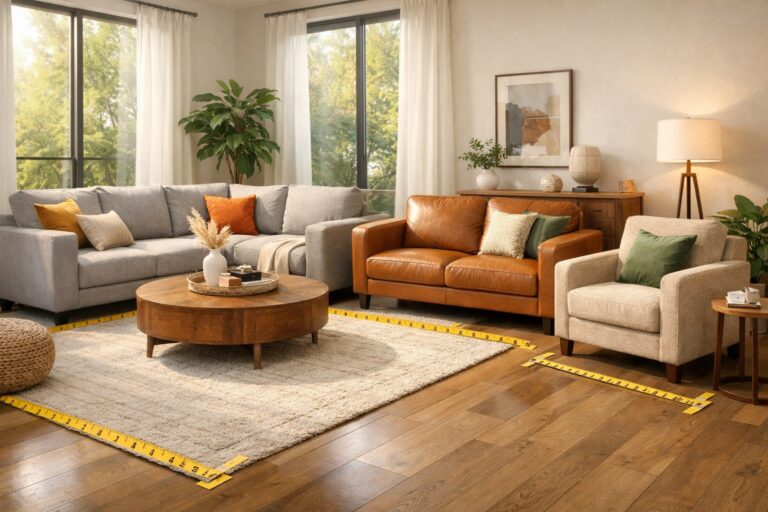
If you want a hands-on approach, grab some painter’s tape and mark out furniture sizes right on your floor. It’s a simple trick, but it really helps you see how much space each piece will take up.

Another idea: tape together newspaper sheets or flatten some cardboard boxes in the shape of your furniture. Move these around to test layouts, and you won’t have to lift a thing.

Take a few photos of your empty room and print them out. Sketching your ideas on paper gives you a fresh perspective, almost like a bird’s-eye view.

Don’t forget to measure your furniture and doorways before you start moving stuff. Digital tools can quickly show if something will fit through the door or into that tricky corner you’ve got your eye on.


Small-Space Furniture That Maximizes Storage: Guide & Ideas

0

Living in a small space doesn’t mean you have to give up comfort or organization. The key to making small rooms work is picking furniture that serves more than one purpose and offers hidden storage, so you can keep your home tidy but still stylish and functional.

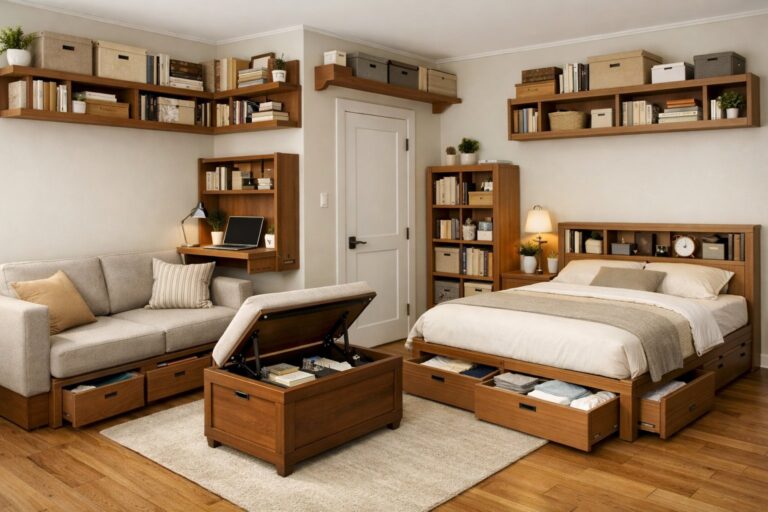
A storage ottoman can stash blankets and double as extra seating. A bed frame with drawers underneath keeps clothes organized, so you might not even need a clunky dresser.

Smart furniture choices and a thoughtful layout help you use every inch of your home. Tight corners can actually become useful with the right pieces.

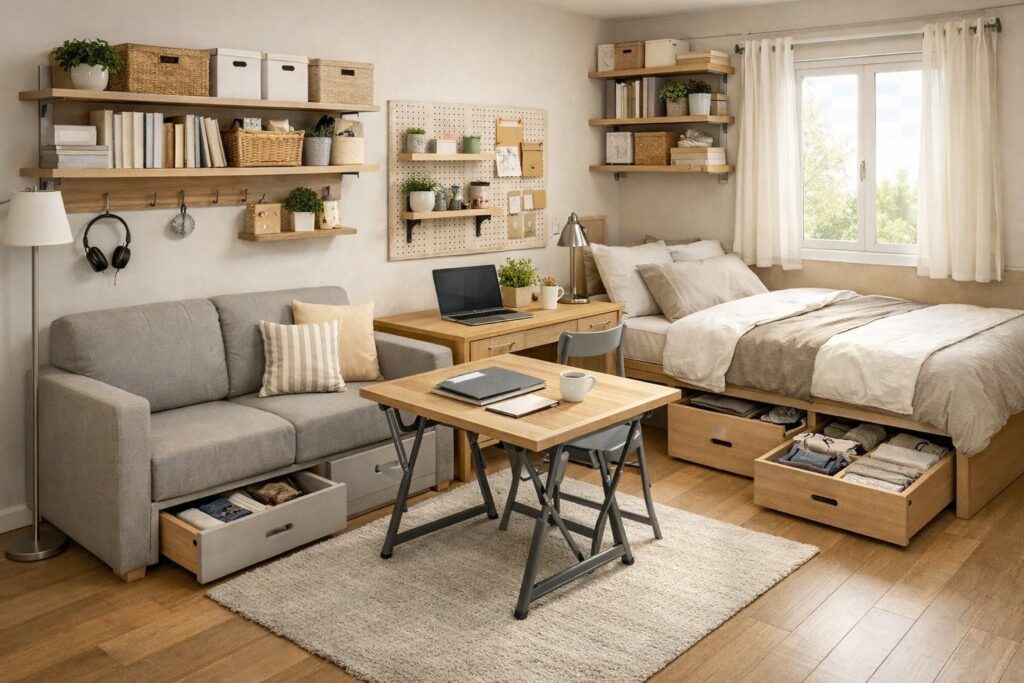
Slim shelves, fold-down desks, and wall-mounted storage keep floors clear. That way, rooms feel a lot more open than they really are.

This guide walks you through picking furniture that actually works harder in small spaces. You’ll find out which pieces pack in the most storage and how to arrange your rooms for better flow.

These tips are handy for studio apartments, small bedrooms, or honestly, any room where space is tight.

Key Takeaways

  • Pick furniture that does double duty and comes with built-in storage
  • Use shelves and wall-mounted pieces to make the most of your vertical space
  • Arrange furniture along room edges and stick with slim designs to help spaces feel bigger

Fundamental Strategies for Maximizing Storage in Small Spaces

https://youtube.com/watch?v=pTyLM3cqAUI

Making every inch count in a small home takes a little creativity. Smart furniture, clever use of vertical space, and a willingness to let go of stuff you don’t need all help turn cramped rooms into organized spaces.

Embracing Multi-Functional Furniture

Multi-functional furniture is the backbone of good small-space living. A storage ottoman gives you both seating and a spot to hide blankets or games.

Murphy tables fold up as wall art when you aren’t using them, then come down as a full dining table when you need it. Drop-leaf tables can be a console, a desk, or a dining table, depending on how you set them up.

If you put two console tables back-to-back, you can create bar-height seating for guests. Benches with lift-top seats hide everything from seasonal clothes to kitchen supplies, all while giving you a comfy place to sit.

Look for beds with drawers or platform bases that create storage under the mattress. Convertible sofas act as seating by day and transform into beds at night, so you don’t have to cram in extra furniture.

These pieces cut down on clutter and free up valuable floor space. It’s honestly kind of fun finding new ways to make furniture do more.

Thinking Vertically for More Storage

Your walls have so much storage potential, but most people just ignore them. Floating shelves let you display books, plants, or decorations while keeping the floor open.

Pegboards make adjustable storage in kitchens, offices, or craft rooms. You can move hooks and shelves around whenever you want.

Hang hooks on walls for bikes, coats, or bags. Tall bookcases that reach the ceiling use vertical space way better than short, wide ones.

Hanging pot racks in the kitchen free up cabinet space and keep your cookware close at hand. Try stacking storage cubes or crates to build custom shelves that even work as room dividers.

Wall-mounted fold-down desks give you workspace when you need it and disappear when you don’t. Even the space under stairs can become useful storage if you add shelves or fit furniture there.

Decluttering and Organizing Essentials

Before you start buying storage solutions, you really have to cut down on what you own. Go through your stuff and get rid of anything you haven’t used in a year.

Donate, sell, or toss things that don’t have a clear purpose in your daily life. Assign a home for every item you keep, and use baskets or bins to group similar things together.

Clear containers make it easy to see what’s inside. Label everything so everyone knows where to put things back.

Store seasonal stuff like winter coats or holiday decorations on high shelves or under the bed. Keep your daily essentials in the most reachable spots.

A shoe cabinet by the door keeps shoes from piling up. Try to declutter every few months to stop new clutter from sneaking back in.

Multipurpose and Space-Saving Furniture Pieces

Furniture that does more than one job helps you store more without hogging the floor. Storage ottomans hide clutter, convertible beds save space, and nesting tables adapt to whatever you need.

Storage Ottomans and Benches

Storage ottomans are basically a win-win. You get a place to sit or rest your feet and a spot to stash stuff out of sight.

Hide blankets, books, or toys inside, and use the top as a seat or footrest. Round ottomans squeeze into corners, while rectangular ones can double as coffee tables if you put a tray on top.

Benches with storage fit perfectly in entryways or at the foot of your bed. You can keep shoes, bags, or seasonal things inside and create a spot to sit while you put on your shoes.

Look for benches with lift-up seats or drawers for easy access. It’s a small change that makes life easier.

Key features to consider:

  • Cushioned tops for comfort
  • Easy-open lids that don’t need two hands
  • Sturdy build that supports adults
  • Fabric or leather that fits your style

Convertible and Murphy Beds

Murphy beds fold up against the wall or into a cabinet when you’re not sleeping. That means more floor space for working, exercising, or just hanging out during the day.

Modern Murphy beds sometimes include shelves or desks that stay usable even when the bed is folded up. Sofa beds turn your living room into a guest room in seconds.

They look like regular couches but pull out or fold down into real beds. Storage beds are another clever option, with drawers built into the base or a lift-up mattress for hidden storage.

If you’re shopping for a Murphy bed, look for gas pistons or springs that make lifting it easy. Storage beds with side drawers are better in tight rooms than ones with drawers at the foot.

Nesting Tables and Folding Surfaces

Nesting tables stack together when you don’t need them and spread out when you do. Use one as a side table and pull out the others when friends come over.

They take up the space of one table but give you several surfaces when you need them. Folding tables attach to walls or fold flat, so you can stash them in a closet or under the bed.

Wall-mounted drop-leaf tables can be desks or dining tables, then fold down out of the way. Folding dining tables expand for more people and shrink back for everyday meals.

Best uses for folding surfaces:

  • Wall desks for quick workspaces
  • Drop-leaf tables in kitchens
  • Tray tables that tuck beside your couch
  • Console tables that extend for dinner parties

Vertical and Wall-Mounted Storage Solutions

When you run out of floor space, your walls become the next best storage spots. Vertical storage helps you organize without crowding your rooms, and wall-mounted options keep things off the ground but still easy to grab.

Floating Shelves and Wall-Mounted Cabinets

Floating shelves give you storage without the bulk of regular furniture. Install them anywhere to hold books, plants, or daily essentials.

They’re especially great in kitchens for dishes or spices, or in bathrooms for toiletries. Wall-mounted cabinets take it a step further by hiding clutter behind doors, and they don’t touch the floor, so the room feels bigger and cleaning is easier.

Pick shallow cabinets for hallways or deeper ones for bedrooms. Mount shelves at a height you can easily reach, usually somewhere between eye and shoulder level.

Think about what you’ll store and how often you’ll need it before you install cabinets. That way, you’re not climbing on chairs every day.

Tall Bookcases and Vertical Shelving

Tall bookcases stretch from floor to ceiling, making the most of vertical space. They can hold books, display decor, or hide storage bins.

Go for adjustable shelves so you can change the spacing as you need. Vertical shelving systems are even more flexible, letting you add or remove shelves and sometimes even adjust the width.

Some come with drawers or cabinets at the bottom for stuff you want out of sight. Place tall storage in corners or along walls where they won’t block the light.

Put heavy items on the lower shelves for safety, and use the top shelves for things you hardly ever need.

Corner and Overhead Storage

Corner shelves turn awkward spaces into helpful storage spots. These fit right into corners where most furniture just won’t work.

Install corner shelves in bathrooms, kitchens, or any room with wasted corner space. Overhead storage uses the area above doors, windows, or furniture.

Built-in cabinets above your bed or desk add storage without crowding the floor. Over-door organizers hang on regular doors and hold shoes, cleaning stuff, or accessories.

The space above your closet rod is perfect for built-in shelves for seasonal items or extra linens. Just make sure you can reach these spots safely, either by hand or with a small step stool.

Layout Tips and Zoning for Space Efficiency

Good layouts can make a cramped space feel like home. Dividing your space into clear zones, managing how you move around, and playing with light and color can open up even the tiniest room.

Creating Zones for Multiple Needs

You need to create zones for different activities in your small space. One room can be your living area, workspace, and dining spot if you use furniture to set boundaries.

Try putting a bookshelf or open shelving unit between your bed and sitting area to separate sleeping from hanging out. Open shelves work better than a solid wall because you keep sight lines and get extra storage.

Area rugs help mark each zone, like one under your desk, another by your sofa, and a third in your dining nook.

Key zoning strategies include:

  • Use tall furniture like bookcases as room dividers
  • Pick different lighting for each zone, like a desk lamp for work and a floor lamp for reading
  • Arrange furniture to face different ways in each zone
  • Keep related activities together, like cooking and eating or sleeping and dressing

A floating console table can separate your entryway from your living room and give you a spot for keys and mail. It just makes coming home a little easier.

Maintaining Traffic Flow and Accessibility

Leave at least 24 to 30 inches of clear walkway between furniture pieces. This helps your space feel less cramped and makes daily movement easier.

Push larger furniture against the walls to open up the center of your rooms. Try not to block natural pathways between doors, windows, or high-traffic spots.

Your main walking path should stay clear even when drawers or cabinet doors are open. It’s a little thing, but it makes a big difference in daily life.

Pick furniture with exposed legs instead of pieces that sit flat on the floor. This lighter look creates visual space underneath and makes rooms seem less crowded.

You’ll see more floor, which can trick your eye into thinking the room is bigger. It’s a neat design trick, honestly.

Mount items on walls when you can. Wall-mounted desks, fold-down tables, and floating shelves keep floors open for easy movement.

Optimizing Lighting and Color

Bright spaces just feel bigger. Maximize natural light by keeping windows clear and using sheer curtains instead of heavy drapes.

Add task lighting where you need it most. Place lamps on your desk, wall sconces by your favorite chair, and under-cabinet lights in the kitchen.

Layering different light sources at various heights helps eliminate dark corners. Those dark spots can make rooms feel smaller than they actually are.

Color and reflection techniques:

  • Stick with a cohesive palette of light neutrals on walls and large furniture
  • Add mirrors opposite windows to bounce sunlight around
  • Pick reflective surfaces like glass tabletops or mirrored furniture
  • Keep patterns minimal to avoid visual clutter

Light-colored furniture in whites, creams, or pale grays opens up a room more than dark wood does. Minimalist design works well here, so stick to essentials in coordinating colors instead of mixing too many styles and shades.

Room-by-Room Small-Space Furniture Ideas

Each room needs its own furniture solutions to balance storage and daily activities. The right pieces help you use vertical space, add hidden storage, and keep the floor open.

Small Living Room: Modular Sofas and Wall-Mounted TVs

A modular sofa lets you arrange seating to fit your room and your needs. You can add or remove sections as needed.

Many modular sofas include storage compartments under the cushions for blankets or remotes. That’s handy for keeping things tidy.

Wall-mounted TVs free up floor space by removing the need for a bulky entertainment center. Mount the TV at eye level when you’re seated.

This leaves room below for a slim console table with drawers or shelves for your media gear and books. It’s a simple switch that opens things up.

Swap out a traditional coffee table for a storage ottoman. It works as seating, a footrest, and hidden storage all at once.

Pick ottomans with removable lids so you can stash magazines, games, or extra throws inside. That way, clutter stays out of sight.

Side tables with built-in shelves or drawers give you a spot for lamps and drinks while storing things you need close by. Nesting tables are flexible, since you can tuck smaller ones under the bigger table when you don’t need them.

Compact Bedroom: Under-Bed Drawers and Wall-Mounted Nightstands

Under-bed drawers put that empty space beneath your mattress to work. Platform beds with built-in drawers are great for heavy stuff like shoes or out-of-season clothes.

Rolling drawer units slide under standard bed frames and pull out easily. You’ll wonder why you didn’t use that space before.

Wall-mounted nightstands attach to the wall at whatever height you like. They keep the floor clear and make your room look bigger.

Look for versions with small drawers or shelves for books, glasses, or charging cords. It’s just enough storage for the essentials.

Wall-mounted desks fold down when you need to work and fold up flat when you’re done. This setup is perfect for bedrooms that double as home offices.

Add adjustable shelves above the desk to store supplies and keep your work area tidy. It’s a simple way to stay organized.

Window seat storage turns awkward window nooks into usable space. Build or buy a bench to fit the window width, with lift-up seats or drawers underneath for linens and seasonal stuff.

Eat-In Kitchens: Built-In Benches and Drop-Leaf Tables

A built-in bench along your kitchen wall creates a dedicated dining spot without blocking traffic. Add drawers beneath the seat for table linens, serving dishes, or kitchen tools.

Benches usually seat more people per foot than chairs. That’s a win for small kitchens.

Drop-leaf tables expand when you need more dining space and fold down when you don’t. The compact size works for everyday meals, while the extended surface is great for guests.

Pick tables with storage drawers or shelves underneath for placemats and napkins. Every bit of storage helps.

Pair your built-in bench with lightweight folding chairs on the other side. Store the chairs in a closet or hang them on wall hooks when you’re not using them.

This setup gives you flexible seating that adapts to different group sizes. It’s easy to adjust for family or friends.

Window seat storage in the kitchen creates a cozy breakfast nook while hiding pantry overflow, small appliances, or cleaning supplies. Add cushions for comfort during longer meals.

Product Suggestions to Maximize Storage

The right furniture can turn cramped quarters into efficient living spaces. These three product categories offer storage solutions that work double duty in small homes.

Versatile Storage Ottomans

Storage ottomans do a lot: they’re seating, storage, and coffee tables in one. The DocSafe Locking Fireproof Storage Ottoman stands out with its secure combination lock and water-resistant leather exterior.

It supports up to 700 pounds and protects valuables from fire and water. That’s peace of mind and practicality in one package.

For daily use, look for ottomans with gas-lift hinges. They make it easy to grab stored items quickly.

Cube-style ottomans usually give you 15-20 gallons of storage space for blankets, magazines, or hobby supplies.

Many models include removable trays on top, so you get a stable spot for drinks or snacks. Handy for movie nights or guests.

Pick round ottomans if you want flexibility, since you can nest several together when company comes over. Rectangular ottomans work better along walls or at the foot of the bed for extra seating and hidden storage for shoes or linens.

Convertible Murphy Beds

Murphy beds with built-in storage give you a bedroom when you need it, and floor space when you don’t. Modern versions have hydraulic lifts that make raising and lowering the bed smooth and easy.

You’ll find models with shelving units, fold-down desks, or cabinets that you can still use even when the bed’s down. That’s pretty clever.

Look for Murphy beds with reinforced bases that hold at least 500 pounds of stored items underneath. Side-lift versions work best in narrow rooms, while end-lift types fit wider spaces.

Many models now include USB charging ports and LED lighting in the frame. It’s all about making the most of your space.

Murphy bed systems range from basic wall-mount frames to full furniture units with built-in bookcases and storage. Some even look like entertainment centers or home offices when closed.

Expandable Nesting Table Sets

Nesting tables offer flexible surface space that tucks away when you don’t need it. A three-piece set usually includes tables that slide under each other, taking up just the space of the largest table.

Pull out the extras for drinks, snacks, or work materials as needed. It’s an easy way to add surfaces without clutter.

Pick nesting tables with different heights, usually from 18 to 24 inches, to mix things up visually and get more use out of them. Metal frames with wood or glass tops stay durable and keep the look light.

Some sets have built-in storage trays or magazine racks. These tables work well beside sofas, in bedroom corners, or as flexible side tables around the house.

Choose sets with felt pads on the feet to protect your floors and make sliding them around easier.

Sustainable and Long-Term Solutions for Small Spaces

Choosing quality pieces that last, staying organized, and going for a simpler approach will help you create a small space that works for years.

Opting for Sustainable and Durable Furniture

Sustainable furniture made from solid wood, bamboo, or recycled materials lasts longer than cheap alternatives. These pieces handle daily use and look good for years, unlike particle board or flimsy options.

Look for certifications like FSC (Forest Stewardship Council) to make sure your furniture comes from responsibly managed sources.

Durable finishes protect your investment and cut down on replacement needs. Natural oils, water-based stains, and powder-coated metal hold up better than standard finishes.

You’ll save money over time because quality pieces don’t need frequent replacement.

Multi-functional sustainable furniture includes storage ottomans made from recycled materials, modular shelving from reclaimed wood, and convertible sofa beds with metal frames. These items serve more than one purpose while reducing your environmental impact.

The higher upfront cost usually pays off with years of reliable use.

Regular Maintenance and Decluttering

Set aside 15 minutes each week to tidy up your small space. Wipe down surfaces, put things back where they belong, and check for damage that needs fixing.

This routine helps you avoid bigger, more expensive problems later.

Every three months, review what you own. If you haven’t used something, donate or sell it.

Small spaces fill up fast, so regular editing keeps your home functional. Try the one-in-one-out rule: when you bring something new home, get rid of something old.

Clean storage furniture regularly to make it last. Vacuum ottoman interiors, dust shelves, and tighten screws on fold-down tables.

These simple habits keep your furniture working and looking good.

Embracing a Minimalist Approach

Minimalism is about keeping only what you need and use. It’s a natural fit for small spaces, since you can’t hold onto extra stuff.

Pick furniture that serves a clear purpose instead of filling every corner. Fewer things competing for attention makes your space look bigger and more organized.

Go for neutral colors and simple shapes that won’t look dated. You’ll spend less time cleaning and organizing, too.

Buy less, but buy better. Instead of three cheap bookcases, invest in one high-quality shelving unit that fits your storage needs. It cuts down on waste and gives your home a more put-together look.

Frequently Asked Questions

Small-space furniture decisions raise questions about which pieces work best, how to arrange them, and where to find affordable options. Here are some answers to common concerns about multipurpose furniture, layout strategies, and specific product recommendations for compact living areas.

What are the top multipurpose furniture pieces recommended for maximizing storage in small spaces?

Ottomans with hidden compartments are some of the most useful multipurpose pieces for small spaces. Use them as extra seating, a coffee table, or a footrest while storing blankets, magazines, or other items inside.

Sofa tables that convert into desks give you workspace without dedicating a whole room to an office. When you’re done working, the table goes back to being a decorative piece behind your couch.

Storage benches work in entryways, bedrooms, or dining areas. Sit down to put on shoes and store things in drawers underneath. Murphy beds fold up against the wall when you’re not using them, freeing up floor space during the day and providing a full bed at night.


How can one arrange furniture to both save space and increase storage options in a small living room?

Put furniture around the room’s perimeter to keep the center open and make the space feel bigger. Wall-mounted shelves and cabinets add storage without taking up floor space.

Use a storage ottoman in front of your sofa instead of a regular coffee table. You get hidden storage and the same functionality.

If you work from home, set up a slim desk behind your sofa to create a workspace that doesn’t block traffic flow. Use vertical space by installing shelves up to the ceiling. Tall bookcases and cabinets hold more while taking up the same footprint as shorter ones.


Can you provide layout strategies for organizing furniture in small spaces to enhance functionality and storage?

Measure your space before buying furniture to make sure pieces fit. Create zones for different activities by using furniture as dividers, like placing a bookshelf between your living and sleeping areas in a studio apartment.

Pick furniture with exposed legs instead of pieces that sit flat on the floor. This creates visual space underneath and makes rooms feel less crowded.

Put beds against walls to free up walking space, and use the area underneath for storage bins or drawers. Build up instead of out with tall, narrow furniture.

A chest of drawers that’s 14 inches deep takes up less floor space than a wide dresser but still offers lots of storage.


What are some budget-friendly furniture options that offer significant storage solutions for small areas?

Cube storage units with fabric bins give you flexible, affordable storage. You can set up the cubes in different ways and use the bins to hide clutter while keeping things easy to grab.

Rolling carts are handy in lots of rooms and usually cost less than built-in storage. Try one in the kitchen for extra prep space, in the bathroom for toiletries, or even as a living room side table with storage underneath.

Stackable storage baskets fit under benches or tables and give you hidden storage for hardly any money. Floating shelves are another cheap fix, since you can add them without spending much or taking up floor space.

Clothing racks with bottom shelves help when you don’t have a closet. Grabbing a second-hand dresser or nightstand can also save money while giving you the same amount of storage as something new.


What are examples of clever storage-maximizing furniture pieces for those living in small apartments or homes?

Platform beds with built-in drawers cut out the need for a separate dresser. Some versions come with six or more drawers, and you can stash clothing, shoes, or extra bedding in them.

Console tables with shelves and drawers work as entryway drop zones or TV stands. You can even slide one behind the sofa if you want. They give you display space on top and hidden storage below, all while keeping a slim profile, usually just 12 to 16 inches deep.

Corner chairs squeeze into spots where regular furniture just won’t fit. Suddenly, that awkward corner is a cozy little seating area.

Wall-mounted fold-down desks attach right to the wall and flip up out of the way when you’re done, so your workspace just vanishes.

Nesting tables stack up neatly when you don’t need them. When friends come over, you can spread them out for more surfaces.

Trunks pull double duty as coffee tables and storage. You get a spot for your feet and a place to hide blankets or board games, all in one piece.


Choosing the Right Sofa for a Living Room: Sizing, Comfort & Style

0

Picking the right sofa can feel overwhelming with so many choices online or in a showroom. You have to consider how it’ll fit in your space, whether it matches your lifestyle, and if it’ll still look good after a few years.

The best sofa for your living room balances proper measurements, comfort that fits your habits, durable materials, and a style that feels right for your home.

A sofa is one of the biggest purchases you’ll make for your home. It usually takes up the most space in your living room and gets used more than just about any other piece of furniture.

Getting it right the first time saves money, stress, and the hassle of returns. This guide covers everything you should know before you buy.

You’ll learn how to measure your space, pick the right size and layout, choose comfortable cushions, select long-lasting materials, and find a style that won’t get old fast. There are even some product recommendations to help narrow things down.

Key Takeaways

  • Always measure your room, doorways, and pathways before buying to ensure your sofa fits through your home and works with your space
  • Choose materials and comfort levels based on how you actually use your living room and who lives in your home
  • Balance your budget with quality since a well-made sofa lasts longer and saves money over time

Measuring Your Space and Sofa Dimensions

Measuring before you buy a sofa can save you from expensive mistakes. You have to measure both your room and the sofa you want to make sure everything fits comfortably.

How to Measure Your Living Room

Start by measuring the wall where you plan to put your sofa. Use a tape measure and write down the width in inches.

Next, measure the depth from the wall to where the front of the sofa will sit. Leave at least 18-24 inches between your sofa and the coffee table so you can move around easily.

For main walkways, you need 30-36 inches of space. Use painter’s tape on the floor to outline your sofa’s footprint. This trick really helps you see how much room it’ll take up.

Walk around the taped area to check if the space still feels open. Measure your ceiling height and any windows behind where the sofa will go.

The sofa back shouldn’t block windows or look awkwardly tall in the room. A quick check here can make a big difference.

Understanding Sofa Dimensions

Sofa dimensions include several key measurements. Sofa width is the distance from the outer edge of one armrest to the other.

Sofa depth is measured from the front of the seat to the back.

Here are standard sofa sizes:

Sofa TypeWidthDepthSeats
Loveseat52-65 inches38 inches2
Three-Seater84-90 inches38 inches3
Four-Seater100-117 inches38 inches4
Sectional Sofa90-120+ inchesVaries5+

Seat depth for standard sofas is usually 21-24 inches. Deeper seats (26-28 inches) are great for lounging, while shallower seats are better if you want your feet to touch the floor.

Seat height is typically 17-20 inches from the floor. Back height changes how much neck support you get and affects the look of the sofa in your room.

Always check the spec sheet for any sofa you’re considering. It lists all the important measurements so you can compare different options.

Navigating Doorways and Delivery Pathways

Measure every doorway, hallway, and stairwell the sofa will need to pass through. Write down the width and height of each opening.

Pay attention to tight corners, too. Measure the diagonal space at corners because movers usually have to angle furniture to get it through.

Watch for low ceilings, hanging lights, or narrow passages. Most sofas fit through a 30-inch doorway if you angle them, but sectionals and larger pieces need more space.

Some sofas have removable legs to make delivery easier. If your entryways are tight, ask the retailer if the sofa legs or back come off.

Matching Sofa Size and Layout to Room and Lifestyle

The right sofa size and layout depends on your room’s measurements and how you actually use the space. Your lifestyle and room dimensions really work together here.

Selecting the Proper Sofa Size for Your Space

Start by measuring your room’s length and width in feet. Write down the numbers so you don’t forget.

You should also measure doorways, hallways, and staircases for delivery. The sofa width should take up about two-thirds of your wall length.

For example, if your wall is 12 feet long, look for sofas between 7 and 8 feet wide. Most standard sofas range from 72 to 96 inches in width.

Sofa depth matters too. Most sofas are 36 to 40 inches deep. Leave at least 30 inches between your sofa and coffee table for walking space.

In a small room under 150 square feet, try a compact loveseat at 58 to 64 inches wide. Check the arm width and seat height as well, since wide arms can add 8 to 12 inches to the total width and eat up seating space.

Choosing the Right Sofa Layout

A standard three-seat sofa works for most medium to large living rooms and seats 3 to 4 people comfortably. An L-shaped or sectional sofa fits well in corners and offers more seating without extra chairs.

Modular sofas are flexible since you can rearrange the pieces as needed. You can add or remove sections over time, but check reviews because some modular sofas slide apart with regular use.

Sleeper sofas and sofa beds are handy if you host overnight guests but don’t have a guest room. These usually need 50 to 60 inches of space in front to open up fully.

Loveseats work well for apartments or as part of a bigger seating setup. They’re 52 to 72 inches wide and seat two people comfortably.

Traffic Flow and Arrangement Considerations

Map out your walking paths before placing your sofa. People should be able to move around without squeezing past furniture.

Keep 30 to 36 inches clear for main pathways. Place your sofa facing the room’s focal point, whether that’s a TV, fireplace, or window.

Try not to block natural light or heating vents with your furniture. If you have pets or young kids, skip the massive sectional that takes over the whole room.

Large sofas don’t always get used fully and can make the space feel crowded. Choose performance fabrics that resist stains and wear if you have a busy household.

Think about how you actually use your living room. If you host big gatherings, a sectional gives you more seats. For formal spaces, a standard sofa with a couple of accent chairs creates a nice balance.

Evaluating Comfort and Cushioning

The right comfort level comes down to how your body fits the sofa and what materials support you. Seat dimensions affect your posture, while cushion types decide how the sofa feels and holds up over time.

Seat Depth and Seat Height

Seat depth measures from the front edge to the back cushion. Most fall between 20 and 24 inches.

If you’re shorter, look for depths around 20 inches so your back reaches the cushion and your feet touch the floor. Taller folks usually prefer 22 to 24 inches for better leg support.

Seat height is from the floor to the top of the cushion, usually 17 to 19 inches. Standard 18-inch heights work for most people.

Lower seats make it harder to stand up, especially for older adults or anyone with mobility issues. Higher seats are easier to get in and out of but might leave shorter people’s feet dangling.

Always test the sofa by sitting for at least five minutes. Your knees should bend comfortably, and you shouldn’t feel pressure behind your thighs.

Your back should rest against the cushion without needing to scoot forward. If it doesn’t feel right, keep looking.

Cushion Firmness and Fill Options

Foam cushions give steady support and come in different densities. High-resiliency foam keeps its shape longer than standard foam and usually lasts longer too.

Look for foam with a density of at least 1.8 pounds per cubic foot for durability. Down-filled cushions feel softer and more luxurious but need regular fluffing.

They compress over time and take more maintenance. Many sofas combine down wrapping over foam cores to balance comfort and structure.

Spring systems like sinuous springs (those S-shaped wires) support the cushions from below. They add bounce and help prevent sagging.

Quality sofas use eight-way hand-tied springs for maximum durability, but those cost more. Firmness is a personal call.

Firm cushions support your body better for sitting upright and tend to last longer. Soft cushions feel cozy for lounging, but they may not hold up as well for long reading sessions.

Back Height and Arm Design

Back height affects head and neck support. Low backs (under 30 inches) fit modern spaces but don’t support your head.

High backs and tufted back designs provide full support for relaxing or napping. Reclining sofas and recliners often have built-in headrests for extra comfort.

Rolled arms add width and give a traditional look, plus they’re comfy for side rests. Track arms (straight and boxy) save space in small rooms.

Slim arms maximize seating width, while thick padded arms give you a spot to rest your elbows or lean against. Think about how you use your sofa most.

If you watch TV for hours, prioritize back support and proper seat depth. For reading, look for higher backs and firmer cushions that help you keep good posture.

Sofa Materials and Upholstery Options

The material you pick changes how your sofa looks, feels, and holds up over the years. Different upholstery options work better for different lifestyles and budgets.

Performance Fabrics and Durability

Performance fabrics resist stains, moisture, and wear better than standard materials. These fabrics have special treatments that make them ideal if you have kids or pets.

They clean easily with just water and mild soap in most cases.

Look for fabrics rated above 15,000 double rubs in durability tests. This number tells you how many times the fabric can be rubbed before showing wear.

Higher numbers mean longer-lasting upholstery.

Key features of performance fabrics:

  • Stain-resistant coatings
  • Water-repellent properties
  • Easy to clean and maintain
  • Fade-resistant colors

Microfiber feels soft but stands up to daily use. Crypton and Sunbrella offer extra protection if you want something even tougher.

You can request fabric swatches from retailers to test the texture and durability at home before buying.

Leather, Velvet, and Fabric Choices

Leather sofas develop a natural patina over time and last for decades with proper care. Full-grain leather is the most durable and expensive option.

Top-grain leather costs less but still offers good quality.

Velvet sofas add luxury and softness to your space. The fabric catches light in different ways and creates visual interest.

However, velvet shows wear patterns and needs regular brushing to look its best.

Cotton and linen fabric sofas breathe well and feel comfortable in warm weather. These natural materials wrinkle more easily than synthetic options.

Polyester blends combine affordability with better wrinkle resistance.

Material comparison:

MaterialDurabilityMaintenancePrice Range
LeatherHighLowHigh
VelvetMediumMediumMedium-High
CottonMediumHighLow-Medium
PolyesterHighLowLow-Medium

Evaluating Frame and Construction Quality

The frame determines how long your sofa lasts, no matter what upholstery you pick. Hardwood frames from kiln-dried maple, oak, or ash provide the best support.

Avoid frames made entirely from particleboard or plastic.

Corner blocks reinforce the joints where frame pieces meet. These triangular supports prevent wobbling and add years to your sofa’s life.

Check that corner blocks are glued and screwed into place, not just stapled.

Eight-way hand-tied springs offer superior support and comfort. Sinuous springs cost less and work well for lighter use.

Webbing is the least expensive support system but wears out faster.

Ask about the frame warranty before you buy. Quality manufacturers offer at least 10 years of coverage on frames.

Lift one end of the sofa to test its weight, heavier pieces usually mean better construction.

Sofa Styles and Aesthetic Considerations

Your sofa style shapes how your entire living room looks and feels. The right combination of style, color, and design details creates a space that reflects your taste while staying practical for everyday use.

Popular Sofa Styles Explained

Modern sofas feature clean lines, low backs, and minimal details. They usually have slim arms or no arms, with legs exposed to keep things airy.

These work best in spaces with simple decor and neutral color schemes.

Traditional sofas include rolled arms, tufted backs, and structured cushions. You’ll often see wooden legs, decorative trim, and classic fabrics like velvet or damask.

These pieces add formality and work well in rooms with classic furniture and detailed woodwork.

Mid-century modern sofas sit lower to the ground with angled legs and button tufting. They balance retro appeal with current trends and fit into both modern and eclectic spaces.

Sectionals come in L-shapes, U-shapes, or curved designs. They’re practical for large families and open floor plans where you need flexible seating arrangements.

Choosing Colors and Finishes

Neutral colors like gray, beige, and cream remain popular because they adapt to changing decor trends. These shades work with almost any accent color and won’t limit your design options later.

Bold sofa colors make strong statements but require more commitment. If you choose a bright or patterned sofa, keep other large furniture pieces neutral.

Navy, emerald green, and terracotta add personality without overwhelming your space.

Consider these factors for sofa color selection:

  • Light colors show dirt and stains faster but make small rooms feel larger
  • Dark colors hide wear better and create cozy, intimate spaces
  • Patterned fabrics disguise spills and pet hair more than solid colors
  • Your existing wall colors and flooring should guide your choice

Matching Sofa Style to Interior Design

Your sofa should complement your room’s overall design direction. In a modern space, avoid heavy traditional pieces with ornate details.

In a classic room, ultra-minimal sofas can look out of place.

Mix different furniture styles intentionally rather than matching everything exactly. If your chairs have skirted bottoms, try a sofa with exposed legs.

This creates visual interest and keeps your room from feeling too coordinated.

Custom sofas let you control exact dimensions, fabrics, and details. You can match specific design elements to your space, though they cost more and take longer to deliver than ready-made options.

Pay attention to small design details like nail head trim, welting along seams, and leg finishes. These elements define your sofa’s style but shouldn’t compete with each other.

Pick two or three details that matter most to you instead of adding every decorative option available.

Top Sofa Picks: Product Suggestions

The right sofa depends on your space, lifestyle, and how you use your living room. These three picks address common needs: flexible layouts, guest accommodation, and tight spaces.

Best Modular Sofa for Versatility

A modular sofa lets you rearrange pieces as your needs change. You can split it into separate seats for game night or push sections together for movie marathons.

This works well if you move frequently or like changing your layout. Look for modular sofas with individual pieces that connect securely but separate easily.

The Lovesac Sactionals system uses washable covers and replaceable cushions. Burrow’s modular sectionals ship in boxes and snap together without tools.

Most modular options use performance fabrics that resist stains and wear. Check that each piece has sturdy legs and a solid frame.

Some brands let you add or remove sections later, which helps if your space grows or shrinks.

Recommended Sleeper Sofa for Functionality

A sleeper sofa gives you seating during the day and a bed for overnight guests. Modern sofa beds don’t look bulky like older models did.

They blend into your living room until you need them. The best sleeper sofas use memory foam mattresses instead of thin metal bars.

West Elm’s Harmony sleeper and Crate & Barrel’s Davis model both offer full-size mattresses with decent support. Look for pull-out mechanisms that operate smoothly without pinching fingers.

Your guests will sleep better on a sofa bed with at least a 4-inch mattress. Test the pull-out system in the store to make sure it feels sturdy.

Check if the mattress folds completely flat without a gap in the middle.

Top Pick for Compact Living Rooms

Small spaces need sofas under 72 inches long that don’t block traffic flow. A compact sofa should still seat two people comfortably without feeling cramped.

IKEA’s Friheten corner sofa fits tight spaces while adding storage underneath. Article’s Ceni sofa measures 67 inches and works in apartments or condos.

Both use firm cushions that don’t sag quickly. Look for sofas with exposed legs instead of skirts, it makes the room feel more open.

Armless designs or sofas with thin arms save several inches of width. Choose lighter colors to keep your space from feeling closed in.

Final Checks and Practical Buying Tips

Before you commit to a sofa purchase, take time to test it properly and understand what protection you have after the sale.

Testing Comfort and Support Before Purchase

Sit on the sofa the way you actually use furniture at home. Spend at least five minutes testing different positions.

Lean back, sit upright, and try lying down if that’s how you plan to use it. Push down on the seat cushions to check for firmness and bounce-back.

High-quality foam and spring systems should feel supportive, not mushy. If the cushion bottoms out easily, it probably won’t hold up well over time.

Check the seat depth by sitting all the way back. Your feet should touch the floor comfortably without the edge cutting into your knees.

Test the armrest height by resting your arm naturally. Bring family members who will use the sofa regularly.

What feels comfortable to you might not work for someone taller, shorter, or with different body needs.

Reviewing Warranties and Return Policies

Read the warranty details before buying. Frame warranties typically last longer than fabric or cushion coverage.

Most quality sofas offer at least a one-year warranty on the frame, with better models covering five to ten years. Ask what the warranty actually covers.

Some only protect against manufacturing defects, not normal wear and tear. Know if you need to keep receipts, register the product, or meet specific care requirements.

Check the return window and any restocking fees. Many stores charge 15-25% to return custom-ordered sofas.

Ask about exchange options if the sofa doesn’t fit your space as expected. Get all promises in writing, including delivery dates and assembly services.

Frequently Asked Questions

Finding the right sofa involves understanding spatial requirements, comfort features, material durability, and aesthetic harmony with your existing decor.

What are the key considerations for selecting a sofa that fits my living room layout?

You need to measure your space multiple times before shopping. Take measurements of the room where the sofa will sit, including the width, depth, and height available.

Measure all pathways the sofa must pass through during delivery. This includes doorways, hallways, stairwells, and any tight corners.

Missing these measurements can lead to delivery problems where the sofa cannot reach its destination. Consider the scale of the sofa relative to your room size.

A sofa that technically fits can still make your space feel cramped if it’s too large for the room’s proportions.


How can I determine the ideal sofa dimensions for my living room size?

Your sofa should leave enough space for traffic flow around the room. Aim for at least 30 inches of walking space between the sofa and other furniture or walls.

The sofa length should be proportional to your wall length. A good rule is to choose a sofa that takes up about two-thirds of the wall it sits against.

For sectionals, avoid filling the entire room with seating you won’t use. Many people choose oversized sectionals that rarely get fully occupied, which wastes valuable floor space.


What factors should I consider to ensure comfort when buying a new couch?

Seat depth affects how you sit and relax on your sofa. Standard seat depth ranges from 21 to 24 inches, but deeper seats work better if you like to lounge or curl up.

Cushion firmness impacts both comfort and longevity. Medium-firm cushions usually offer the best balance of support and comfort while maintaining their shape over time.

Test the sofa in person when possible. Sit in different positions for at least 10 minutes to assess whether the height, depth, and firmness work for your body and usage habits.


Which sofa materials offer durability and ease of maintenance for a busy living room?

Performance fabrics resist stains and wear better than traditional upholstery. These materials are treated to repel liquids and stand up to heavy use from kids and pets.

Leather and faux leather wipe clean easily. They’re good choices for households with young children or pets, though genuine leather needs occasional conditioning to prevent cracking.

Tightly woven fabrics like microfiber or canvas hold up well to daily use. Avoid loosely woven materials or delicate fabrics like silk if your living room sees high traffic.


Could you provide guidance on matching sofa styles with existing living room decor?

Your sofa style really ought to complement your room’s overall vibe. Modern rooms usually look great with clean-lined sofas that skip the extra detailing.

If your space feels more traditional, you might want to try sofas with rolled arms or decorative touches. Sometimes, a little classic charm just works better.

Color choice depends on whether you want your sofa to blend in or stand out. Neutrals like gray, beige, or navy can anchor the room and adapt if you ever switch things up.

On the other hand, bold colors can turn your sofa into the main event. It’s a bit of a commitment, but sometimes that’s what a room needs.

Think about the visual weight of your sofa too. Sofas with exposed legs can make small spaces feel lighter and more open.

Skirted sofas or those with a lower profile tend to look more substantial and grounded. It’s all about the mood you’re after, really.


What are some top recommended sofas that combine quality, comfort, and style?

The Burrow Nomad Sofa brings modular flexibility, so you can rearrange it to fit your space. The pieces connect securely, so you won’t deal with annoying shifting.

It comes with stain-resistant fabric, which is honestly a lifesaver if you have kids or pets. Burrow ships it in boxes that actually fit through standard doorways, so delivery is a breeze.

The Article Sven Sofa leans into that mid-century modern look, and the solid birch frame feels sturdy. Its tufted bench seat cushion holds its shape, which is nice if you don’t want to constantly fluff individual cushions.

The IKEA Kivik Sectional is a solid pick if you’re watching your budget. You get washable covers, which makes cleaning up spills way less stressful.

It also comes with a 10-year frame warranty. If you want to keep it comfy, swap out the cushions every few years.


Creating a Home Command Center: Layout, Calendar, and Storage Ideas

0

Trying to wrangle schedules, mail, and daily chaos? Having a central spot for all of it just makes life smoother. A home command center is basically your household’s main hub where calendars, mail, keys, and important papers all hang out in one spot everyone can reach.

Setting up this space is easier than it sounds, and you don’t need fancy supplies—just some basics and a bit of planning.

You can build a command center in any high-traffic spot in your home. The kitchen, entryway, or mudroom usually work best since everyone passes through several times a day.

Some folks go all out with a full wall system—storage baskets, planning boards, the works. Others just want a couple of hooks and a calendar. Honestly, either way works if it fits your needs.

This guide covers how to pick the right location, choose a layout that actually fits, organize different zones, and add products that help (not just look cute).

You’ll figure out a setup that keeps your family on track, doesn’t hog space, and doesn’t empty your wallet.

Key Takeaways

  • Pick a high-traffic spot and plan zones for calendars, mail, keys, and family tasks before you hang anything up
  • Wall-mounted organizers, hooks, and dry-erase boards make daily items easy to see and grab
  • Live with your setup for a week or two, then tweak it so it actually matches your family’s real-life habits

Understanding the Home Command Center

A home command center is the spot where you manage your household’s everyday chaos. It cuts down on mental clutter by keeping schedules, tasks, and key info all in one place.

Purpose and Benefits of a Command Center

With a command center, your family gets organized because everything you need to run the house lives in one spot. No more hunting through random rooms for calendars or mail.

It really does make life less stressful. You can see what needs to happen at a glance, and it’s way harder to miss appointments or forget bills when they’re staring you in the face.

Better communication is a bonus. Everyone can check the calendar and know who’s got what going on. Kids see their chores, adults coordinate without endless texts.

During those frantic mornings or evenings, you just grab what you need and check your tasks. No more rifling through drawers or pestering someone for info.

Key Elements for Effective Family Organization

Visual calendar systems are the backbone here. A big monthly calendar lets everyone see what’s coming up, and using different colors for each person helps a ton.

Paper management tools are a must for keeping mail and documents from piling up. Sort things into categories—bills, school papers, stuff that needs action.

Task tracking boards make to-do lists impossible to ignore. Clipboards, whiteboards, or magnetic boards work for chores, groceries, and projects.

Essential supplies storage means pens, sticky notes, scissors, and stamps are always handy. A little caddy or cup does the trick.

Reference information like emergency contacts, WiFi passwords, and key phone numbers should stay close by. Laminate the sheet or pop it in a clear sleeve so it lasts.

Common Locations and Space Considerations

The kitchen wall near your main entrance is usually the winner for most families. High traffic means you’ll actually use it, and you see it coming and going.

Mudrooms and entryways work too since they’re already handling backpacks, coats, and all the coming and going. You can add hooks and baskets right alongside your boards.

You don’t need much space—just 2 or 3 feet of wall is enough. In small homes, try the back of a pantry door or a narrow hallway wall.

Good lighting is key so everyone can read what’s posted. Try not to put your command center somewhere it blocks traffic or just adds more clutter. You want it easy to reach, not an extra chore to visit.

Planning Your Command Center Layout

Getting your command center right starts with planning for your actual routines and space. The best layout is functional, easy to use, and doesn’t confuse anyone.

Assessing Your Family’s Needs

Start by watching what piles up around your house for a week. Where do people drop keys, backpacks, and mail? That’s what your command center needs to handle.

Think about how many people will actually use this space. A couple needs less storage than a family with four kids and a million activities.

Jot down your biggest headaches. Is it lost keys, missed appointments, scattered mail, forgotten school forms, or no central place for the grocery list?

Make a list of must-haves versus nice-to-haves. Maybe you need a calendar and mail sorter, but a charging station or pet basket could wait.

Selecting the Right Location

Pick a spot your family passes all the time. Kitchen, entryway, mudroom, or that hallway by the garage are all solid options. If you hide it in a spare room, no one will use it.

Measure the wall space before you buy anything. Even just 3 or 4 feet of width works for a basic setup. Wall-mounted organizers are great for saving floor space.

If you want to add charging or lighting, check for outlets nearby. Natural light is nice, but not a dealbreaker.

Try not to block traffic or cabinets with your setup. The area should feel open, not cramped or awkward.

Zoning and Accessibility

Break your command center into zones by function. That keeps clutter down and helps everyone find what they need fast.

Standard zones include:

Zone TypePurposeCommon Items
SchedulingTrack dates and tasksCalendar, meal planner, activity schedule
Mail & PapersSort incoming documentsFile baskets, mail slots, bill holder
Quick AccessStore daily essentialsKey hooks, phone charger, sunglasses tray
SuppliesKeep tools handyPens, sticky notes, stamps

Put the stuff you use most at eye level, usually 48-60 inches from the floor. Use visual cues like labels or color-coded baskets so kids and guests can figure it out, too.

For little kids, keep their hooks or chore charts between 30-40 inches high so they can reach them without help. No climbing required.

Ergonomic and Aesthetic Considerations

If you want to write or sit at your command center, make sure surfaces and chairs are the right height. A small stool or chair is plenty for paying bills or helping with homework.

Leave 6-8 inches of space between items so the wall doesn’t look jam-packed. White space keeps the area calm instead of stressful.

Match your command center design to the rest of your home. Use similar colors and materials—wood for traditional, metal or acrylic for modern.

Install lighting if your spot is dim. Even a cheap LED strip or wall sconce makes it easier to read calendars and lists. Add a plant or a little art if you want the space to feel welcoming, not just utilitarian.

Designing Calendar and Scheduling Systems

https://youtube.com/watch?v=BR_yko0gr-Y

A calendar system keeps everyone on the same page about activities, appointments, and responsibilities. Having the right mix of tools and organization makes tracking family schedules way easier and helps you avoid missing stuff.

Choosing Between Wall Calendars, Planners, and Digital Tools

A wall calendar is perfect as the main display since everyone can see it. Put it at eye level where people naturally gather. Big wall calendars give you space to write multiple events per day, and you get to see the whole month at once.

Personal planners are nice for detailed schedules that don’t need to go on the family calendar—think homework, work meetings, or private appointments.

Digital tools like shared phone apps can sync schedules instantly. They’re great, but not everyone checks their phone all the time, so pairing them with a physical calendar works best. Some families do both: wall calendar for the master plan, digital reminders for the details.

Setting Up Color-Coding Systems

Give each family member a color for all their activities on the calendar. That way, you can see who’s doing what without squinting at every entry. Pick up colored markers, stickers, or highlighters for this.

Write each person’s stuff in their color—maybe dad’s blue, mom’s green, each kid has their own. You could also color-code by activity: sports in red, medical in orange, school in purple.

Keep it simple. More than five or six colors can get confusing fast. Put a color key near the calendar so no one forgets which is which.

Creating Family Calendars and Chore Charts

Your family calendar should show everyone’s activities, appointments, and commitments. Add school holidays, sports, doctor visits, and work schedules. Update it weekly at a family meeting—trust me, it helps.

A chore chart tracks who does what and when. List daily chores like dishes and weekly ones like vacuuming. Add checkboxes so people can mark things done. It keeps everyone accountable and cuts down on nagging.

Put the chore chart next to the family calendar for easy reference. Add a to-do list section for one-time tasks. During family meetings, review both and shuffle tasks if schedules change.

Incorporating Storage and Organization Solutions

Good storage tools keep your command center working and stop clutter from taking over. Wall-mounted systems save space, bins and baskets wrangle loose items, and a spot for mail keeps things from vanishing.

Wall-Mounted File Holders and Organizers

Wall-mounted file holders can save counter space and keep important documents visible. You can mount metal or plastic organizers near your command center to hold bills, school papers, and medical forms.

These holders work well in kitchens or entryways if you have wall space to spare. Pick file holders with multiple slots, so you can separate different types of documents.

Label each slot with categories like “Bills to Pay,” “School,” or “Medical.” That way, finding what you need is a breeze.

Some wall-mounted organizers come with pockets or compartments for pens, notepads, and other small supplies. Look for ones with hooks at the bottom for keys or badges, keeping everything together and off your counters.

Using Bins, Baskets, and Clipboards

Bins and baskets help corral items that won’t fit in file holders. Small bins work for chargers, scissors, and sticky notes.

Bigger baskets can hold things family members need to grab on their way out, like library books or sports gear. Label each bin or basket with its contents or the owner’s name.

Clear bins let you see what’s inside, no digging required. Wicker or fabric baskets look nice and hide the mess.

Clipboards on the wall or inside cabinets make handy reference spots. Give each family member a clipboard for their schedules or permission slips.

Clipboards also work for meal plans or shopping lists you update often.

Sorting Incoming Mail and Important Papers

A mail basket or tray stops papers from piling up on counters. Place it in your command center as the spot for all incoming mail.

Sort through it daily or whenever you remember, just to keep things from getting out of hand. Set up a simple system with three categories: action needed, file, and recycle.

Tackle “action needed” items first, like bills or forms that need signatures. File important papers in your wall-mounted holder or a filing cabinet nearby.

Keep a paper shredder close for sensitive stuff you want to toss. It makes it easier to deal with mail right away, instead of letting it stack up.

Message Boards and Visual Communication

Message boards give everyone a shared spot for daily updates, reminders, and quick notes. The right visual tools cut down on repeated questions and keep info moving between family members.

Utilizing Whiteboards and Chalkboard Walls

Whiteboards are probably the easiest way to post messages that change every day. Jot down notes like “Soccer practice at 5 PM” or “Dinner with neighbors tonight” and wipe them off tomorrow.

Mount your whiteboard at eye level where everyone passes by. Chalkboard walls let you turn a whole section into a writing zone.

Paint a 3×4 foot area with chalkboard paint for about $15-20. It’s great for longer lists or when you want everyone to be able to write at once.

Keep some chalk and an eraser nearby, because you’ll need them. Product suggestion: Quartet Magnetic Dry Erase Board (17×23 inches) gives you a durable writing surface and magnets for hanging papers.

Assign certain areas on your whiteboard or chalkboard for different things. Maybe the top third is for the daily schedule, the middle for groceries, and the bottom for reminders.

Use different colored markers or chalk for each family member or type of message. It keeps things clear, or at least a little less confusing.

Bulletin Boards, Corkboards, and Sticky Notes

Cork boards are perfect for posting things you need to see but don’t change every day. Pin up permission slips, invites, sports schedules, or takeout menus.

A 24×36 inch corkboard gives you plenty of space without taking over your wall. Sticky notes fill the gap between permanent displays and quick messages.

Keep a pad of sticky notes next to your bulletin board for “Don’t forget” reminders. Try color-coding so each family member gets their own color.

Product suggestion: U Brands Cork Bulletin Board comes with a wooden frame and push pins, so you’re set to go.

Divide your corkboard into zones using ribbon, washi tape, or just draw lines. You might create spots for:

  • Urgent items that need action now
  • This week’s events like after-school stuff
  • Reference materials like emergency contacts
  • Fun items such as photos or quotes

Swap pushpins for small binder clips on hooks if you want a cleaner look that’s easy to update.

Designing Task Boards and Message Zones

Task boards turn to-do items into something you can actually see getting done. Make columns labeled “To Do,” “In Progress,” and “Done” on your board.

Write each task on an index card or sticky note and move it as you go. A message zone is your family’s main communication spot, so pick one area for messages between family members.

Product suggestion: Simple Houseware Wall Mount File Organizer with 6 compartments can double as a message center and mail sorter.

Set up visual systems that make sense at a glance. Use a red magnet on your whiteboard for urgent stuff.

Add a “Check This” section on your bulletin board for things that need attention right now.

Technology and Charging Station Integration

Today’s command centers need a spot for phones, tablets, and other gadgets. A solid tech zone keeps cords under control and your digital tools handy.

Setting Up Charging Stations for Devices

Start with a multi-port USB charging station that can handle a bunch of devices at once. Place it on a shelf or tuck it in a drawer in your command center.

Look for stations with 4-6 ports to cover all your family’s phones, tablets, and smartwatches. Mount the station near an outlet to avoid cords running everywhere.

A power strip with surge protection works as your base, protecting your devices and giving you enough outlets. If you have cabinet space, try a charging drawer.

Drill a hole in the back for the cord and line up your devices inside. This keeps charging hidden and cuts down on visual mess.

You could also use a decorative box or basket on your counter with the charging station inside. Product suggestions:

  • Anker PowerPort 6 – Six-port USB charger for multiple devices
  • Rev-A-Shelf Charging Drawer Insert – Built-in for cabinets

Managing Cables and Digital Tool Storage

Cable clips or adhesive cord organizers help route charging cables neatly along your wall or inside drawers. Velcro ties keep extra cable length bundled up.

Label each cable with small tags so everyone knows whose is whose. A cord cover or cable raceway hides wires running along your wall, and you can paint them to match your wall for a cleaner look.

Store extra cables and adapters in a small bin or drawer organizer. Use dividers or little pouches to separate by type, which stops the usual cord tangle.

Tips for Tech Zone Organization

Give each family member a designated spot for their devices. Small trays or labeled sections help prevent mix-ups, especially if everyone has similar phones.

Keep paper clutter away from your charging area. Tech and paper don’t mix well, and you need space to set down devices.

Mount a small shelf above your charging station for extra storage while devices charge. Check your charging station weekly, remove stuff that doesn’t belong, and clean off dust and debris.

Replace any damaged cables right away to avoid charging hassles.

Real-Life Examples and Product Recommendations

Seeing real command centers and specific products can help you figure out what actually works at home and which tools make organizing easier.

Sample Command Center Layouts for Different Spaces

A refrigerator command center is great for small apartments. Stick up a magnetic wall calendar, add small bins for pens, and clipboards for each person.

This setup doesn’t need wall space and keeps everything at eye level. In a narrow hallway, mount a vertical board about 12-18 inches wide.

Stack three clipboards for categories like school papers, bills, and activities. Hang small hooks underneath for keys and add a slim wall calendar beside the clipboards.

Kitchen command centers fit into 2-3 feet of wall space near the pantry or entrance. Use a big wall calendar in the middle, storage bins for mail sorting underneath, and a bulletin board and dry erase board on either side.

For mudrooms, pick one wall with cubbies at the bottom for shoes and bags. Mount your command center pieces above, like a wall calendar and clipboards with hooks for coats and backpacks.

Product Suggestions for Efficient Organization

The Quartet Dry Erase Calendar Board (24 x 18 inches) gives you a monthly view you can update easily. It comes with a marker and mounting hardware for around $25.

Acrylic wall-mounted clipboards keep papers visible and tidy. A set of three clear clipboards costs about $18 and works for sorting mail, school forms, and bills.

You can label each one with dry erase markers. The mDesign Metal Wire Wall Mount Storage Basket comes in sets of two for $20, attaches to walls, and holds supplies like pens, scissors, sticky notes, and charging cables.

The open design means you can see what’s inside right away.

Tips for Maintaining and Updating Your Command Center

Check your wall calendar every Sunday night to plan the week. Add all appointments, activities, and deadlines then.

Clear out outdated papers from clipboards and bins weekly to keep things from piling up. Empty your bins once a month and toss dried-up pens, old receipts, and papers you don’t need.

Return anything that’s wandered into the command center back to its real home. If your system stops working, change it up.

Add another clipboard if yours are always full, or switch to bigger bins. Replace your wall calendar at the start of each year, and move your command center if your family isn’t using it where it is.

Frequently Asked Questions

Setting up a home command center takes some planning and the right mix of calendars, storage, and layout. When you get it right, it really does make a difference for staying organized.

What are the essential components for a functional home command center?

Every command center needs a calendar to track schedules and appointments. Include a spot to sort mail and papers, like trays or wall pockets.

Add a pen holder with basics like sticky notes, scissors, and tape. A to-do list board helps track daily chores.

Post emergency contacts and important phone numbers where everyone can see them. A meal planner saves time, and a small charging station for devices keeps everything in one place.


How can you incorporate a calendar system into a command center for optimal family organization?

Mount a wall calendar at eye level in your command center. Pick a dry-erase, chalkboard, or big paper calendar that shows the full month.

Use different colored markers or stickers for each family member. It makes it easy to see who has what going on.

Write down all appointments, school events, work schedules, and social plans right away. Update the calendar once a week, maybe Sunday night.

Keep blank calendar pages or a backup calendar nearby for planning ahead.


What are some layout ideas for setting up an effective command center in a small space?

Use vertical wall space to get the most out of a small area. Mount a narrow shelf with hooks underneath for keys and bags.

One corkboard or magnetic board can hold your calendar, notes, and important papers. Add small command hooks on the side for clipboards or baskets.

The back of a pantry or closet door works in tight spots. Use over-the-door organizers with clear pockets for mail and papers.

A slim rolling cart fits in narrow spaces and holds supplies on a few levels. Wall-mounted file holders take up less room, and you can stack them vertically for different zones like mail, bills, and school papers.


What are the best storage solutions for organizing a home management center?

Wire baskets on the wall keep papers off the counter. Label each basket with categories like “To Pay,” “To File,” or “To Read” so you know exactly where things go.

Magazine holders are great for notebooks, folders, and slim binders. You can stand them upright and grab what you need without digging through a pile.

Small drawer units hide away supplies, which helps keep the area looking tidy. Clear acrylic trays let you spot what you need fast, and they’re perfect for grouping similar items together.

Mason jars or little containers work for pens, markers, and paper clips. Just line them up on a shelf and you won’t lose track of the small stuff.

Desktop file boxes with hanging folders sort paperwork by category or family member. Wall pockets made from fabric or plastic make it easy to grab the papers you use most.


Can you suggest a few products that enhance the usability of a wall command center?

The Quartet Magnetic Dry Erase Calendar Board goes right on the wall and comes with a monthly grid and space for notes. It’s 17 x 23 inches, and you get markers and magnets in the box.

The SimpleHouseware Mesh Desk Organizer has several compartments for mail, papers, and supplies. Set it on a counter or hang it up if you’re short on space.

The Yamazaki Home Tower Magnetic Storage Basket sticks to any magnetic board or surface. It’s handy for holding mail, keys, or other small things, and you don’t even need to drill holes.


What strategies can be used for integrating a drop zone into a home command center?

Put hooks at different heights so both kids and adults can actually reach them. Try installing about 4 to 6 hooks for coats, bags, and keys right by your command center.

Set a bench or even a small stool underneath the hooks. That way, people have a spot to sit and kick off their shoes.

Drop a shallow basket or tray on the bench to catch small stuff like sunglasses or wallets. It might sound simple, but it really helps keep things from vanishing.

Stick a shoe rack on the wall or slide a low shoe tray on the floor under the drop zone. This keeps shoes out of the main walkway and saves some sanity.

Give each family member their own cubby or bin for daily essentials. If you label each space with names or even photos, nobody has to guess where their things go.


Organizing Kitchen Drawers Effectively: Dividers, Decluttering & Top Tools

0

Kitchen drawers have a sneaky way of turning into chaotic catch-alls. You open a drawer for a spatula, and suddenly you’re fishing through a pile of gadgets and random stuff. It’s a daily annoyance that honestly just slows you down and makes cooking less fun.

Organizing your kitchen drawers with smart dividers, clear categories, and a regular declutter can really change your whole kitchen vibe. You don’t need to splurge on fancy systems or lose a whole weekend to the process. A few simple strategies and the right tools can bring lasting order.

Start by pulling everything out, then sort items into groups that make sense for your cooking style. Pick organizers that actually fit your space and the stuff you use. Set up zones for different kinds of tools, and make it easy to keep up with your new system.

Key Takeaways

  • Take everything out, toss broken or unused tools, and sort similar items together before you start organizing
  • Use dividers and organizers to split drawers into zones for utensils, gadgets, and whatever else you use often
  • Keep things organized by always putting items back and giving your system a quick review every few months

Understanding the Importance of Organizing Kitchen Drawers

When your kitchen drawers are organized, you find things faster and feel less stressed. A good drawer system can honestly change the way you work in your kitchen.

Benefits for Kitchen Organization and Efficiency

With organized drawers, you grab what you need in seconds, not minutes. Knowing where every spatula or whisk belongs saves you time and lets you focus on cooking.

You can fit more into the same space when everything has its own spot. Tools don’t get scratched up, and sharp knives stay safe if you store them right.

It’s easier to see what you have, too. You’re less likely to buy duplicates just because you forgot about the one buried in the back. That’s money saved and less waste.

And honestly, a tidy drawer just looks better. It’s more inviting, and you might even feel a little more excited to cook.

Common Kitchen Drawer Challenges

Most of us have at least one overstuffed drawer where everything gets jumbled together. You end up digging for a single whisk, and tools get scratched up in the process.

Little things like bag clips or measuring spoons disappear into the abyss. Before you know it, you’ve got a junk drawer with no real purpose.

Big drawers without dividers just waste space. Items slide around, and different tools mix together, so grabbing what you need becomes a hassle.

Deep drawers are especially tricky. Stuff stacks up and hides what’s underneath, so you forget about tools at the bottom.

How Organization Impacts Kitchen Workflow

When drawers are organized, you can grab the right spatula or knife without breaking your cooking flow. You just move faster and with less stress.

Grouping similar items together makes your workflow more logical. Baking tools in one drawer, cooking utensils in another, so you’re not bouncing all over the kitchen.

Clean-up is easier, too. When everything has a spot, it’s simple to put things away after washing.

If you cook with family or friends, organized drawers make it easy for everyone to find what they need. No more “Where’s the peeler?” every five minutes.

Step-By-Step Guide to Organizing Kitchen Drawers

If you want to tackle your kitchen drawers, you’ll need a plan. Start by emptying everything, measure your space, create zones, and arrange things so you can actually reach them.

Emptying and Assessing Drawers

Pull everything out and spread it on the counter. It’s the only way to see what you’re working with.

Ask yourself if you use each item, if it actually works, and if you have more than one. Be honest here.

Get rid of broken tools, duplicates, and anything you haven’t touched in a year. You might be surprised how many extra spatulas you’ve collected.

Give your drawers a good wipe with soapy water. Clean the sides, bottom, and runners, then let them dry out before putting anything back.

Once everything’s out, you get a better sense of your real storage space.

Measuring and Planning Layouts

Grab a tape measure and write down the width, depth, and height of each drawer. You’ll need these numbers when you shop for dividers or organizers.

Check how far each drawer opens, since some don’t pull out all the way.

Key measurements to record:

  • Interior width (left to right)
  • Interior depth (front to back)
  • Interior height (bottom to top when closed)
  • Usable depth (how far back you can actually reach)

Draw a simple sketch of each drawer. Mark where you want dividers based on what you’ll store there. Planning like this means you won’t waste money on organizers that don’t fit.

Assigning Zones: Cooking, Prep, and Storage

Set up a cooking zone near your stove for things you use while making meals. This is where spatulas, tongs, and ladles should go. Oven mitts and pot holders fit here too.

Make a prep zone close to your main counter. Fill it with measuring cups, spoons, whisks, peelers, and graters.

Use other drawers for stuff you don’t need every day, like specialty tools or extra towels. Seasonal gadgets can go here as well.

Keep your most-used items in drawers between waist and chest height. Heavy pots belong in lower drawers, and lighter, rarely used things can go higher up.

Group similar items in each zone. All baking tools in one spot, all cutting tools in another. It just makes life easier.

Arranging Items for Accessibility

Put the things you grab every day at the front of the drawer. Less-used items can hang out in the back.

Dividers help keep utensils upright and separated, so they don’t slide around every time you open the drawer.

Accessibility tips:

  • Keep knives in a separate dock or with blade guards
  • Roll kitchen towels instead of folding them flat
  • Clip measuring spoons together so you don’t lose them
  • Heavy stuff goes in wide, shallow sections

Leave a little empty space in each drawer. If you cram too much in, you’ll just end up frustrated again.

If several people use your kitchen, label the divider sections. It helps everyone keep things in the right place.

Decluttering Kitchen Drawers for Lasting Organization

Getting rid of extra stuff is really the heart of any organized drawer. If you’re ruthless about decluttering, you’ll make space for what you actually use and keep clutter from creeping back in.

Declutter Ruthlessly: What to Keep, Donate, or Discard

Dump everything from a drawer onto the counter. Sort it into three piles: keep, donate, and toss. Only keep tools you’ve used in the last three months, if you want to be honest with yourself.

Donate duplicates or gadgets you haven’t touched in ages, as long as they’re in good shape. That avocado slicer you never used? Someone else might want it.

Toss anything broken, rusty, or missing parts. Bent whisks, chipped measuring cups, and stained utensils don’t deserve a spot in your kitchen.

Keep items that are:

  • Used weekly or daily
  • In good working condition
  • Part of a complete set
  • Needed for specific cooking jobs

Donate or discard items that are:

  • Broken or beyond repair
  • Unused for half a year or more
  • Duplicates of something you already like better
  • Single-use gadgets you never reach for

Handling Duplicates and Rarely Used Items

Don’t let five spatulas or three can openers hog your drawer space. Keep the one you love, ditch the rest. Go for quality and comfort over quantity.

Move rarely used tools out of the main drawers. Stash things like turkey basters or icing tips in upper cabinets or the pantry. They don’t need prime real estate if you only use them once a year.

If you’re not sure which duplicate to keep, ask yourself which one you grab first. That’s the keeper. Try this with measuring cups, whisks, and peelers too.

Maintaining an Organized System

Try to make it a weekly habit to put everything back where it belongs. It only takes a minute or two, but it keeps chaos at bay.

Every few months, give your drawers a quick review. Pull out anything new that doesn’t fit, and toss tools that have worn out.

Don’t add a bunch of new stuff all at once. When you buy something new, let go of something old. That one-in, one-out rule keeps things under control.

Label drawer sections if your kitchen has multiple users. Simple labels help everyone return things to the right place. Use a label maker or stick-on tags that won’t mess up your drawers.

Using Drawer Dividers and Organizers Effectively

Dividers and organizers can turn a cluttered mess into a drawer that actually works for you. The best divider depends on what you’re storing and how often your needs change.

Choosing Between Fixed and Adjustable Drawer Dividers

Fixed dividers are great if you already know what you want to store and those items don’t change much. They create permanent sections that stay put, which works well for utensil drawers where forks, spoons, and knives always need the same space.

Adjustable dividers let you tweak your drawer layout whenever your needs shift. You can move them around to fit new tools or reorganize after buying different cookware.

Most adjustable dividers use tension rods, sliding tracks, or removable pegs to keep things secure. These are especially handy for deep drawers where you stash pots, pans, and baking sheets.

You can make wide sections for big items and slim slots for things like cutting boards or trays. Adjustable dividers also shine in utility drawers where the mix of stuff changes all the time.

Fixed options usually cost less and go in faster, but you lose the ability to adapt the space later.

Optimizing with Expandable Drawer Dividers

Expandable drawer dividers stretch to fit different drawer widths and don’t need tools or permanent installation. They use spring-loaded parts or adjustable arms that reach from one side of the drawer to the other.

These work best in standard-depth drawers for utensils, flatware, or small tools. You can position several expandable dividers side by side or crisscrossed to make custom compartments.

This way, serving spoons stay separate from spatulas, and measuring cups don’t get mixed up with cooking utensils. Expandable dividers are a lifesaver if you move often or just want to reorganize without buying new stuff.

They move easily between drawers of different sizes, and the spring tension keeps them locked in place during daily use. Look for expandable options with non-slip feet or rubber grips so they don’t slide around when you open or close drawers quickly.

Stackable and Tiered Organizers for Maximum Space

Stackable organizers help you use the vertical space in deep drawers instead of letting things pile up. You can put one organizer on the drawer bottom and stack another on top, doubling your storage in the same spot.

This works for spices, small containers, or kitchen wraps. A tiered spice rack insert angles jars so labels face up, making every bottle easy to spot without pulling anything out.

Tiered organizers also work in utensil drawers by keeping your go-to tools on the top layer and backup or specialty tools underneath. No more digging through everything to find what you need.

Always check that your drawer organizers have enough clearance when the drawer closes. Measure the inside height before buying stackable options so stuff doesn’t get crushed or block the drawer from closing.

Categorizing and Zoning Kitchen Drawers

Sorting your kitchen stuff into clear categories and giving each category its own zone where you use it most can really save time and cut down on clutter.

Grouping Tools by Category

Start by sorting your kitchen items by what they do. Common categories are flatware (forks, spoons, knives), cooking utensils (spatulas, ladles, tongs), baking tools (measuring cups, whisks, cookie cutters), and specialty items (can openers, peelers, thermometers).

Keep similar items together. For example, stash all your measuring tools in one spot instead of spreading them out.

Serving utensils like big spoons and salad tongs go in one section, while everyday eating utensils belong in another. If you keep food storage stuff in drawers, make a category for lids and containers.

A lid organizer keeps these upright and stops them from toppling over or getting lost. You might also want categories for knives, wooden spoons, or small gadgets depending on what you use most.

Establishing Drawer Zones for Function

Put your categories in zones that match where you use them. The cooking zone near the stove should have spatulas, wooden spoons, tongs, and other tools you grab while cooking.

This way, you don’t waste steps during meal prep. Set up a prep zone near your main counter workspace with measuring cups, mixing spoons, peelers, and cutting tools.

Keep your flatware drawer close to the dishwasher or dining area for easy unloading and setting the table. If you have a baking area, store those supplies nearby.

Less-used items can go in lower drawers or spots farther from your main work areas.

Storing Items Vertically and Horizontally

Use vertical storage to get the most out of your drawer depth and keep things visible. Stand cutting boards, baking sheets, and pot lids on their edges using dividers or slots.

This keeps you from stacking and makes it easy to grab what you need without messing up the rest. Arrange utensils horizontally in divided sections so you can see everything at once.

Shallow trays work for flatware and small tools. For deeper drawers, stackable organizers or tiered inserts create more levels but still let you reach things easily.

Store knives in a horizontal in-drawer knife block to protect both the blades and your fingers. Put long tools like rolling pins or whisks horizontally in wide compartments so they don’t bend or break.

Examples of Organized Kitchen Drawers

Real examples make it easier to imagine how different drawer setups could work in your kitchen. The best system depends on what you store and how much space you have.

Utensil Drawers: Trays and Custom Dividers

A utensil tray is probably the most common way to organize forks, knives, spoons, and serving utensils. Standard trays have 5 to 8 compartments to separate everything by type.

You can find expandable trays that adjust from 12 to 18 inches wide to fit your drawer. For deeper drawers, try a two-tier system with everyday silverware on top and serving spoons, spatulas, and whisks underneath.

This setup gives you more storage without adding clutter. Drawer organizers with adjustable dividers are great for tools of different sizes.

Make narrow slots for measuring spoons and wider ones for spatulas or tongs. Bamboo dividers are popular since they’re sturdy and easy to wipe clean.

If you’ve got lots of specialty tools, a pegboard system can help. Little pegs hold each utensil in place, so nothing slides around when you open the drawer. This works especially well for tools with holes in the handles.

Spice Drawer Solutions and Tiered Inserts

Pull-out spice drawers keep jars visible and stop you from buying duplicates. Clear containers with labels let you spot everything at once instead of digging through a cabinet.

Most spice drawer inserts are angled so you can read labels without picking up each jar. Tiered inserts create three levels in one drawer, with the back row highest, the middle row lower, and the front row lowest.

This stair-step layout means you can see every spice label at a glance. Standard spice jars are about 4 inches tall, so measure your drawer depth before buying an organizer.

You need at least 3 inches of clearance for the drawer to close with an insert inside. Some systems have adjustable dividers so you can mix spice storage with small items like measuring spoons or citrus zesters.

Drawer Organization for Lids and Containers

A lid organizer solves a classic kitchen headache. Tension rods installed vertically create slots where lids stand upright instead of stacking flat.

You can grab the size you need without unstacking the whole pile. File organizers also work well for lids, keeping different sizes separated and visible.

This method works for pot lids, storage container lids, and even cutting boards. For food storage containers, nest same-shaped containers inside each other and stash all the matching lids together in a separate spot.

Square containers usually stack more efficiently than round ones and waste less drawer space. Deep drawers can hold baking sheets and cutting boards if you add vertical dividers every few inches.

This keeps flat items from sliding around and makes it easy to pull out just one piece without disturbing the rest.

Recommended Products for Kitchen Drawer Organization

The right products make organizing drawers a lot easier. Good dividers and organizers keep things separated, stop shifting, and help you get the most from your space.

Expandable Drawer Dividers: Utoplike Bamboo Dividers

These bamboo dividers adjust to fit drawers between 15 and 20.6 inches wide. You can buy them in two size ranges depending on your drawer measurements.

They come in gray, black, and natural bamboo colors to match your kitchen. The ends have rubber pads that grip the drawer sides, so the dividers don’t slide when you open and close the drawer.

You can move them to different drawers if you reorganize or move to a new place. The bamboo is sturdy and resists water better than plastic.

Each set includes four dividers you can arrange however you like. This works for separating utensils, kitchen tools, or baking supplies. The natural bamboo finish gives any drawer a clean look.

Multi-Compartment Utensil Trays

A good utensil tray has sections for forks, knives, spoons, serving utensils, and small tools. Look for trays with at least five to eight compartments.

Some trays stack in two layers to double your storage without using more drawer space. Choose bamboo, plastic, or stainless steel based on what you like.

Bamboo looks great and handles moisture. Plastic trays are light and budget-friendly. Stainless steel is best for commercial kitchens or if you like a modern vibe.

Measure your drawer before buying any tray. It should fit snugly without too much space on the sides. Some trays have expandable sides to adjust to your drawer width.

Tiered Spice Rack Inserts and Lid Organizers

A tiered spice rack insert adds steps inside your drawer so you can see every bottle. The back bottles sit higher than the front ones.

This setup is better than storing spices flat since you can read all the labels at once. Lid organizers use vertical slots or adjustable dividers to stand container lids on their sides.

This saves space and keeps lids from getting lost at the bottom. Some organizers use tension rods that expand to fit your drawer width.

You can use tiered organizers for cutting boards, baking sheets, or even tablets. The angled design keeps flat items separated and easy to grab.

Pick organizers with non-slip feet so they stay put when you open the drawer.

Frequently Asked Questions

Kitchen drawer organization brings up a lot of practical questions, from picking the right dividers to keeping order in tricky drawers. Here are some answers to common challenges, with specific solutions for dividers, decluttering, categorizing, and making the most of your space.

What are the most effective dividers to use when organizing kitchen drawers?

Bamboo expandable dividers work for most kitchen drawers since they adjust to fit different sizes. They’re sturdy and hold up to daily use without sliding around.

Acrylic dividers let you see your stuff and are easy to clean. They’re great in drawers where you want everything visible, like utensils or baking supplies.

Spring-loaded dividers need no installation and can move as your needs change. They make firm compartments without drilling or sticky stuff. For deep drawers, find dividers at least 3 inches tall to keep things separated.


What strategies can be employed to declutter and maximize space in kitchen drawers?

Start by emptying your drawers and sorting everything into three groups: things you use weekly, things you use monthly, and things you rarely touch. If you haven’t used something in a year, it’s probably time to donate or toss it.

Use the vertical space in drawers by adding shallow trays or small boxes that stack. This works well for small items like measuring spoons, tea bags, or spice packets.

Keep similar items together in containers instead of letting them scatter. Try the one-in-one-out rule to avoid future clutter. When you buy a new spatula, get rid of an old one.

Put your most-used items in the front and less-used stuff in the back of the drawer.


Could you provide examples of how to categorize items in kitchen drawers for better workflow?

Create a cooking utensils drawer. Group wooden spoons, spatulas, tongs, and whisks by type.

Keep this drawer close to your stove. That way, you can grab what you need without wandering around.

Set aside a different drawer for baking tools. Toss in measuring cups, pastry brushes, rolling pins, and cookie cutters.

Put this baking drawer near your main workspace. It makes baking days slightly less chaotic.

Add a drawer just for prep tools like vegetable peelers, graters, can openers, and knives. Position it close to your cutting board area.

Reserve another drawer for food storage items. Stash plastic wrap, aluminum foil, food storage bags, and twist ties near your fridge.


What are the best practices for maintaining an organized snack drawer?

Use clear bins or containers to separate snacks. Granola bars, chips, crackers, and dried fruit each get their own spot.

This setup helps avoid forgotten snacks hiding in the back. It also makes it easier to see what you actually have.

Label each container or section with the snack type. That way, everyone knows where things go.

Check the drawer every week. Remove empty packages and toss anything expired.

Put snacks with the earliest expiration dates in front. If you want to nudge healthier choices, keep those at eye level or right up front.


Can you recommend some high-quality organizers suitable for large kitchen utensils?

The SimpleHouseware Kitchen Drawer Organizer has deep compartments for big spatulas, ladles, and serving spoons. It measures about 17 inches long, so it fits most standard kitchen drawers.

OXO Good Grips Expandable Utensil Organizer adjusts from 10 to 17 inches wide. The compartments can handle bulky items, and the non-slip feet keep it steady even if you slam the drawer shut.

YouCopia Chef’s Edition Spice Stack holds up to 30 bottles. It also works for larger spice containers or small kitchen tools, and the angled design lets you see labels without shuffling everything around.


Which stackable organizers are recommended for deep kitchen drawers to optimize space?

The mDesign Plastic Stackable Kitchen Storage Organizer Bins come in sets of four. You can stack them two levels high in drawers at least 6 inches deep.

Each bin stands about 3 inches tall. Handles make it easy to pull them out when you need something.

Copco Non-Skid Pantry Cabinet Lazy Susan actually works in deep drawers if you lay it flat. It creates rotating storage for oils, vinegars, or sauce bottles, which is honestly pretty handy.

The 9-inch diameter fits most standard drawers. You might need to double-check your drawer size, but it usually works.

InterDesign Linus Drawer Organizers come in several heights, from 2 to 4 inches. Stack the shorter ones in deep drawers to get two layers of storage, which is a nice space saver.

The clear plastic design lets you see what’s inside right away. No need to open every container just to find that one thing you need.


How to Organize a Closet for Maximum Space

0

A crowded closet really makes getting ready in the morning feel like a chore. When your clothes are crammed together and you can’t spot what you need, it’s just stressful.

The good news? You can turn any closet into an organized, functional space, even if it’s tiny.

The key to maximizing closet space is mixing smart storage solutions like shelves, containers, and the right hangers with a layout that really fits your life. You don’t need to spend a fortune on a custom system, either.

Just switching to slim hangers, adding a second rod, or tossing some bins in for socks and accessories can seriously boost your storage.

This guide will take you through each step. You’ll figure out how to sort your stuff, plan a layout, and pick products that actually help keep things tidy and easy to grab.

Key Takeaways

  • Start by removing items you no longer wear and grouping similar items together to see what storage you actually need
  • Use vertical space with additional shelves and double rods while keeping frequently used items at eye level
  • Maintain your organized closet by putting items back in their designated spots and reviewing your belongings each season

Clear Out and Assess Your Closet

Before you organize, empty your closet completely. Seriously, take every single thing out.

Put it all on your bed or the floor so you can see what you’re working with. You’ll also want to take some quick measurements while the closet’s empty.

Decluttering for an Organized Closet

Sort your clothes into four piles: keep, donate, sell, and trash. Ask yourself if you wore each piece in the last year.

If you haven’t worn it, it’s probably time to let it go. Be honest about what fits and what you actually reach for.

Clothes that don’t fit your lifestyle or body just eat up space. Hang onto what you love and wear, not the stuff you wish you wore.

Check for damage too. Stains, rips, busted zippers—decide if you’ll actually repair them or if they’re just clutter.

Measuring and Evaluating Your Closet Space

Measure the height, width, and depth of your closet. Write the numbers down somewhere, trust me, you’ll forget.

Check where your closet rod sits and how much space is above and below it. Most reach-in closets are about 24 inches deep, which limits what fits.

Take a look at what features you already have. Count shelves, rods, and drawers.

Spot any wasted vertical space near the ceiling or empty floor space. Are there awkward obstacles like lights, doors, or outlets?

Snap a few photos of your empty closet from different angles. These will help when you’re shopping for organizers later.

Design a Layout to Maximize Space

A good closet layout uses every inch and groups your stuff by type and how often you use it. Even a tiny closet can feel organized with the right design.

Choosing the Optimal Closet Layout

Match your closet layout to what you actually own. Count how many long dresses, shirts, pants, and shoes you have before making changes.

Most people get the most out of their space with a double hang rod setup. Install one rod at about 40 inches for shirts and another at 80 inches for longer stuff.

This basically doubles your hanging space. If you have mostly short items, dedicate more space to double rods.

Got lots of long dresses? You’ll need more single-rod sections. A closet system can help you customize these areas.

Don’t ignore the corners. Corner shelves are perfect for shoes or folded stuff, and you can add a corner rod if there’s enough room.

Using Vertical Space Effectively

Most closets waste the top 12 to 24 inches near the ceiling. Pop a shelf up there for bins with seasonal clothes or things you rarely touch.

Keep a small step stool handy so you can actually reach those high spots.

Install shelves above your hanging rods to use space without sacrificing hanging room. These work well for sweaters, bedding, or storage boxes.

You can DIY with brackets and boards or go for a closet system with built-in shelves.

Stackable bins and drop-front shoe boxes let you build upward instead of outward. Label the bins, or just go for clear ones so you can see what’s inside.

Floor-to-ceiling storage units are great if your closet has high ceilings. Adjustable shelves let you tweak things as your storage needs change.

Creating Dedicated Storage Zones

Divide your closet into zones by category. Everyday clothes go at eye level for easy grabbing. Stash off-season stuff up high or down low.

Create these basic storage areas:

  • Hanging zone: Shirts, dresses, pants, and jackets on rods
  • Folded zone: Sweaters, jeans, and casual wear on shelves
  • Accessories zone: Bags, belts, and scarves on hooks or in bins
  • Shoe zone: All footwear in one designated area

Keep similar items together in each zone. All pants in one spot, all shirts in another. This makes getting dressed so much easier.

Use the back of your closet door for lightweight items. Hang an over-the-door organizer with pockets for accessories, or add hooks for bags and hats.

Strategic Shelving for Efficient Storage

Shelves are the backbone of closet storage. They create defined spots for folded clothes, shoes, and accessories.

The right shelf type, smart vertical use, and a few dividers can turn a cramped closet into a surprisingly organized space.

Types of Closet Shelves and Their Placement

Wire shelving is cheap and allows air to circulate, so your closet doesn’t get musty. It’s fine for everyday stuff, but it can leave marks on soft fabrics.

Solid wood or laminate shelves give you a smooth surface and can handle heavier loads. No more weird marks on your sweaters.

Place fixed shelves 12 to 15 inches apart for folded sweaters and tees. Adjustable shelves let you change things up as your needs shift.

Shoes do best on shelves 6 to 8 inches apart. That way, you don’t waste space above them.

Mount your most-used shelves between hip and eye level. It’s just easier to grab things there than bending or stretching all the time.

Lower shelves work for shoes and bins. Save those upper shelves for stuff you barely touch, like out-of-season clothes.

Incorporating High Shelves and Corners

High shelves make use of vertical space that usually gets ignored. Try to get shelves within a foot of your ceiling to squeeze out extra storage.

Store off-season clothes, bedding, or holiday stuff up there. Use lightweight bins with labels facing out, so you don’t have to dig through everything.

Corner shelves fill in those awkward gaps. Triangle or L-shaped units work, or you can try rotating shelves that pull out.

If you use high shelves often, keep a small step stool nearby. It’s safer and way easier than trying to reach or climb.

Utilizing Shelf Dividers

Shelf dividers are surprisingly helpful. They keep stacks from toppling and make your shelves look way neater.

Common divider types:

  • Wire dividers that clip onto wood shelves
  • Acrylic dividers that slide into place
  • Tension-mounted dividers that press between shelves

Stick a divider every 8 to 10 inches to create sections for different clothes. Separate tees from pants, or sort by color if you’re feeling fancy.

They’re great for purses too, which always seem to collapse on themselves. You can even stack sweaters vertically like files, so it’s easier to grab one without wrecking the rest.

Choosing and Arranging Hangers

The right hangers can double your closet’s capacity and keep your clothes in good shape. Velvet and other slim hangers save the most space, while specialty hangers keep accessories in check.

Space-Saving Hanger Styles

Velvet hangers are honestly a game changer for saving space. They’re about 0.2 inches thick, compared to plastic ones at 0.5 inches.

You can fit almost twice as many clothes on the same rod. The velvet coating keeps stuff from sliding off, so shirts and dresses stay put without bunching.

You can usually find decent velvet hangers for under a buck each.

Key benefits of velvet hangers:

  • Slim profile saves 50% more space than plastic
  • Non-slip surface prevents clothes from falling
  • No shoulder bumps or creases on garments
  • Available with clips or pants bars

Wooden hangers are best for heavy coats and suits. They’re pricier, but they keep the shape of your clothes.

Wire hangers can save space for basics, but they bend easily and can snag your shirts. Not my favorite, honestly.

Organizing Clothes by Type and Length

Group similar items on the same type of hanger. Keep all your button-downs together, dresses in another spot, and so on.

This really helps when you’re in a rush and need to find something fast. Arrange clothes by length too—short stuff like shirts on one side, longer stuff like dresses on the other.

This leaves open space below the short items for shoes or bins. Face all your hangers in the same direction with the hook toward you. It’s a small detail, but it makes things look neater and makes hangers easier to slide.

Organize by category:

  • Work clothes
  • Casual wear
  • Special occasion outfits
  • Seasonal items

Try hanging organizers with multiple tiers for things you wear a lot. These let you stash 5 or 6 items in the space of one hanger, which is pretty handy.

Specialty Hangers for Accessories

Multi-tier hangers hold pants, scarves, or ties in vertical rows. A single 5-tier hanger replaces five individual hangers.

You save rod space and keep matching items together. Clip hangers work well for skirts and pants.

Hang pants by the bottom seam to avoid visible crease marks. The clips grip fabric securely, so nothing slips off.

Belt and scarf hangers come with multiple hooks or loops around the frame. One hanger can hold 10 to 15 accessories.

These keep small items visible instead of tangled in drawers. Cascading hooks connect hangers vertically to organize your closet even further.

Attach the hook to your main rod, then hang additional garments below. You can stack four or five items in the same space as one hanger.

Incorporating Bins, Boxes, and Drawer Organizers

Bins, boxes, and drawer organizers can turn a cluttered closet into a functional storage zone. The right containers help you sort items, protect your stuff, and use every inch of space.

Selecting Storage Bins and Boxes

Pick clear plastic bins when you want to see what’s inside without opening each one. These are great for seasonal things like sweaters, swimsuits, or holiday accessories.

Label each bin on the front and top, so you can spot what’s inside from any angle. Storage bins with handles are easier to pull down from high shelves.

Look for stackable bins in a uniform size. This gives your closet a clean look and helps you use vertical space.

Drop-front shoe boxes make footwear easy to grab while keeping pairs dust-free. The front panel opens, so you don’t need to move all the other boxes in your stack.

These boxes work for sneakers, flats, and low-heeled shoes. Fabric bins look better on open shelving if you want a softer vibe.

Pick fabric bins that match your closet’s color scheme. Collapsible ones fold flat when you’re not using them.

Drawer Dividers and File Folding Techniques

A drawer organizer keeps clothing types separate, so things don’t get mixed up. Use drawer dividers to create spots for underwear, socks, or accessories.

Adjustable dividers let you change compartment sizes based on what you need to store. File folding stands items upright in rows instead of piling them flat.

When you file fold shirts, pants, or shorts, you see every piece at once. This way, you don’t have to dig through piles and wrinkle everything at the bottom.

To file fold a shirt, lay it flat and fold the sides toward the center. Fold the bottom up in thirds to make a little rectangle that stands on its own.

Place folded items vertically in your drawer, folded edge up. Drawer dividers help keep file-folded items upright and separated by category or color.

Organizing Small Items and Accessories

Small drawer organizers are perfect for jewelry, belts, scarves, or sunglasses. Velvet-lined compartments stop delicate pieces from scratching.

Use narrow dividers for rings and wider sections for watches or bracelets. Acrylic drawer organizers let you see what’s inside without opening each compartment.

They’re handy for makeup, hair accessories, and even small electronics like earbuds. Stack shallow organizers in deep drawers to use vertical space.

Store accessories in labeled boxes on shelves if your drawer space is tight. Group similar things together: one box for hats, another for gloves, and a third for scarves.

Honeycomb dividers create little cells for socks and underwear. Each item gets its own spot, so things stay organized even after a few wears.

Smart Shoe Storage and Specialty Solutions

Shoes can eat up closet space and create clutter if you don’t store them right. Good storage systems keep your shoes organized, protected, and easy to grab.

Maximizing Shoe Storage Options

Your closet can fit more shoes than you might think with the right methods. Start by sorting shoes by how often you wear them.

Keep your everyday pairs at eye level for quick access. Drop-front shoe boxes stack up and let you see your shoes without unstacking everything.

These clear boxes protect shoes from dust and keep them visible. They work for sneakers, flats, and casual shoes you rotate often.

Wall-mounted shoe shelves use vertical space you might ignore. Install shelves from floor to ceiling in narrow closet sections.

Space them 6 to 8 inches apart for sneakers and flats or 12 to 14 inches for heels and boots. Store seasonal shoes in labeled bins on upper shelves or under your bed.

This frees up closet space for current footwear. Swap bins when the seasons change so your closet setup keeps working for you.

Shoe Racks and Accessible Solutions

A tiered shoe rack fits lots of pairs in a small space. Metal or wood racks with three or four tiers hold 9 to 12 pairs and take up less than two square feet of floor space.

Put these racks on your closet floor or in the entryway for shoes you wear all the time. Slanted shoe shelves keep pairs visible and stop shoes from getting piled up.

These are especially nice for heels and dress shoes you want to keep in good shape. You can find standalone units or add slanted shelves to a bigger closet system.

Boot storage needs a little extra care to keep them looking good. Use boot shapers or clip boots upside down on hangers to avoid creases.

A dedicated boot rack with tall slots keeps them upright and organized. Wire shelving allows air to move around your shoes, which helps prevent odors and moisture.

Adjust shelf heights to fit all the different shoe types in your collection.

Utilizing Garment Racks and Over-the-Door Organizers

A garment rack with a bottom shelf does double duty in walk-in closets. Hang tomorrow’s outfit on top and put matching shoes below.

This setup can help you plan outfits and save time in the morning. Over-the-door organizers add storage without tools or permanent changes.

Fabric or clear plastic pockets hold shoes vertically on any standard door. Each pocket usually fits a pair of flats or sandals.

This solution works great in small closets where floor space is tight. Hanging organizers attach to your closet rod and create pockets for shoes under your hanging clothes.

These fabric organizers often have 10 to 16 pockets and keep lightweight shoes like flip-flops or ballet flats tidy. They’re cheaper than most other options and easy to move around.

Put heavier shoes in the lower pockets to keep the organizer from getting top-heavy. Use upper pockets for accessories like shoe care supplies, gloves, or scarves.

Maintenance and Long-Term Organization Tips

An organized closet doesn’t just stay that way on its own. Quick weekly checks and seasonal reviews help stop clutter from creeping back in.

Maintaining an Organized Closet

Take 10 minutes each week to keep your closet in shape. Put clothes back in their assigned spots after wearing them.

Hang things on the right hangers right away instead of tossing them on a chair. Use the one-in-one-out rule when you buy new clothes.

If you bring home a new shirt, take an old one out. This keeps your closet from getting stuffed.

Weekly tasks:

  • Return everything to its proper zone
  • Straighten folded stacks on shelves
  • Check for clothes that need washing or repairs
  • Empty laundry hampers before they overflow

Sort through bins and baskets once a month to clear out things you don’t need. Wipe down shelves and vacuum closet floors every few weeks to keep dust away.

Label storage containers clearly so everyone in the house knows where things go.

Seasonal Closet Reviews and Adjustments

Look over your closet setup at the start of each season. Move heavy winter coats to higher shelves or bins when spring rolls around.

Bring summer dresses to eye level when it gets warm. Store off-season clothes in clear bins with labels.

Pack winter sweaters with cedar blocks to keep moths away. Keep bins on top shelves or under beds so your main closet space stays open for current clothes.

Seasonal checklist:

  • Switch out seasonal clothing every three months
  • Donate things you didn’t wear all season
  • Check for damaged clothes that need to go
  • Clean closet storage bins before refilling
  • Update your closet layout if your needs changed

Try on clothes from storage before the new season hits. This way, you can spot anything that doesn’t fit or suit your style before you need it.

Recommended Closet Organization Products

The right products can really change a messy closet into a smooth storage system. Look for space-saving hangers, clear bins, dividers for shelves, and dedicated shoe storage to make the most of every inch.

Best Slimline Hangers for Saving Space

Slimline hangers are thinner than regular plastic hangers. They’re usually about a quarter-inch thick, while standard ones are half an inch or more.

You can fit almost twice as many clothes on the same rod. A standard closet rod that holds 40 regular hangers might fit 70 to 80 slimline ones.

Velvet-flocked slimline hangers work for most clothing types. The soft coating keeps clothes from slipping off, which helps with tank tops or silky things.

They also protect delicate items from creasing. Look for hangers that hold at least 10 pounds.

Metal hooks last longer than plastic ones. Some slimline hangers have notches for straps or loops.

Buy matching hangers instead of mixing styles. It looks cleaner and makes sliding clothes easier.

Sets of 50 velvet slimline hangers usually cost $20 to $35.

Top Storage Bins and Boxes

Clear plastic bins let you see what’s inside without opening them. This saves time when you’re searching for something and helps you stay organized long term.

Stackable bins work well for upper shelves where you keep seasonal stuff. Pick bins with lids that lock together so they don’t topple over.

Standard sizes range from 6 to 66 quarts, so you can find what fits. Fabric bins with handles look better on open shelves than plastic ones.

They’re easier to pull down from high spots. Canvas or linen bins in neutral colors blend in with most closet styles.

Label every bin clearly on the front and top. You’ll want to read labels from different angles depending on where bins sit.

Use a label maker or write with a permanent marker on sticky labels. Match bin sizes to your shelves by measuring depth and width before you buy.

Bins should fit snugly without wasting space or hanging over the edge.

Effective Shelf Dividers and Drawer Organizers

Shelf dividers stop stacks of clothes from falling over. Wire or acrylic dividers slide onto shelves and split them into sections.

Adjustable dividers give you the most flexibility. Move them around as your storage needs change.

They work especially well for sweaters, jeans, and bags on closet shelves. Drawer organizers keep small things from getting jumbled together.

Spring-loaded expandable dividers fit drawers of different widths without tools.

Key drawer organizer types:

  • Honeycomb designs for underwear and socks
  • Shallow trays for jewelry and accessories
  • Deep compartments for scarves and belts
  • Adjustable strips for custom sections

Bamboo or plastic organizers both do the job. Bamboo looks nicer but costs a bit more. Plastic is lighter and easier to wash.

Shoe Storage Solutions

A shoe rack is the simplest fix for floor storage. Tiered racks hold 9 to 30 pairs, depending on size.

Metal racks with angled shelves are better than flat ones because you can actually see each pair. Over-the-door organizers use space you might ignore.

Clear pocket organizers hold 12 to 24 pairs and keep shoes visible. This works well in small closets where floor space is at a premium.

Stackable shoe boxes protect expensive or seasonal shoes from dust. Drop-front boxes let you grab shoes without unstacking everything else.

They’re pricier than basic boxes but keep shoes in better shape. Under-bed shoe storage stretches your closet capacity.

Rolling bins with clear tops slide under your bed and usually hold 12 pairs. This way, off-season shoes stay accessible but out of your main closet space.

Measure your shoes before buying storage. Men’s size 12 and women’s boots need deeper compartments than average.

Standard shoe storage usually fits up to women’s size 10 and men’s size 11.

Frequently Asked Questions

Small closets need smart tricks like vertical storage and slim hangers. Organizing by category and season keeps things easy to reach.

Budget options like bins and hooks can work just as well as pricier systems when you use them thoughtfully.

What are effective strategies for maximizing storage space in small closets?

Use every inch of vertical space, from the floor up to the ceiling. Install shelves just above the floor instead of tossing things on the ground, which helps keep clutter at bay and makes cleaning a little less annoying.

Add a second closet rod to double your hanging area. Put one rod high up for tops, and another a few feet above the floor for pants and skirts.

Try using the backs of closet doors for storage. Over-the-door organizers or utility tracks hold shoes, accessories, or random small stuff without eating up any closet space inside.

Switch to slimline hangers, which free up several inches of rod space. These thinner hangers take up less room than the chunky plastic or wooden ones, but still keep your clothes in good shape.


How can you categorize clothing effectively in a closet for easy accessibility?

Start by grouping your clothes by type. Keep all shirts together, all pants in one spot, and all dresses in another, so you don’t have to dig through unrelated items.

Within each type, sort by color or season. Arrange things from light to dark, or stash winter clothes separately from summer stuff. Off-season items can live on higher shelves or in bins.

Use shelf dividers to keep stacks of folded clothes from falling over. These little tools make separate spots for things like sweaters, jeans, or gym clothes.

Label bins and pick clear containers so you can see what’s inside without guessing. This way, you find what you need on the first try and it’s easier to put things back where they belong.


What are affordable solutions for closet organization that don’t compromise on efficiency?

Basic storage bins from discount stores do the job just as well as pricey ones. Grab sturdy plastic bins with lids for things you keep on shelves or the floor, and you can usually find them for under $10 each.

Command Strip hooks cost only a few bucks and give you instant hanging space without making holes in the wall. They’re perfect for purses, scarves, belts, or even jewelry, and work especially well if you’re renting.

A basic shoe rack organizes your shoes for less than $20. If you’re short on floor space, under-the-bed shoe boxes are a clever and cheap option.

You can make your own shelf dividers out of cardboard or old bookends. It barely costs anything and keeps folded stacks tidy without needing custom stuff.


Which closet storage bins and containers are best for keeping items neatly sorted?

Clear plastic bins let you see what’s inside without opening each one. Go for stackable ones with lids that actually close, so you can maximize shelf space. They’re handy for accessories, seasonal things, or any small items you want to corral.

Fabric bins with handles work well for shelves you reach for a lot. They’re lighter than plastic, easier to pull down, and you can pick neutral colors to keep things looking calm and tidy.

Divided storage containers keep small things from getting lost in the shuffle. Use them for socks, underwear, belts, or jewelry. Some even let you move the dividers around to fit your stuff better.

For floor storage, heavy-duty bins with lids are your best bet. They keep dust out and keep everything together, instead of letting stuff creep across the floor.


Could you suggest methods to organize a wardrobe when hangers are not an option?

Try file folding, which Marie Kondo made pretty popular. Fold clothes so they stand upright in drawers or bins, letting you see everything at once and actually fit more in.

Shelves with dividers help you create neat stacks of folded clothes, and the dividers stop everything from toppling when you grab something in the middle.

Store folded items in open baskets or fabric bins on shelves. This keeps categories separate and makes it easy to pull out a whole basket when you need it.

Vacuum-sealed storage bags shrink bulky things like sweaters or winter coats. These bags can cut down the volume by up to 75% and protect your clothes from moisture or pests.


What layout techniques can be used to enhance space utilization in compact closet designs?

First, grab a tape measure and check your closet’s dimensions before you buy any organizers. Seriously, it’s the only way to avoid ending up with stuff that just doesn’t fit.

Keep the things you grab all the time right at eye level. Toss the out-of-season or rarely touched stuff up high or way in the back.

Try putting shelves a few inches above the floor instead of piling things directly on it. This simple move gives every item a spot and lets you vacuum underneath without hassle.

Stick some battery-powered LED lights on the shelves. It’s amazing how much easier it is to find things when you can actually see what’s lurking in the corners.

If your closet’s bursting, move a few items out. Maybe set up a garment rack in your bedroom to show off favorite pieces and make some breathing room in the closet.


Organizing an Entryway: Practical Storage Ideas and Solutions

0

Your entryway greets you the second you step inside, but let’s be real, it usually turns into a dumping ground for shoes, coats, bags, and mail. When this space gets messy, it can throw off the vibe of your whole home and add a bit of stress you don’t need.

The upside? With a couple of clever storage tweaks and some thoughtful layout choices, you can totally flip this high-traffic spot into something both functional and welcoming.

An organized entryway needs three key elements: designated storage for everyday items, hooks or racks for coats and bags, and a clear system for managing shoes. You don’t need a huge space or a fancy remodel to make it work.

Simple things like a storage bench, wall hooks, and a shoe rack can handle most of the clutter and make it easy to grab what you need when you’re rushing out.

Your setup really depends on your space and how many people are coming and going. Some folks have a narrow hallway, others a big foyer, but either way, you can make it work for your routine.

This guide dives into practical storage ideas, product picks, and layout tips to help you get organized. Maybe you’ll even enjoy coming home a little more.

Key Takeaways

  • Use vertical space with wall hooks and racks to store coats, bags, and accessories without taking up floor space
  • Choose multi-functional furniture like storage benches that provide seating and hide shoes or seasonal items
  • Create designated zones for keys, mail, and shoes so everything has a specific place when you enter or leave

Assessing Your Entryway Needs

Before you run out and buy bins or start hanging hooks, take a minute to figure out what your space can actually handle. Also, think about what you really need to store.

The right setup depends on your available space, who uses the entry, and what you carry in and out each day. It’s worth a little planning—trust me.

Evaluating Space and Entry Traffic Flow

Start by measuring your entryway’s width, depth, and height. Jot those numbers down, since they’ll decide what furniture and storage will fit.

Walk through your entry like you just got home with groceries, kids, or a backpack. Notice where you instinctively want to drop your stuff. That’s your drop zone, and it’s a smart spot for your main storage.

Count how many people use this entry on a regular basis. A family of five needs way more hooks and shoe storage than a couple, obviously.

Think about whether you come in through the front door or the garage most often, since that can change where things pile up.

Check if doors swing into your entryway. This matters for where you can put furniture. If a door opens inward, you’ll want to keep at least 36 inches clear so no one’s stuck squeezing by.

Look around for empty wall space you could use for hooks, shelves, or maybe a pegboard. Sometimes you have more options than you think.

Determining Storage Priorities

Make a quick list of everything that piles up in your entryway. Usual suspects: coats, shoes, bags, keys, mail, umbrellas, pet leashes, and all those hats and gloves in winter.

Next to each thing, jot down how many your household actually uses every day. Like, maybe you need space for four pairs of shoes, but just one umbrella.

Rank your top three storage headaches. If shoes are always in the way, a shoe rack or boot tray jumps to the top of your list. If coats are the problem, start with hooks or a hall tree.

Think about what you always grab on your way out. Keys, wallets, sunglasses—those need a tray or basket right by the door. These grab-and-go items should be super easy to reach.

Don’t forget about the seasons. You’ll need more coat storage in winter than you will when it’s warm out.

Setting an Organization Goal

Decide what you want your entryway to look like when it’s “done.” Maybe your goal is “clear floors, no visible clutter” or “everyone has a spot for their bag and shoes.”

Be specific about when you want to tackle this. A goal like “install hooks and a shoe rack this weekend” feels doable, while “make the perfect entryway” is just overwhelming.

Pick between open storage (hooks, shelves, baskets you can see) and closed storage (cabinets, drawers that hide everything). Open storage is great if you’re good at putting things back. Closed storage is better if you want everything out of sight.

Set a rough budget. Hooks and baskets might run you $50-100, but a hall tree or console table could be $150-400. It adds up fast, so plan ahead.

Choose one main organizing principle: will you organize by person (everyone gets their own hook and basket) or by category (all shoes together, all bags together)? That one choice shapes your whole setup.

Smart Entryway Storage Solutions

Creating good entryway storage means combining pieces that actually work for your daily stuff. The right mix of surfaces, containers, and zones can turn a cluttered entrance into a space you don’t mind showing off.

Drop Zone Essentials

A drop zone is just a spot to dump your stuff when you walk in. It keeps keys, wallets, and phones from disappearing into the couch cushions or ending up in random places.

You can set up a drop zone with a basic tray or dish on any flat surface. The tray acts like a little boundary that tells everyone where to put the small stuff. Put it right by the entrance so it’s easy to use—no excuses.

Essential drop zone items include:

  • A tray for keys and loose change
  • A mail organizer to sort bills and letters
  • Wall hooks mounted above for bags and coats
  • A small bowl for sunglasses

The best drop zones just make sense. You won’t have to nag anyone to use them because it’s obvious where things go.

Console Table and Entryway Console

A console table gives you surface space and hidden storage, all in a slim design that fits tight entryways. Most are about 10-15 inches deep, so you won’t trip over them.

Look for one with drawers if you want to stash clutter like dog leashes, gloves, or spare batteries. The top is perfect for a tray, lamp, or whatever little decor you like.

Some have lower shelves for baskets and extra storage. You can find budget options for $50 or hit up thrift shops for more character. A console table with a couple of drawers is usually enough to keep things separated and easy to find.

Storage Baskets and Woven Baskets

Baskets hide mess while keeping things easy to grab. Slide them under a console table, stash them on shelves, or line them up along the wall for shoes, hats, or pet stuff.

Woven baskets add a cozy vibe and are super practical. Families love them because you can just toss things in—no need to be too tidy. Assign each basket to a category: shoes, scarves, sports gear, whatever you’ve got.

Keep baskets where you can actually reach them. If you’ve got a crowd, label baskets so everyone knows what goes where. If you’re on a budget, you can even DIY some storage baskets out of old boxes and a little creativity.

Maximizing Vertical Space with Hooks and Racks

Wall-mounted hooks and racks turn blank walls into storage you’ll actually use. Standing options are great if you can’t drill holes or want something you can move around.

Wall Hooks and Hook Racks

Wall hooks are the simplest way to use vertical space. Single hooks are fine for bags or the occasional jacket, but a rack gives you more spots to hang things in one go.

Mount hooks at different heights so everyone can reach—lower for kids, higher for adults. Maybe 40-48 inches for little ones, 60-65 for grownups. That way, nobody has to ask for help just to hang up a coat.

Hook rack configurations:

  • Linear racks: 3-5 hooks in a row, good for narrow spaces
  • Grid patterns: Multiple rows for bigger families
  • Decorative options: Vintage or modern styles to fit your vibe

Adhesive hooks work if you rent or just don’t want to mess up the walls. Pick sturdy ones that hold at least 5-10 pounds each. Always test the adhesive somewhere hidden first so you don’t wreck your paint.

Coat Hooks and Coat Rack Choices

Coat hooks have to handle heavier stuff, especially in winter. Go for ones rated for 10-15 pounds per hook so they don’t snap off when loaded down with wet coats.

A mounted coat rack usually combines hooks with a shelf up top for hats or bins. These are about 24-36 inches wide, giving you both hanging and storage space. Mount them 60-66 inches off the floor so adults can use them comfortably.

Double hooks double your hanging space without taking up extra wall. Each peg holds two things, which is a lifesaver for families. Rounded ends help keep delicate fabrics safe.

Recommended products:

  • Liberty 4-Hook Wall Rack: Bronze finish, decorative backplate, holds 10 pounds per hook
  • AmazonBasics Wall Mounted Coat Rack: Budget pick with shelf and 5 hooks

Standing Coat Rack and Alternatives

A standing coat rack skips the installation and you can move it wherever you want. These fit in corners or next to the door, and you don’t have to commit to anything permanent.

Tree-style racks have branches at different heights and can hold 8-12 coats, depending on how bulky they are. Look for a weighted base so it won’t tip if everyone loads it up at once.

Leaner racks just rest against the wall at an angle and have hooks or pegs along the length. They look modern and stay stable without hardware. Most can handle 30-50 pounds total, which is plenty for most folks.

Freestanding alternatives:

  • Hall trees: Combo of hooks, a bench, and shoe storage underneath
  • Over-door racks: Hang on any door, no tools needed, hold 5-7 items
  • Tension pole racks: Stretch from floor to ceiling with adjustable hooks

Shoe Storage and Organization Strategies

Shoes might be the biggest source of entryway chaos. The right storage keeps them organized, protects your floors, and just makes life a bit easier.

Shoe Storage and Shoe Rack Options

A shoe rack helps keep entryways tidy, and it usually works for most households. Wall-mounted racks free up floor space and can hold several pairs in a compact area.

Vertical racks stack shoes in tiers, while horizontal models stretch along the wall. Open racks let you see all your shoes at a glance, making morning routines a bit easier.

Metal racks with wire shelves let wet shoes dry out, so you don’t end up with that musty smell. If your family is on the larger side, a shoe cubby system comes in handy, giving everyone their own spot and avoiding the classic shoe pile-up.

Wooden cubbies feel cozy and warm, but plastic ones are a breeze to clean. Stackable cube organizers are pretty flexible since you can add or remove cubes as your needs change.

Over-door shoe organizers are a lifesaver in cramped spaces. Hang them on closet doors to use up vertical space you’d probably ignore otherwise.

Boot Tray and Shoe Bench Ideas

A boot tray’s great for trapping water, snow, and mud before it hits your floors. Set one just inside the door for rainy days or snowy boots.

Rubber or plastic trays with raised sides keep messes contained and clean up fast. If you want to make the most of your space, try stacking a shoe rack above your boot tray. That way, you get spots for both everyday shoes and boots without crowding the floor.

A shoe bench is one of those things that feels like a small luxury. You can sit while you take shoes on or off, and the storage underneath keeps pairs off the floor.

Benches with open shelves make it easy to grab what you need, while closed storage hides the clutter. Lift-top benches stash everything inside, but you’ll have to lift the seat each time, so maybe keep less-used shoes there.

Using Storage Benches for Multi-Function

Storage benches are more than just a spot for shoes. They blend seating, storage, and style in one piece, so your entryway doesn’t feel thrown together.

Try a bench with a cushion in your entry. It’s just more comfortable for slipping shoes on or off, and you can stash shoes on one side and things like bags or umbrellas on the other.

Benches with pull-out drawers keep everything tucked away and dust-free. Drawers are easier for daily use than lift-tops, honestly.

You can even assign a drawer to each family member or sort by season. If you add hooks above the bench, you’ve got a whole entryway station for coats, bags, and shoes in one spot.

Optimizing Layout and Traffic Flow

Your entryway should have enough room for people to move around without bumping into stuff or tripping over shoes. A thoughtful layout really cuts down on clutter and makes coming and going way less chaotic.

Furniture Placement Tips

Stick bigger furniture against the walls to keep the center of your entryway open. A storage bench usually fits best on the longest wall, out of the way of the door swing.

Leave at least 36 inches of clear space for the main walkway. That’s enough for two people to pass and plenty of space for hauling in groceries.

Mount coat hooks about 5 feet up for adults, and add a lower row at 3 or 4 feet for kids. Keep hooks 4-6 inches apart so coats don’t pile up and fall off.

Try not to put furniture right in front of the door or along the natural walking path. Watch your family’s habits for a few days to see where storage works best.

Keeping Pathways Clear

Keep things off the floor unless they’re serving a purpose. Shoes belong in a cabinet or rack, not scattered everywhere.

Use vertical storage like wall shelves and hooks for things you need often, like keys or bags, so you’re not tripping over them. Baskets or small containers on shelves give everything a home, making it more likely people will put stuff away instead of dropping it on the floor.

Accommodating Small or Narrow Entryways

Mount slim shoe cabinets, just 6-8 inches deep, to store shoes vertically without blocking your walkway. Some hold up to two dozen pairs in hardly any space.

Swap out bulky furniture for wall-mounted options like floating shelves or a fold-down bench. Fold-down benches are surprisingly handy, offering a seat when you need it and folding away when you don’t.

Use the back of your entry door for storage with an over-the-door organizer for things like scarves or dog leashes. Mirrors on the wall can make a narrow space feel bigger and give you a last look before heading out.

Organizing Entryway Accessories

Small stuff like mail and umbrellas tends to create the most chaos in an entryway. A good system for these bits keeps things functional and less stressful.

Mail Organizer and Sorting Systems

A mail organizer keeps paper from piling up. Wall-mounted versions with several slots let you sort bills, letters, and magazines as soon as you walk in.

You can assign one slot for incoming mail, another for outgoing, and a third for urgent stuff. If you’ve got a small table or console, a desktop mail sorter with 3-5 compartments does the trick, and some even have a drawer for stamps or pens.

Product suggestion: The Umbra Estique Organizer has three slots and a key holder, so you get mail and key storage in one compact piece.

Umbrella Stand and Holder Solutions

An umbrella stand keeps drips off your floors. Ceramic or metal stands with drainage holes are best since water can evaporate or drain into a tray.

Put your stand near the door, but not in the main walkway. Wall-mounted umbrella holders save floor space, especially in tight spots, and hold a couple of umbrellas vertically.

Pick a holder based on your household’s needs. For a family of four, you’ll probably want space for 4-6 umbrellas.

Adding Mirrors and Final Touches

A mirror in the entryway is both practical and makes the space feel bigger and brighter. Hang it at eye level, somewhere between 57 and 65 inches from the floor.

Choose a frame that matches your style. Some mirrors have built-in shelves or hooks, which is a nice bonus. Try to place the mirror where it’ll catch natural or overhead light.

Set a small tray or bowl on a console table for things like sunglasses or receipts. It’s a simple way to keep those little items from vanishing into the abyss of your bag or coat pocket.

Top Product Recommendations

The right products make your entryway work better without crowding it. Shoe racks keep footwear in order, wall hooks offer grab-and-go storage, and a wooden bench adds both seating and a spot to stash stuff.

Recommended Entryway Shoe Rack

Wall-mounted shoe racks give you storage without eating up floor space. Metal or wood models can hold 6-12 pairs, depending on your family size, and multi-tiered racks stack shoes vertically.

Good wall-mounted racks start at around $20. Make sure to mount them to wall studs for stability. Some even have a shelf on top for keys or small items.

If you don’t want to drill into your walls, floor-standing racks work just as well. Go for 2-3 tier models that fit your space. Neutral colors like black, white, or natural wood blend in with most decor.

Best Wall Hooks

Wall hooks are a cheap and easy way to add storage for coats, bags, or leashes. Metal hooks hold more weight than plastic, so they’re better for heavy coats.

For a family, try a peg rail with 4-6 hooks spaced 4-6 inches apart. Mount hooks at different heights so everyone can reach, with adult hooks around 60 inches up and kids’ at about 40 inches.

Look for hooks that handle at least 5-10 pounds each. Decorative finishes like brass or matte black add some style. You’ll need a drill and level for installation, but it’s pretty straightforward.

Versatile Wooden Storage Bench

A wooden storage bench gives you a seat and a spot to stash shoes or gear. Most have a lift-up lid or pull-out drawers, and sizes usually run 36-48 inches wide and 18 inches tall.

Basic benches start at about $35 and have simple compartments inside. You can store shoes, hats, gloves, or pet stuff. A cushioned top makes sitting more comfortable for putting on shoes.

Solid wood benches last longer than particle board. Look for safety hinges so the lid doesn’t slam shut. Some have cubbies or baskets underneath for extra organization.

Frequently Asked Questions

Small spaces really benefit from vertical storage and furniture that pulls double duty. A few layout tweaks and smart products help families stay organized and keep the entryway looking put together.

What are the best storage solutions for a limited-space entryway?

Wall-mounted options are your best bet when floor space is tight. Install floating shelves above hooks for baskets, gloves, or mail. A slim console table, just 10-12 inches deep, gives you a surface without blocking the walkway.

Vertical shoe racks that mount to the wall keep shoes off the floor. Over-the-door organizers add storage without taking up space, and the back of the entry door works for hanging bags or seasonal items.

A slim storage bench with a lift-top seat gives you a place to sit and hides shoes or other stuff inside. Look for benches under 14 inches deep so you don’t crowd your entry.


How can you maintain an organized and functional entryway with kids and pets?

Lower hooks let kids hang their own coats and backpacks. Place these 36-40 inches from the floor so little ones can reach.

Keep a basket by the door for leashes, waste bags, and pet toys. Label bins or baskets for each family member so everyone knows where their stuff belongs.

Use washable bins or wipeable baskets, since kids and pets can be messy. Set a tray or mat by the door for muddy shoes and paws. A weekly cleaning routine helps keep things from spiraling, and have kids empty their baskets every few days to avoid overflow.


What are some creative shoe storage solutions that work for busy households?

Tiered shoe racks let you see everything and fit more pairs in less space. Stack shoes vertically to double your storage, or use built-in cubby systems so each person has their own spot.

Rolling shoe carts are handy if you need to move storage around or clean underneath. Fabric organizers that hang over doors hold lots of shoes and stay out of sight.

Large baskets under a bench are a quick drop zone for shoes. Boot trays with raised edges catch dirt and water, and shoe cabinets with flip-down doors keep shoes hidden but easy to grab. If you’ve got a lot of shoes, go for a rack with multiple levels for up to 20 pairs.


Can you suggest layout tips for maximizing the efficiency of an entryway?

Create a drop zone on one side of the entryway for everything you bring in. Include hooks, a small table or shelf, and a shoe spot. Keep the other side clear for walking.

Put your most-used items at arm level, between 40-60 inches up. Store seasonal stuff higher and less-used things lower. Place a mirror across from or next to your door for last-minute checks.

Use all the wall space, from floor to ceiling. Add shelves above coat hooks for extra storage. Make sure there’s at least 36 inches of clear width for walking through comfortably.

Group items by activity or family member to create zones. School stuff goes together, work bags in another spot. This makes busy mornings less frantic since everyone can find what they need quickly.


What are some practical yet stylish hooks and organizers for entryways?

Metal rail systems with movable hooks let you adjust spacing as your needs change. Wood peg rails add warmth and work with lots of decorating styles.

You can find these in different finishes to match your existing furniture. Modern coat hooks with multiple prongs hold more items per hook.

Decorative wall hooks shaped like animals or geometric forms double as art while storing coats. Flip-down hooks stay flat against the wall when you’re not using them.

Entryway organizers with mail slots, key hooks, and small shelves keep everything in one place. Wall-mounted charging stations with hooks above handle phones and bags together.

Combination pieces with a shelf, hooks, and mirror give you three functions in one. I love finding something that multitasks like that.

Pick hooks made from solid materials like brass, steel, or hardwood since they support heavy winter coats. Try installing hooks 60-65 inches high for adults, and add lower ones for kids if you need to.


Could you recommend a couple of must-have products for keeping an entryway clutter-free?

A storage bench with cubbies underneath works as seating and hides shoes or bags from sight. The Prepac Entryway Cubbie Bench has compartments for organizing and comes in several finishes.

It measures about 48 inches wide, so you get open storage and a cushioned top. I like that it manages to look tidy without much effort.

Wall-mounted mail organizers with key hooks can stop paper piles before they even start. The mDesign Mail Organizer gives you slots for letters, a basket for little things, and hooks for keys.

You can mount it right by the door, which makes it much harder to misplace important items. It’s a small fix, but it helps a lot.

Large woven baskets work well under console tables or benches. They hide clutter and add a bit of texture to your space.

Honestly, these baskets hold everything from pet supplies to sports gear, and they never seem to look messy. They’re one of those simple things that just make life easier.


Decluttering a Home Without Feeling Overwhelmed: A Practical Guide

0

Decluttering your home doesn’t have to feel impossible. Most people look at their cluttered spaces and freeze before they even start.

The thing is, clutter builds up slowly over time, and you can clear it in much the same way.

The key to decluttering without feeling overwhelmed is to start small, work in short sessions, and focus on one area at a time. You don’t have to transform your entire house in a single weekend.

When you break the process into small steps and let yourself go slow, decluttering feels a lot more doable. You’ll pick up simple methods that actually fit your schedule and real life.

This guide offers practical ways to clear your space without all the stress. You’ll get tips for finding the right mindset and room-by-room strategies.

Whether you have 20 minutes or a few hours, you can make real progress toward a calmer home.

Key Takeaways

  • Start with small tasks that take 20 minutes or less to build momentum and avoid feeling overwhelmed
  • Touch every item in a space and ask yourself if you use it or love it before deciding to keep it
  • Create a simple system for organizing what remains and practice regular habits to maintain a clutter-free home

Understanding Decluttering and Its Benefits

Decluttering means removing things you don’t need so your space actually works for your daily life. This process brings real benefits for your mental health and how well your home functions.

But honestly, a lot of people struggle to figure out where to start, or how to deal with the emotional side of letting go of stuff.

What Is Decluttering?

Decluttering is just sorting through your stuff and getting rid of things that don’t serve a purpose anymore. You go through your spaces and decide what stays, what gets donated or sold, and what needs to go in the trash.

The goal isn’t to get rid of everything. Instead, you want a home where each item has a clear function and its own spot.

That means keeping what you actually use and letting go of things that just fill up space. When you declutter, focus on one area at a time—maybe just a single drawer or the top of your desk.

Breaking the work into small tasks makes everything less overwhelming. You’ll see progress pretty quickly, which helps a lot.

Benefits of a Clutter-Free Home

A clutter-free home can lower your stress and anxiety. When you can find what you need without digging through piles, you feel more in control.

Cleaning gets easier too. Fewer things on surfaces means you can dust and vacuum faster. You spend less time organizing and more time on stuff you actually like.

You save money because you know exactly what you own. People often buy duplicates just because they can’t find something in the mess.

Physical health improves when your space is organized. Less dust and clutter means better air quality, and you reduce tripping hazards.

Your mind feels clearer in a calm space. A lot of people say they’re more focused and productive when their home isn’t full of visual distractions.

Common Causes of Clutter

Emotional attachment makes decluttering tough. You might keep things because they remind you of someone or a certain time, even if you never use them.

“Just in case” thinking leads to holding onto items you might need someday. This fills your home with stuff that rarely gets used.

Lack of storage systems means clutter builds up fast. Without spots for your things, they end up scattered everywhere. You need clear homes for your stuff to keep things in order.

Busy schedules make it hard to stay organized. When you’re rushing around, putting things away feels like extra work, and stuff piles up quickly.

Shopping habits add to the problem. Buying more than you need or grabbing things on impulse just creates more clutter. Sales and deals can be tempting, but where will all that stuff go?

Getting Into the Right Mindset

Your thoughts about clutter really shape how you deal with it. If you shift your mindset, decluttering feels less stressful and a lot more manageable.

The right mental approach helps you set goals that work for you and keeps you motivated along the way.

Overcoming Overwhelm and Perfectionism

You don’t need a perfect home. You just need a home that works for you.

Lots of people put off decluttering because they think they have to finish everything at once. That kind of pressure makes it hard to even start.

Decluttering isn’t a one-time event. It’s something you do over time.

Instead of aiming for perfection, focus on making progress. One drawer is progress. One shelf? That matters too.

Overwhelm usually comes from thinking about the whole picture. Break it down. Pick a small space. Spend 15 minutes there. When the timer goes off, stop.

This way, you avoid burnout and actually build confidence. Remember, clutter took a while to pile up. It’ll take time to clear, and that’s totally fine.

Setting Realistic Decluttering Goals

Clear goals help you move forward. Without them, you’ll just move things around and call it a day.

Start by asking yourself why you want to declutter. Maybe you want a calm bedroom, or space for a home office, or just less stress when you walk in the door.

Write down your reason and keep it somewhere you can see it. Next, set specific goals:

  • Time-based: “I’ll declutter for 30 minutes every Saturday morning”
  • Space-based: “I’ll clear out my closet by the end of the month”
  • Item-based: “I’ll donate 50 items this week”

Pick goals that actually fit your life. If you only have 10 minutes a day, that’s still enough. Small, steady efforts work better than rare, exhausting marathons.

Building Motivation and Accountability

Motivation comes and goes. Habits stick around.

Track your progress in a way you can see. Take before and after photos, or keep a list of areas you’ve finished. Write down how many bags you’ve donated.

Seeing progress reminds you that you’re making changes, even if they feel small. Find support if you can. Ask a friend to help, join an online group, or share your goals with someone who’ll check in.

Accountability makes it harder to give up. Give yourself rewards after you finish a room—maybe a favorite snack or an episode of a show you love.

Set regular check-ins. Every week, spend a few minutes looking at what you did and planning your next small step. These mindset tips help you stay on track when motivation dips.

Step-by-Step Decluttering Methods

Breaking decluttering into clear steps makes the work feel manageable. A structured approach keeps you focused and helps you see real progress.

Start Small: Tackling One Area at a Time

When you start, pick one small area. Maybe a single drawer, a closet shelf, or your nightstand.

Don’t start with a whole room or your entire house. Set a timer for 15 or 30 minutes and work in that one spot until the timer stops.

This time limit keeps you from burning out. Pick areas you use every day first—kitchen counters, bathroom drawers, or your dresser.

When you clear these spaces, you notice the results right away. Finish one small area, then move to the next. Each finished spot builds your confidence.

Establishing a Decluttering Schedule

Create a schedule for when you’ll declutter. Maybe it’s 30 minutes each morning or an hour on Saturday afternoons.

Consistency matters more than the total time. Put your decluttering sessions on your calendar like any other appointment.

Treat this time as important. Plan which areas you’ll tackle each week. For example:

  • Week 1: Kitchen drawers and pantry
  • Week 2: Bedroom closet and dresser
  • Week 3: Bathroom cabinets
  • Week 4: Living room shelves and tables

Stick to your schedule, but stay flexible. If you miss a session, just pick up where you left off—no guilt needed.

Using Decluttering Methods and Checklists

Having a method makes decision-making easier. The three-box method is simple: get three boxes labeled “Keep,” “Donate,” and “Trash.”

Place each item in one of these boxes as you go. Another approach is the time-test rule: ask yourself if you’ve used the item in the last three months, or if you’ll use it in the next three months.

If the answer’s no to both, it’s probably time to let it go. A checklist keeps you organized and focused. Make a list of every area in your home that needs attention.

Check off each space as you finish. That visual progress is surprisingly motivating. You can also declutter by category—gather all your books, clothes, or kitchen tools in one place.

This shows you how much you actually have and makes it easier to decide what stays.

Practical Decluttering Techniques

Breaking decluttering into specific methods helps you tackle clutter without getting stuck. These techniques give you systems to sort items, spot what you use, and group similar things together.

The Four-Box or Three-Box System

The box method gives every item a clear category. Grab three or four boxes and label them: Keep, Donate, Trash, and maybe Relocate.

When you pick up an item, put it in one of these boxes right away. This stops you from making messy piles all over the room.

The relocate box is for things that belong in another room. You can put those away later in one trip. Start small, like with a single drawer or shelf.

Pick up each item and ask yourself when you last used it. If it’s been a year, chances are it belongs in the donate or trash box.

At the end of your session, empty all the boxes. Put keep items back in their spots, take donate items to your car, and throw out the trash right away.

This way, you finish the cycle and see visible progress.

Applying the 80/20 Rule

The 80/20 rule basically says you use about 20% of your stuff 80% of the time. Most of us wear the same few outfits, grab the same dishes, and reach for the same tools over and over.

Take a look at your belongings and notice what you actually use every week or month. Those items really deserve their spot in your home.

The rest, the 80% you barely touch, just takes up space. Start by grabbing the things you use all the time and set them aside.

Everything left becomes a candidate for removal. You might find out you own five spatulas but only ever use one.

You don’t need three coffee makers if you only use one. Let go of books you know you’ll never reread or clothes that haven’t left the closet in months.

Group Like Items and Categorize

When you gather similar items in one place, you really see what you own. Pull out all your books, kitchen tools, or craft supplies from every corner and lay them out where you can see everything.

You’ll probably spot duplicates you forgot about. Three tape dispensers? Six half-used notebooks? It’s easy to miss until you put them together.

Decide how many of each thing you actually need. Keep the best ones and let the rest go.

This works especially well in the kitchen, bathroom, or your home office, where duplicates pile up fast. Store what you keep in one spot, like all batteries in one drawer or all cleaning supplies in one cabinet.

It’s so much easier to find things this way, and you won’t end up buying more just because you couldn’t find what you already had.

Real-Life Examples and Room-by-Room Strategies

If you start with high-impact spaces like the kitchen or bedroom, you build momentum. Each room calls for different strategies, depending on what you store there and how you use it day to day.

Decluttering the Kitchen

The kitchen runs best when you can find things quickly. Start with spices and expired food items, since those are easy wins.

Check dates on canned goods, condiments, and spices you haven’t used in ages. Then go for your utensil drawer. Odds are, you have three potato peelers or five wooden spoons and only need one or two.

Keep your most-used tools close to where you use them. Items to declutter:

  • Duplicate utensils and gadgets you never use
  • Chipped plates, cracked bowls, or random containers
  • Cookbooks you’ve never opened (snap photos of favorite recipes first)
  • Expired pantry items and old spices

Create zones based on tasks. Store coffee stuff near the coffee maker. Baking items go together in one cabinet. It just makes cooking less of a hassle and shows you what you actually need.

Clearing Out the Bedroom and Closet

Your bedroom should feel calm and restful. Start by moving out anything that doesn’t belong, like paperwork, dishes, or laundry that needs to go elsewhere.

The closet usually needs the most work. Pull out clothes you haven’t worn in a year. If it doesn’t fit or make you feel good, it might be time to let it go.

Create three piles: keep, donate, and trash. If you wouldn’t buy it again at full price today, just donate it. That trick helps you avoid the “maybe someday” trap.

Sort what stays by type and color. Duplicates jump out, and you’ll get dressed faster in the morning. Store out-of-season clothes in bins under the bed or on high shelves.

Simplifying the Living Room and Entryway

The living room ends up as a catch-all for everyone. Hunt for things that wandered in from other rooms: toys, books, mail, or shoes by the door.

The entryway sets the mood for your house. Keep only what you use every day, like keys, one coat per person, and your go-to shoes. Put up hooks or a small table to give these things a home.

Limit decorative stuff to pieces you truly love. Keep books you’ll actually read again. Remotes need one spot, maybe a basket on the coffee table.

Create a “launch pad” in the entryway with spots for bags, shoes, and coats. That way, clutter doesn’t follow you into the rest of the house.

Managing Sentimental and Emotional Items

Sentimental stuff is always the hardest. You don’t have to keep everything to honor your memories. Take photos of bulky items like old jerseys or artwork before letting them go.

Set a memory box with a size limit, maybe one bin per person. When it’s full, you have to remove something before adding more. This keeps only the most meaningful things.

Ask yourself with each sentimental item:

  • Does this bring me joy, or just guilt?
  • Would I keep this if I moved tomorrow?
  • Can I honor this memory in a smaller way?

For kids’ artwork, take photos and make a digital album or photo book. You save the memory without keeping piles of paper forever. Hold onto a few special pieces from each year.

Some things just feel too important to toss. That’s okay. The goal isn’t strict minimalism, it’s about keeping what matters and letting go of what doesn’t serve you anymore.

Organizing What Remains

Once you’ve decluttered, you need to organize what’s left so it’s easy to find and use. Good storage and smart placement create spaces that stay tidy longer.

Optimizing Storage Solutions

Match your storage to what you’re actually keeping. Use vertical space with wall-mounted shelves or tall bookcases to free up the floor. A storage ottoman in the living room works for seating and hiding blankets or magazines.

Under-bed containers help in bedrooms for seasonal clothes or extra linens. Clear bins let you see what’s inside without opening them, which saves time.

Label each container on the top and side, so you can tell what’s in there from any angle. Install hooks on walls or inside closet doors for bags, keys, and things you grab often.

Add a lazy Susan in corner cabinets to reach stuff easily. Use the space behind doors for hanging organizers for shoes, cleaning supplies, or toiletries.

Using Bins, Baskets, and Drawer Organizers

Bins and baskets keep similar things together and stop small stuff from vanishing. Go for open baskets for daily-use items, like fruit or toys. Lidded bins work for seasonal things you don’t need often.

Drawer organizers split up space for utensils, office supplies, or bathroom products. Adjustable dividers in kitchen drawers let you customize compartments for different tools.

Use small containers inside drawers for rubber bands, paper clips, and other tiny odds and ends. Measure shelves and cabinets before buying bins, so they actually fit.

Stackable bins are great in closets and pantries where you need to use vertical space.

Maximizing Space and Creating Functional Areas

Group items by how you use them to create functional areas. Keep cooking utensils near the stove, coffee supplies by the coffee maker, and cleaning products together under the sink or in a closet.

Set up zones for different activities. Maybe a homework station with supplies in one spot, and a reading nook with books in another. Use furniture with built-in storage, like beds with drawers or coffee tables with shelves.

Try to keep counters and surfaces mostly clear. Store appliances you don’t use every day in cabinets. Leave out only what you use a lot. This makes rooms look bigger and cuts down on visual clutter.

Staying Clutter-Free for the Long Term

Keeping your home organized after decluttering takes daily habits, some ground rules for new stuff, family teamwork, and responsible ways to get rid of things you no longer want.

Maintenance Habits and Routines

Daily tidying stops clutter from building up again. Take 10 or 15 minutes each night to put things back where they belong. It’s a small habit that keeps surfaces clear and mess from piling up.

Do a weekly reset in busy areas. Spend about half an hour every Sunday checking entryways, kitchen counters, and living spaces. Return things to their homes and deal with new clutter before it spreads.

Schedule a seasonal review every three months. Go through closets, storage, and drawers to pull out what you haven’t used. This keeps spaces from filling up again.

Label containers and shelves so everyone knows where things go. Clear labels make it easier for everyone to keep up the system.

Build clean-up time into activities, especially with kids. End playtime, crafts, or cooking with a quick reset. It teaches good habits and keeps clutter from taking over.

Handling Incoming Items and One-In, One-Out Rule

The one-in, one-out rule keeps things balanced. When you buy something new, let go of a similar item. Buy a new shirt, donate an old one. This stops clutter from creeping back in.

Be picky about what comes into your space. Before bringing something home, ask yourself: Do I need this? Where will it go? What will I get rid of to make space?

Stop clutter at the door. Sort mail right away, preferably over a recycling bin. Keep a donation box in your closet for things you decide to let go.

Deal with paperwork immediately instead of making piles. Resist free stuff and impulse buys. Just because it’s free doesn’t mean it deserves a spot in your house.

Wait 24 hours before buying non-essentials to avoid bringing in clutter you don’t need.

Involving Family and Using Professional Help

Everyone in the house needs to pitch in to keep things organized. Hold a family meeting, explain your systems, and give everyone age-appropriate tasks.

Use pictures or symbols for labels if your kids can’t read yet. That way, they know where things go without always needing help.

Make tidying a team effort with clear expectations. Kids can handle their own rooms, adults take care of shared spaces. Set a regular clean-up time so it becomes a habit.

If you need extra help, hire a professional organizer. They can visit a couple times a year to refresh your systems and keep you from getting overwhelmed.

Some organizers offer monthly check-ins or virtual sessions. That can help you stay on track and tweak your systems as your needs change.

Selling, Donating, and Disposing Responsibly

Sell valuable stuff on Facebook Marketplace or similar sites. Take clear photos, write honest descriptions, and price things to sell quickly. No point letting them sit around forever.

Donate usable items to local charities, shelters, or thrift stores. Call ahead to check what they take and their drop-off hours. Keep a donation box handy so you can add things as you find them.

Dispose of broken or unusable items the right way. Check your local rules for electronics, batteries, and hazardous stuff. Lots of communities have special collection days for things that can’t go in the regular trash.

Once you decide to let something go, act fast. Put donations in your car and drop them off during your next errand. List things for sale right away instead of storing them “for later.” The faster things leave, the less chance they’ll sneak back into your life.

Frequently Asked Questions

Starting to declutter brings up a lot of questions about methods, timing, and the emotional side of things. Here are some answers to the most common concerns and situations.

What are the initial steps to take when starting to declutter a home for someone feeling overwhelmed?

Pick one small area to start with. Go for a single drawer, a nightstand, or just the top of your desk instead of a whole room. That way, it feels doable and you get a quick win.

Set a timer for 15 to 30 minutes for your first session. When it goes off, you can stop or keep going if you feel like it. Short bursts help you avoid burnout and make it easier to fit decluttering into your day.

Grab three containers before you begin. Label them “keep,” “donate,” and “trash.” Every item you touch goes in one of these right away.

Stay in your chosen space until you finish. Don’t run around the house putting things away in other rooms. Make a “belongs elsewhere” pile and deal with it after you finish your current area.


What is the ‘core four’ method, and how can it be applied to home decluttering?

The core four method sorts every item into four categories: keep, donate, sell, and trash. Some folks simplify it to three by combining donate and sell, but the gist is the same.

Set out four boxes or bags in your workspace. Label each one so you don’t have to overthink where stuff goes.

Pick up each item once and decide right away which box it belongs in. Don’t linger or second-guess too much, just make the call.

If you keep something, it should have a clear home and purpose. If you can’t say where it goes or when you’ll use it, maybe it’s time to let it go.

Be honest with yourself about what you actually use or love. The donate box is for stuff that still works but doesn’t serve you anymore.

The sell pile is for things with real value you can list quickly. Toss broken, expired, or useless things straight into the trash.


Can you provide a comprehensive checklist for clutter-free home organization?

Start at the entryway. Clear out old shoes, expired coupons, and junk mail.

Keep only the essentials like keys, daily bags, and seasonal coats. Hooks and a small basket for incoming mail help a lot.

Head to the kitchen. Toss expired food from the pantry and fridge.

Get rid of duplicate utensils, broken appliances, and mismatched containers. Only keep dishes and cookware you actually use.

In bedrooms, go through clothes and pull out anything that doesn’t fit or hasn’t been worn in a year.

Clear nightstands of old magazines and random receipts. Sort dresser drawers by category, not just stuff everything in.

For bathrooms, throw out expired meds and old cosmetics. Ditch empty bottles and samples you know you’ll never use.

Keep cleaning supplies under the sink in bins so they’re easy to find. It just makes life easier.

In living spaces, sort books, magazines, and entertainment stuff. Remove broken electronics and outdated media.

Organize whatever’s left on shelves or in cabinets. Don’t let it pile up again.

Tackle storage areas last. These spots usually hold things from all over the house.

Sort through seasonal stuff and keep only what you use. If you haven’t opened a box in years, maybe it’s time to say goodbye.


What strategies exist for decluttering a home quickly for individuals who have limited time?

Try the “trash bag tango.” Walk through each room with a trash bag and grab obvious garbage, broken stuff, and anything expired.

This takes about 10 minutes per room and you see results right away. It’s oddly satisfying.

The “one minute rule” can help too. If something takes less than a minute to put away, just do it instead of setting it down.

That way, you stop new clutter from piling up while you work on the old mess.

Clear off surfaces first for quick wins. Empty kitchen counters, tables, and desks. It makes a bigger difference than you’d think.

Set a timer for 15 minutes and declutter in short bursts during your week. Six of those sessions gets you 90 minutes without feeling overwhelmed.

Focus on high-traffic spots where clutter collects fastest. Entryways, kitchen counters, and bathroom sinks are worth your limited time.


How can someone with a hoarding tendency approach decluttering in a manageable way?

Start with expired or broken things you know you should toss. Spoiled food, old medications, and broken electronics are usually easier to let go of.

This helps you practice making decisions without too much emotional weight. It’s a good place to start.

Ask a trusted friend or professional organizer to help out. Having someone by your side keeps you on track and gives you a reality check if you get stuck.

Sometimes they’ll stop you from pulling things back out of the discard pile. It really helps.

Take photos of sentimental stuff before letting it go. A digital album saves the memory without taking up space.

Set limits for the things you tend to collect. Maybe decide you’ll keep 20 mugs or three boxes of craft supplies.

Physical limits force you to pick what matters most. It’s not easy, but it works.

If you find yourself struggling with the emotional side, consider talking to a therapist who understands hoarding.

Professional help can make the process less overwhelming and more sustainable in the long run.


Are there mindset adjustments or practices that can help prevent feeling overwhelmed during the home decluttering process?

Try focusing on the function you want each space to serve, not on perfection. Ask yourself what actually happens in each room, and keep only the stuff that fits those activities.

This approach gives you clearer criteria for what stays and what goes. It also takes the pressure off making everything look like a magazine cover.

Decluttering isn’t an all-or-nothing thing. If you make your home even 20% better, that’s still progress.

Give yourself permission to keep items you honestly love or use. Nobody expects you to live with nothing, and honestly, that’s not the point anyway.

The real goal is to get rid of things that don’t add value to your life. Let yourself keep what matters, and let go of the rest.

You’ll probably feel tired after making a lot of decisions. Decision fatigue sneaks up fast and makes it hard to think straight.

If you notice yourself getting stuck on every single item, that’s a good sign to take a break. No need to power through when your brain’s fried.

Try scheduling regular maintenance sessions so clutter doesn’t pile up again. A quick 10-minute pickup each day, plus a monthly decluttering session, can make things way more manageable.

These little habits help you avoid another overwhelming cleanout later. Honestly, it’s so much less stressful in the long run.